


Pair of Mantel Dogs
A pair of mantel dogs brings character to a fireplace, and these nineteenth-century earthenware figures offer the traditional charm collectors seek.
Pair of Mantel Dogs
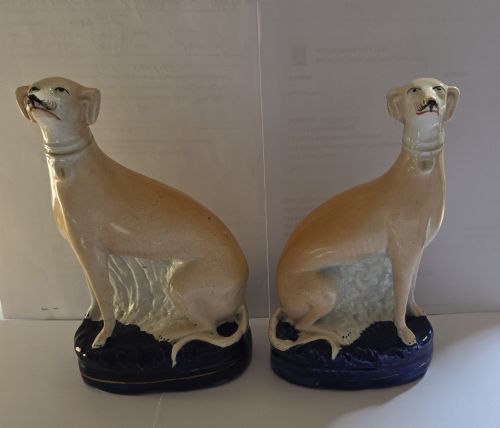
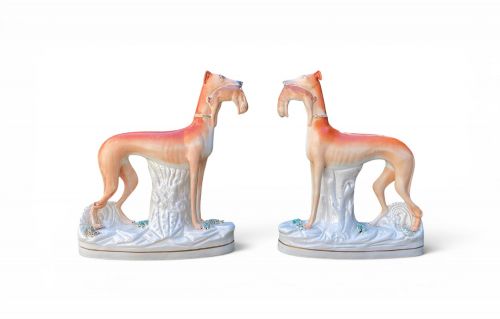
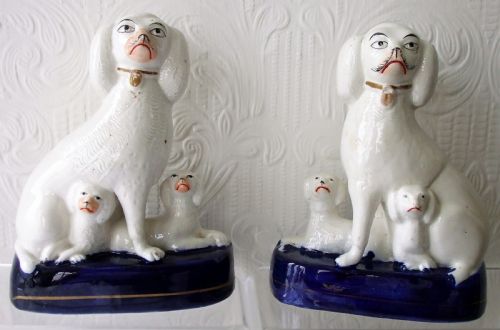
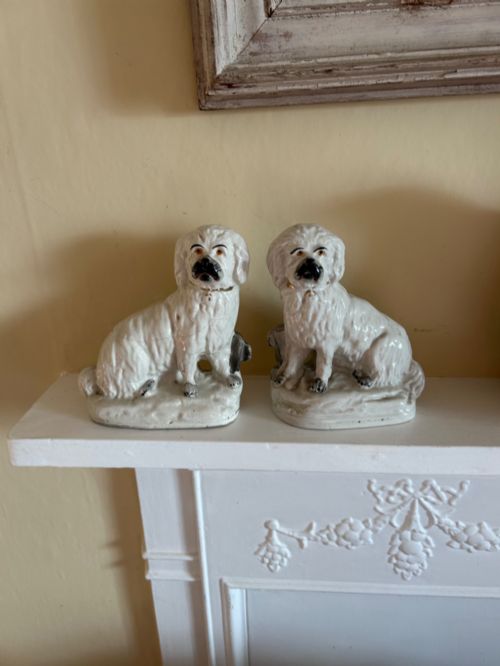
A pair of mantel dogs comprises symmetrical ceramic figures designed to sit on a fireplace mantel, usually facing each other. The pieces seen here span the Victorian era, dating from the mid to late nineteenth century through to nineteen hundred.
The most common examples on this page are Staffordshire pottery figures depicting spaniels, greyhounds, poodles, and whippets. Other variations include pugs, Maltese terriers, and hunting dogs with hares, along with occasional bronze sculptures.
Many of these ornamental figures take the form of comforter spaniels, sitting upright and attentive. Some examples incorporate spill vases behind the figures, combining decorative appeal with a practical household function for holding matches.
Materials and production methods
Potters shaped these figures primarily from earthenware and ceramic, utilising press moulds to form the hollow bodies of the animals. Artisans then applied glazes, including lead glaze and copper lustre, before firing the pottery in kilns.
Many nineteenth-century spaniels wear gilded chains with padlocks, ensuring the ceramic hounds stayed safely tethered to the mantelpiece.
Distinctions in quality
The quality of a pair of mantel dogs depends largely on the crispness of the moulding and the skill of the hand-painting. Finer examples display carefully defined facial expressions and neatly applied enamel or copper lustre details rather than hasty decoration.
The weight of the ceramic and the depth of the glaze also distinguish the tier of the work. Superior pairs maintain symmetry and balance between the two figures, preserving the intended decorative effect for the mantelpiece.
Thomas Parr·Royal Doulton·Beswick
The Pair of Mantel Dogs Glossary
- Staffordshire pottery
- Earthenware figures produced in the pottery districts of Staffordshire, England. This region dominated the manufacture of nineteenth-century animal ornaments.
- Copper lustre
- A metallic glaze technique that produces a reflective, coppery sheen on the ceramic surface. Potters used this finish to highlight the coats and collars of the dogs.
- Spill vase
- A hollow vertical cylinder attached to a figure, designed to hold wooden spills for lighting candles or fires. Several mantel dogs incorporate this practical element behind the animal.
- Comforter spaniel
- A seated Staffordshire spaniel model traditionally kept on domestic hearths. Victorian households placed these symmetrical pairs on mantelpieces across the country.
Pair of Mantel Dogs: Frequently Asked Questions
What are mantel dogs?
Mantel dogs are ceramic or pottery animal figures made in symmetrical pairs to sit on either end of a fireplace mantelpiece.
Most nineteenth-century examples depict seated spaniels, greyhounds, or poodles modelled to watch over the hearth.
How were they used?
Victorian households placed these ceramic pairs on mantelpieces as decorative ornaments to bring warmth and respectability to a room.
Some variants included built-in spill vases behind the dogs to store wooden tapers used for lighting fires and pipes.
How do I date Staffordshire dogs?
Dating relies on stylistic details, glazing techniques, and the type of clay body used in the pottery figures.
Mid-nineteenth-century examples often feature copper lustre or rich red and white markings, while later Victorian pieces show different glaze compositions.
Are all mantel dogs made of pottery?
While the majority of pieces found in this category consist of glazed earthenware and ceramic, alternative materials exist.
Selected nineteenth-century works comprise bronze sculptures or bronze and ormolu hounds rather than standard pottery.