



Staffordshire Mantel Dogs
Staffordshire mantel dogs bring quintessential Victorian character to a hearth with their painted ceramic presence and steadfast glaze.
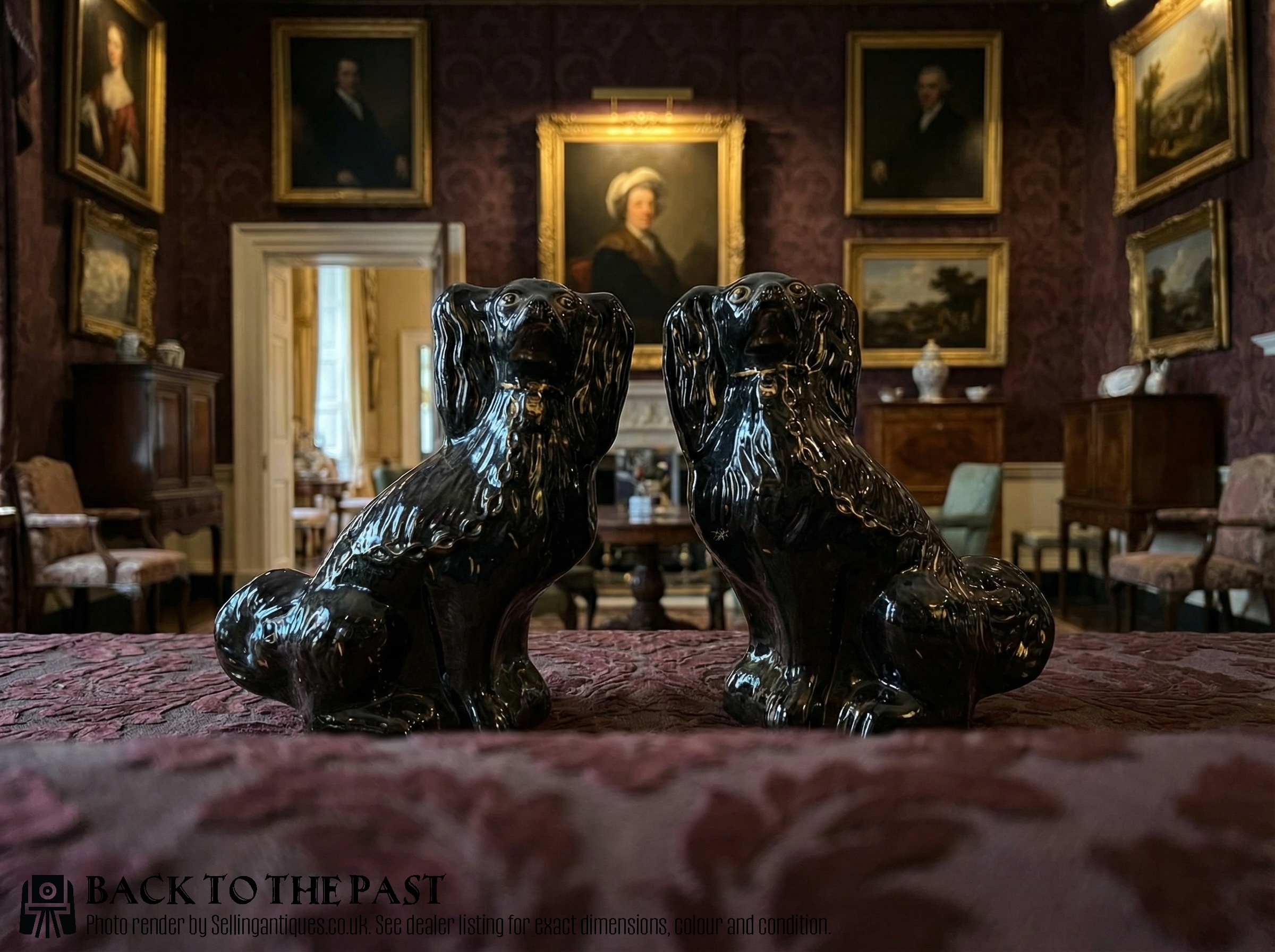
Staffordshire Mantel Dogs
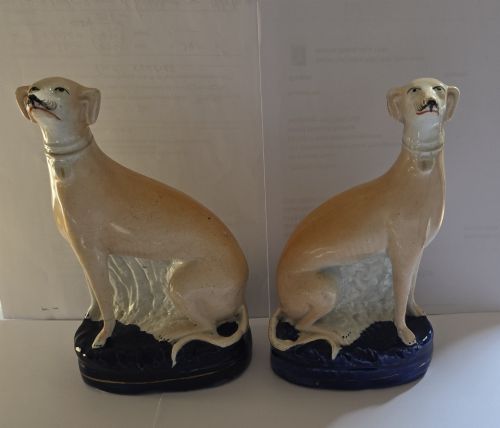
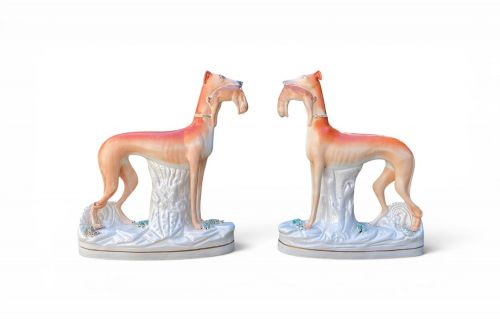
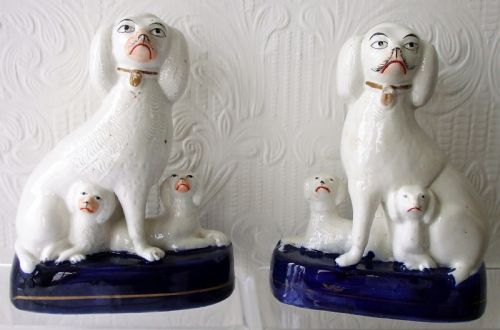
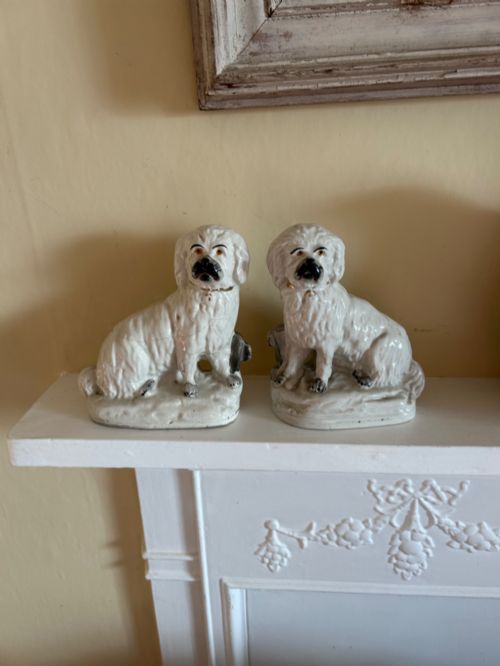
Staffordshire mantel dogs are decorative ceramic figures modelled as canine companions, designed specifically to adorn nineteenth-century fireplace mantels. The pieces collected under this phrase encompass matched pairs of seated spaniels and whippets dating from the Victorian era.
The versions most commonly met on this page are Victorian pairs produced across the middle and late nineteenth century, notably from the eighteen-sixties through to eighteen-eighty. These earthenware figures typically portray seated dogs facing inward toward each other as a symmetrical pair.
Makers shaped these decorative objects as spaniels and whippet dogs, sometimes finished with distinctive red and white colourways or back spaniel markings. They survive as decorative figurines that capture the domestic taste of the period.
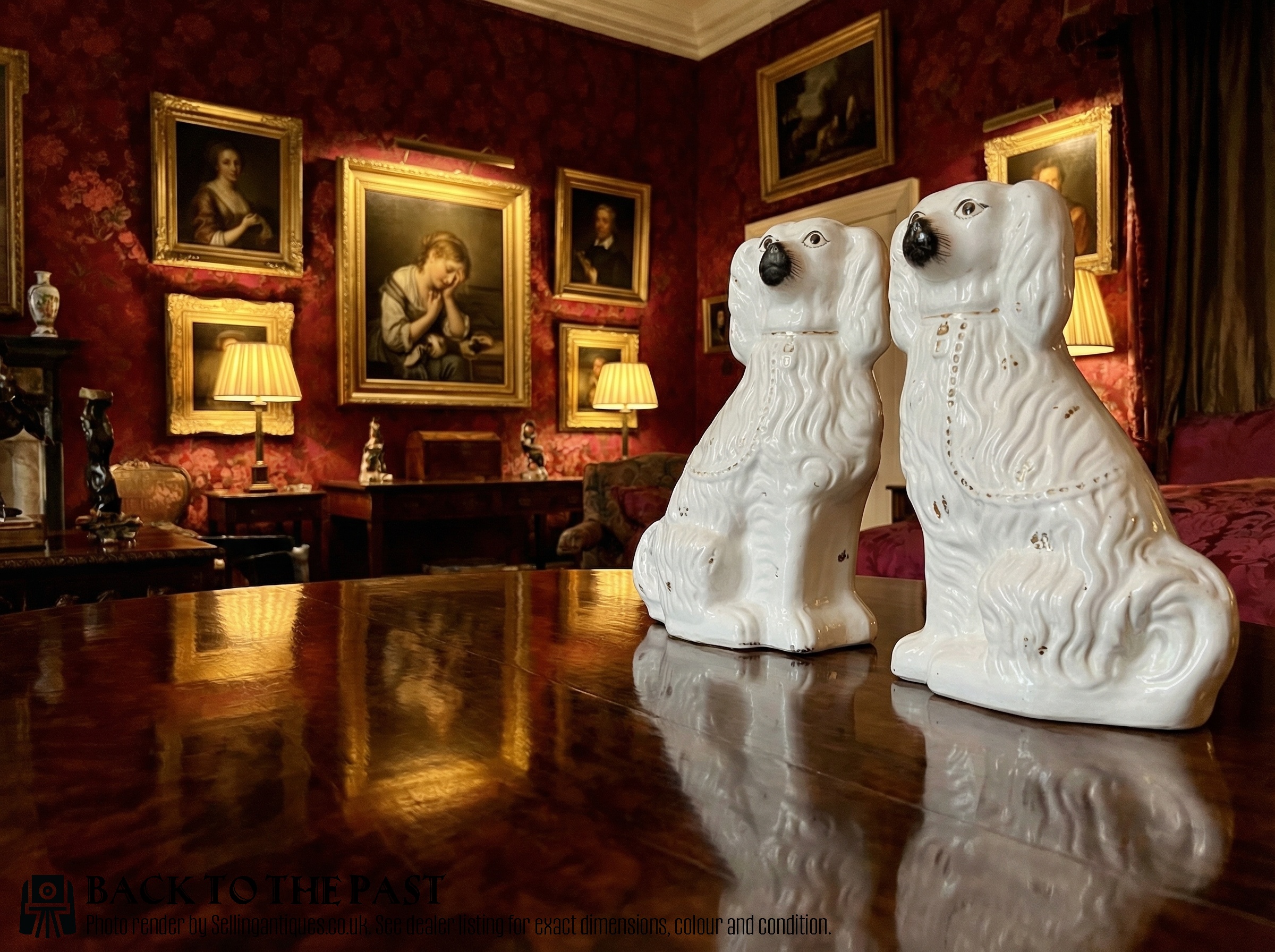
How they were made
Potters constructed these nineteenth-century figures using earthenware clay, forming the ceramic bodies through moulding techniques suited to mass production. Artisans then applied a lead glaze over the ceramic base to seal the porous material and provide a smooth, glossy surface.
Staffordshire Mantel Dogs Retail Price Guide 2026
Typical asking prices for staffordshire mantel dogs among the pieces listed under this phrase on Sellingantiques today, from the lower quarter to the upper quarter. They describe what is for sale here now, not the wider market.
Many pairs feature gilt chains painted directly onto their ceramic necks, keeping the porcelain hounds permanently leashed to the mantelpiece.
What varies in quality
Quality in these ceramic figures rests upon the crispness of the moulding and the delicacy of the hand-painted details. Finer examples display cleanly rendered facial expressions and precisely applied gilt paint that remains bright against the glaze.
The depth and consistency of the lead glaze further distinguish superior pieces, along with the successful preservation of the enamel colours across the ceramic surface. Matched pairs that retain their original opposing stance demonstrate greater visual harmony than mismatched survivors.
The Staffordshire Mantel Dogs Glossary
- Earthenware
- A porous type of pottery fired at lower temperatures, commonly used for nineteenth-century figurines before being sealed with a glaze. This ceramic body forms the structural base of the figures.
- Lead glaze
- A glossy coating containing lead oxide applied to pottery to give a smooth, waterproof finish. It provides the characteristic sheen found on Victorian ceramic pieces.
- Enamel
- Opaque glass-like paint applied over the fired glaze to add colour and pattern to ceramic objects. Artisans used this pigment for the spots and markings on the dogs.
- Gilt paint
- A gold-coloured metallic finish used to highlight decorative elements such as collars and lockets. This paint adds ornamental brightness to the ceramic surface.
- Figurine
- A small carved or moulded model representing a human or animal figure. These decorative objects were standard ornaments in Victorian parlours.
Staffordshire Mantel Dogs: Frequently Asked Questions
Where were Staffordshire mantel dogs displayed?
These ceramic figures were traditionally placed upon the mantelpiece above a fireplace in Victorian homes, usually arranged as a pair facing each other.
Their symmetrical design allowed them to anchor either end of the mantel shelf, framing the hearth as domestic ornaments.
How do I identify Victorian Staffordshire dogs?
Look for the characteristic earthenware body beneath a glossy lead glaze, combined with hand-painted enamel markings and gilt accents.
Most period examples depict seated spaniels or whippets modelled in distinct pairs that date from the nineteenth century.
Are these dogs always found in pairs?
Many surviving examples are matched pairs designed to sit facing one another on a shelf or mantelpiece.
Individual figures do exist, though collectors often seek the complete paired set to maintain their original decorative symmetry.
What breeds are represented in these figures?
The listings predominantly feature spaniels and whippets modelled in various sizes and colourways, such as red and white.
These particular canine subjects reflected the popular domestic pets and sporting animals favoured during the Victorian era.