


Victorian Ceramic Dog Ornaments
Victorian ceramic dog ornaments bring character to a mantelpiece, offering the traditional pairs and individual figures that defined nineteenth-century domestic interiors.
Victorian Ceramic Dog Ornaments
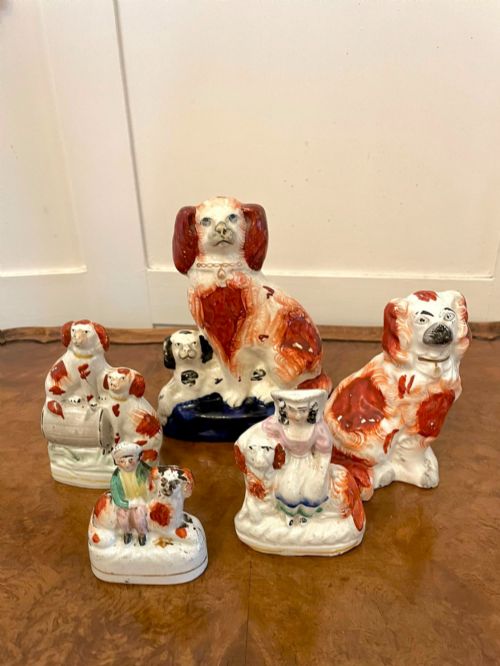
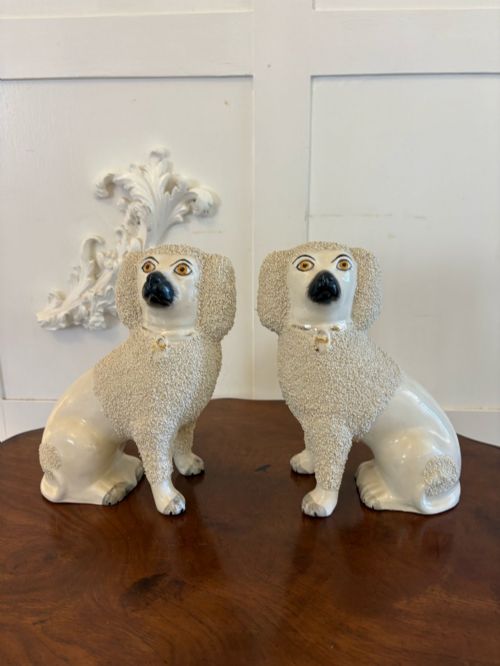
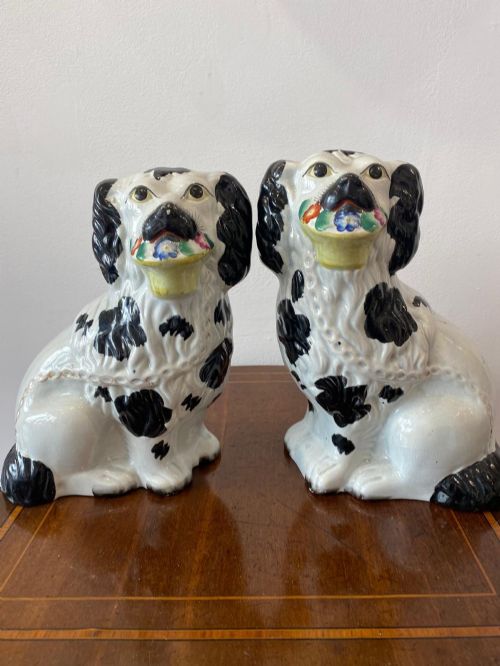
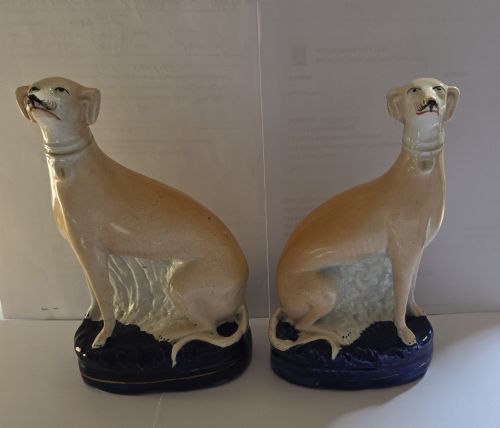
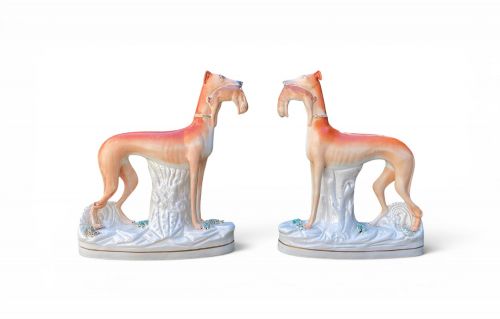
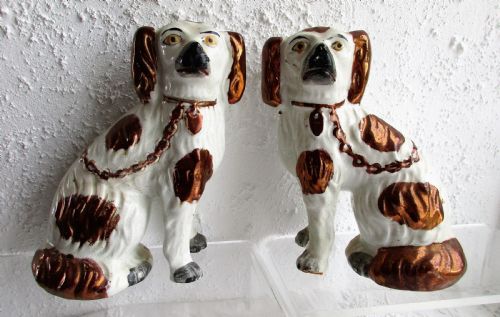
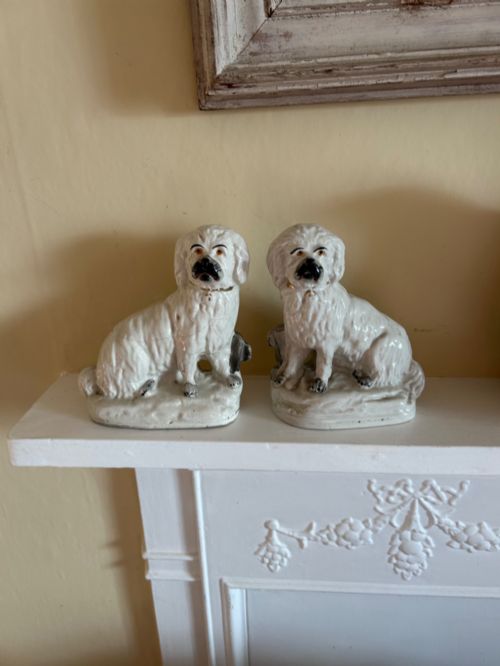
Victorian ceramic dog ornaments encompass earthenware and pottery figures produced across the nineteenth century, capturing popular breeds like spaniels, poodles, greyhounds, and pugs. Buyers seeking these pieces frequently encounter matched pairs designed to sit either side of a fireplace or on a sideboard.
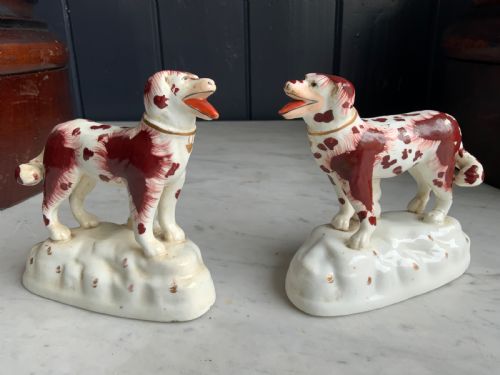
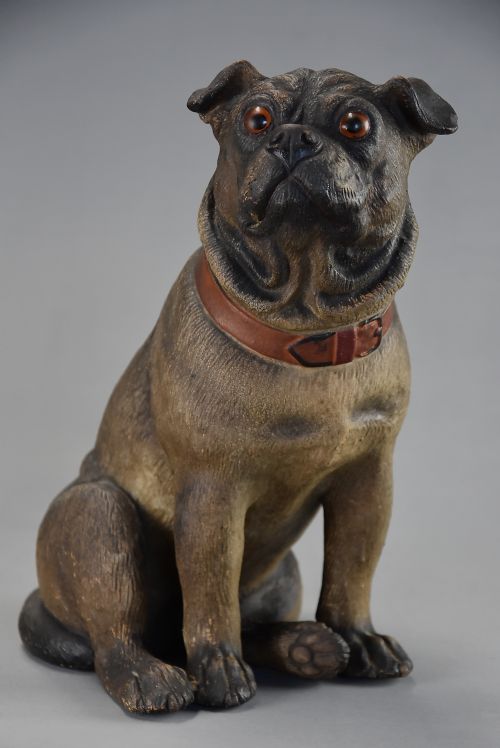
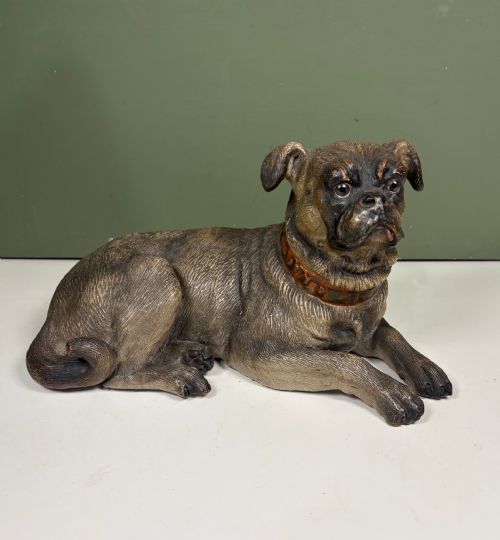
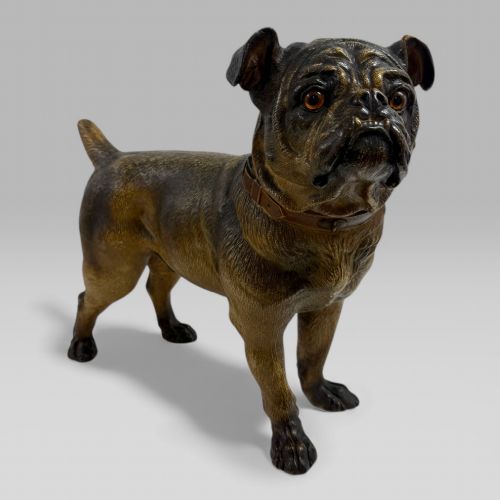
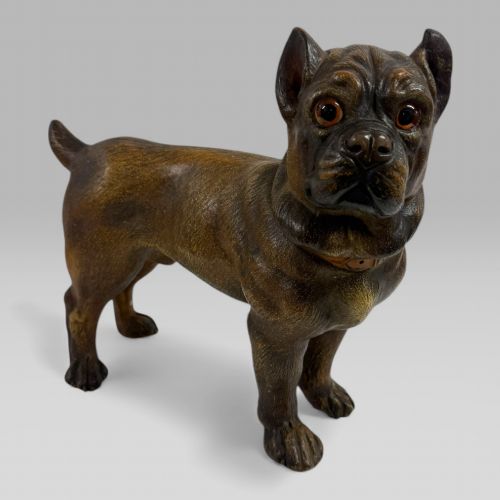
The selection ranges from Staffordshire earthenware spaniels and whippets to Austrian terracotta sculptures and German porcelain lamps. Most examples date from the middle to late decades of the nineteenth century, reflecting the Victorian fondness for animal subjects in domestic decor.
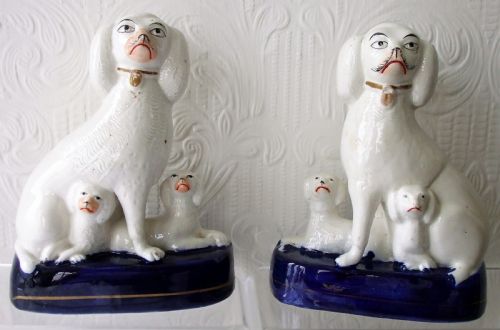
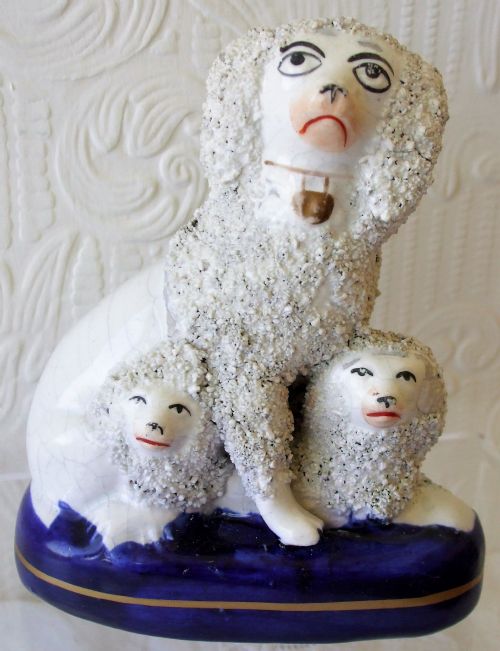
Alongside standard mantel ornaments, the category includes functional items such as quill holders and figure groups depicting poodles with pups. These variations demonstrate the breadth of pottery production during the period, spanning country pottery workshops and larger factories.
Materials and production techniques
Potters shaped these figures primarily from earthenware and terracotta, employing moulds to achieve consistent forms for popular dog breeds. Lead glaze was applied to surfaces to provide a protective sheen, whilst enamel colours and gold leaf added decorative detail to collars, eyes, and markings.
Firing techniques varied from simple earthenware kilns producing rustic country pottery to porcelain and stoneware manufacturing processes. Artisans hand-painted details onto the glazed surfaces, ensuring that each pair retained distinct facial expressions and markings despite the use of production moulds.
Comforter spaniels supposedly brought psychological warmth to Victorian hearths, quietly guarding mantelpieces without needing a walk.
Distinguishing quality in dog ornaments
The weight and stability of the ceramic body, alongside the depth of the lead glaze, dictate the overall durability and finish of the piece. Well-preserved painted surfaces without excessive rubbing indicate careful handling and superior initial firing.
Thomas Parr·Wooley
The Victorian Ceramic Dog Ornaments Glossary
- Staffordshire pottery
- Earthenware figures produced by numerous factories and potteries in the Staffordshire region of England. These works formed the backbone of nineteenth-century chimney ornamentation.
- Lead glaze
- A glossy coating containing lead oxide applied to pottery before firing. It gives the ceramic surface its characteristic smooth and reflective sheen.
- Terracotta
- Unglazed or lightly glazed fired clay of a brownish-red colour. Austrian workshops utilised this material for life-size dog sculptures and detailed figures.
- Enamel
- Opaque glass-like pigments fused to the ceramic surface during a secondary low-temperature firing. Artisans used enamel to render the spots, patches, and facial markings on the animals.
- Quill holder
- A desk accessory formed as an animal figure with specific depressions or troughs designed to hold writing feathers. These combine decorative animal sculpture with functional desk utility.
Victorian Ceramic Dog Ornaments: Frequently Asked Questions
Where were Victorian ceramic dog ornaments displayed?
Owners typically placed pairs of Staffordshire spaniels or poodles on mantelpieces above fireplaces in the parlour or drawing room. They were arranged symmetrically to flank the central clock or ornaments.
Smaller figures and desk accessories found places on writing tables and sideboards. Their presence reflected domestic respectability and a fondness for household pets during the nineteenth century.
Why are most Victorian dog ornaments found in pairs?
Potters manufactured these figures in matched pairs intended to sit at opposite ends of a mantelpiece or shelf. Symmetry was a central principle of Victorian interior decoration.
Left-facing and right-facing moulds were used to create mirror-image dogs for this balanced arrangement. Single surviving dogs usually indicate that the companion piece was broken or separated over time.
How can I identify a Staffordshire spaniel?
Staffordshire spaniels typically represent King Charles spaniels, characterised by drooping ears, tan patches, and a solemn expression. They frequently wear a collar and chain painted in gold leaf or copper lustre.
These figures appear in various sizes, ranging from small mantel ornaments to larger seated pairs. Their earthenware bodies are covered in a clear lead glaze over white or coloured enamel grounds.
What is the difference between earthenware and terracotta figures?
Earthenware involves a porous clay body fired at lower temperatures and finished with a glossy lead glaze and painted enamels. Staffordshire dog ornaments are almost exclusively made from this material.
Terracotta uses a coarser brownish-red clay left unglazed or finished with minimal surface treatment, allowing the natural warm tone of the fired earth to show. Austrian workshops favoured terracotta for larger-scale and life-size dog sculptures.