
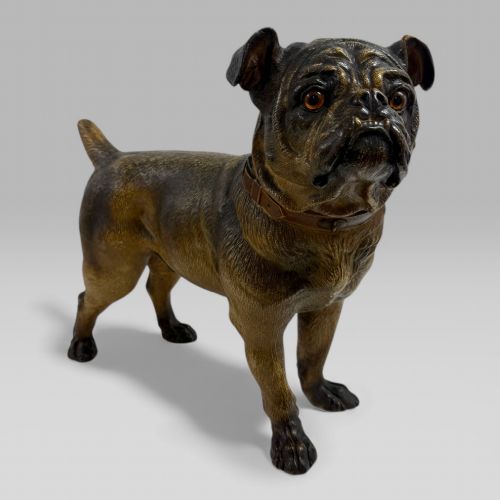
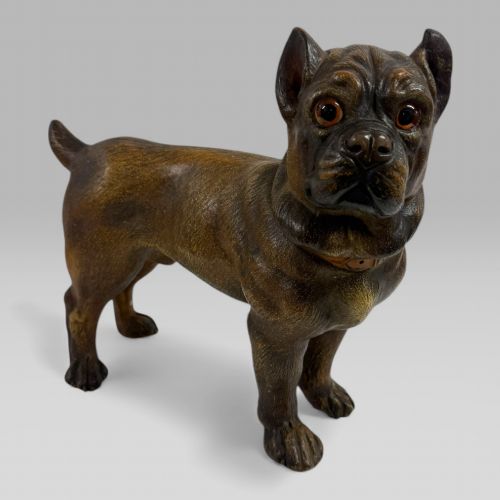


Antique Terracotta Ceramic Dogs
Antique terracotta ceramic dogs are sculptural figures and decorative ornaments that bring character and history into a room.
Antique Terracotta Ceramic Dogs
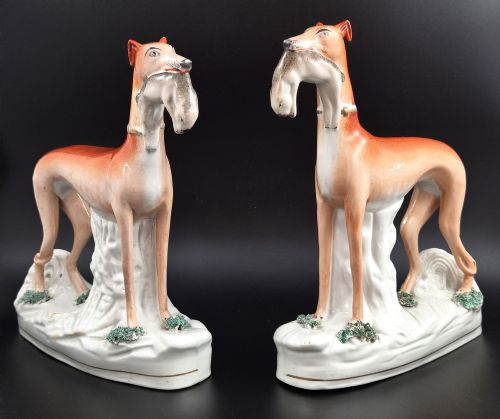
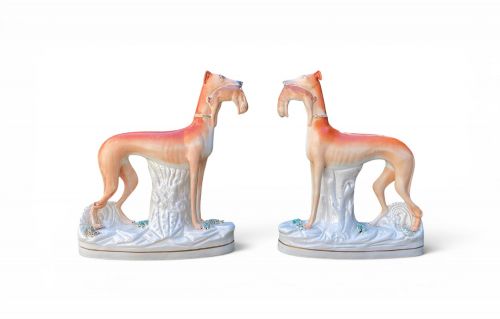
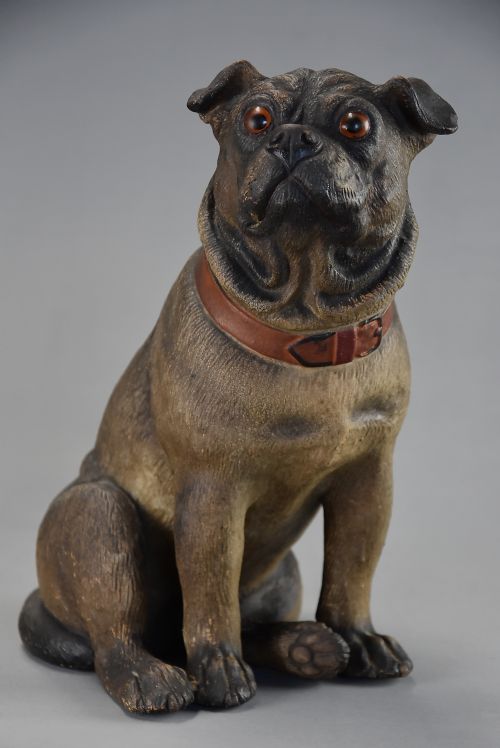
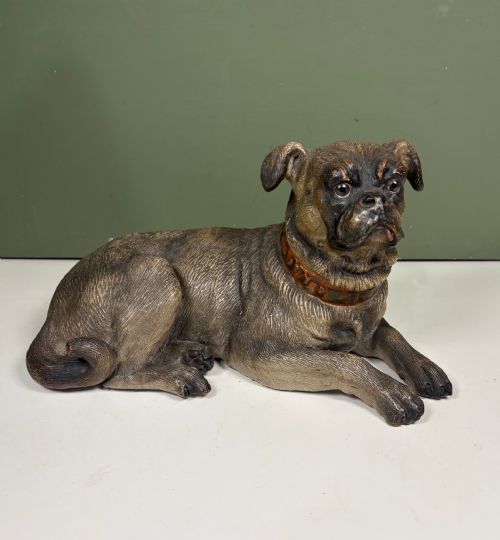
Antique terracotta ceramic dogs encompass a variety of sculptural forms, including seated pugs, greyhounds with hares, whippet quill holders, and spaniels. These pieces originate from the nineteenth century, capturing Victorian and Art Nouveau sensibilities across English, French, and Austrian workshops.
Buyers exploring this selection will most frequently encounter nineteenth-century Staffordshire pottery figures, alongside larger Austrian terracotta sculptures. Pairs of greyhounds and spaniels dominate the domestic offerings, reflecting popular household subjects of the Victorian era.
How they were made
Makers shaped these antique terracotta ceramic dogs using moulded earthenware and terracotta, often applying a lead glaze or enamel paint to finish the surface. Some iterations incorporate finer details through added glass, gold leaf, or painted decoration upon the ceramic body.
Production methods ranged from mass-produced Staffordshire pottery figures to detailed life-size Austrian terracotta sculptures. Artisans utilised traditional ceramic techniques to fire the clay before applying surface finishes such as glazes and enamels.
What varies in quality
The distinction between standard commercial pieces and finer works lies in the subtlety of the modelling and the precision of the hand-painted decoration. Sculptures signed by known makers or originating from notable Austrian and French foundries demonstrate superior anatomical definition and character.
Larger life-size sculptures and detailed pairings display a higher level of artistic ambition than smaller decorative ornaments. The preservation of original painted surfaces, gold leaf, and lead glazes also influences the standing of individual pieces.
Thomas Parr·Bernard Bloch·Royal Dux
The Antique Terracotta Ceramic Dogs Glossary
- Terracotta
- A porous fired clay used for sculptural figures and ornaments. It forms the primary medium for many nineteenth-century animalier sculptures.
- Earthenware
- A type of pottery fired at lower temperatures, remaining porous until glazed. Staffordshire dogs and similar figures are typically formed from this material.
- Animalier
- A nineteenth-century artistic style focusing on realistic depictions of animals. French and Austrian workshops frequently applied this approach to terracotta dog sculptures.
- Staffordshire pottery
- Ceramics produced in the Staffordshire region of England, famous for domestic mantelpiece figures. Spaniels and greyhounds are classic examples of this tradition.
- Lead glaze
- A glossy coating applied to pottery before firing to seal the porous clay body. It imparts a shiny protective finish to earthenware figures.
Antique Terracotta Ceramic Dogs: Frequently Asked Questions
Where were antique terracotta ceramic dogs displayed?
These figures typically sat on mantelpieces, sideboards, or desks within nineteenth-century homes. Pairs of spaniels and greyhounds often flanked fireplaces as decorative ornaments.
Smaller pieces like whippet quill holders served a functional purpose on writing desks while maintaining a decorative appearance.
How do I identify a Staffordshire dog?
Staffordshire dogs are usually earthenware figures modelled as spaniels or greyhounds, often produced in pairs. They date primarily from the nineteenth century and feature hand-painted details or lead glazes.
Many of these pieces were made as facing pairs to sit symmetrically on mantelpieces. The modelling style is typically sturdier and more folk-art in character than continental terracotta sculptures.
Are life-size terracotta dogs rare?
Life-size terracotta dog sculptures, particularly Austrian and French pieces from the nineteenth century, were produced in smaller quantities than domestic mantelpiece figures. Their scale required specialised kilns and skilled modelling.
These larger sculptures often depict pugs or guarding dogs and were intended as substantial decorative accents for hallways or garden rooms.
How should I care for ceramic dogs?
Keep these pieces away from areas of high moisture or fluctuating temperatures to protect the porous terracotta and earthenware bodies. Dust them gently with a soft, dry cloth rather than using liquid cleaners.
Painted surfaces and gold leaf details require particular care to prevent flaking or abrasion over time.