
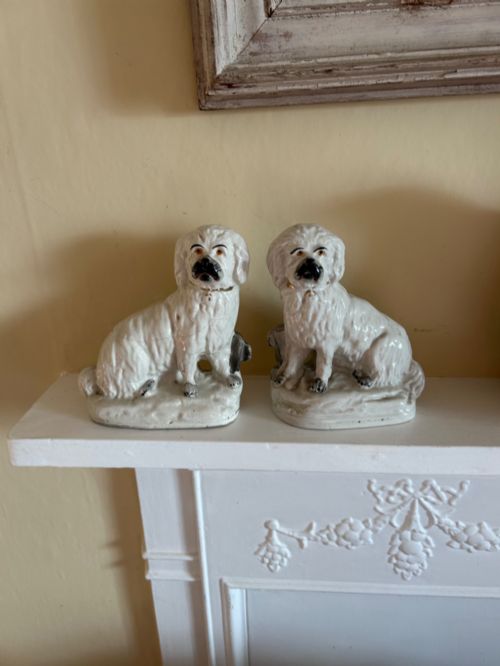


Earthenware Dog Ornament Pair
An earthenware dog ornament pair brings character to a mantelpiece, offering the traditional appeal of nineteenth-century Staffordshire figures.
Earthenware Dog Ornament Pair
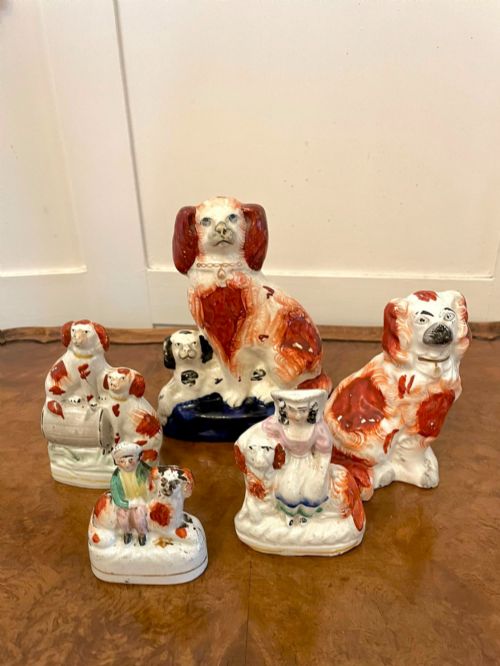
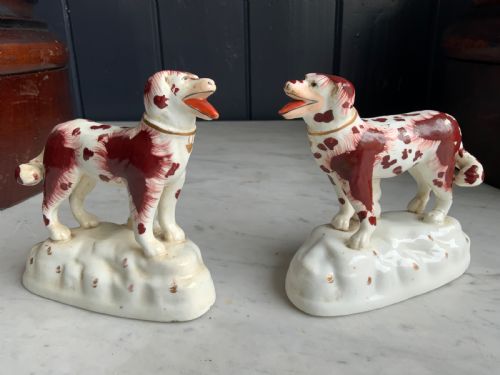
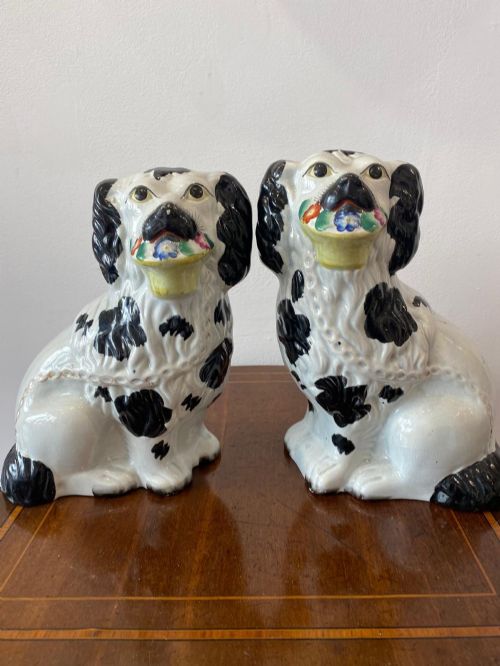
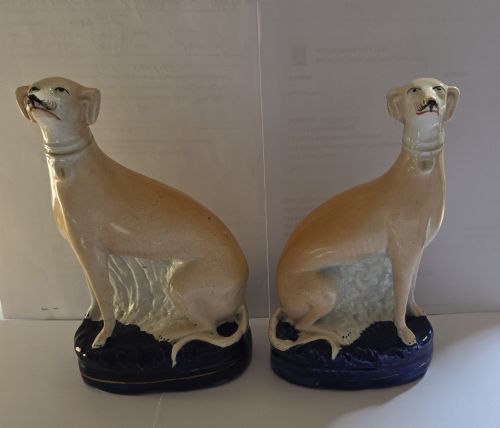
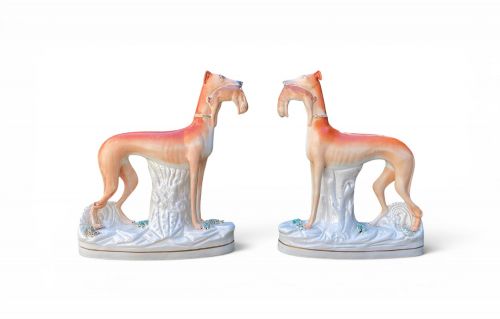
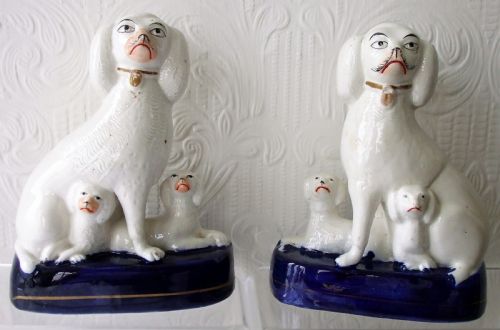
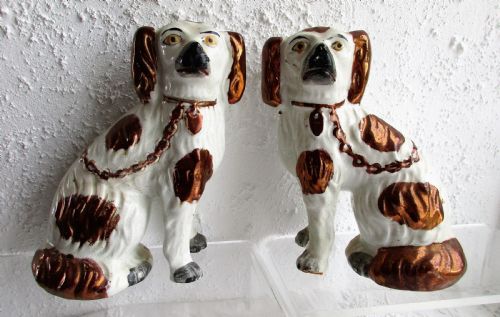
An earthenware dog ornament pair typically takes the form of seated spaniels, poodles, greyhounds, whippets, pugs, or Maltese terriers. These figures trace back to the nineteenth century, with Victorian examples dominating the current selections.
Makers produced these decorative pottery figures in matched configurations designed to sit on either end of a fireplace mantel or shelf. The spaniels, often known as comforter spaniels, appear alongside hunting dogs and smaller miniature poodles.
The objects span periods from the Regency era through to nineteen hundred, encompassing Victorian country pottery and English traditional styles. Most examples rely on moulded earthenware ceramic bodies decorated with hand-painted enamel and glaze.
Materials and methods
Potters shaped these figures from earthenware ceramic, often utilising lead glaze to seal the porous clay body. The process involved press-moulding the dog forms in halves before joining them together prior to firing.
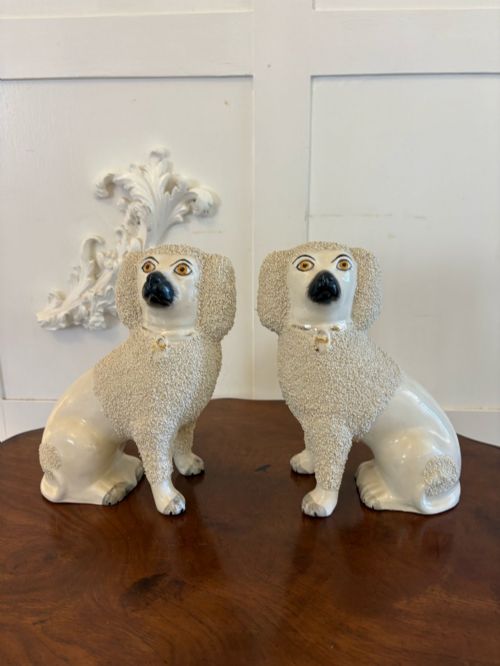
Surface decoration relied on enamel colours and gold leaf or gilt highlights applied over the fired glaze. Some specialised poodles incorporated applied clay work to simulate textured wool or hair.
Some poodles were made with textured wool work to mimic real curls.
Judging the quality
Size and scale also differentiate the range, with large pairs or unusual breeds such as whippets and greyhounds standing apart from standard spaniel pairs. Intricate decorative elements like blue cushions, encrusting, or accompanying pups elevate the standard of a pair.
Thomas Parr·Beswick
The Earthenware Dog Ornament Pair Glossary
- Earthenware
- A porous type of pottery fired at lower temperatures, commonly used for nineteenth-century figures. It requires a glaze to hold liquids and provide a smooth surface.
- Lead glaze
- A glossy coating containing lead oxide applied to ceramic bodies before firing. This produces a shiny finish characteristic of Victorian pottery.
- Enamel
- Opaque glass-like paint applied over the fired glaze to add colour to pottery figures. It sits on the surface rather than fusing into the clay.
- Staffordshire figures
- Ornamental ceramic pieces produced in the pottery towns of Staffordshire. They include popular animal subjects, people, and buildings from the Victorian period.
Earthenware Dog Ornament Pair: Frequently Asked Questions
What are Staffordshire dog pairs?
These decorative ceramic figures represent various canine breeds produced in nineteenth-century Staffordshire potteries. They were modelled as matched pairs intended for domestic display.
Most feature seated dogs decorated with enamel colours, sometimes including metallic gilt highlights or modelled bases.
How were these ornaments displayed?
Victorian households traditionally placed these ceramic dogs on either end of a mantelpiece above a fireplace. They faced inward toward each other as decorative furnishings.
Some variations also functioned as practical items, such as quill holders or inkwells modelled in the shape of greyhounds.
How do I identify Victorian periods?
Dating relies on stylistic clues, ceramic bodies, and the type of glaze or enamel used by the potteries. Nineteenth-century examples often display specific moulding techniques and hand-painted details typical of the era.
Later Victorian pieces from around eighteen eighty show distinct variations in scale and surface decoration compared to earlier Regency or eighteen fifty figures.
What breeds appear most often?
Spaniels, commonly referred to as comforter spaniels, form the largest group among these antique ceramic pairs. Poodles and greyhounds also appear frequently in the listings.
Less common variations include whippets, pugs, Maltese terriers, and poodles accompanied by small pups.