


Victorian Greyhound Pottery Pair
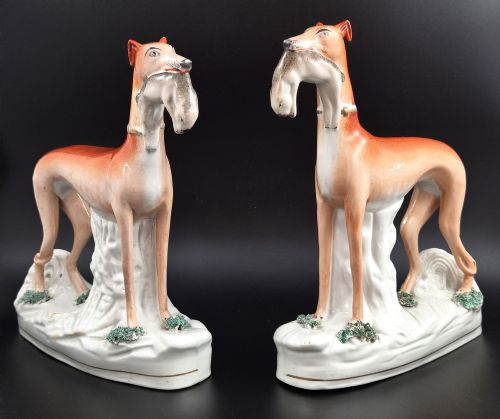
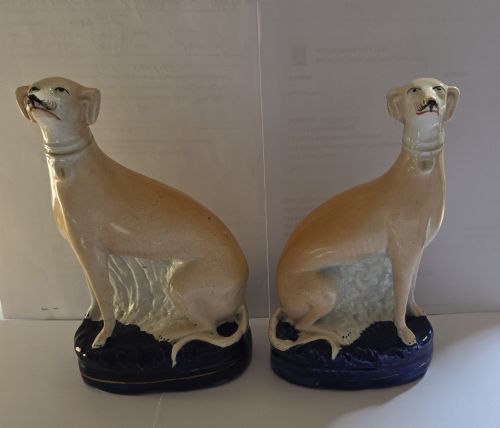
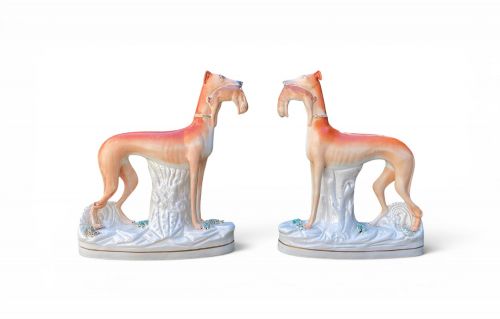
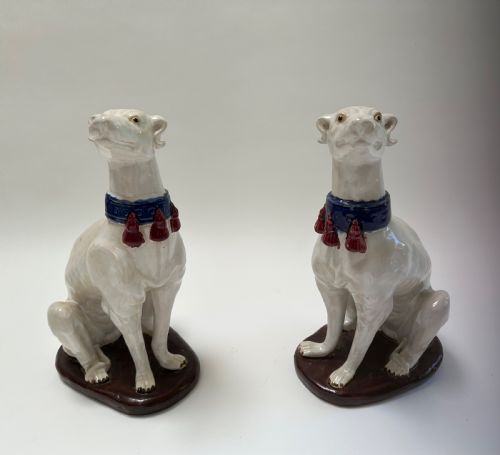
These Victorian greyhound pottery pair pieces are delightful ceramic figures that bring character to a mantelpiece.
Victorian Greyhound Pottery Pair
A victorian greyhound pottery pair comprises matching ceramic mantel ornaments modelled as seated hounds, often accompanied by hares or serving practical functions like inkwells and quill holders.
Most examples found here hail from the Victorian period, spanning the mid to late nineteenth century with styles encompassing traditional Staffordshire country pottery and Italian Majolica.
Collectors generally encounter these animals paired as mirror images for symmetrical fireplace display, showcasing the era's fondness for domestic animal sculpture.
Materials and Manufacture
Potters shaped these figures from earthenware, employing lead glaze and tin-glazed earthenware finishes to seal the ceramic body before firing.
Current listings feature earthenware materials across Victorian periods, incorporating functional inkwells and quill holders alongside decorative figures.
Markers of Quality
The distinction between standard figures and superior pieces rests on the crispness of the modelling in the hound's musculature and the delicacy of the hand-painted enamel decoration.
Pairs featuring functional elements such as inkwells or quill holders often demonstrate more intricate moulding to accommodate their dual purpose.
Thomas Parr
The Victorian Greyhound Pottery Pair Glossary
- Earthenware
- A porous pottery fired at lower temperatures which requires glazing to become watertight. It forms the standard ceramic body for these nineteenth-century figures.
- Staffordshire
- A generic term for pottery manufactured in the industrial region of Staffordshire. The potteries there produced vast quantities of animal figures for domestic display.
- Quill Holder
- A desk accessory designed to hold writing feathers. These models incorporate a hollow trough or stand alongside the seated hound.
- Majolica
- A tin-glazed earthenware featuring colourful low-fire glazes. Italian interpretations bring a distinct Mediterranean palette to the subject.
Victorian Greyhound Pottery Pair: Frequently Asked Questions
What were greyhound figures used for?
These ceramic animals served primarily as decorative ornaments for the Victorian mantelpiece, displayed in symmetrical pairs to flank a clock or garniture set.
Some iterations doubled as functional desk accessories, incorporating inkwells or quill holders for use in the study.
How do I date these pottery pairs?
Dating relies on stylistic clues, glaze characteristics and manufacturing techniques typical of the nineteenth century. Mid-century examples often exhibit simpler hand-painting compared to later Victorian pieces.
Reference points include the presence of modelled hares at the base and specific backstamps or attributed makers where applicable.
Are whippets and greyhounds different?
Victorian potters frequently used terms for slender hounds interchangeably, depicting both greyhounds and whippets in seated postures. The sculptures generally capture the sleek silhouette characteristic of sighthounds.
Distinctions in the titles usually reflect the specific proportions modelled by the pottery rather than strict canine taxonomy.
How should I display them?
Position the pair facing inward toward each other to maintain visual balance on a shelf, mantel or side table. Placing them away from direct sunlight preserves the vibrant enamel paint.
Ensure they rest on a stable surface, as these ceramic pieces are top-heavy when modelled with extended bases.