
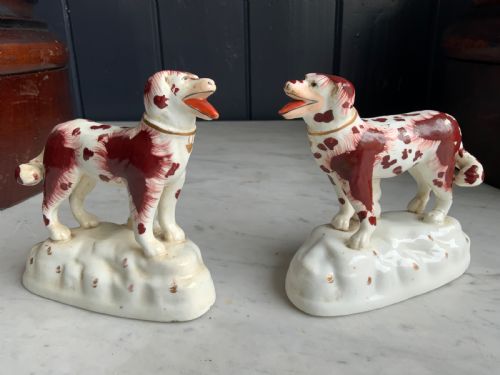


Antique Mantle Dogs
These antique mantle dogs bring undeniable character and period charm to a room, ranging from Staffordshire pottery to French bronze sculpture.
Antique Mantle Dogs
When searching for antique mantle dogs, collectors encounter a diverse array of decorative figures, from traditional pottery spaniels to French bronze sculptures and marble table lamps.
The selections span the nineteenth century into the 1930s, encompassing Victorian Staffordshire earthenware pairs alongside Art Deco bronze borzois and greyhounds.
Most commonly, buyers find ceramic figures and spaniels designed specifically to sit upon a mantelpiece, often modelled as seated pairs with hand-painted details or glass eyes.
Materials and construction
Pottery and earthenware bodies form the foundation of traditional Staffordshire figures, finished with hand-painted glazes, enamel touches, and occasional moulded encrusting.
Higher-end sculptural pieces utilise cast bronze, sometimes accented with gilt work or mounted onto heavy marble bases, while other variations combine brass and glass components.
Listings feature earthenware, porcelain, bronze, and marble across Victorian and Art Deco periods.
Judging quality and character
In bronze and metal works, the crispness of the chasing, the quality of the patination, and the integration of marble plinths determine the overall standard of the piece.
The Antique Mantle Dogs Glossary
- Staffordshire
- A broad term for pottery and earthenware figures produced in the Staffordshire potteries, famous for pairs of spaniels and greyhounds.
- Animalier
- A nineteenth-century artistic style focusing on the realistic depiction of animals, frequently seen in bronze sculptures of hounds.
- Earthenware
- A porous pottery body fired at lower temperatures, typically coated in an opaque glaze before being hand-painted.
- Gilt bronze
- Metal cast in bronze and treated with a gold wash or leaf to create a bright, decorative surface finish.
Antique Mantle Dogs: Frequently Asked Questions
How do I display antique mantle dogs?
Pairs of ceramic spaniels or greyhounds look best arranged symmetrically at either end of a fireplace mantelpiece, echoing traditional Victorian interior placement.
Heavier bronze sculptures or marble table lamps work equally well on side tables or deep windowsills where light catches the metal surface.
What periods do these dogs come from?
The pieces span from the Regency era and mid-nineteenth-century Victorian period through to later Art Deco designs of the 1930s.
Staffordshire earthenware models often date to the late nineteenth century, while bronze hounds and marble-mounted figural groups frequently reflect French manufacturing of the 1860s and 1930s.
Are these figures sold as pairs?
Many ceramic spaniels, poodles, and greyhounds are offered as matched pairs intended to sit symmetrically on display.
Other items, such as bronze sculptures or table lamps, are individual decorative works rather than paired ornaments.
How do I clean antique ceramic dogs?
Dust pottery and earthenware gently with a dry, soft brush to protect delicate hand-painted enamel details and glaze surfaces.
Avoid using harsh chemical cleaners or submerging older ceramic figures in water, as moisture can penetrate hairline cracks in the glaze.