




Ceramic Poodle Figurines
Ceramic poodle figurines are charming Victorian Staffordshire pieces that bring character and playful sculptural detail to any traditional mantelpiece or cabinet.
Ceramic Poodle Figurines
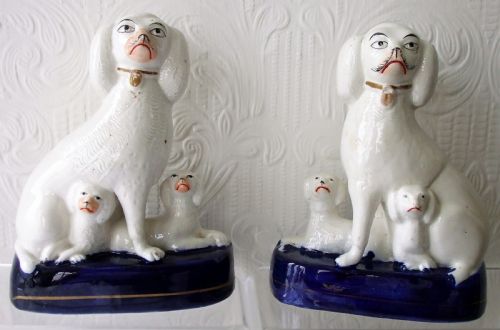
Ceramic poodle figurines capture the Victorian fascination with animal subjects, appearing most frequently as pairs of modelled dogs. These figures often include accompanying pups, baskets, or clock group settings.
The objects span the nineteenth century, including examples from around eighteen-forty-five and eighteen-sixty, alongside miniatures. Makers produced these decorative figures to sit on mantels and display shelves in homes across Britain.
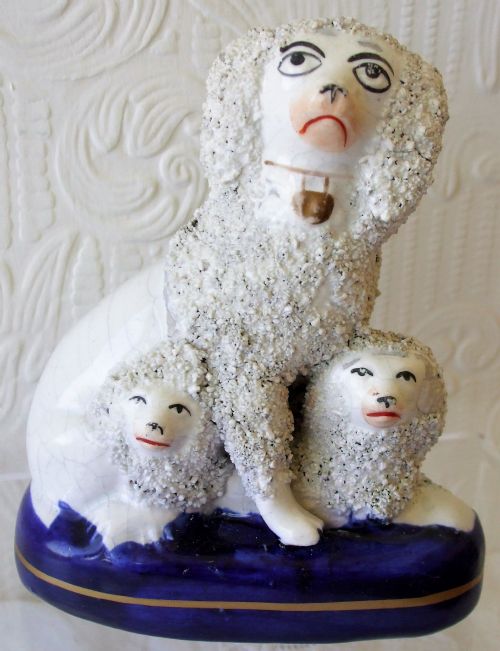
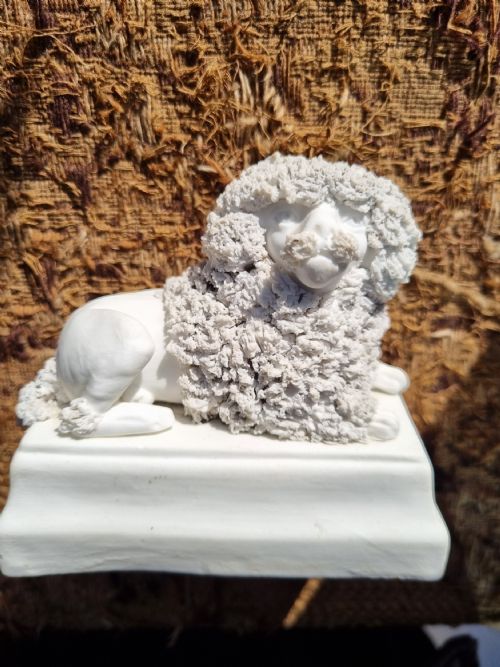
Buyers searching for ceramic poodle figurines will encounter both white bisque finishes and glazed earthenware versions. Many pieces display the distinctive textured clay work used to represent woolly coats.
Materials and methods
Makers added textured details such as clay encrusting to imitate the characteristic curls of a poodle coat. Select pieces incorporate gold leaf or gilt highlights to accent collars, baskets, and facial details.
Object types recorded include decorative figurines, quill holders, and clock groups from the Victorian period.
Judging quality and character
Quality in these figures rests on the crispness of the modelled wool work and the precision of the hand-painted enamels. Finer examples display detailed facial expressions and well-defined paws rather than soft, muddy moulding.
Completeness alters the appeal of a pair, particularly when dealing with miniature models or figures accompanied by pups. The crispness of the original gilt and enamel highlights further separates standard production from superior output.
James Dudson
The Ceramic Poodle Figurines Glossary
- Bisque
- Unglazed ceramic pottery that has been fired once, offering a matte white surface texture. This finish highlights the pure modelling of the clay form.
- Staffordshire pottery
- Ceramics produced in the Staffordshire potteries region of England during the Victorian era and earlier. The term covers a wide range of popular figures and animals.
- Earthenware
- Porous pottery fired at lower temperatures and finished with an impermeable glaze. This material formed the standard body for nineteenth-century decorative figures.
- Enamel
- Vitreous coloured decoration applied over the glaze and fired again to fix the pigments. It provides the bright hues seen on collars and eyes.
- Gilt
- A thin layer of gold applied to the ceramic surface to add decorative highlights. It commonly catches the light on collars or base lines.
Ceramic Poodle Figurines: Frequently Asked Questions
What periods do these figures come from?
The pieces originate primarily from the nineteenth century, spanning the Victorian era from the mid to late decades. Production dates often cluster around eighteen-sixty and earlier mid-century periods.
Potters maintained similar styles across decades, making precise dating reliant on modelling techniques and material characteristics.
Are these figures usually found in pairs?
Many examples survive as matching pairs intended to sit symmetrically on either side of a fireplace or shelf. Single figures and groupings involving clocks or baskets also appear.
Pairs often feature mirrored poses with poodles turned toward one another.
What is woolly pottery?
Woolly pottery refers to a specific Staffordshire technique where small pieces of clay are applied by hand to simulate curly fur. This method creates the tactile, textured coat seen on many nineteenth-century poodle figures.
The density and neatness of these applied clay curls vary considerably across different workshops.
How should I display them at home?
These decorative objects suit traditional mantels, side tables, and enclosed display cabinets where they are protected from knocks. Placing pairs together maintains the original decorative intent of the Staffordshire modellers.
Keep them away from direct sunlight and areas of high moisture to preserve the enamel paints and gilt highlights.