


White Glazed Dog Statues
White glazed dog statues are characterful ceramic figures that bring domestic charm and period presence to a mantelpiece.
White Glazed Dog Statues
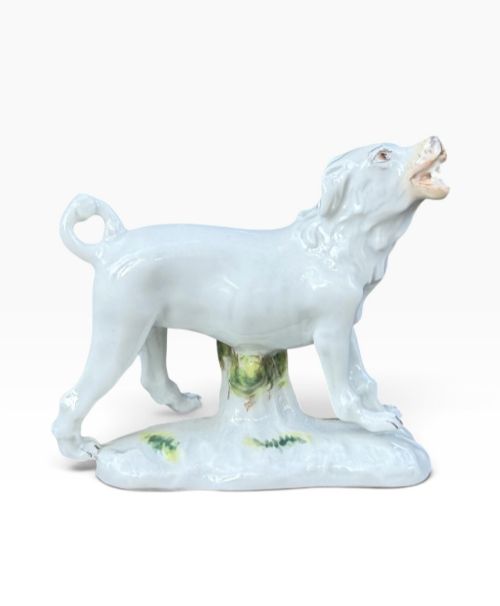
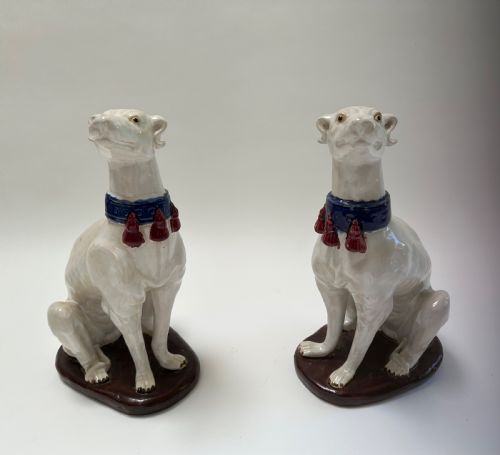
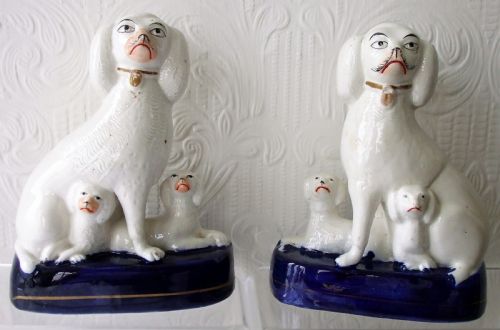
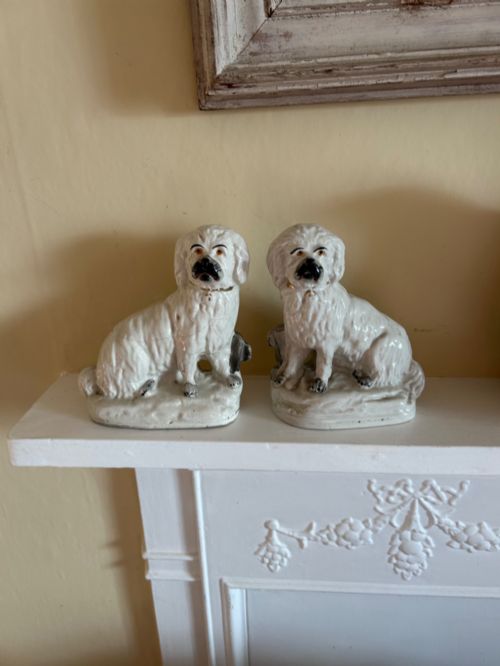
White glazed dog statues encompass a range of decorative figures produced across the nineteenth and early twentieth centuries. Buyers searching for white glazed dog statues will frequently encounter Staffordshire pottery poodles, spaniels, and maltese terriers alongside continental porcelain examples. These ceramic pieces include seated pairs, figures with pups, and larger sculptural representations made for display.
The selection on this page draws heavily from Victorian Staffordshire pottery traditions, featuring earthenware spaniels and poodles decorated with glaze and enamel. Alongside these English models appear German porcelain figures, Italian majolica, and Japanese Meiji period examples such as figures of Kannon on shishi. Forms range from miniature poodles to substantial seated spaniels.
How they were made
Certain examples integrate gilt or gold leaf accents upon the glazed surfaces to highlight collars or chains. Production methods span slip casting and press moulding depending on the pottery centre and the period of manufacture.
Several poodles arrive accompanied by tiny sculpted pups tucked faithfully beside them.
What varies in quality
Quality in white glazed dog statues rests primarily on the crispness of the modelling and the sensitivity of the hand-painted details. Finer figures display careful attention to anatomical form and facial expression rather than hasty mass production.
The consistency and application of the glaze also distinguish finer pieces, where smooth surfaces and neatly controlled enamel or gilt touches enhance the overall visual presence.
Meissen·Beswick
The White Glazed Dog Statues Glossary
- Staffordshire pottery
- Ceramic wares produced in the pottery towns of Staffordshire, England, famous for domestic animal figures. These popular earthenware ornaments were standard mantelpiece decoration in Victorian homes.
- Majolica
- Tin-glazed earthenware decorated with colourful metallic oxide glazes over an opaque white background. This technique produces vibrant surfaces seen in Italian decorative figures.
- Enamel
- Opaque glass-based colour applied over the glaze and fired to bond with the ceramic surface. It provides the facial markings and collar details on many animal figurines.
- Meiji
- A period in Japanese history spanning from 1868 to 1912 characterised by opening trade and refined porcelain production. Figures from this era often display intricate hand-painted decoration.
- Gilt
- A thin layer of gold or gold leaf applied to ceramic surfaces for decorative emphasis. It frequently highlights collars and lockets on nineteenth-century canine figures.
White Glazed Dog Statues: Frequently Asked Questions
What dog breeds appear most often?
Spaniels, poodles, and maltese terriers dominate the available Staffordshire and English pottery figures.
Pairs of seated spaniels and poodles with pups are particularly common among nineteenth-century examples.
How do I date a ceramic dog?
Dating relies on stylistic markers, base characteristics, and the type of glaze or enamel employed.
Victorian pieces often show crazing in the glaze and hand-painted details typical of nineteenth-century earthenware production.
Where were these figures displayed?
Owners traditionally placed these ceramic dogs on mantelpieces in pairs facing inwards toward the hearth.
They also served as decorative ornaments on sideboards and tables within Victorian parlours.
Are all white dogs Staffordshire?
While Staffordshire potters produced many of these animals, continental factories also manufactured porcelain equivalents.
German porcelain works and Italian majolica makers created distinct canine figures alongside Japanese Meiji period sculptures.