



Earthenware Poodle Ornaments
These earthenware poodle ornaments are nineteenth-century ceramic figures depicting poodles, designed to bring traditional domestic charm to Victorian mantelpieces.
Earthenware Poodle Ornaments
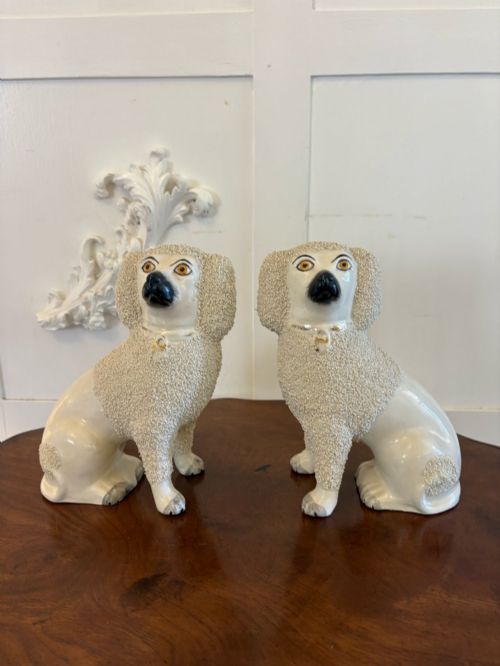
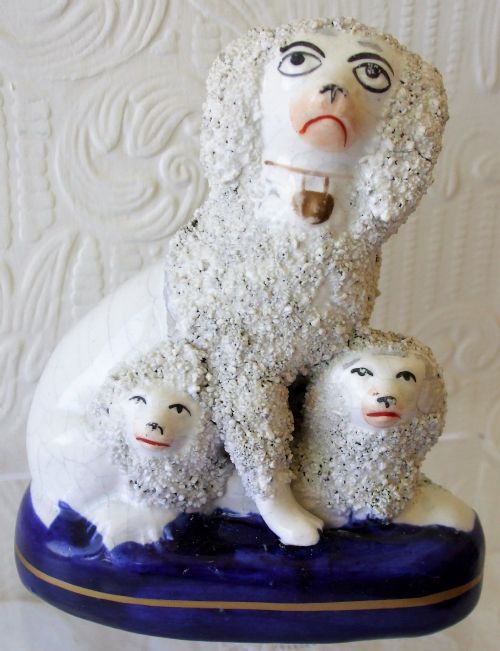
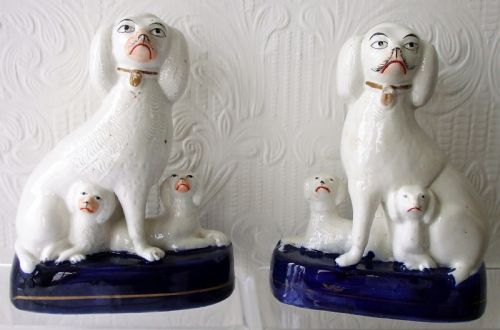
Earthenware poodle ornaments are nineteenth-century ceramic figures depicting poodles, frequently modelled as pairs or accompanied by pups. These decorative figurines often incorporate blue cushions or clock groups, reflecting popular Victorian parlour aesthetics.
The pieces listed on this page centre on nineteenth-century Victorian examples. Buyers will frequently encounter Staffordshire pottery traditions, including miniature poodles and woolly coated variants dating across the eighteen-forties to nineteen-hundred.
How they were made
Makers utilised earthenware and glazed pottery formed into figures, applying lead glaze and enamel colours. Artisans built up surface details using ceramic techniques suited to mass production in Staffordshire potteries.
Finishing touches often included gold leaf, gilt accents, and applied textures to represent woolly coats on the ceramic bodies. These materials combined to create durable ornamental figures designed for domestic display.
Earthenware Poodle Ornaments Retail Price Guide 2026
Typical asking prices for earthenware poodle ornaments among the pieces listed under this phrase on Sellingantiques today, from the lower quarter to the upper quarter. They describe what is for sale here now, not the wider market.
Listings span the nineteenth century and Victorian period, utilising earthenware, lead glaze, enamel, and gold leaf.
What varies in quality
The application of glaze and enamel decoration influences the visual appeal of each figurine. Pieces with cleanly executed gilt highlights and carefully preserved colours stand apart from simpler productions.
The Earthenware Poodle Ornaments Glossary
- Earthenware
- Porous pottery fired at lower temperatures than stoneware or porcelain. It forms the structural body for the vast majority of these Victorian figures.
- Staffordshire
- A major English pottery region known for producing large quantities of domestic ceramic figures during the nineteenth century. Most poodle ornaments originate from these kilns.
- Lead glaze
- A shiny coating applied to pottery before a final firing to seal the porous earthenware body. It gives these ornaments their characteristic glossy finish.
- Gilt
- A thin layer of gold leaf or metallic paint applied to highlight decorative elements. It appears on collars, bases, and clock surrounds.
Earthenware Poodle Ornaments: Frequently Asked Questions
What are earthenware poodle ornaments?
These pieces are nineteenth-century ceramic figures made primarily in Staffordshire. They depict poodles, often as pairs or with pups.
Victorian homes used them as mantelpiece decorations. They reflect the period's taste for domestic animal subjects in pottery.
How old are these figures?
The listings span the nineteenth century and the Victorian era, specifically around eighteen-forty-five to nineteen-hundred.
Most examples date from the mid to late Victorian period. Makers produced them in large quantities during these decades.
How were they displayed?
Owners typically arranged them as pairs on mantelpieces, sideboards, or tables within the Victorian parlour. They often flanked clocks or other ceramic figures.
The inclusion of blue cushions and miniature scales shows how variety was introduced for domestic settings. They served purely as decorative ornaments.
What materials make up these ornaments?
Potters used earthenware as the primary ceramic body. They applied lead glaze to seal the clay and provide a shiny surface.
Enamels provided colour for the details, while gold leaf or gilt added metallic highlights. Some figures incorporated textured clay to represent woolly coats.