




White Pottery Poodle
White pottery poodle figures bring Victorian charm into a room, offering the appeal of moulded earthenware dogs often modelled as pairs.
White Pottery Poodle
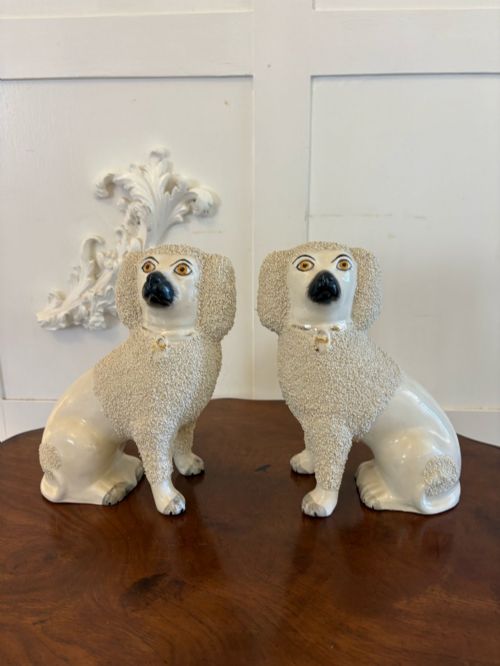
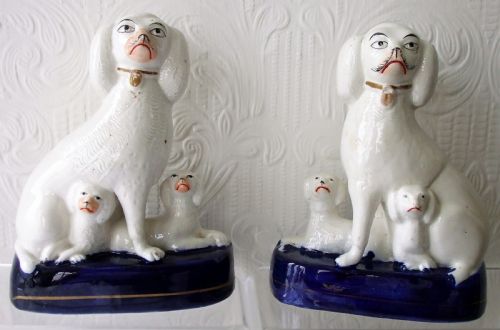
White pottery poodle pieces in this selection are predominantly Victorian Staffordshire figures, often appearing as pairs. Collectors seeking white pottery poodle examples will encounter standing dogs, figures with pups, and quill holders dating from the nineteenth century.
Many examples showcase specific decorative variations such as blue cushions, baskets, or clock groups. These earthenware models capture the distinct aesthetic of nineteenth-century domestic ceramic figures.
Materials and construction
Makers utilised moulded ceramic techniques to produce woolly textures and fine details, sometimes separating the front feet on fireside dog models to enhance realism.
Certain poodles sport distinctly woolly coats moulded into tiny ceramic curls that demand a smile.
Judging quality in ceramic poodles
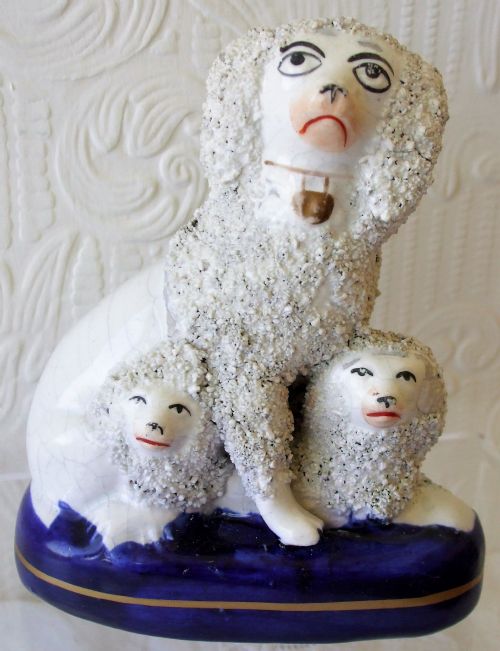
The presence of ancillary elements like pups, baskets, or gilt collars distinguishes finer figure groups from simpler single models.
James Dudson
The White Pottery Poodle Glossary
- Staffordshire pottery
- Ceramic wares produced in the pottery towns of Staffordshire. This region dominated British figure production throughout the Victorian era.
- Bisque pottery
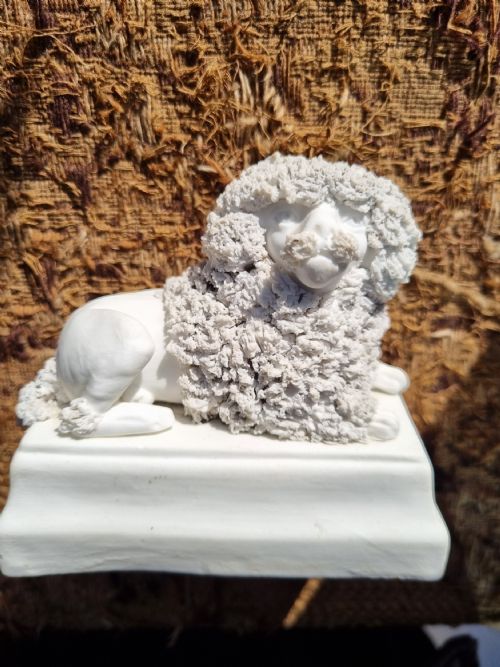
- Porous unglazed ceramic fired once to create a matte finish. It provides a tactile surface seen on specific nineteenth-century figures.
- Lead glaze
- A shiny coating applied to pottery before a final firing. It waterproofs the earthenware and imparts a glossy sheen to the white surface.
- Quill holder
- A ceramic desk accessory featuring an integrated loop or receptacle. These pieces held writing feathers alongside decorative animal models.
White Pottery Poodle: Frequently Asked Questions
What are white pottery poodles?
These ceramic pieces are decorative earthenware dog figures produced primarily during the Victorian period. Potters modelled them as single dogs, pairs, or groups accompanied by puppies.
Many examples functioned as fireside ornaments or mantelpiece decorations, reflecting Victorian tastes for domestic animal subjects.
How were these figures used?
Victorian households displayed these ceramic poodles on mantelpieces, side tables, and firesides as ornamental centrepieces. Specific variations like quill holders served a practical function on writing desks.
Pairs were typically arranged facing one another on either side of a clock or fireplace.
How do I date these ceramics?
Dating relies upon stylistic markers, glaze types, and manufacturing methods associated with nineteenth-century Staffordshire potteries. Victorian examples often display distinct hand-painted enamel touches and gilt collars.
Archival records and specific model configurations such as separate front feet help narrow the era of production.
Are all these poodles white?
The listings focus primarily on white glazed earthenware and bisque bodies, though enamel colours and gilt highlights frequently supplement the palette. Some figures feature blue cushions or coloured collars.
The dominant white ceramic body defines the visual character of the group.