


Cobalt Blue Base Figurines
Cobalt blue base figurines are decorative figures and inkwells set upon distinctive coloured plinths, combining Victorian Staffordshire pottery and porcelain with rich painted foundations.
Cobalt Blue Base Figurines
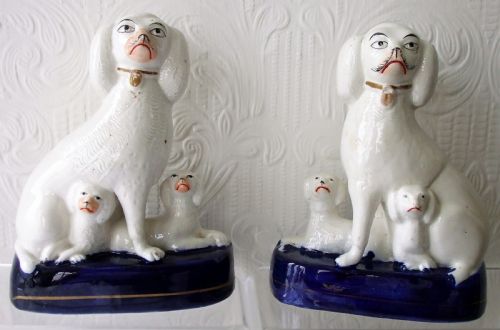
When you search for cobalt blue base figurines, you encounter nineteenth-century decorative figures, inkwells, busts, and sculptural groups mounted on striking blue foundations. The pieces on this page span the Victorian and late Victorian eras, taking the form of dogs, poodles, dalmatians, spaniels, greyhounds, and historical subjects like Marie Antoinette.
English Staffordshire potteries and continental workshops produced these objects during the nineteenth century, including specific dates around eighteen-sixty and eighteen-ninety. The most frequent examples are pairs of Staffordshire poodles with pups or spaniels resting on blue cushions, alongside porcelain dog figures and French neoclassical busts.
How they were made
Potters shaped these figures using earthenware, glazed ceramic, and porcelain, applying lead glaze to seal the bodies and provide a smooth surface. Artisans then introduced rich cobalt blue glaze to the bases, cushions, and plinths of the sculptures.
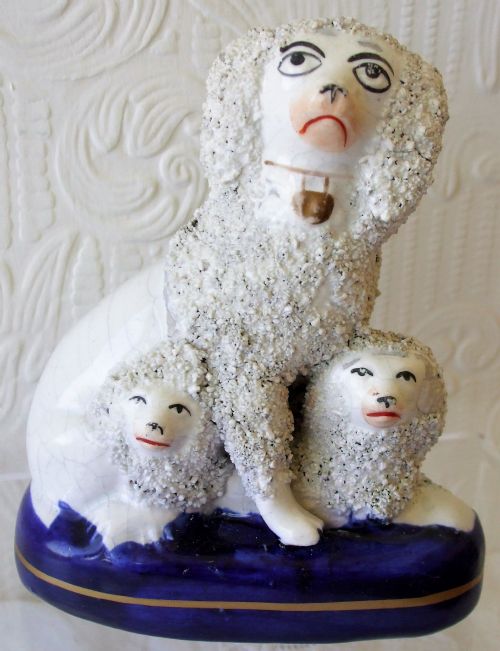
Countless nineteenth-century poodles arrive with tiny modelled pups tucked permanently beside them on cobalt blue cushions.
What varies in quality
Quality depends upon the crispness of the modelling in the clay and the precision of the hand-painted enamel work across the figures. Superior examples display carefully rendered facial expressions and detailed texturing, such as the fur on poodles or the spots on dalmatians.
The application of the glaze and the richness of the gilt or gold leaf also separate standard production from finer work. Consistency in the cobalt blue base colour and the delicacy of any encrusting reveal the skill of the original workshop.
The Cobalt Blue Base Figurines Glossary
- Earthenware
- A porous pottery body fired at lower temperatures, requiring a glaze to become impermeable. It forms the foundation of most nineteenth-century Staffordshire figures.
- Lead glaze
- A glossy coating containing lead oxide that melts during firing to create a smooth, shiny surface. Potters used this mixture to seal earthenware figures.
- Enamel
- Vitreous coloured paints applied over the fired glaze and fixed with a secondary, lower-temperature firing. Makers used enamels to add realistic markings to animals and clothing.
- Gold leaf
- Extremely thin sheets of beaten gold applied to the dried or glazed surface for ornamentation. It appears on collars and decorative accents.
- Encrusting
- Applied ceramic clay particles or slip shaped to resemble foliage, flowers, or texture. This technique ornaments the cushions and bases of Staffordshire dog figures.
Cobalt Blue Base Figurines: Frequently Asked Questions
What periods do these figures come from?
The pieces date from the nineteenth century, with specific examples recorded around eighteen-sixty and eighteen-ninety. This encompasses the Victorian and late Victorian periods.
English Staffordshire potteries and continental porcelain manufacturers produced these decorative figures and inkwells during these decades.
How were these figures used originally?
Many served as mantelpiece ornaments, decorative groups, and sculptural displays in nineteenth-century homes. Pairs of poodles, spaniels, and dalmatians brought domestic animal themes into parlours.
Specific pieces, such as the dalmatian items, functioned as inkwells on writing desks while maintaining a decorative appearance.
What subjects do the figures depict?
The subjects include popular domestic animals like poodles with pups, spaniels on blue cushions, dalmatians, and greyhounds. Staffordshire potteries specialised in these canine groups.
Other examples include continental miniature porcelain dog figures and French neoclassical busts representing historical figures like Marie Antoinette.
How do I identify a Staffordshire figure?
Staffordshire figures typically employ earthenware pottery bodies finished with lead glazes and hand-painted enamel details. They often feature distinct modelling styles typical of nineteenth-century English kilns.
Many examples take the form of paired animals, such as poodles and spaniels, frequently mounted on coloured bases or cushions.