




Staffordshire Poodle Figurines
Staffordshire poodle figurines are charming Victorian earthenware pottery figures capturing the loyalty and distinct grooming styles of the popular nineteenth-century breed.
Staffordshire Poodle Figurines
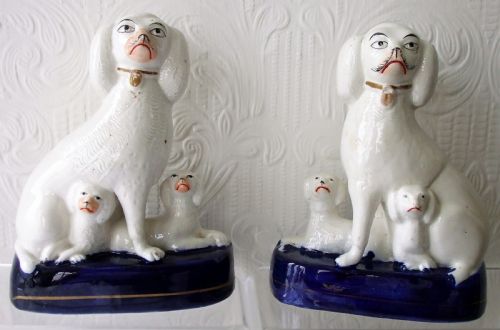
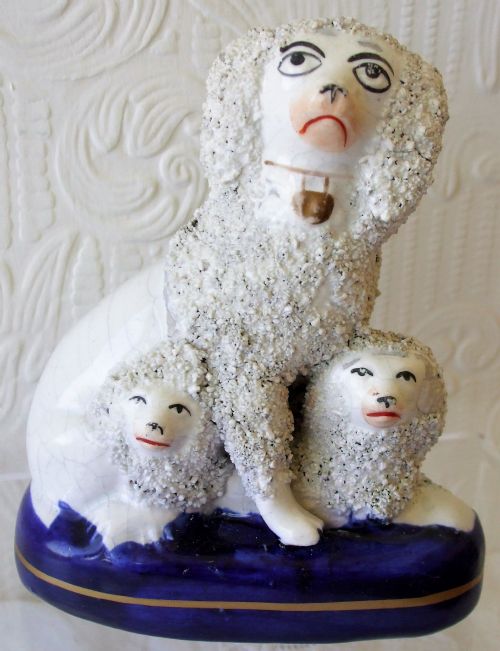
Staffordshire poodle figurines are delightful earthenware and ceramic figures created during the nineteenth century, often appearing as matched pairs to display on mantelpieces. These decorative objects frequently portray the dogs with their pups, beside baskets, or even functioning as practical quill holders and clock groups.
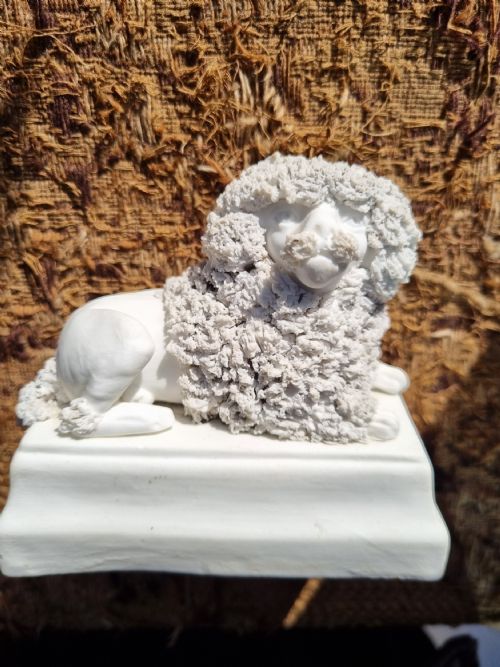
The version most commonly met on this page is the Victorian pair, typically modelled in white or naturalistic glazes with textured coats. Examples range from standard decorative figures to miniature poodles and unusual bisque pottery variations.
How they were made
Many pieces incorporate gold leaf or gilt highlights, along with textured clay encrusting to simulate the distinctive curly fleece of the poodles. Bisque pottery variations received a matte finish without the traditional shiny glaze.
Current listings feature earthenware, ceramic, and bisque pottery pieces created during the nineteenth century under Victorian influence.
What varies in quality
Quality rests primarily on the crispness of the modelling and the finesse of the hand-painted enamel details. Superior figures display distinct facial expressions and sharply defined fur texture rather than soft or blurred contours from worn moulds.
The application of gold leaf and the complexity of the grouping also influence standard, with multi-figure compositions such as poodles with pups or clock groups representing more ambitious ceramic work.
James Dudson
The Staffordshire Poodle Figurines Glossary
- Bisque pottery
- Unglazed ceramic ware that has been fired once, offering a matte, porous surface texture. This finish highlights the sculptural modelling without the reflection of a glossy glaze.
- Enamel
- Coloured glass paste fused to the ceramic surface during a secondary firing to add painted details. Artisans applied these mineral pigments to render eyes, noses, and collars.
- Earthenware
- Porous pottery fired at lower temperatures, commonly used for nineteenth-century Staffordshire figures. It provides an accessible body for mass moulding before glazing.
- Gilt
- A thin layer of gold or gold leaf applied to ceramic highlights. Potters used this metallic accent sparingly on collars or bases to catch the candlelight.
- Quill holder
- A ceramic decorative object featuring an integrated ink or pen rest. These functional figurines combined the visual appeal of a poodle model with a practical desk accessory.
Staffordshire Poodle Figurines: Frequently Asked Questions
What are Staffordshire poodle figurines?
Staffordshire poodle figurines are nineteenth-century ceramic figures depicting the popular breed, often modelled as pairs or groups with pups.
Potters created these decorative objects in the Victorian era using earthenware, applying glazes and enamel details to capture the characteristic clipped coats of the dogs.
How were poodle figurines displayed?
Victorian households typically arranged these pottery dogs as matching pairs on mantelpieces, side tables, or brackets. Their symmetrical design made them ideal centrepieces for domestic display.
Some specialised examples also served a practical purpose, incorporating small vessels to hold writing quills or surrounding clock faces.
How do I care for antique pottery?
Antique earthenware requires gentle handling and protection from direct sunlight and damp conditions to preserve the delicate enamel colours and gold leaf accents.
Cleaning should be limited to very careful dusting with a soft, dry brush, avoiding water or chemical cleaning agents that could harm the ceramic body.
How can I tell the period?
Dating relies on observing the ceramic body, the style of the modelling, and the specific type of glaze or enamel decoration used. Victorian pieces often display characteristic crazing in the glaze.
Comparing the manufacturing technique and decorative motifs with documented examples helps establish whether a piece originates from the nineteenth century.