




White Ceramic Poodle Figurines
White ceramic poodle figurines are charming Victorian Staffordshire animals that bring character to a mantelpiece, prized for their expressive detail and woolly texture.
White Ceramic Poodle Figurines
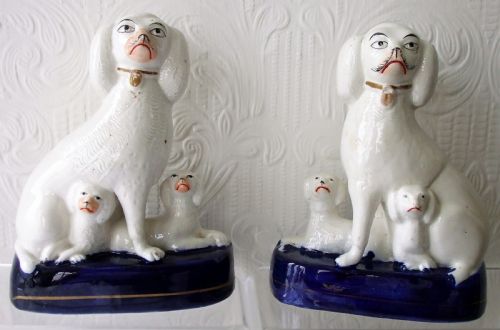
White ceramic poodle figurines represent a distinct branch of 19th-century Staffordshire pottery, capturing the Victorian fascination with domestic animals. These decorative figures take various forms, appearing as pairs, family groups with pups, or functional pieces such as quill holders and clock groups.
Most examples found here date from the Victorian period, specifically around the mid-19th century, including individual pieces and matched pairs. Buyers encounter miniature versions alongside larger shelf groups, often finished with distinctive textured details that mimic curly canine coats.
How they were made
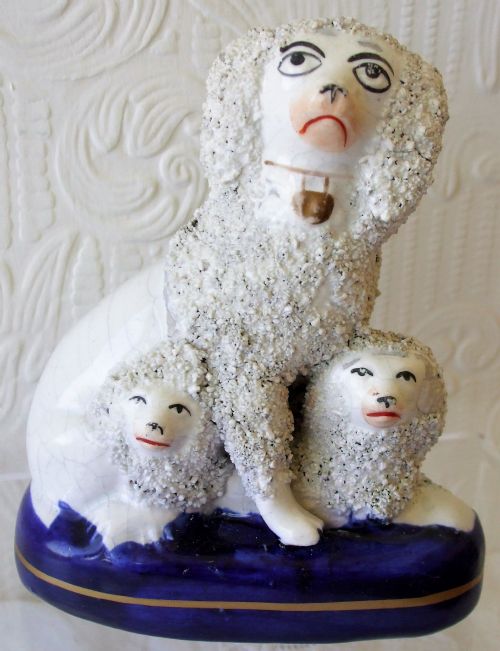
Potters shaped these earthenware figures using traditional moulding techniques before applying a glossy glaze to the ceramic body. Artisans often added finer touches by hand, building up the characteristic woolly texture of the coat using clay appliqués or specialised trailing methods.
Listings span the 19th century, featuring earthenware, glaze, enamel, gold leaf, and bisque pottery in distinct Victorian styles.
What varies in quality
The sophistication of the modelling separates standard decorative figures from superior examples, with finer pieces displaying expressive faces and carefully defined anatomy. The application of the woolly texture also dictates quality, as skilled makers created crisp, distinct curls rather than flat or muddy surfaces.
Completeness and originality of the enamel painting and gilt highlights influence the desirability of a piece. Pairs that have survived together without extensive touching-up hold greater appeal than mismatched or heavily restored companions.
James Dudson
The White Ceramic Poodle Figurines Glossary
- Earthenware
- A porous type of pottery fired at relatively low temperatures, commonly used for 19th-century Staffordshire figures. It requires a glaze to become impermeable to liquids.
- Bisque
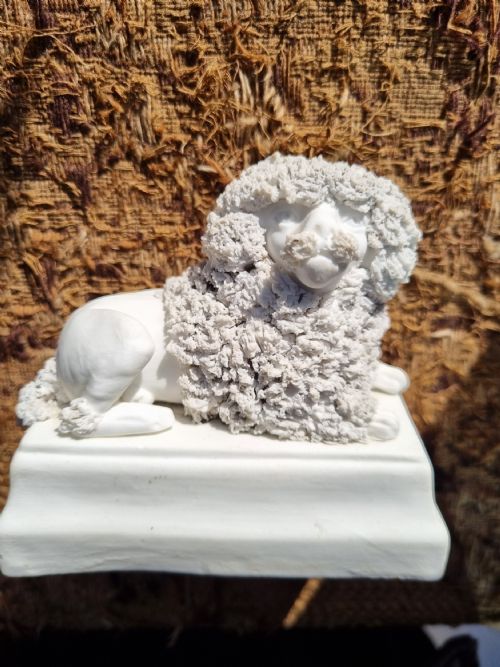
- Unglazed ceramic pottery that has been fired once, valued for its smooth, matt surface texture. It reveals the pure form of the moulded clay without a glossy finish.
- Staffordshire pottery
- Earthenware figures and pottery produced in the numerous kilns of Staffordshire, England. This regional term covers a vast array of mid-19th-century animal and human figures.
- Quill holder
- A decorative desk accessory featuring a small receptacle designed to hold writing feathers. These practical items were often modelled as dogs or figures.
- Gilt
- A thin layer of gold applied to the surface of the ceramic for decoration. It adds subtle highlights to collars, baskets, or bases.
White Ceramic Poodle Figurines: Frequently Asked Questions
What periods do these poodles come from?
These figures originate primarily from the 19th century, with many examples dating from the Victorian era around eighteen-sixty.
Craftsmen produced these earthenware pieces during a time when animal figures held immense popularity in British homes.
Are these figures sold in pairs?
Many of the listed poodles appear as matched pairs, which Victorian owners traditionally displayed on mantelpieces or side tables.
Individual pieces and family groups with small pups also occur frequently within the selection.
How were the woolly coats made?
Potters achieved the textured coat by applying small pieces of clay or using specialised trailing techniques before firing the earthenware.
This method created the distinctive curly appearance associated with Staffordshire poodles from the nineteenth century.
Did these figures serve a purpose?
While most functioned purely as decorative ornaments, certain examples incorporated practical elements such as built-in quill holders or clock groups.
These utilitarian designs combined household utility with the popular aesthetic of Victorian animal ceramics.