




Victorian Pottery Poodles
Victorian pottery poodles are charming earthenware companion figures produced in pairs or groups, bringing distinct character and period charm to a mantelpiece.
Victorian Pottery Poodles
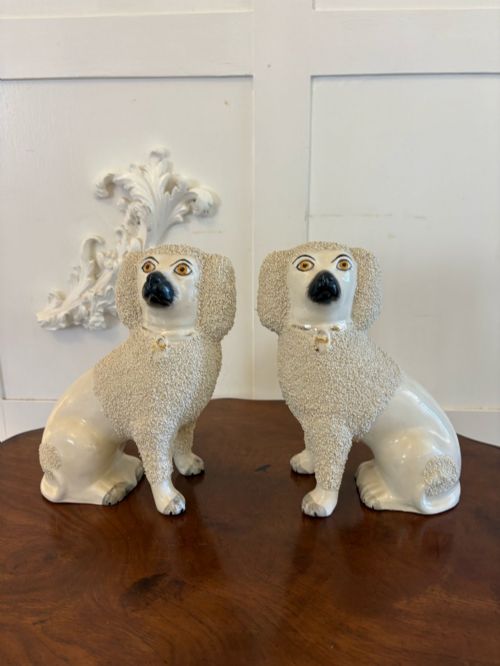
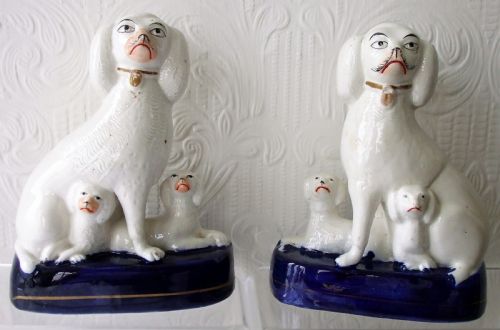
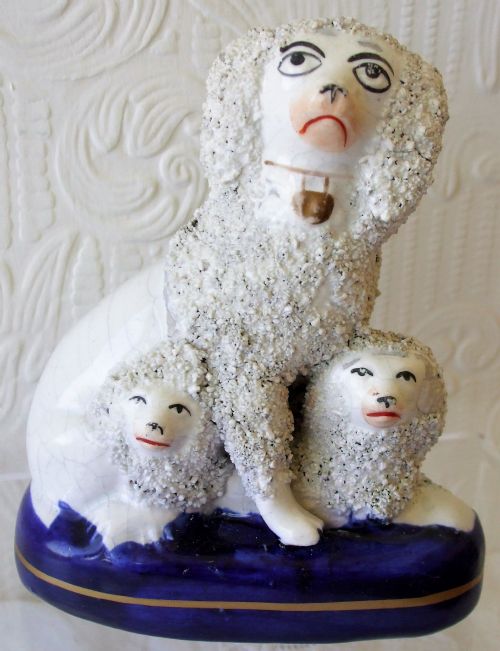
Victorian pottery poodles are decorative earthenware figures modelled as individual dogs, pairs, or figure groups with pups. The pieces encountered most frequently on this page originate from the nineteenth century, often attributed to Staffordshire potteries.
Many examples are styled as fireside dogs with separate front feet, while others incorporate practical elements such as quill holders or clock groups. Miniature versions and depictions featuring baskets or blue cushions also appear regularly across the selection.
How they were made
Makers shaped these nineteenth-century figures using earthenware, applying surface detail through glazes, enamel, and lead glaze. Many pieces feature textured detailing created to mimic woolly coats, often enhanced with fine gold leaf or gilt collars.
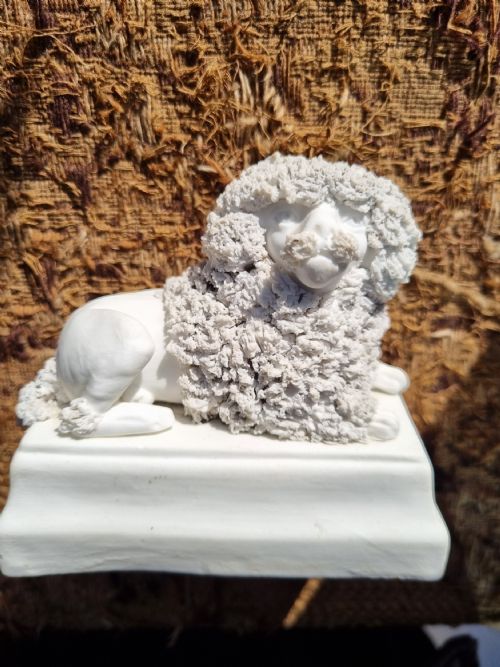
White bisque pottery is also utilised for unglazed variations, offering a matte surface texture. Individual components such as pups or bases were assembled before firing and subsequent enamel decoration.
Listings feature nineteenth-century earthenware and glazed ceramic, spanning miniature models to fireside pairs with separate front feet.
What varies in quality
The application of enamel and gold leaf varies considerably across examples. Finer pieces retain vibrant, carefully placed colour and neat gilding that complements the underlying earthenware form.
James Dudson
The Victorian Pottery Poodles Glossary
- Bisque
- Unglazed ceramic fired once to create a porous, matte white surface. This finish highlights the sculptural details of the modelling.
- Earthenware
- Porous pottery fired at a lower temperature than stoneware or porcelain. It serves as the primary ceramic body for these nineteenth-century figures.
- Lead glaze
- A glossy coating containing lead oxide applied to pottery before firing. It creates a smooth, protective shine across the figurine.
- Staffordshire
- A geographic region in England famous for its extensive pottery industry. Factories here produced the vast majority of these decorative animal figures.
Victorian Pottery Poodles: Frequently Asked Questions
What are victorian pottery poodles?
Victorian pottery poodles are nineteenth-century ceramic figures modelled after the breed, often created as decorative pairs for display.
Potters in Staffordshire and surrounding areas produced these earthenware animals in various sizes, ranging from miniatures to larger fireside companions.
How were they used in homes?
These figures were primarily designed as decorative ornaments to be placed on mantelpieces or shelves. Some specialised forms also functioned as quill holders on desks or were integrated into clock groups.
Pairs were typically arranged facing one another on either side of a fireplace, a common domestic display method of the period.
How can you tell periods apart?
Dating relies on observing manufacturing techniques, material composition, and stylistic changes across the nineteenth century. Earlier pieces often display specific potting methods and distinct glaze formulations.
Miniatures and variations featuring separate front feet or specific cushion bases also help anchor pieces to particular decades within the Victorian era.
Why do some have textured coats?
Potters applied specialised modelling techniques to mimic the distinct curly fur of real poodles. This textured surface, sometimes referred to as woolly, is a defining characteristic of many Staffordshire dog figures.
The fine detail required extra skill during shaping and glazing to ensure the ceramic definition remained clear after firing.