




Shredded Clay Poodles
Shredded clay poodles are charming Victorian decorative figurines crafted to capture canine coats with remarkable texture and presence.
Shredded Clay Poodles
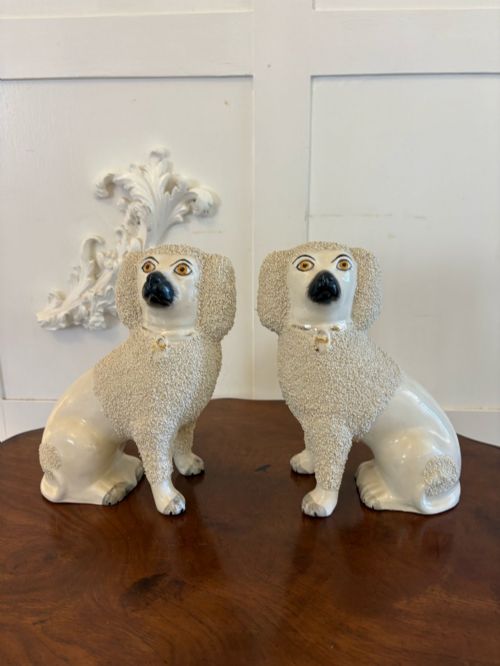
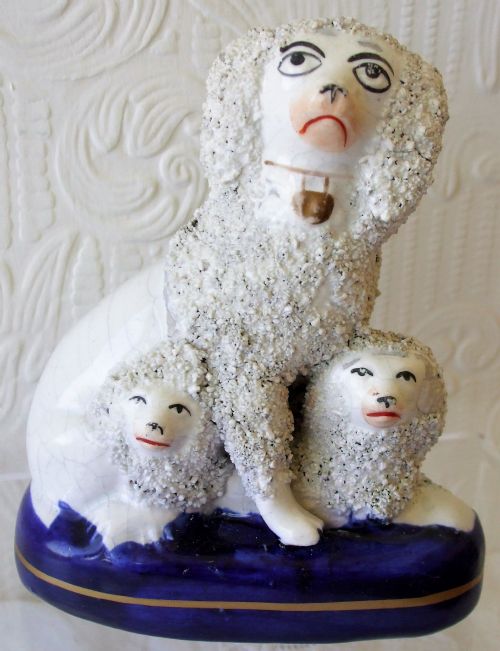
When you search for shredded clay poodles, you encounter Staffordshire pottery figures and figure groups originating from the nineteenth century. These ceramic dogs appear as pairs, single models, or groupings accompanied by pups, often resting on cushions or moulded in miniature formats.
The pieces on this page span the Victorian era, specifically featuring works from around eighteen sixty up to nineteen hundred. Most examples take the form of decorative objects and figurines made to adorn nineteenth century interiors.
How they were made
Potters shaped these earthenware figures using glazed ceramic, lead glaze, and white bisque pottery. Artisans applied fine surface textures to simulate curly fur, sometimes finishing details with enamel and gold leaf or gilt highlights.
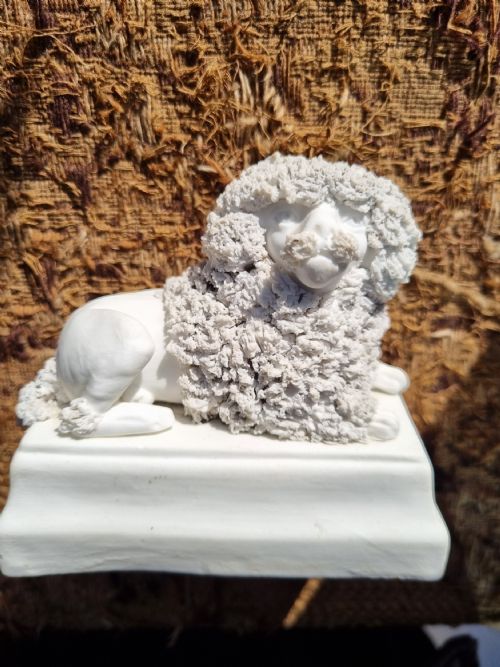
The characteristic woolly or shredded coat effect requires careful manipulation of the clay before firing. Makers then applied coloured glazes or left the pottery in white bisque depending on the desired Victorian aesthetic.
Shredded Clay Poodles Retail Price Guide 2026
Typical asking prices for shredded clay poodles among the pieces listed under this phrase on Sellingantiques today, from the lower quarter to the upper quarter. They describe what is for sale here now, not the wider market.
Listings feature nineteenth century earthenware and glazed ceramic figures from the Victorian era, including miniatures and pieces with gilt highlights.
What varies in quality
Pairs showing balanced proportions, intact gilding or enamel, and well-modelled accompanying pups represent the stronger end of the range. Miniature versions and marked pieces add further distinction to individual examples.
James Dudson
The Shredded Clay Poodles Glossary
- Bisque
- Unglazed pottery fired once to create a porous, matte white surface. This finish highlights the sculptural detail of the shredded clay without the interference of a shiny glaze.
- Staffordshire
- A generic term for pottery produced in the Staffordshire potteries of England. These works include the decorative figures and poodles typical of the Victorian period.
- Lead glaze
- A glossy coating containing lead oxide applied to earthenware before the final firing. It provides a waterproof seal and a characteristic lustrous sheen to nineteenth century figures.
- Figure group
- A ceramic composition featuring more than one subject interacting within a single piece. In this context, it describes poodles grouped together with their pups.
Shredded Clay Poodles: Frequently Asked Questions
What are shredded clay poodles?
These pieces are nineteenth century Staffordshire pottery figures shaped to represent poodles with textured, woolly coats. Potters produced them as decorative objects for Victorian homes.
They appear as single figures, pairs, or groups with pups, frequently modelled on cushions or in miniature sizes.
How were these figures displayed?
Victorian households placed these ceramic dogs on mantelpieces, side tables, and shelves as ornamental displays. Pairs were traditionally arranged symmetrically on either side of a fireplace.
Their cheerful presence and detailed coats made them popular parlour ornaments during the nineteenth century.
How do I identify Victorian pieces?
Victorian examples show specific ceramic characteristics such as earthenware bodies, lead glazes, and hand-applied enamel or gilt details. The modelling reflects nineteenth century Staffordshire traditions.
Pay attention to the weight of the pottery, the style of the base, and the manner in which the shredded clay coat is executed.
What materials make up the glaze?
Potters utilised lead glaze to impart a smooth, reflective surface over the earthenware clay body. This transparent coating protected the underlying colours and added depth to the white or coloured ceramics.
Some variations omit the glaze entirely, resulting in a porous white bisque finish that emphasises the sculptural texture.