



Antique Mantel Dogs
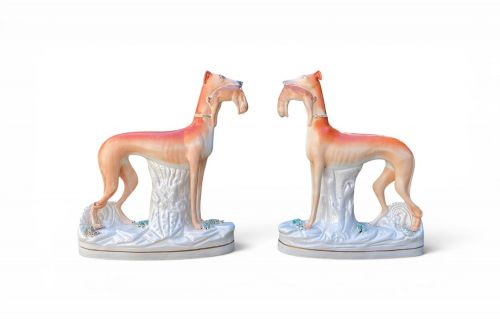
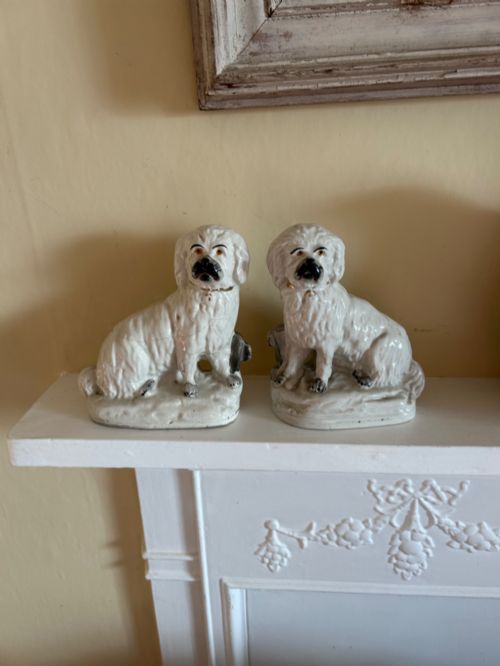
These antique mantel dogs bring steady Victorian presence to a fireplace, shaped mostly as Staffordshire spaniels and greyhounds from the nineteenth century.
Antique Mantel Dogs
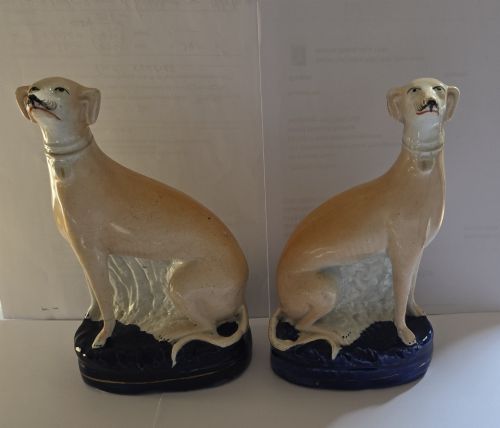
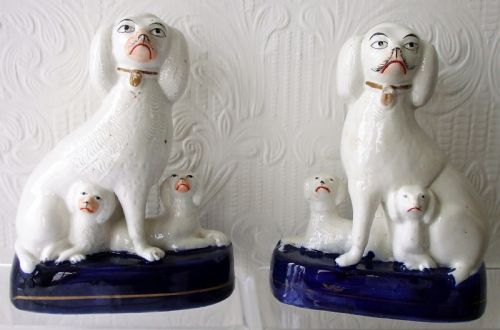
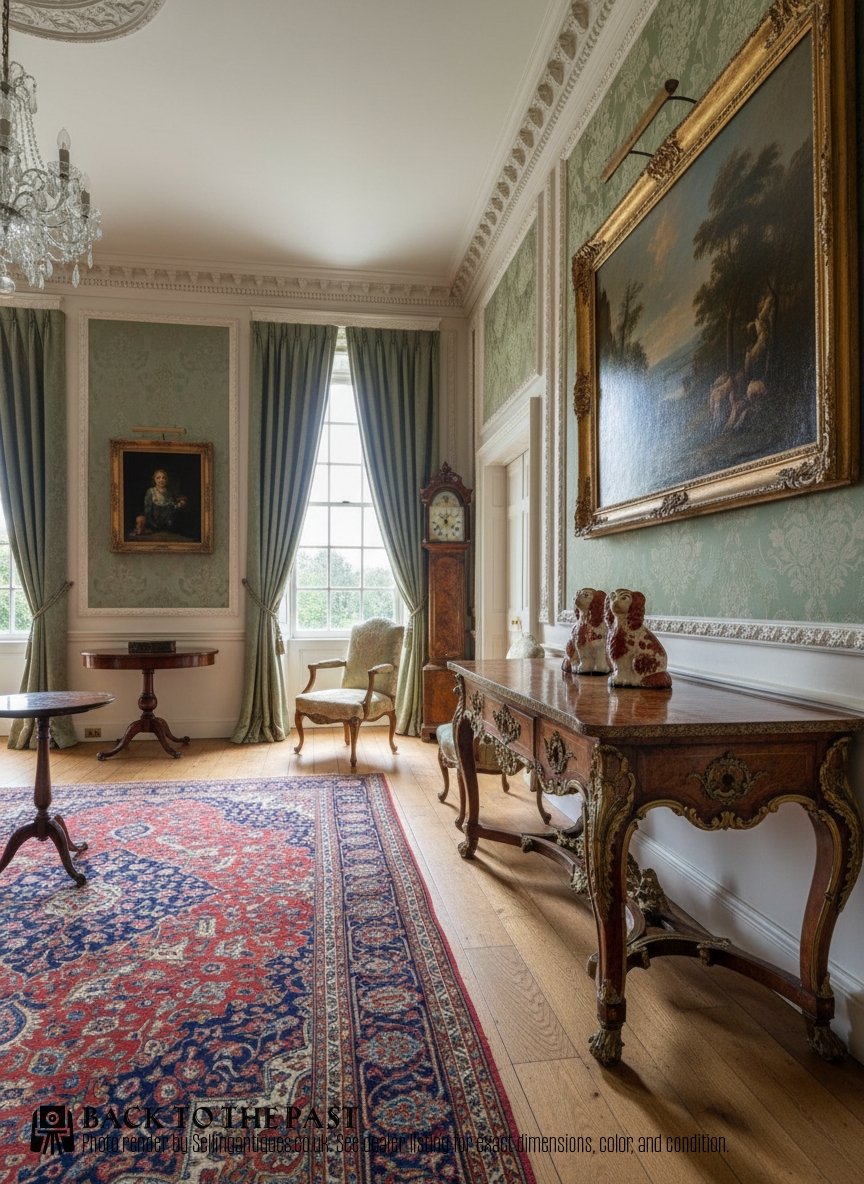
When you search for antique mantel dogs, you encounter ceramic figures and bronze sculptures designed to sit symmetrically upon a fireplace. The most common version met on this page is the Victorian Staffordshire pottery spaniel, often found facing left and right as a matched pair.
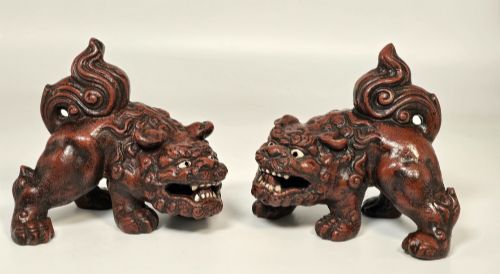
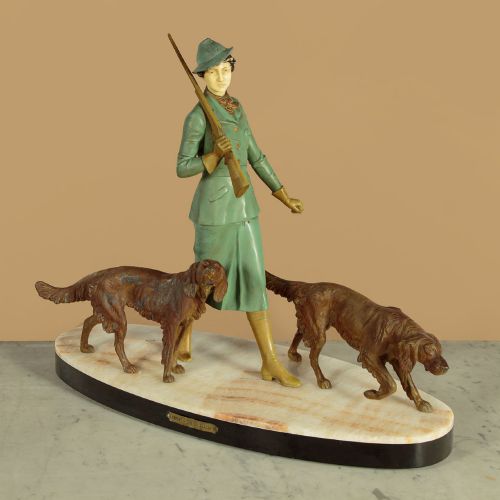
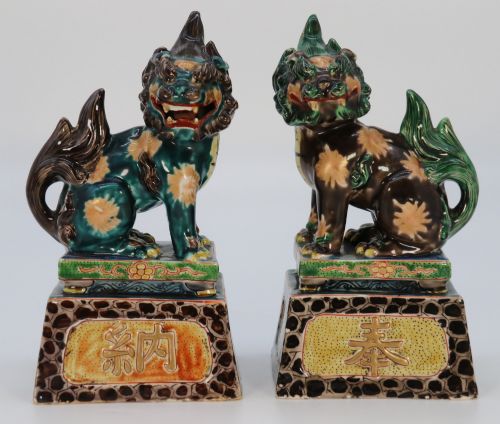
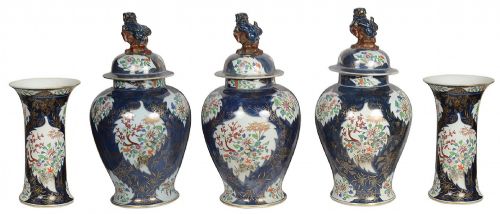
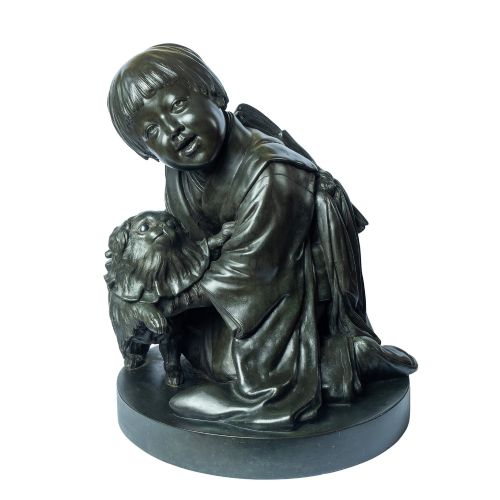
Beyond earthenware spaniels, the selections span poodles, greyhounds, pugs, and terriers alongside French bronze clock groups and Japanese bronze okimono. These objects originated primarily across nineteenth-century Staffordshire potteries, continental Europe, and Japanese workshops.
Many serve purely as decorative mantel ornaments, while others incorporate spill vases, clock faces, or hinged alarms. Their enduring appeal lies in how they anchor a mantelpiece with traditional domestic character.
Materials and production methods
Metal versions relied on bronze, ormolu, and brass, cast carefully into hounds, poodles, and decorative clock cases. These pieces frequently combined cast bronze figures with marble plinths or gilt mounts.
Antique Mantel Dogs Retail Price Guide 2026
Typical asking prices for mantel dogs among the pieces listed under this phrase on Sellingantiques today, from the lower quarter to the upper quarter. They describe what is for sale here now, not the wider market.
Listings feature earthenware, bronze, and enamel across the nineteenth century, uniting English pottery traditions with French and Japanese metalwork.
Assessing quality and finish
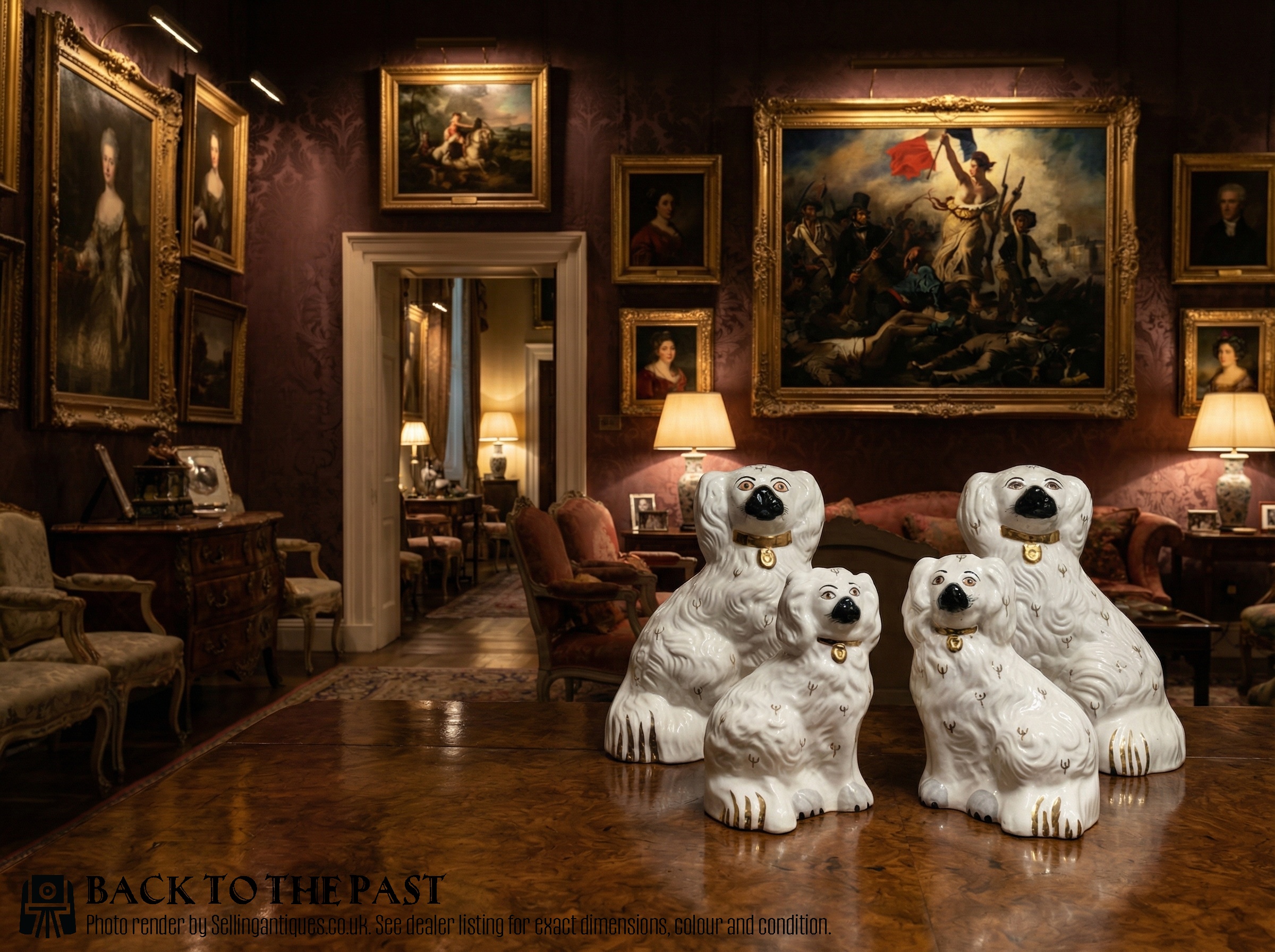
Quality rests heavily on the crispness of the moulding and the hand-painted brushwork of the facial expressions and markings. Finer earthenware examples show deliberate attention to detail in the eyes, coats, and gilt highlights rather than hasty mass production.
In bronze and gilt metal pieces, the sharpness of the chasing and the weight of the casting determine the standard. Matched pairs with intact original gilding and clear period glazing consistently stand above heavily worn or mismatched specimens.
Thomas Parr·Mason·Michel Decoux·Royal Doulton·Hessen Paris·Masaaki·Dumond
The Antique Mantel Dogs Glossary
- Earthenware
- Porous pottery fired at lower temperatures, commonly used for nineteenth-century Staffordshire figures. It forms the base body for the majority of ceramic mantel dogs.
- Spill vase
- A hollow vertical cylinder attached to a figure, designed to hold wooden spills for lighting fires. These functional vessels often accompany Staffordshire dogs holding game.
- Gilt
- A thin layer of gold applied to the surface of ceramics, bronze, or wood. It is frequently seen on collars, chains, and facial accents of period mantel figures.
- Okimono
- A Japanese freestanding carving or sculpture intended for display on a shelf or mantelpiece. They appear in bronze alongside European ceramic figures.
- Copper lustre
- A metallic glaze technique producing a coppery, reflective sheen on pottery. This finish defines specific Staffordshire dog pairs from the mid-nineteenth century.
Antique Mantel Dogs: Frequently Asked Questions
Were these dogs always sold in pairs?
Most ceramic mantel dogs were manufactured and sold as symmetrical left and right pairs to flank a fireplace. Single figures do appear, but matched pairs remain the traditional standard for mantel display.
Makers painted and modelled them to gaze towards one another, creating a balanced focal point when positioned at either end of a shelf.
What is a comforter spaniel?
Comforter spaniels represent the typical Victorian Staffordshire mantel dog modelled after King Charles spaniels. People placed them on hearths as decorative substitutes for real lap dogs.
They frequently feature distinct gilt chains, lockets, and feathered coats, capturing the domestic sentiment of the nineteenth century.
Can bronze mantel clocks be repaired?
Antique bronze clock groups housing fusee movements generally require specialist horological restoration. Many retain original mechanical components like French brass movements and bell strikes.
Working condition varies across historical timepieces, so professional servicing ensures the mechanisms function properly without harming the bronze sculpture.