




White Ceramic Poodles
White ceramic poodles are charming Staffordshire figures that bring character and period warmth to any mantelpiece.
White Ceramic Poodles
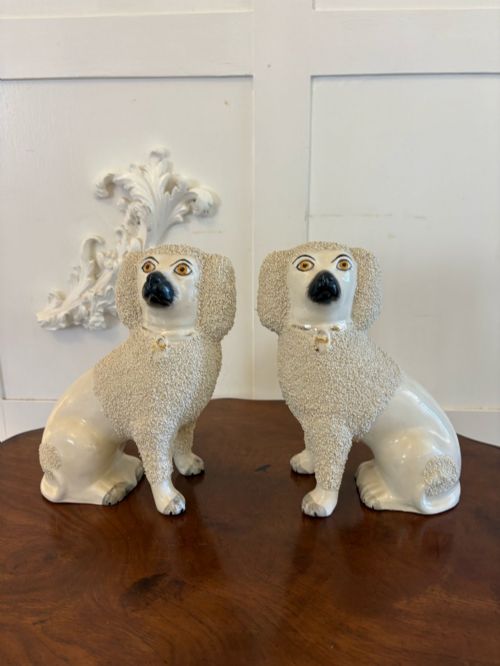
White ceramic poodles are decorative earthenware figures from the Victorian period, frequently modelled as pairs. These pieces capture the distinctive clipped coats of the breed through textured detailing.
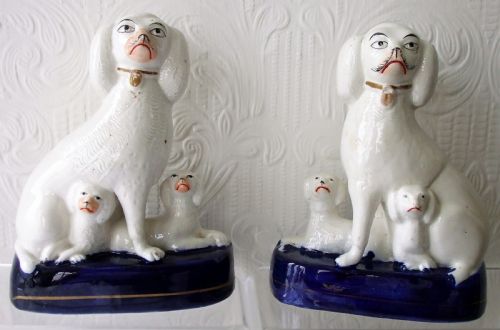
The selection on this page centres on nineteenth century figures, including miniature examples and groups featuring pups. Some designs incorporate functional elements such as quill holders or clock groups.
How they were made
Potters shaped these earthenware figures using traditional ceramic techniques before applying lead glazes or enamel colours. Details like woolly coats were achieved through applied clay work or individual texturing.
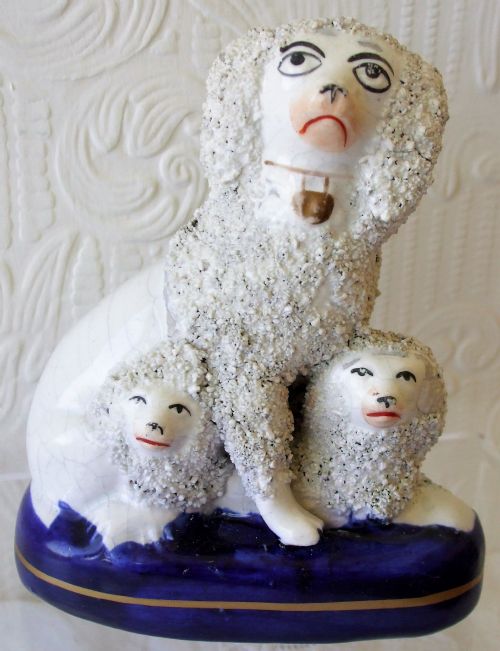
Some Victorian poodles come complete with miniature puppies tucked securely into baskets or clinging to their sides.
What varies in quality
Quality in these figures depends upon the crispness of the moulded details and the precision of the hand-painted enamels. Finer examples display lively modelling in the facial expressions and careful application of gilt highlights.
The presence of secondary elements like pups, baskets, or cushions distinguishes more ambitious Staffordshire groups from simpler single figures. Miniature scales and unusual functional forms also add interest to the work.
James Dudson
The White Ceramic Poodles Glossary
- Earthenware
- A porous type of pottery fired at lower temperatures, commonly used for nineteenth century Staffordshire figures. It requires a glaze to become impermeable to liquids.
- Biscuit
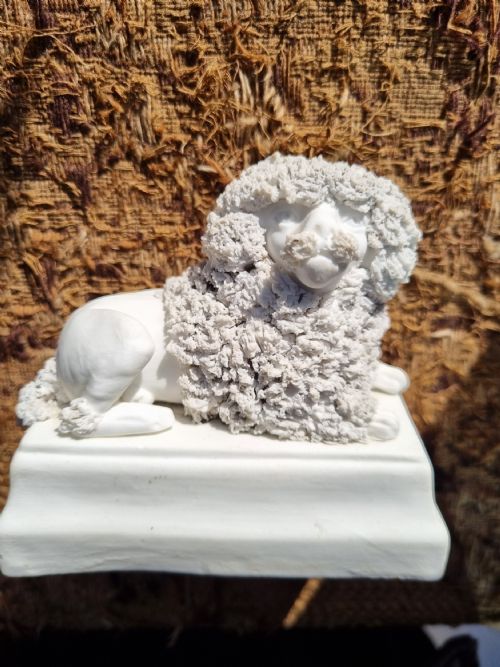
- Unglazed ceramic pottery that has been fired once, leaving a matte, porous surface texture. This finish highlights the pure form of the white clay without the gloss of lead glaze.
- Gilt
- A thin layer of gold or gold-coloured leaf applied to ceramic surfaces for decoration. On these figures, it highlights details such as chains and baskets.
- Staffordshire
- A generic term for pottery manufactured in the English region of Staffordshire. The area produced countless decorative figures and animals during the Victorian era.
White Ceramic Poodles: Frequently Asked Questions
Are these poodles antique?
The pieces listed originate from the nineteenth century during the Victorian era. They represent traditional English pottery production from that period.
Collectors look for specific manufacturing traits and materials to confirm their Victorian origin.
How were poodle figures displayed?
Victorian households typically placed pairs of Staffordshire dogs on mantelpieces facing inward towards each other. They served purely as decorative ornaments in the parlour.
Some specialised versions also functioned as quill holders or incorporated clock faces.
What is biscuit pottery?
Biscuit pottery refers to ceramic pieces that have undergone an initial firing without a protective glaze layer. This leaves the clay with a matte and porous finish.
In white poodles, this technique emphasises the tactile texture of the modelled fur.
Why do some have puppies?
Figure groups featuring poodles with pups represent a more elaborate style of Staffordshire modelling. Makers produced these multi-figure compositions to appeal to Victorian sentimentality.
These grouped pieces are less common than standard pairs of adult dogs.