




Victorian Poodle Figurines
Victorian poodle figurines are charming ceramic and bronze dogs that bring character to any mantelpiece.
Victorian Poodle Figurines
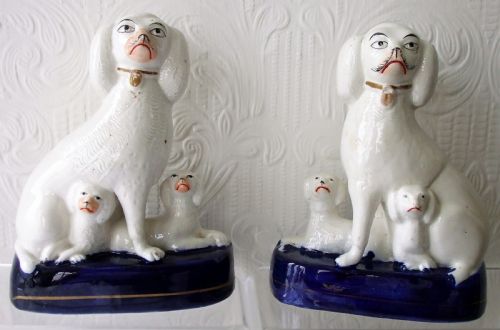
Victorian poodle figurines encompass a delightful variety of earthenware and ceramic subjects modelled in 19th Century Britain and Austria. Buyers searching for Victorian poodle figurines typically encounter charming pairs, miniature studies, and functional pieces such as quill holders and clock groups.
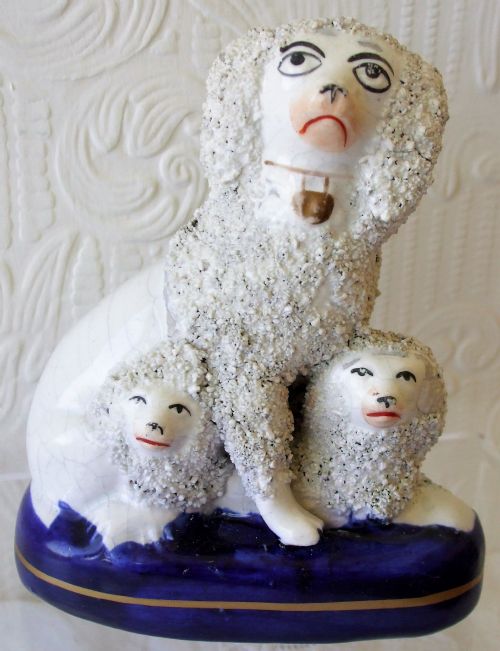
The selections on this page frequently include Staffordshire pottery examples featuring woolly details, puppies, and baskets. Pieces span from the mid 19th Century around 1860 to the turn of the century in 1900, capturing the domestic sentiment of the era.
Materials and construction
Potters built these figures using earthenware and glazed ceramic, applying hand-painted enamel and occasional gold leaf or gilt highlights. Potters often used slip-casting or moulding techniques before finishing the surfaces with detailed texturing to mimic woolly fur.
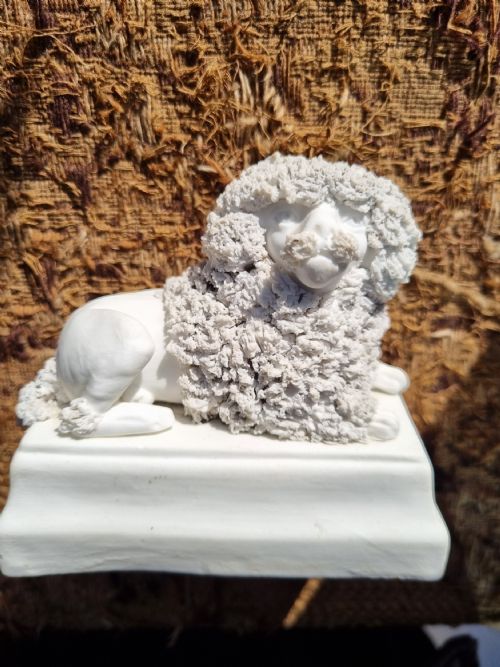
Some variations incorporate bisque pottery without glaze, whilst Austrian examples utilise cold painted bronze. Metal components and enamel work required careful firing and finishing by hand in the workshop.
One particularly cheeky Austrian bronze dog lifts its leg rather than sitting politely.
Assessing quality and charm
Quality in these figures rests primarily on the crispness of the modelling and the preservation of the delicate hand-painted enamel. Finer examples display clean facial expressions, well-defined woolly textures, and minimal wear to the gilt details.
Companion pairs demonstrate greater symmetry and balance in their opposing poses than single items. The presence of secondary elements like puppies, baskets, or clock faces adds complexity and desirability to the piece.
James Dudson·Stephan Buchinger
The Victorian Poodle Figurines Glossary
- Bisque pottery
- Unglazed ceramic fired once to produce a matte, porous white surface. It allows fine sculptural details to remain crisp.
- Staffordshire pottery
- Earthenware produced in the industrial potteries of Staffordshire, England. This region dominated the manufacture of decorative animal figures in the 19th Century.
- Gold leaf
- Extremely thin sheets of beaten gold applied to glazed surfaces. It highlights bases and collars with metallic brilliance.
- Quill holder
- A decorative desk object featuring a receptacle for writing feathers. These combined practical utility with whimsical animal subjects.
Victorian Poodle Figurines: Frequently Asked Questions
What are woolly poodles?
Woolly poodles are Staffordshire figures created with small clay granules or applied slips to simulate the distinctive clipped curls of the breed.
Potters achieved this fluffy texture by hand or through specialised moulding before firing the earthenware.
How were these figures displayed?
Victorian households typically placed matching pairs of poodle figures on mantelpieces, side tables, or brackets flanking a clock or ornament.
Their symmetrical poses made them ideal for balancing the decoration of a formal room.
Are all these pieces English?
The majority of the ceramic examples originate from English Staffordshire potteries active during the 19th Century. Other regions also contributed, as seen in Austrian bronze animal figures from the same period.
What purpose did quill holders serve?
Quill holders combined decorative animal sculpture with a practical desk accessory for holding writing feathers.
They allowed Victorian writers to keep their tools close at hand whilst displaying popular domestic pets.