


Antique Poodle Figures
Antique poodle figures capture the spirited charm of the breed in glazed pottery, earthenware, and bronze from the nineteenth century.
Antique Poodle Figures
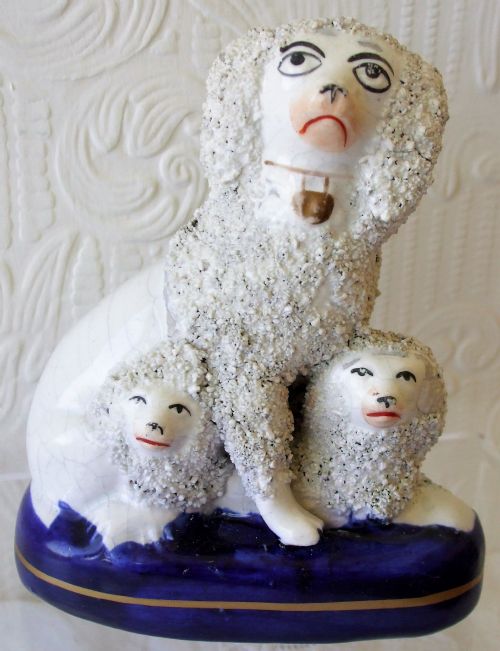
When you search for antique poodle figures, you find charming ceramic and metal models capturing the popular nineteenth-century breed. These decorative objects take various forms, including single sculptures, pairs with pups, and functional quill holders.
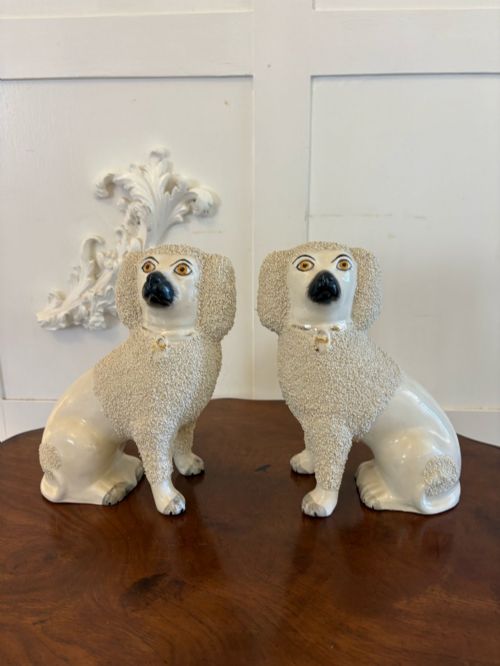
The pieces on this page are most commonly Victorian Staffordshire earthenware figures produced around 1860. You will also encounter miniature versions and occasional bronze models from the same era.
How they were made
Potters shaped these earthenware figures using moulds before applying lead glazes and enamel details. Many pieces utilise textured clay treatments to render the distinctive curly coat of the dog.
Some nineteenth-century Staffordshire poodles feature woolly textured clay coats that mimic the actual clipped fur of the lively breed.
What varies in quality
The standard of modelling separates ordinary pots from superior examples, particularly in how sharply the curly coat texture and facial expressions are rendered. Finer pieces often feature well-modelled pups and careful hand-painting rather than hasty decoration.
Pairs display better symmetry and more convincing proportions at the higher end of the range. The application of the glaze and enamel colours also dictates visual appeal across different pieces.
James Dudson
The Antique Poodle Figures Glossary
- Earthenware
- A type of porous pottery fired at relatively low temperatures and typically covered with an opaque glaze. It forms the primary material for nineteenth-century Staffordshire figures.
- Lead glaze
- A glossy coating containing lead oxide applied to ceramics before firing to provide a waterproof surface. It gives these nineteenth-century figures their characteristic shine.
- Quill holder
- A small ceramic desk accessory incorporating a figure with an integrated receptacle for writing feathers. These functional pieces combine domestic display with utility.
- Gilt bronze
- A metal object cast in bronze and subsequently treated with a layer of gold. This material appears in nineteenth-century sculptural models.
Antique Poodle Figures: Frequently Asked Questions
What are antique poodle figures made from?
These decorative objects are primarily constructed from glazed earthenware and pottery, utilising lead glazes and enamel colours for surface detail. A small number of examples are cast in bronze.
Porter and foundry workers shaped these materials into sculptural groups, pairs, and functional desk accessories during the nineteenth century.
How were poodle figures used originally?
Victorian households displayed these ceramic and bronze models on mantelpieces and side tables purely for decorative effect. Some specialised pieces, such as quill holders, served a practical function on writing desks.
Pairs of dogs were frequently arranged symmetrically to adorn nineteenth-century parlours.
What styles do these poodle figures follow?
The pieces predominantly reflect Victorian taste and Regency design influences from the nineteenth century. Staffordshire potters interpreted the popular breed through traditional regional modelling techniques.
Styles range from straightforward portrait figures to elaborate clock groups and models incorporating pups.
How do you date nineteenth century poodle figures?
Dating relies on stylistic markers, manufacturing methods, and material characteristics associated with the Victorian period. Reference points include specific decades such as eighteen-sixty and broader nineteenth-century production windows.
Glaze types and modelling conventions help distinguish earlier pieces from later variations.