


Victorian Ceramic Ornament
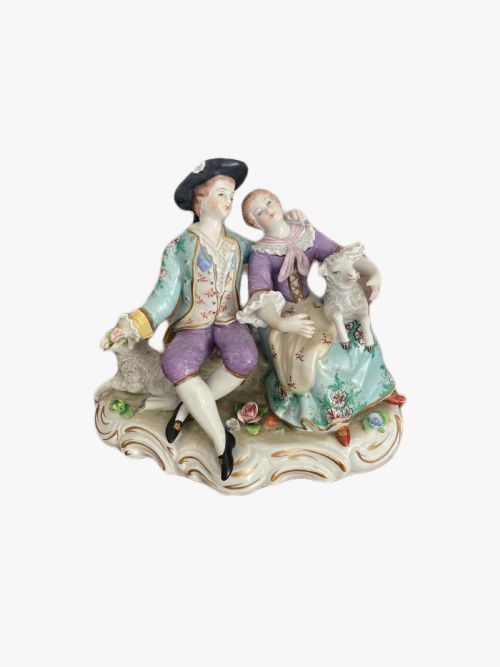
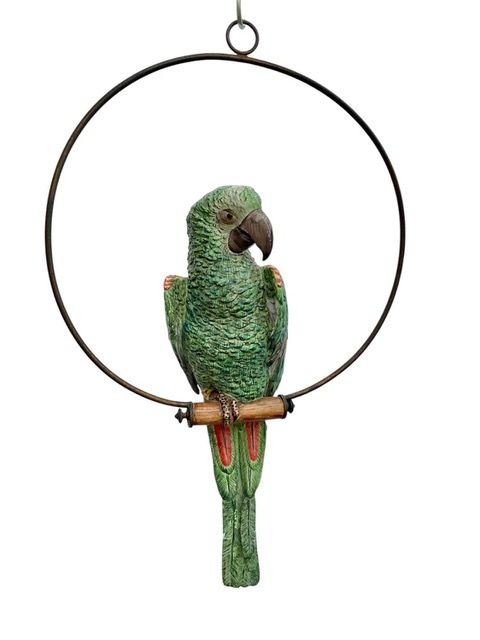
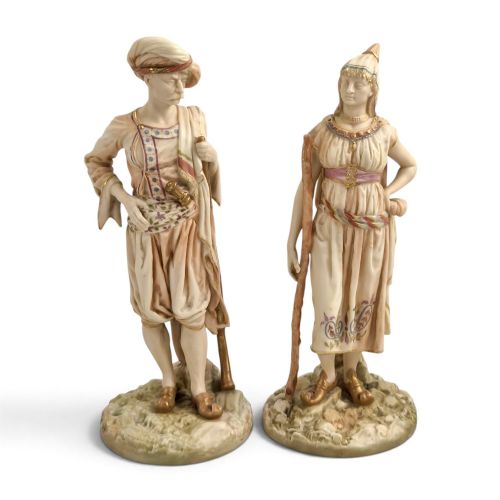
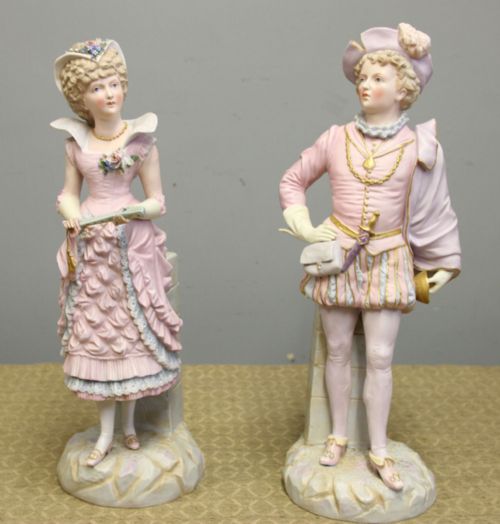
These pieces of victorian ceramic ornament capture the character and portraiture of the nineteenth century through earthenware and porcelain.

Victorian Ceramic Ornament
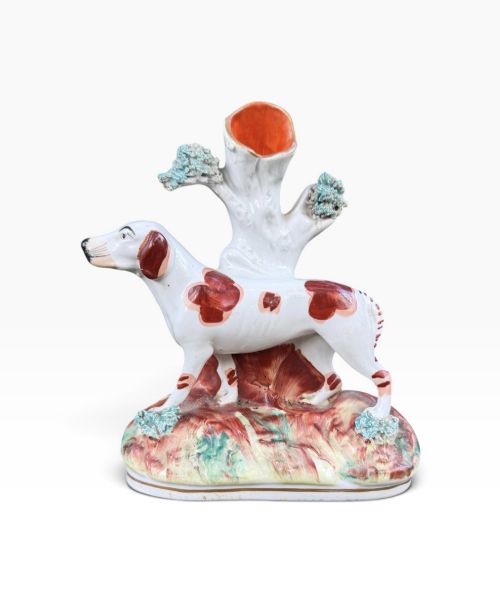
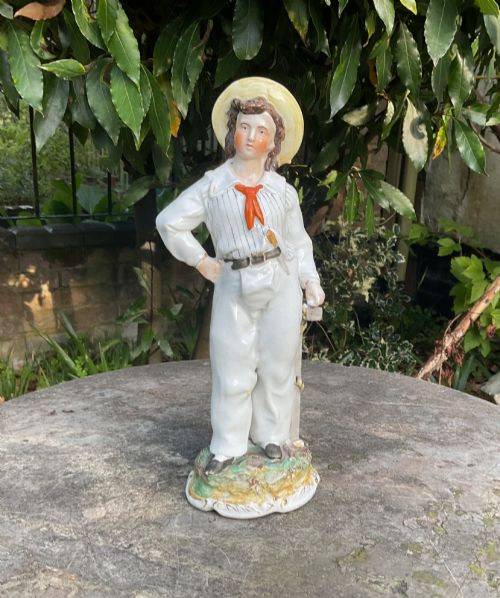
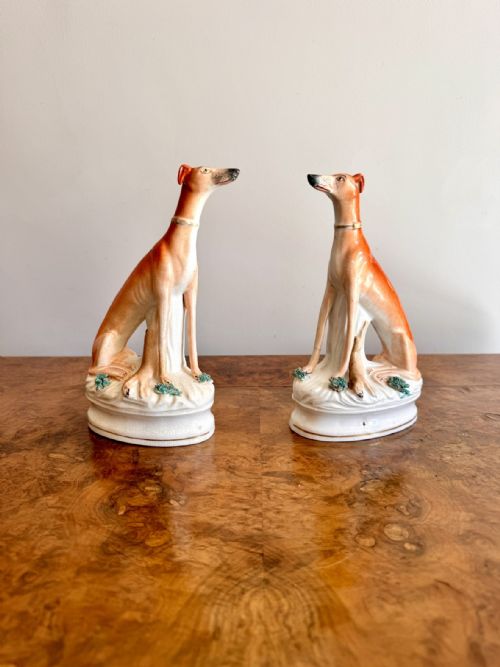
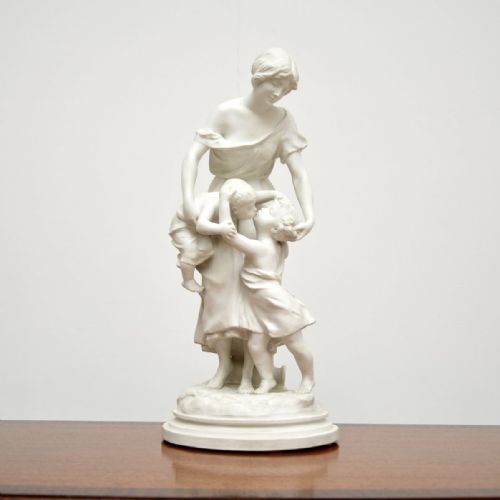
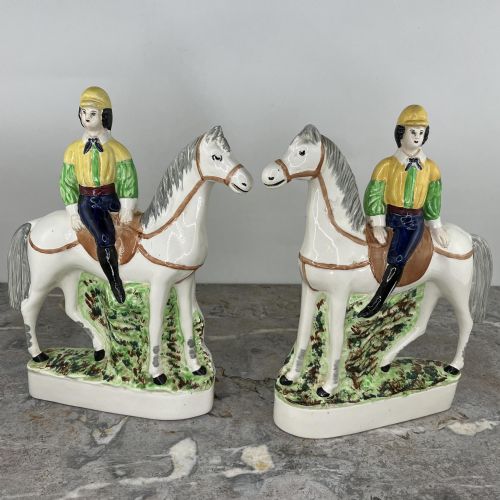
When searching for a victorian ceramic ornament, buyers encounter a rich assortment of Staffordshire pottery figures, earthenware dogs, and porcelain figurines dating across the nineteenth century. These objects range from portrait groups depicting historical figures and theatrical personalities to spill vases and animal pairs modelled with distinct local character.
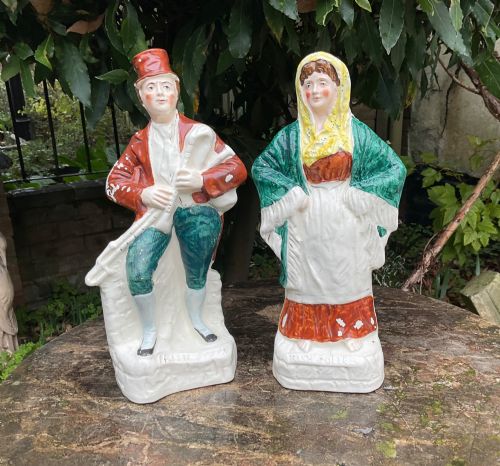
The most common form met on this page is the Staffordshire flatback figure or canine group, typically designed to sit proudly on a mantelpiece. Alongside these sturdy earthenware pieces, one finds delicate porcelain ornaments originating from English factories and continental kilns.
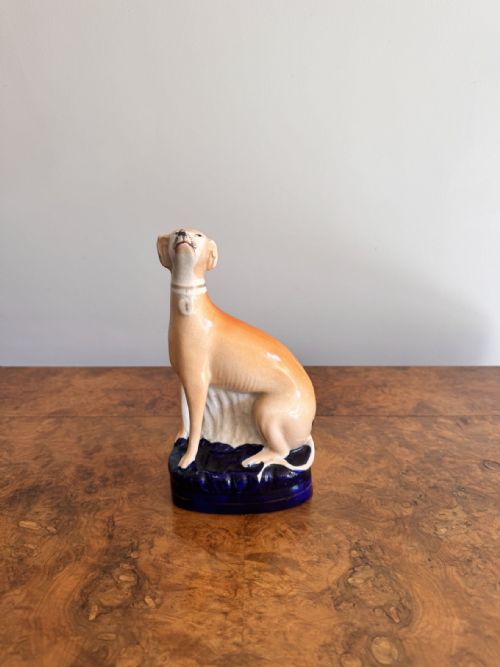
Subjects span historical events such as the Crimean War, literary characters, and domestic animals like spaniels, poodles, and greyhounds. Each victorian ceramic ornament reflects the popular taste and mantelpiece decoration of homes during the period.
Earthenware, porcelain and glaze
Firing techniques varied between the rustic earthenware common in Staffordshire potteries and the refined porcelain productions of factories like Meissen and Royal Worcester. Many flatback figures were hollow-backed to ensure even drying and firing in the kiln.
Victorian Ceramic Ornament Retail Price Guide 2026
Typical asking prices for victorian ceramic ornament among the pieces listed under this phrase on Sellingantiques today, from the lower quarter to the upper quarter. They describe what is for sale here now, not the wider market.
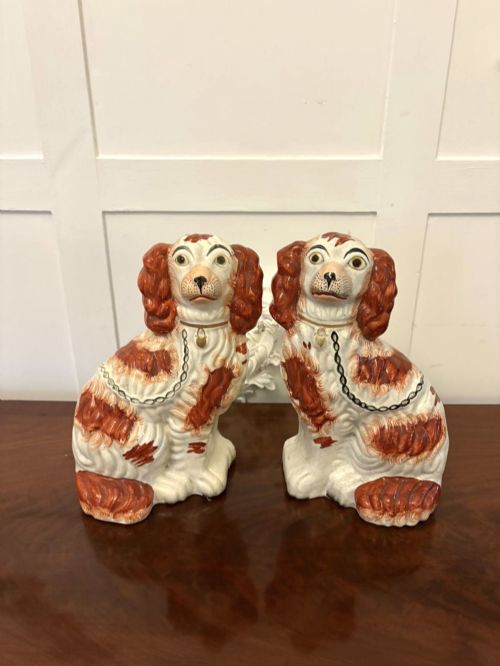
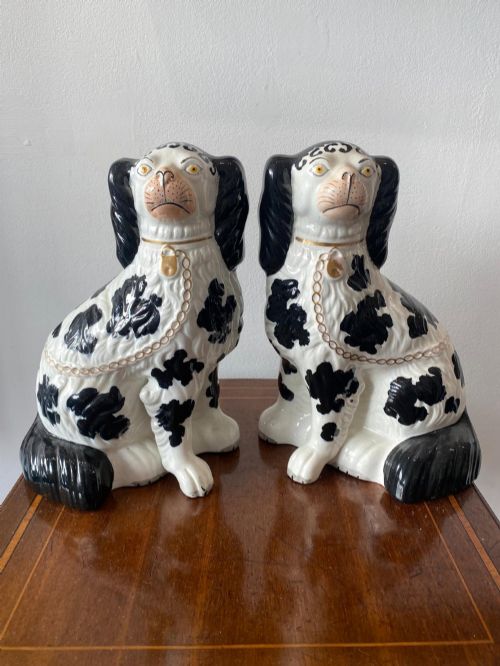
Victorian households gathered around the hearth alongside ceramic poodles wearing gilt chains.
Modelling, painting and preservation
Preservation of the original glaze and enamels dictates the integrity of a piece. Finer items retain their vibrant surface colours and original gilt highlights without excessive fading, restoration, or structural damage to delicate protruding elements.

Volkstedt Rudolstadt Factory·John Bevington·Royal Doulton·Royal Worcester·Meissen
The Victorian Ceramic Ornament Glossary
- Flatback
- A Staffordshire figure modelled with a finished front and a largely unpainted, flat or semi-flat back designed to stand against a wall.
- Spill Vase
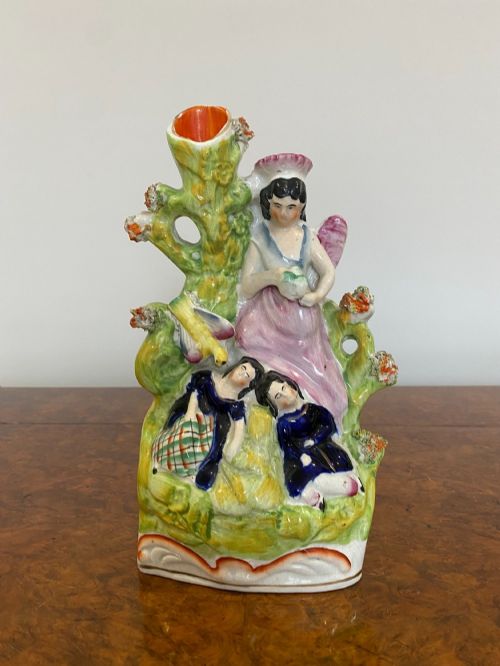
- A hollow ceramic figure incorporating an attached small cylinder intended to hold wooden spill matches for lighting fires.
- Fairing
- A small, humorous Victorian ceramic ornament mass-produced for sale at annual fairs, often depicting domestic scenes with witty captions.
- Earthenware
- A porous type of pottery fired at lower temperatures, commonly used for traditional Staffordshire figures and animal models.
Victorian Ceramic Ornament: Frequently Asked Questions
What are Staffordshire flatbacks?
Staffordshire flatbacks are earthenware figures produced during the nineteenth century with decorated fronts and plain backs. They were made specifically to be displayed on mantelpieces against cottage or parlour walls.
Potters created these pieces in moulds and painted them by hand with enamel colours. They often depicted royalty, political events, literary characters, or domestic animals.
How do spill vases work?
Spill vases combine a decorative figural sculpture with an integrated vertical cylinder. The hollow tube was designed to hold wooden splints called spills, which residents used to transfer a flame from the fireplace to lamps or candles.
These functional ornaments often depict animals, such as deer or sheep, nestled beside the tree-trunk or pillar container. They merged everyday household utility with decorative parlour display.
What is a fairing?
Fairings are small Victorian ceramic ornaments that were originally sold at annual country fairs. They typically portray humorous domestic narratives accompanied by moulded titles or captions.
These pocket-sized pieces offer a glimpse into Victorian popular culture and everyday domestic humour. Their small scale and lighthearted themes made them affordable and amusing souvenirs.