



Antique Pottery Statuette
An antique pottery statuette brings history into the room, and on this page you will find Staffordshire earthenware, portrait figures and foreign porcelain modelled with character.

Antique Pottery Statuette
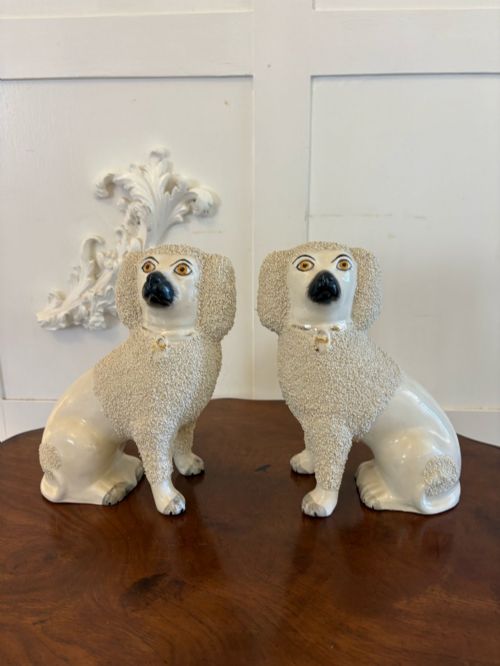
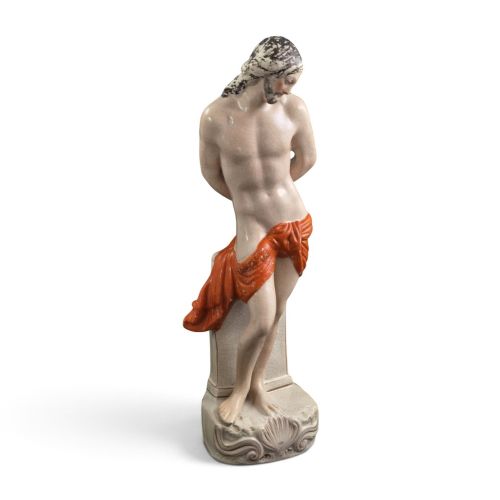
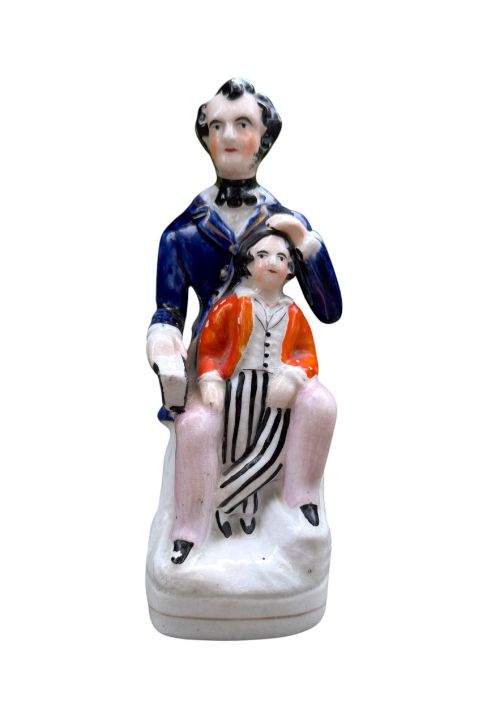
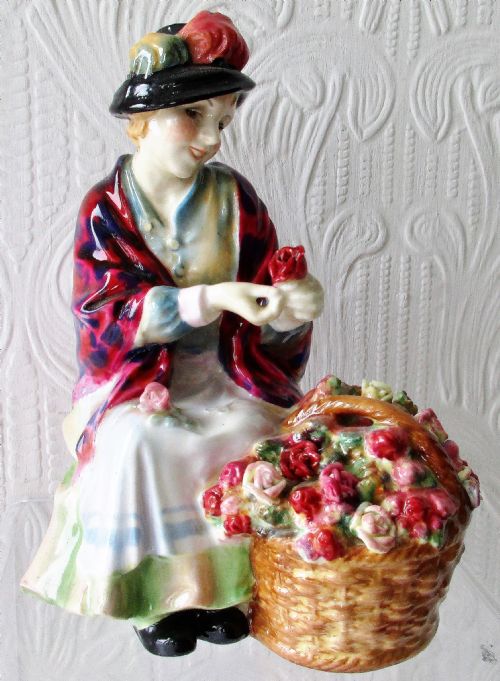
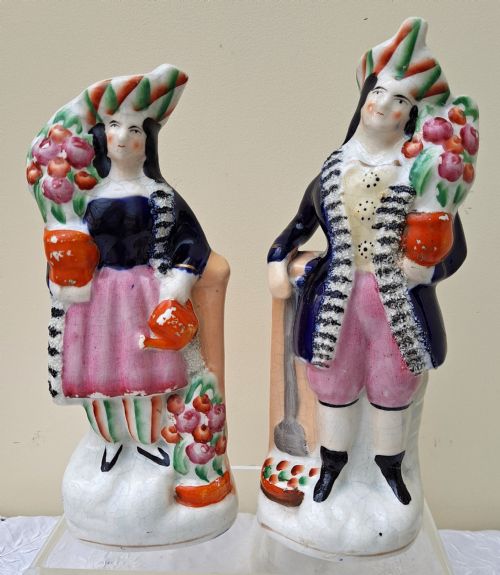
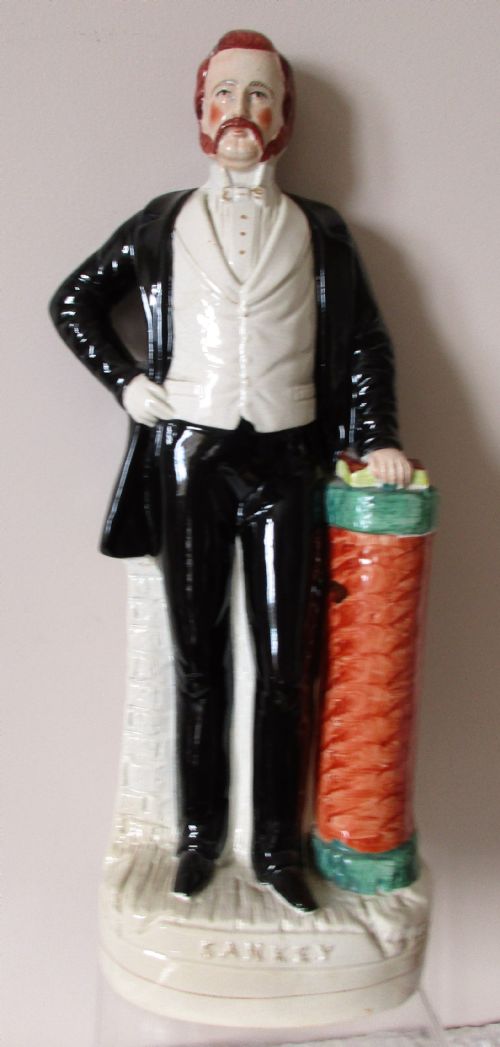
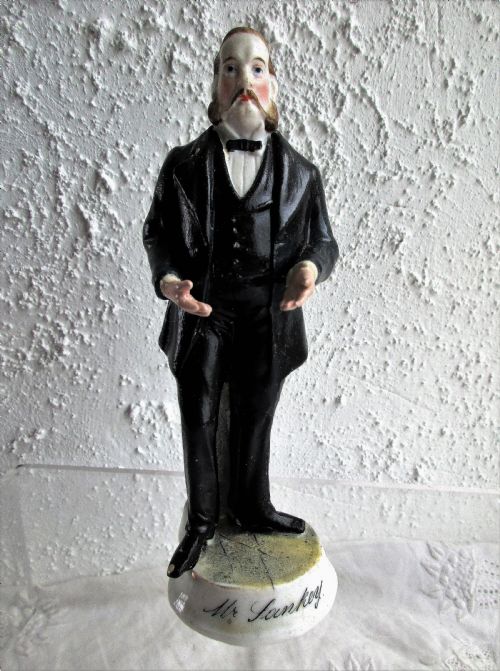
When you search for an antique pottery statuette, you meet a diverse selection of ceramic figures depicting animals, historical personalities, literary characters and everyday folk. The majority of pieces on this page are nineteenth-century Staffordshire earthenware figures, ranging from flatback portrait groups to quill holders and poodles.
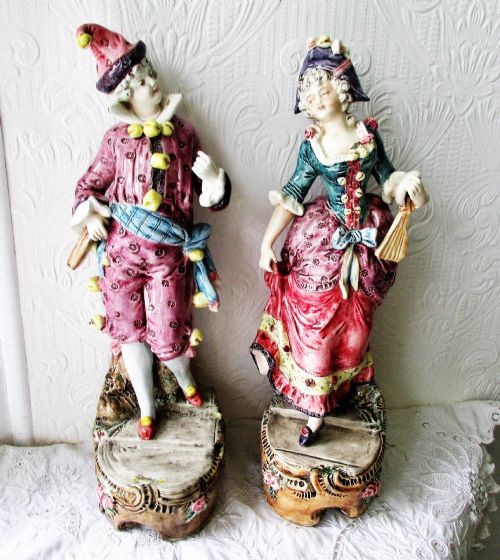
Beyond the Staffordshire tradition, the selection includes twentieth-century porcelain figurines, Art Deco cats, French earthenware carnival figures and Chinese porcelain pieces. These objects served as mantelpiece ornaments, desk accessories and decorative shelf items in Victorian and Edwardian homes.
How they were made
Makers shaped these statuettes from earthenware, porcelain and ceramic bodies, often employing press moulds to form the figures before hand-finishing the details. Artisans then applied lead glazes, enamel paints and occasional touches of gold leaf to bring colour and surface sheen to the ceramic.
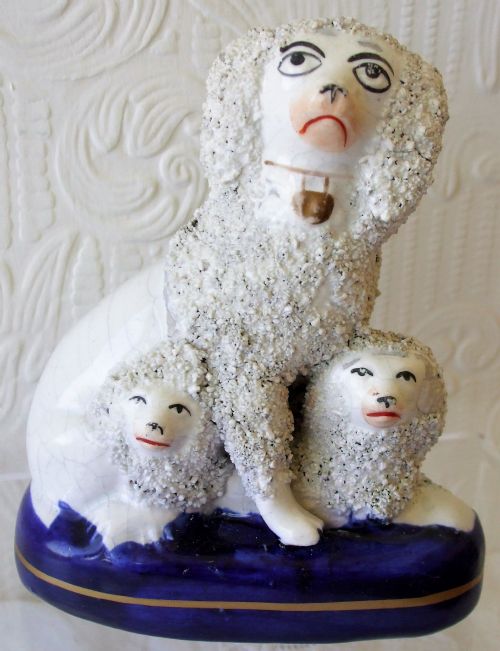
Several Staffordshire poodles wear coats made entirely of applied ceramic clay curls, patiently piped by hand to mimic unruly Victorian poodle fur.
What varies in quality
The weight of the ceramic body and the stability of the flatback construction also distinguish superior examples from simpler production pieces. Finer models show thoughtful proportion and careful finishing to the reverse sides, whereas lower-tier examples exhibit coarser moulding and rushed decoration.
Royal Dux Bohemia·Royal Doulton·Wedgwood and Co Ltd·Shelley·Rozenburg
The Antique Pottery Statuette Glossary
- Flatback
- A figure moulded with a finished front and a flat, unadorned back designed to stand directly against a wall or mantelpiece. This construction saved ceramic material and simplified the firing process for nineteenth-century Staffordshire potters.
- Earthenware
- A porous pottery body fired at lower temperatures than stoneware or porcelain, requiring a glaze to achieve impermeability. It forms the foundation for the vast majority of Staffordshire portrait figures and animal models.
- Lead Glaze
- A glossy coating containing lead oxide applied to pottery before a secondary firing to create a smooth, waterproof surface. It gives many nineteenth-century figures their characteristic shine.
- Enamel Paint
- Opaque coloured decoration applied over a fired glaze and fixed with a gentle secondary heat. It allowed potters to add vivid reds, blues and greens to the costume details of their figurines.
- Quill Holder
- A functional ceramic desk accessory incorporating a modelled figure alongside a small trough or rest for writing quills. These dual-purpose pieces combined domestic display with practical library use.
Antique Pottery Statuette: Frequently Asked Questions
What are Staffordshire flatback figures?
Staffordshire flatback figures are earthenware ornaments produced in the nineteenth century with decorated fronts and plain, flat backs intended to sit against a wall. Potters designed them primarily for display on cottage mantelpieces.
These pieces typically portrayed contemporary political leaders, literary heroes, royalty, crimean war events or domestic animals like poodles and lions. They brought popular culture and current affairs into nineteenth-century homes as affordable decorative art.
How do I date an antique pottery statuette?
Dating relies on stylistic clues, costume details, ceramic bodies and any impressed registry marks or maker stamps on the base. Figures depicting specific historical events or famous individuals usually date close to the time of the event.
Victorian pieces often feature lead-glazed earthenware with hand-painted enamel touches, while twentieth-century examples frequently show finer porcelain bodies and printed factory marks. Comparing the modelling style with documented factory outputs helps narrow down the period of manufacture.
Were these figures meant to be toys?
These ceramic figures were strictly ornamental and decorative objects rather than toys for children. Their fragile earthenware or porcelain composition made them entirely unsuited for play.
Placed securely on mantelpieces, sideboards and desks, they demonstrated the owner's taste, political loyalties or interests in literature and popular events. Many served dual functions, such as inkstands or quill holders.