




Victorian Military Figure Ornament
A victorian military figure ornament captures political heroes, royalty and soldiers in earthenware, porcelain and brass.
Victorian Military Figure Ornament
A victorian military figure ornament brings home the likenesses of notable commanders, royals and historical soldiers that dominated the nineteenth century. These sculptures take the form of Staffordshire pottery figures, Austrian bronze cavaliers, Meissen porcelain elephants and heavy brass doorstops.
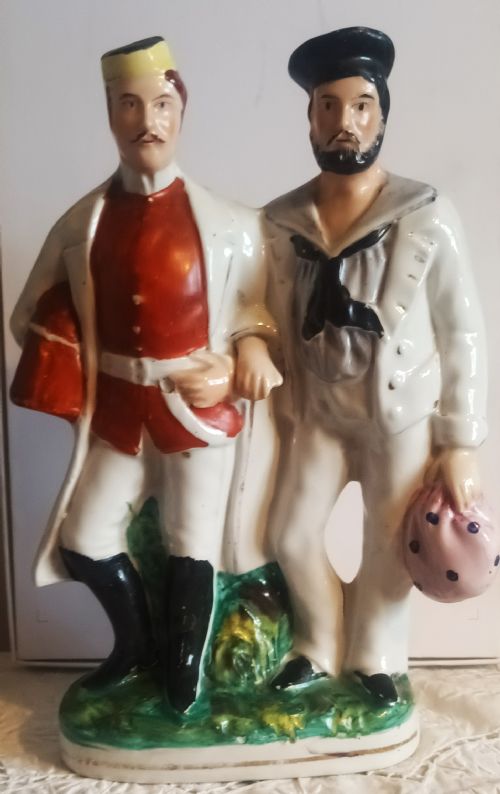
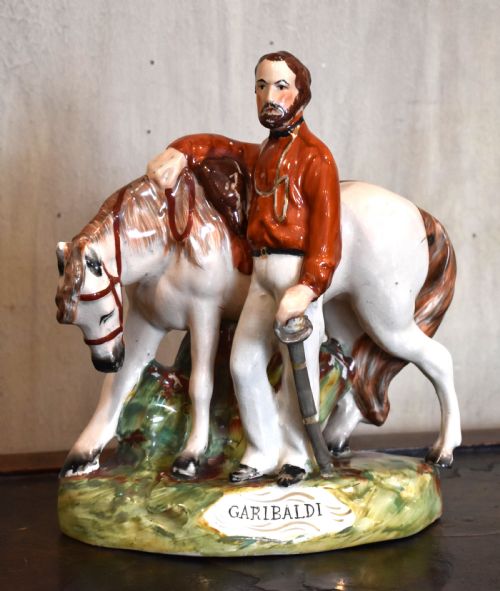
Most examples found on this page hail from the nineteenth century, including specific dates around eighteen sixty and earlier late Georgian iterations. Subjects range from Admiral Sir Charles Napier and General Charles George Gordon to Napoleon III, Prince Albert and Garibaldi.
Materials and construction methods
Pottery figures rely on moulded earthenware finished with lead glaze, enamel paints and occasional gilt highlights to define military uniforms and facial details. These Staffordshire ceramics are hand-painted, leading to individual variations in colour and expression across different examples.
Metal pieces utilise cast brass and Austrian bronze to create solid figures of cavaliers and historical commanders that double as functional doorstops. Porcelain works, such as Meissen pieces, employ hard-paste ceramic bodies fired at high temperatures to achieve fine sculptural detail.
Surface treatments combine colourful enamel glazes with applied gilding to accentuate buttons, medals and decorative elements on uniforms. The combination of ceramic slip casting and metal casting dictates the weight and durability of each distinct ornament.
Napoleon III and Garibaldi share mantelpiece space here, proving that nineteenth-century ceramic potters cared little for European geopolitical rivalries.
Factors of quality and execution
The precision of the moulding and the crispness of the hand-painted enamel details distinguish superior pottery figures from simpler productions. Well-defined facial expressions and carefully applied gilt accents elevate a Staffordshire piece above standard output.
In bronze and brass examples, the sharpness of the casting and the depth of the chased surface work determine overall refinement. Superior weight, stable mounting and intact patination mark out the better metal cavaliers and doorstops.
Scale and complexity also influence quality, as larger multi-figure groups or intricate porcelain compositions demand greater technical mastery from the potter or foundry.
Meissen porcelain
The Victorian Military Figure Ornament Glossary
- Staffordshire pottery
- Ceramic wares produced in the English pottery districts, known for earthenware portrait figures and chimney ornaments. These slip-cast pieces captured public interest through likenesses of contemporary heroes and royalty.
- Hard-paste porcelain
- A durable ceramic material composed of kaolin and petuntse, fired at high temperatures to produce a dense, vitreous body. Meissen utilised this medium for highly detailed sculptural groups.
- Lead glaze
- A glossy coating containing lead oxide applied to earthenware before firing to seal the porous clay and enrich painted colours. This technique gives Staffordshire figures their characteristic shiny finish.
- Flat-back
- A style of Staffordshire figure moulded with a finished front and a plain, unglazed or partially glazed flat rear. This construction allowed the ornament to sit flush against a mantelpiece or shelf.
- Gilt
- A thin layer of gold applied to ceramic or metal surfaces to highlight decorative details such as uniform buttons, epaulettes and titles. This metallic finish adds a formal contrast to painted enamels.
Victorian Military Figure Ornament: Frequently Asked Questions
What are victorian military figure ornament pieces?
These ornaments are sculptural representations of soldiers, generals, admirals and royalty produced primarily in ceramic, bronze and brass during the nineteenth century. They served as decorative mantel ornaments or functional items such as doorstops.
Subjects often commemorated specific historical figures, political leaders and military engagements that captured public attention at the time. Collectors encounter various regional styles, ranging from English Staffordshire earthenware to continental porcelain.
How were these figures displayed originally?
Many Staffordshire earthenware pieces were designed as flat-back ornaments meant to be placed on mantelpieces or shelves in domestic interiors. Their flat rears allowed them to sit securely against walls.
Heavier brass and bronze versions often functioned as doorstops or desk accessories, combining utility with decorative martial themes. Portrait figures of rulers and commanders also served as expressions of political loyalty and patriotism in Victorian homes.
How do I identify a Staffordshire pottery figure?
Staffordshire figures are typically constructed from earthenware with a visible lead glaze and hand-painted enamel decoration. They often feature titles inscribed on the base in raised capitals to identify the portrayed dignitary.
Examining the underside usually reveals a hollow interior and porous clay body typical of nineteenth-century English pottery production. The modelling style tends to be robust and folk-art in character rather than hyper-realistic.
What is the difference between pottery and bronze examples?
Pottery examples, predominantly made in English kilns, rely on moulded earthenware, enamel colours and lead glaze for their visual impact. They are lighter and focus heavily on British political and military subjects.
Bronze and brass examples are metal castings that offer greater structural durability and intricate surface detail. These pieces frequently depict cavaliers or historical commanders and often double as heavy doorstops.