






Blue Glaze Pottery Figure
These pieces of blue glaze pottery figure work span centuries of domestic and overseas kiln traditions, offering collectors characterful ceramics shaped by hand.
Blue Glaze Pottery Figure
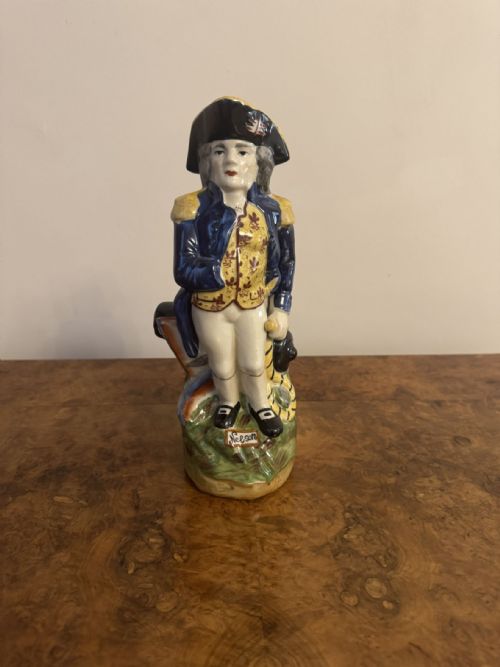
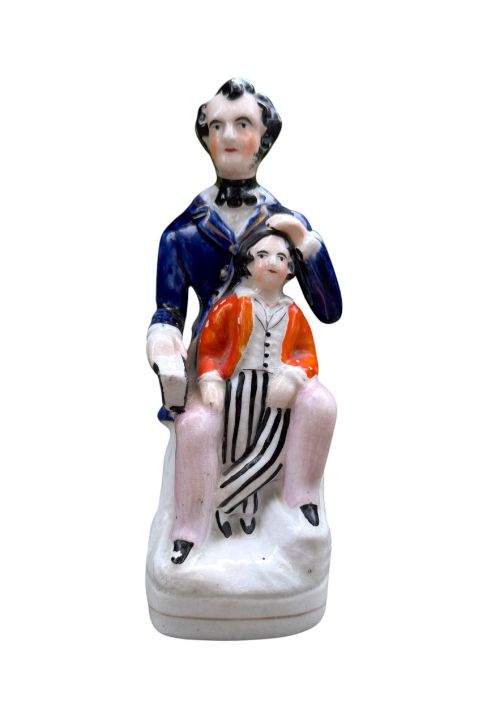
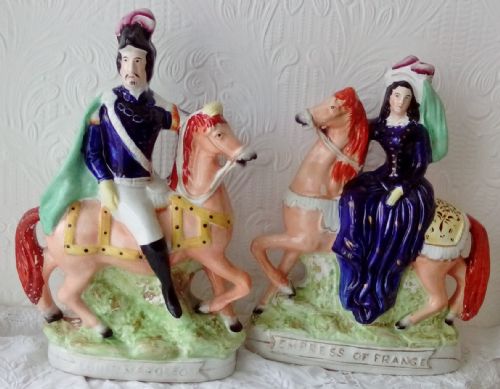
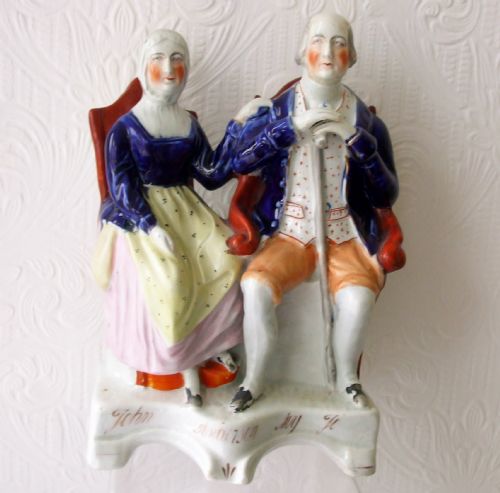
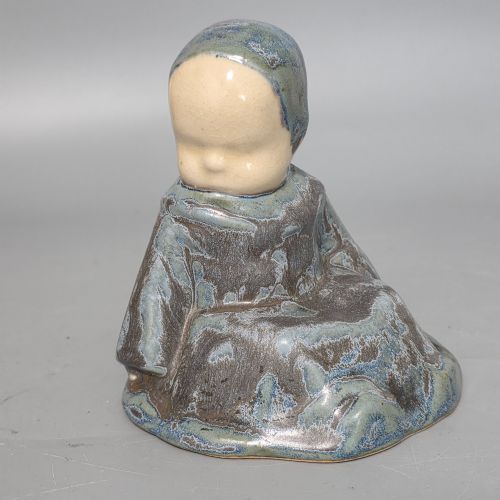
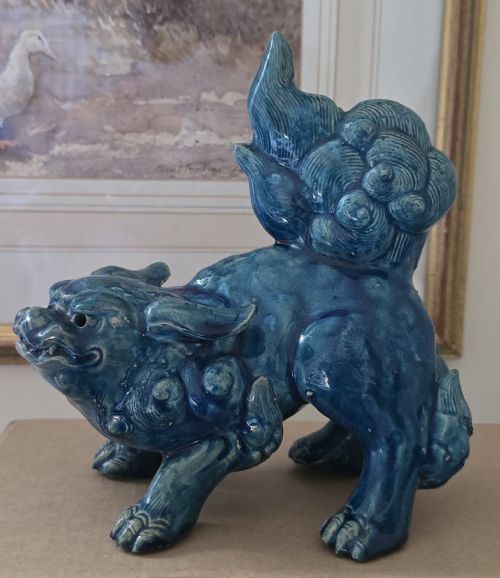
A blue glaze pottery figure search brings together diverse ceramic traditions spanning Staffordshire flatbacks, Dutch delftware, and Japanese wares from the Meiji and Taisho periods. Buyers find representations of royalty, literary characters, animals, and mythological subjects shaped as mantel ornaments, spill vases, or inkwells.
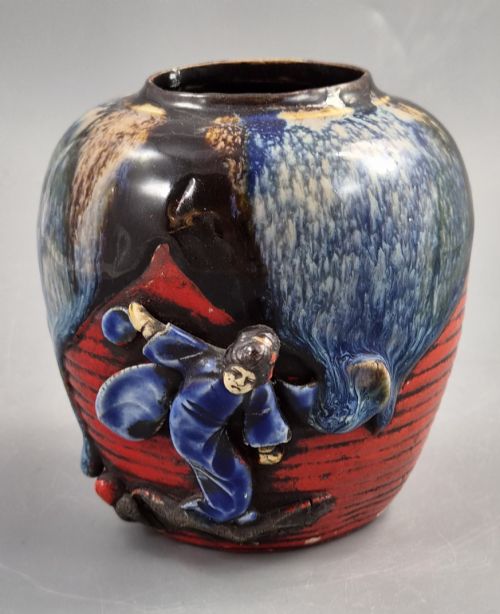
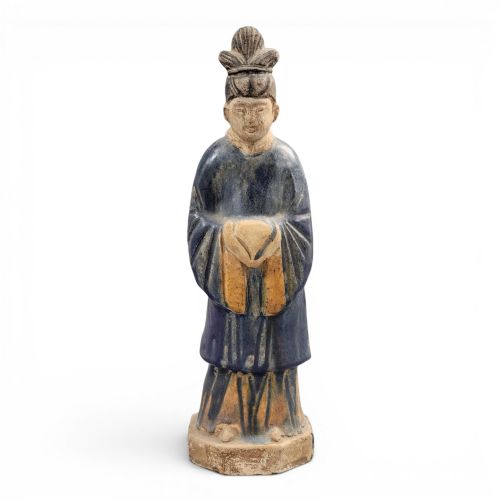
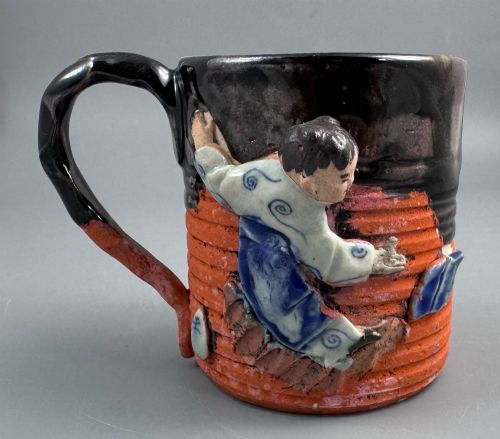
Nineteenth-century English Staffordshire pottery dominates the selection, particularly portrait figures and animal groups marked by cobalt blue accents. Alongside these sit continental faience, Chinese funerary pieces, and textured Japanese vessels featuring applied figures modelled in high relief.
Materials and construction
Potters shaped these objects using earthenware, stoneware, and faience bodies, applying lead glazes, enamel paint, and occasional gold leaf for surface decoration. Cobalt provided the deep blue tones found across English, Dutch, and Asian pieces, often reacting with kiln heat to yield varied depths of glaze.
Many nineteenth-century English examples rely on slip-casting or press-moulding before hand-painting, whereas Japanese Sumida Gawa pieces feature distinctive textured glazes with modelled figures applied directly to the body.
Listings feature earthenware, stoneware, and faience bodies finished with lead glaze, enamel, and gold leaf.
Distinctions in quality
Signatures on Japanese ceramics or clear maker attributions on Staffordshire figures elevate a piece, as do well-matched pairs and items retaining original components like covers or quill holders.
Berthe Savigny·Hiroshi
The Blue Glaze Pottery Figure Glossary
- Flatback
- A Staffordshire figure designed with a finished front and an unglazed or plain flat rear intended to sit against a mantelpiece wall.
- Spill vase
- A hollow cylindrical holder integrated into a ceramic figure, designed to store wooden spills used for lighting candles or fires.
- Moriage
- A Japanese decorating technique using piped slip to build up raised decorative patterns and figures on the ceramic surface before glazing.
- Faience
- Tin-glazed earthenware produced across European potteries, known for its opaque white background and painted polychrome or blue designs.
Blue Glaze Pottery Figure: Frequently Asked Questions
What periods do these ceramic figures cover?
The available selection spans from eighteenth-century European faience and Dutch delftware through the height of Victorian Staffordshire production up to early twentieth-century Japanese and French studio pottery.
Each period utilises distinct regional clays, glazes, and moulding techniques that help identify the exact era of manufacture.
How were Staffordshire figures displayed?
Victorian households placed flatback figures and animal ornaments on mantelpieces, shelf edges, and side tables where they could be viewed from the front.
Many incorporated functional elements such as inkwells, watch-holders, or spill vases to combine decoration with everyday domestic utility.
What is Sumida Gawa pottery?
Sumida Gawa refers to Japanese ceramics produced around Tokyo featuring heavy, dripping flambé or oxblood glazes and distinct figures modelled in high relief applied to the exterior.
These tactile vessels often include artist signatures and date from the Meiji and Taisho periods.
How do I care for antique glazed pottery?
Keep glazed earthenware and stoneware away from direct sunlight and dramatic temperature fluctuations to protect the ceramic body and prevent crazing in the surface glaze.
Dust gently with a dry cloth and avoid using liquid cleaners or soaking pieces in water.