1,710  PAGES BROWSED TODAY PAGES TODAY • 0 ANTIQUES UPLOADED TODAYNEW ARRIVALS
GIFTSNEW
LATEST STOCK
Sort Order
Items Per Page
Browse Categories
Sort order
Relevant Links
Items per page
ID #SA1236693
FOR SALE
£400
Email Phone Buy
Save
Antique Dutch Delft Blue and Manganese Octagonal Baluster Vase, Chinese Scholar, C.1680
For sale by Ritas Bazaar
for sale €468     $508
£400

Ritas Bazaar

Sellingantiques Verified Since Nov 2025
Browse dealers 260 items
Id #SA1236693
PDF SHARE
SAVE

Antique Dutch Delft Blue and Manganese Octagonal Baluster Vase, Chinese Scholar, C.1680

18th century
For Sale by Ritas Bazaar
Description

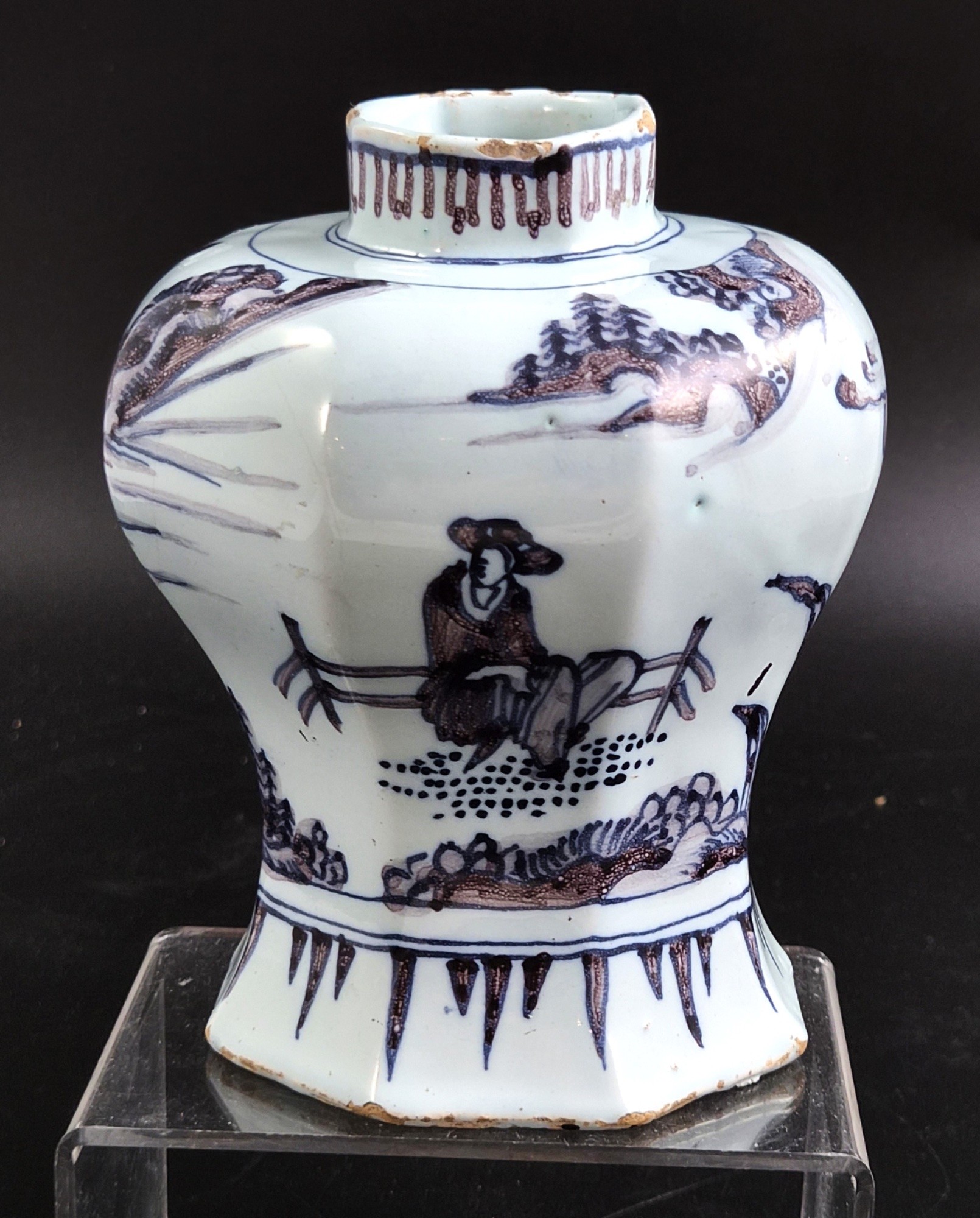
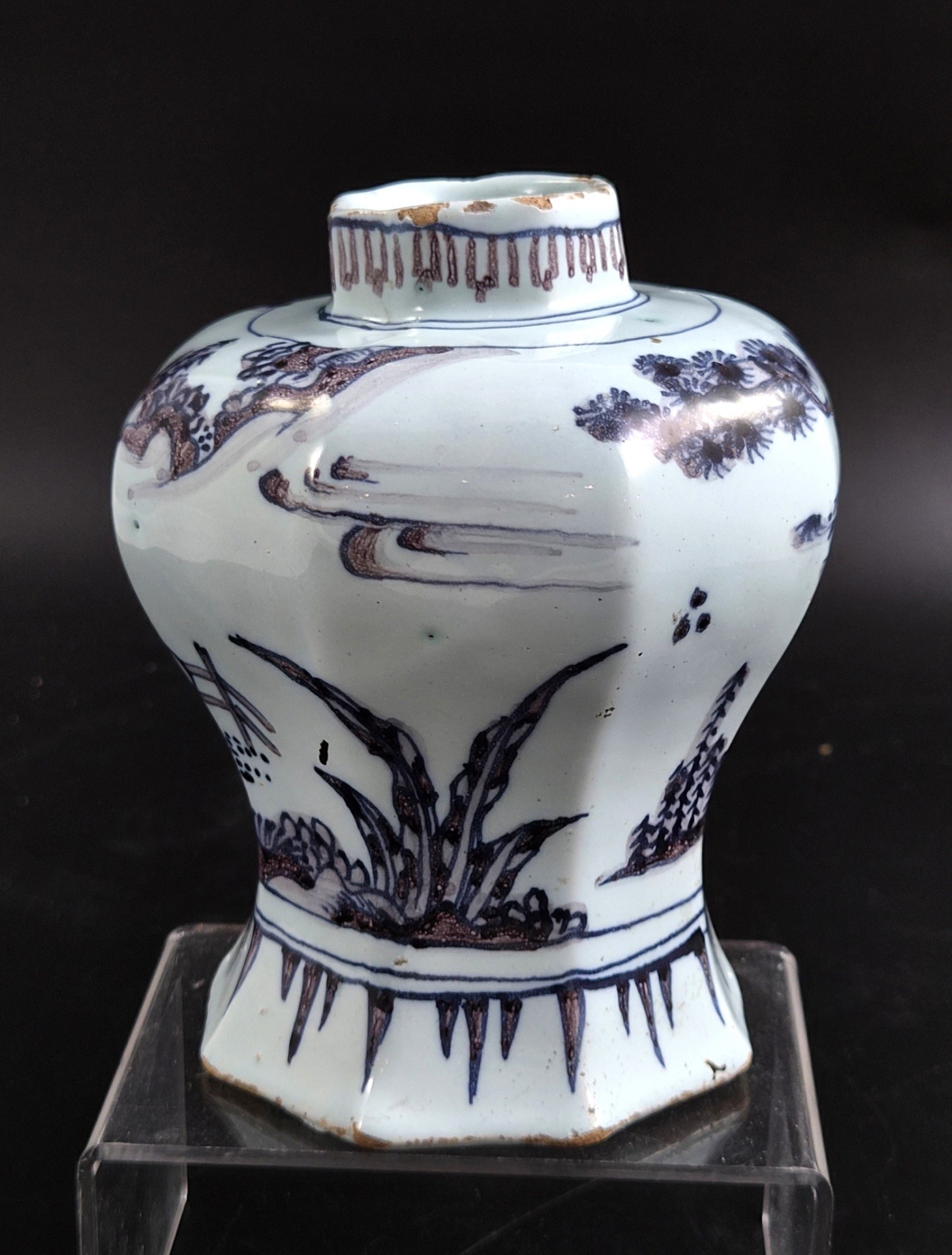
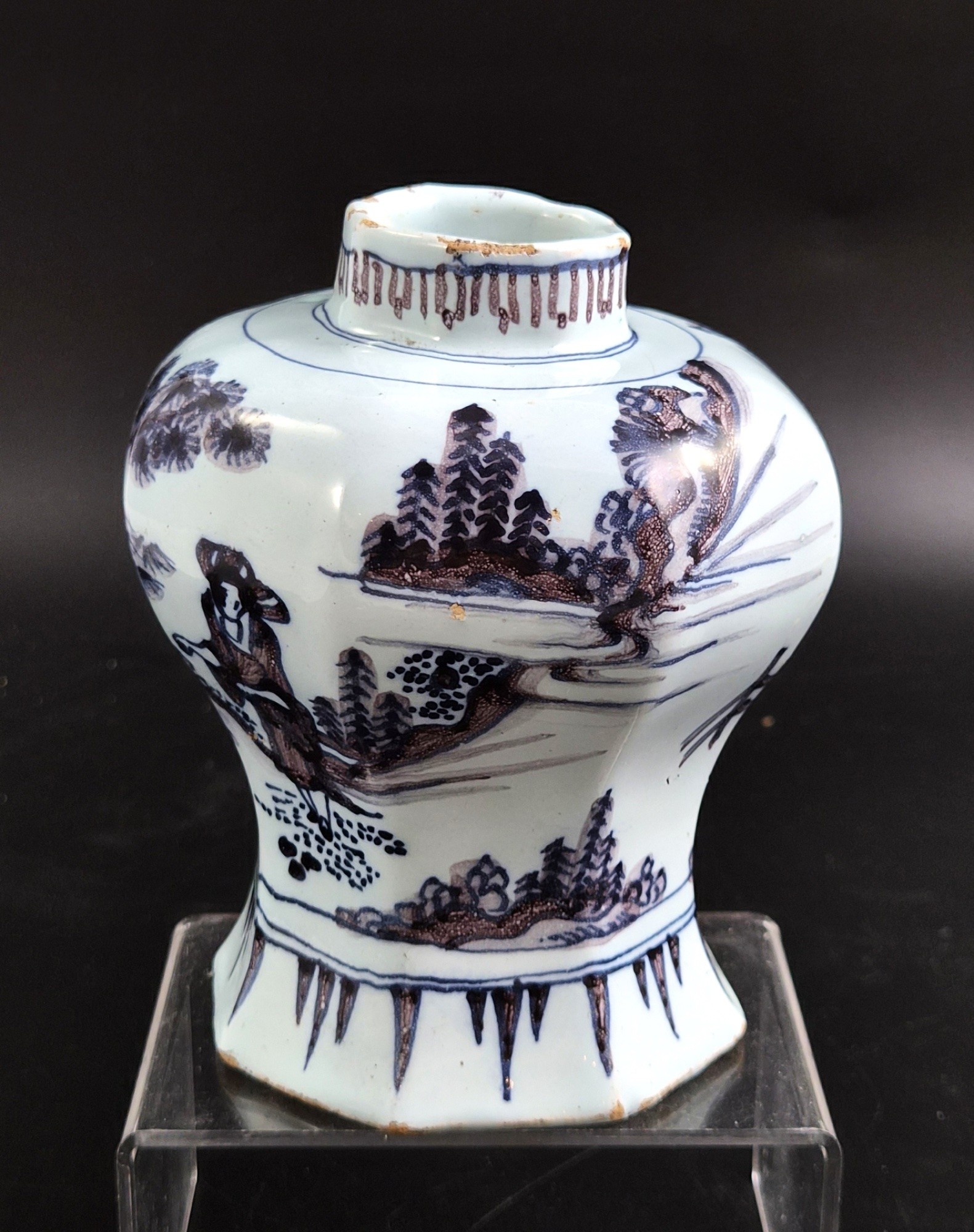
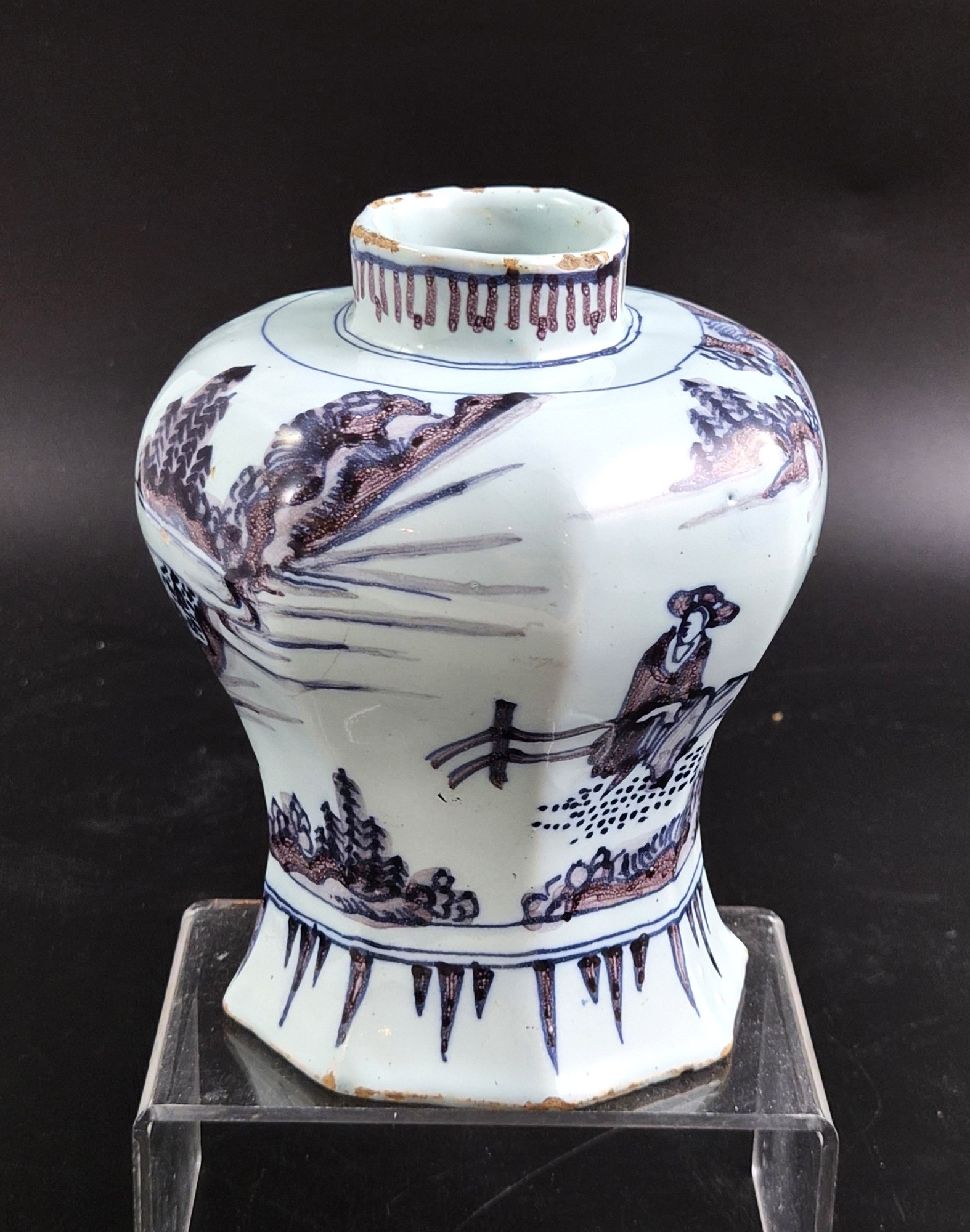
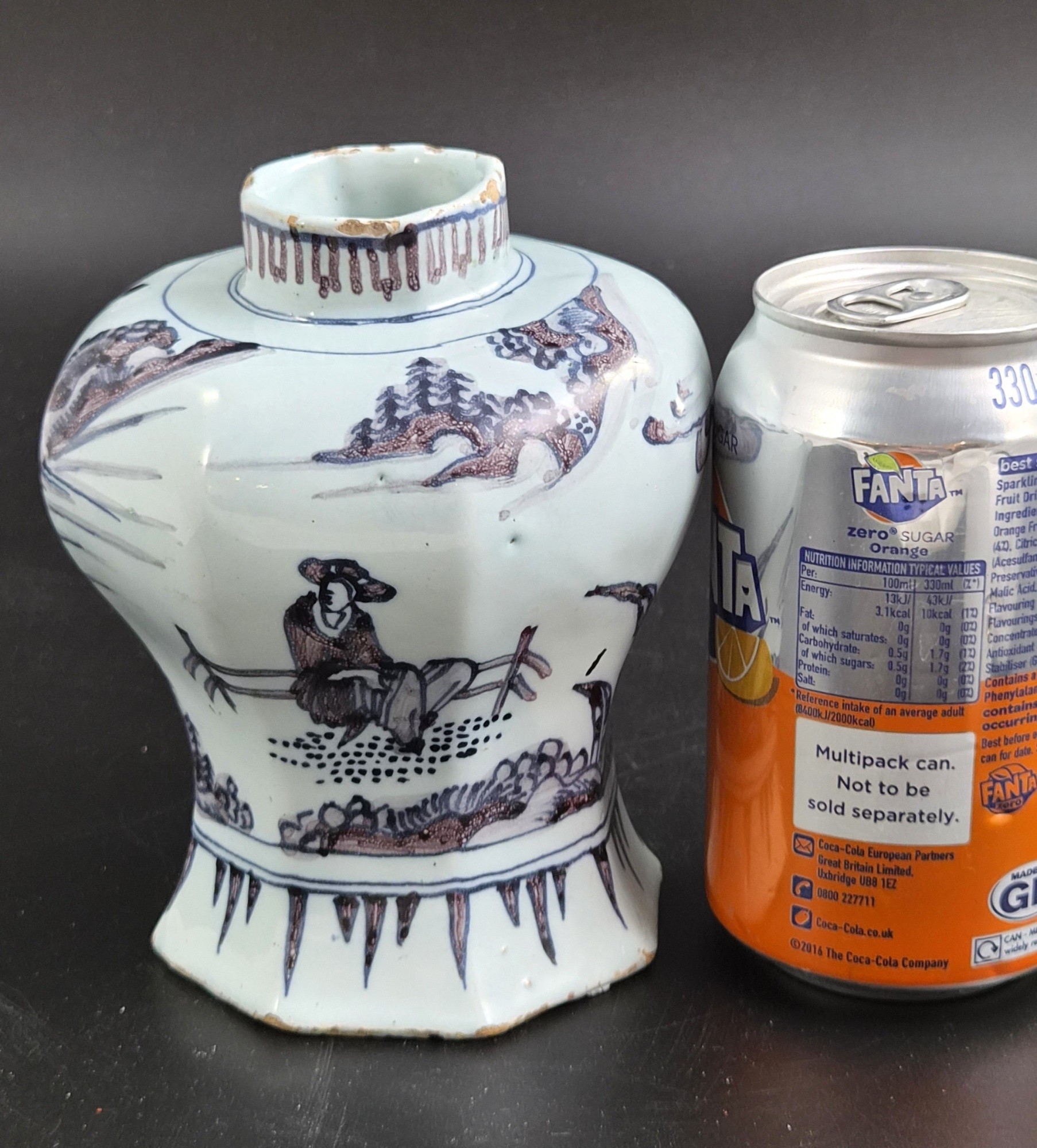
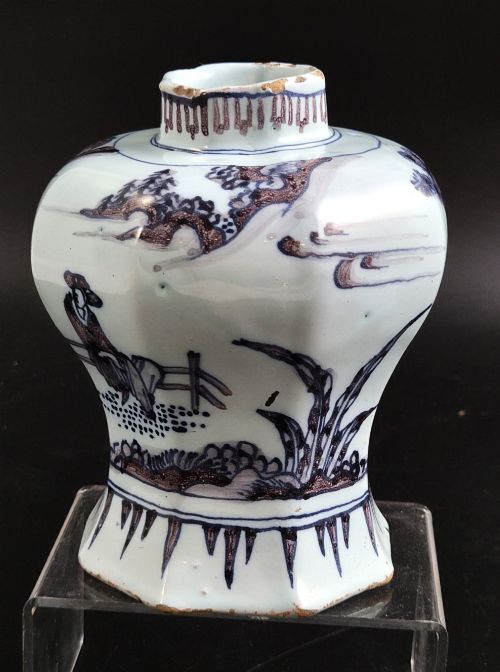
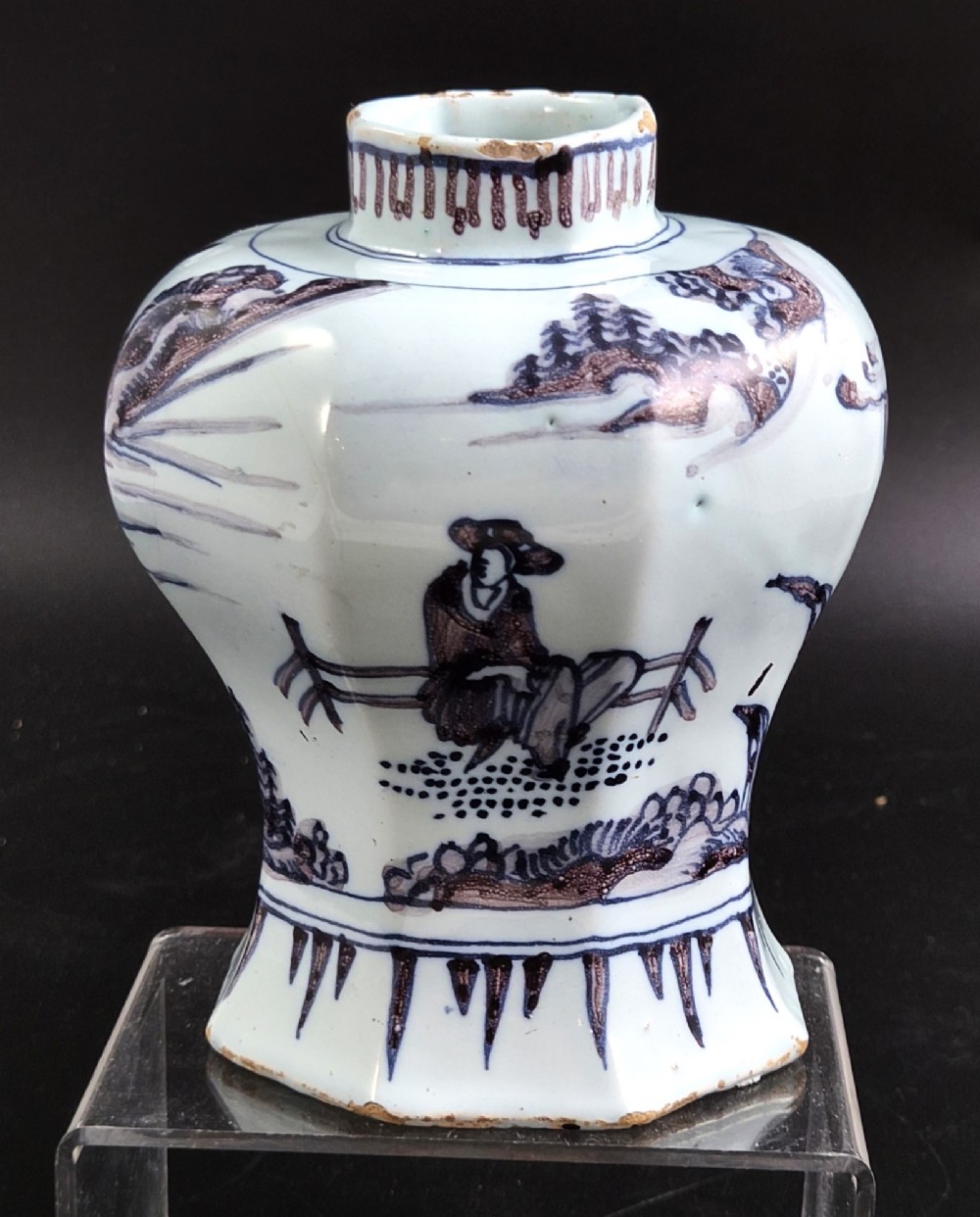
An authentic late 17th-century Dutch Delftware vase of octagonal waisted baluster form on a spreading foot, made in the Netherlands, circa 1680-1700. The vase is painted in manganese-purple and cobalt-blue over a milky tin glaze. The continuous scene is hand-painted in the Chinese Transitional style, depicting a seated Chinese scholar in a watery landscape with rocks, dwellings and stylised pine trees. The lower neck carries a pendant border, matched by a stiff-leaf band above the flared base.
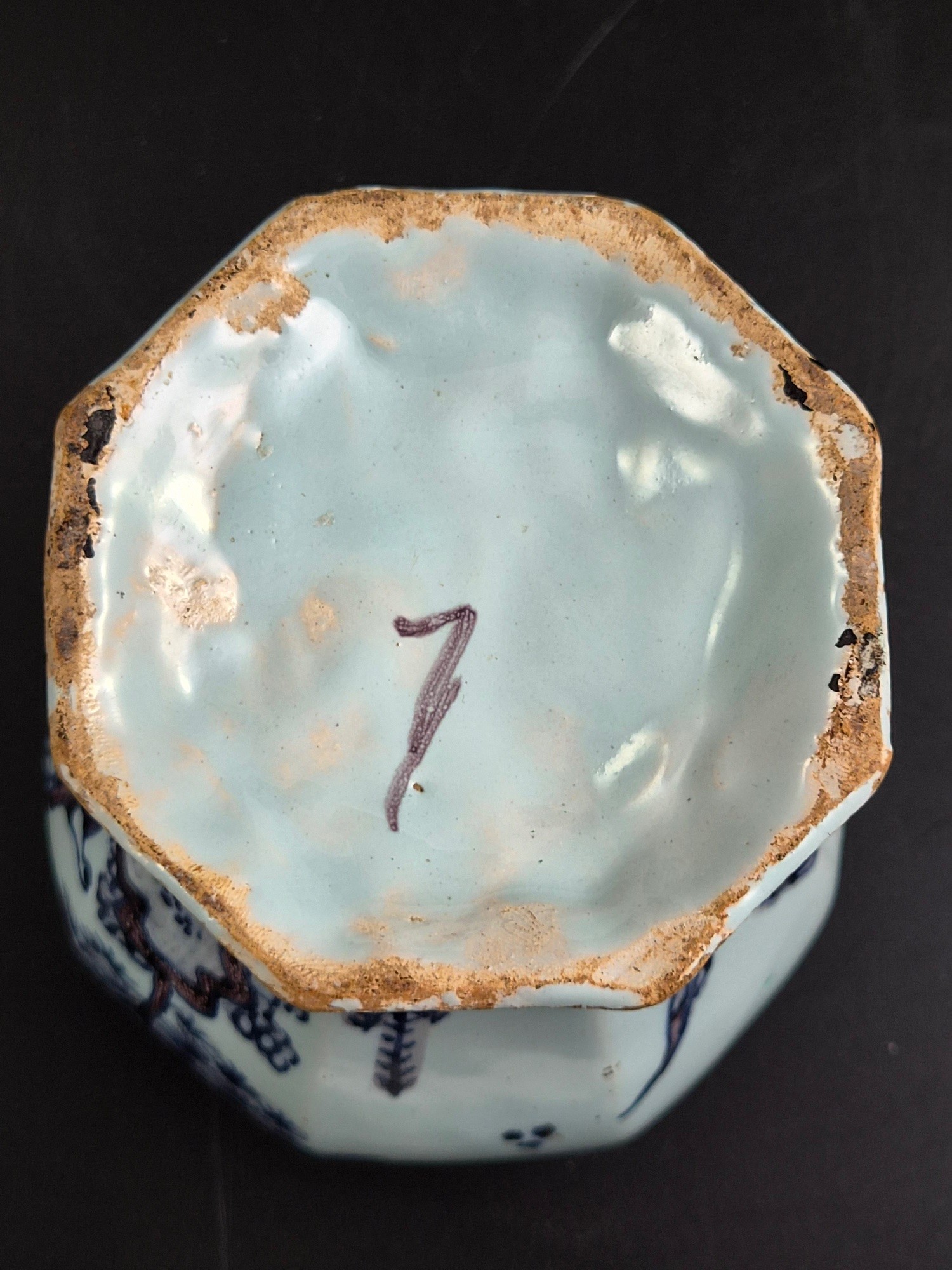
The underside of the glazed base bears a hand-painted manganese numeral 7, probably a workshop or production numeral. The pale blue-white tin glaze covers the entire underside, with wear at the footrim revealing the yellow-buff earthenware body. This construction is consistent with 17th-century Dutch Delftware, whose biscuit-fired bodies were dipped in opaque tin glaze before painting and final firing. Fingerprints are visible in the glaze on the underside, evidence of the vessel having been dipped by hand during production.
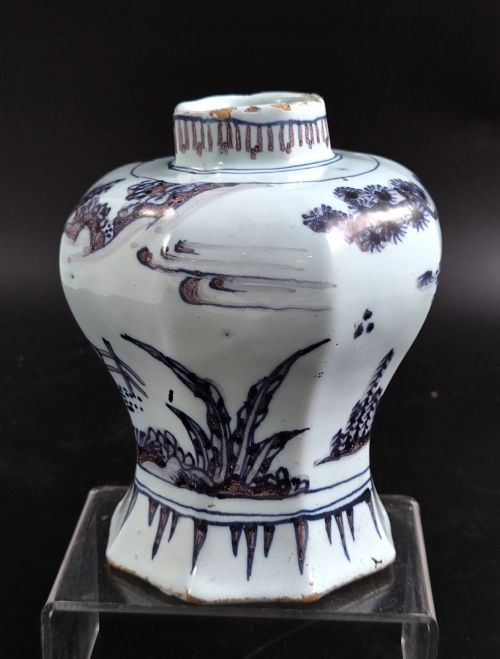
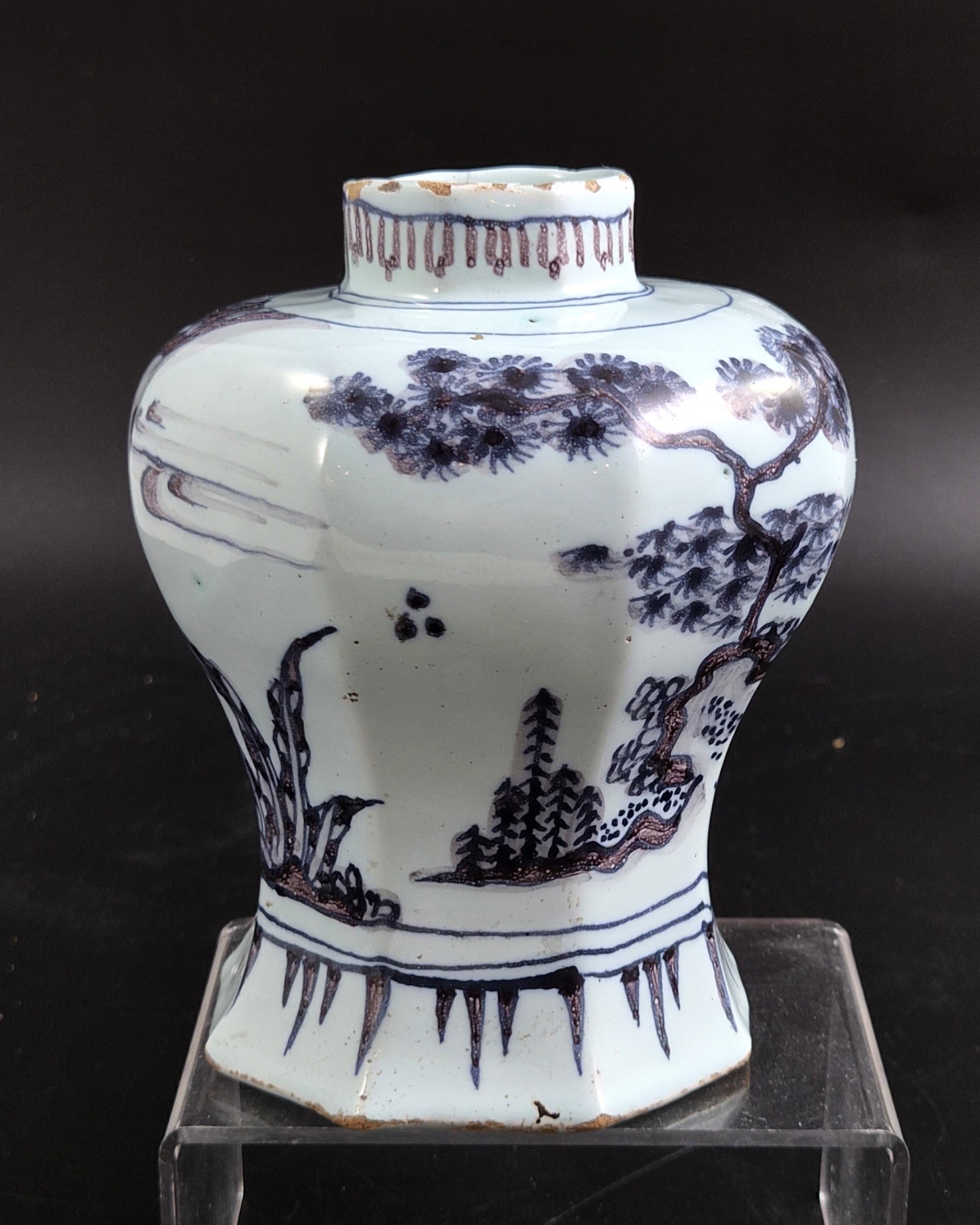
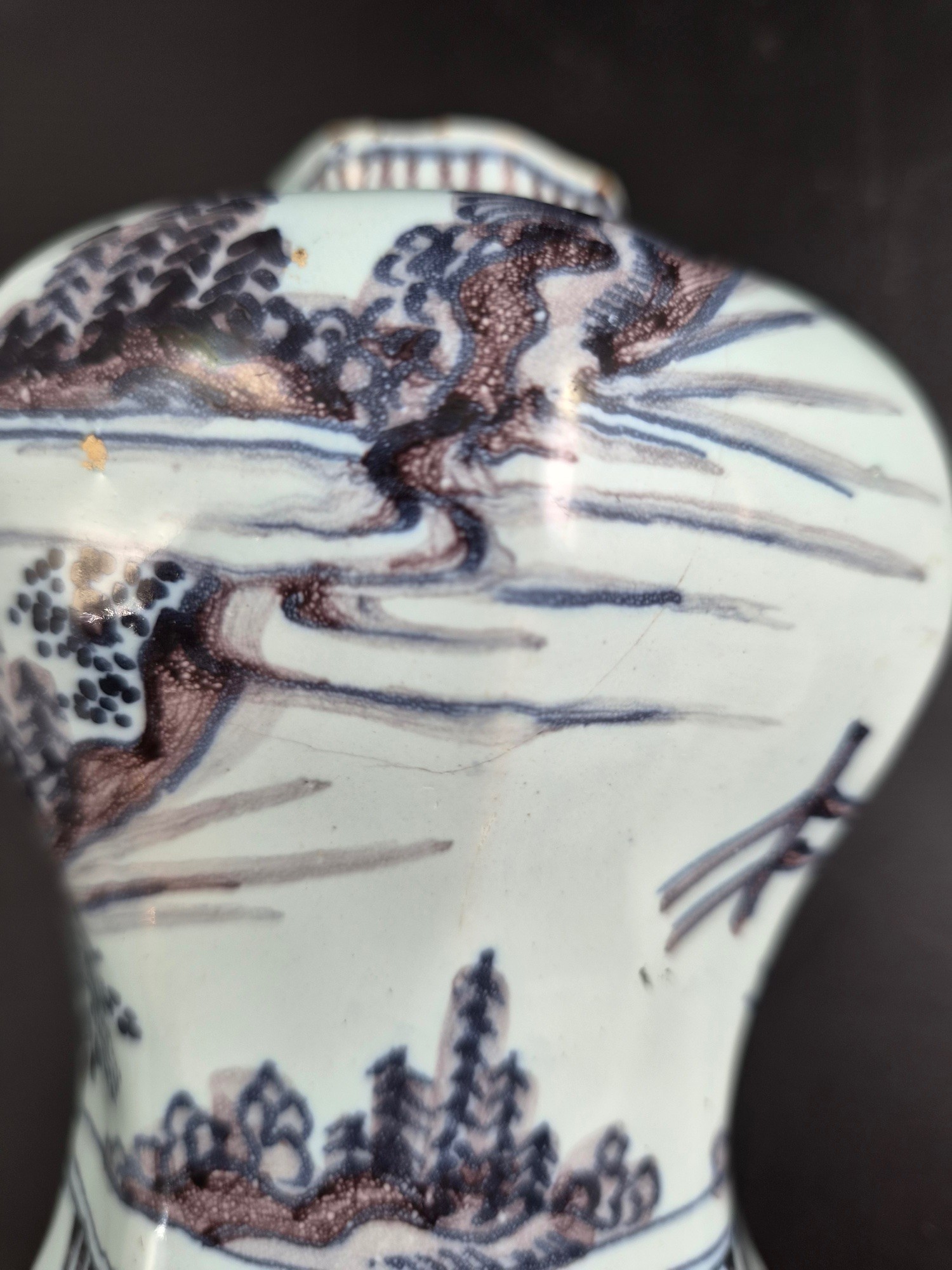
The vase belongs to the blue-and-manganese Delftware tradition of the later 17th century. The use of manganese-purple alongside cobalt-blue, the carefully painted Chinese-inspired landscape and the octagonal profile reflect the Dutch response to Chinese Transitional porcelain. The scene is a European interpretation of Chinese landscape painting, created for the Dutch market.
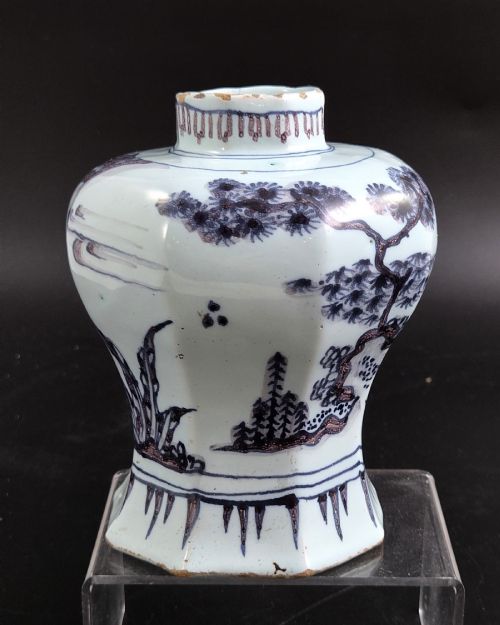
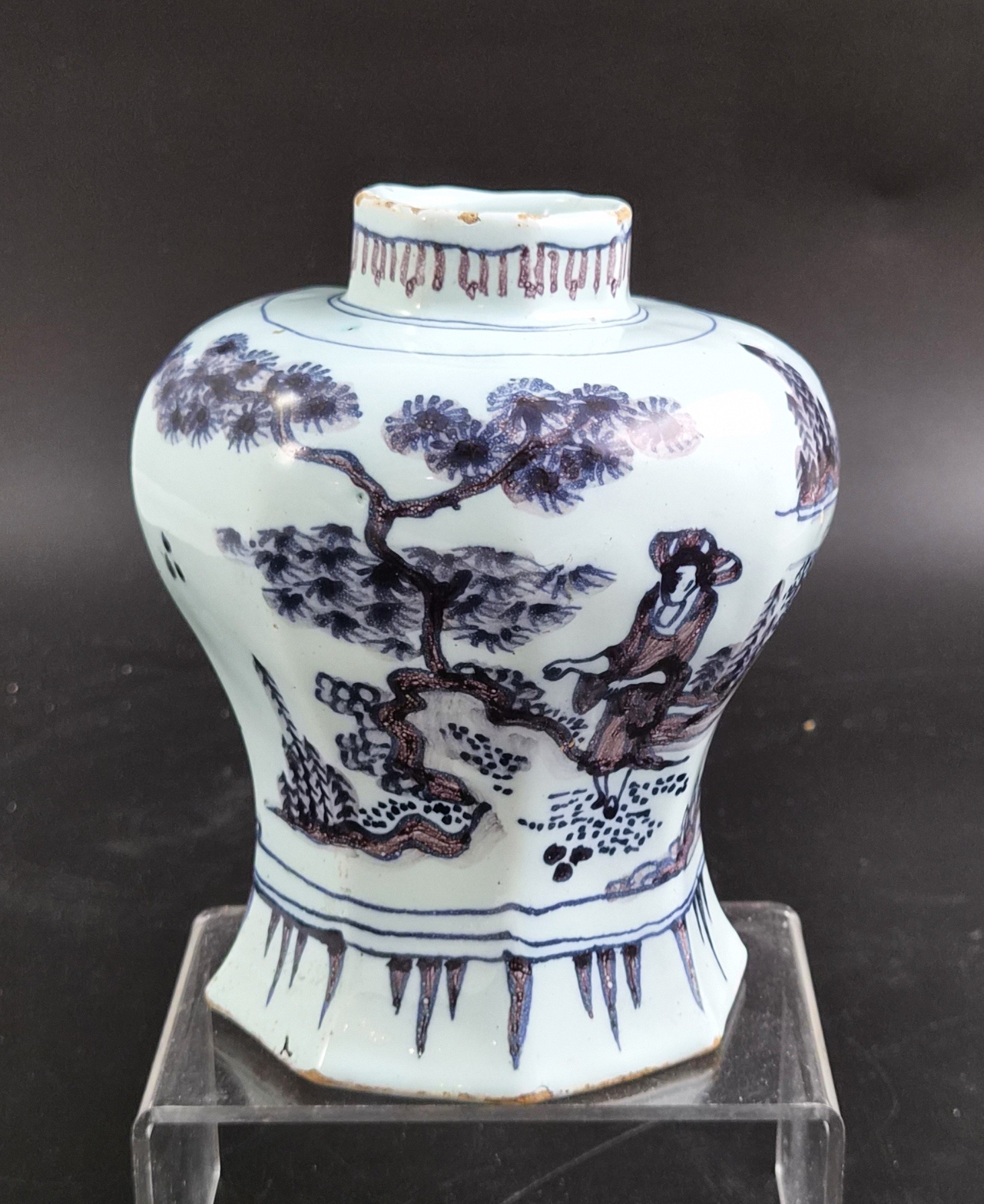
During the 17th century, Delft became the ceramic capital of Europe. When civil war in China disrupted the trade in Ming porcelain, Delft potters answered the demand for the oriental aesthetic by combining local clays with imported calcareous marl beneath a dense, brilliant tin glaze. Delftware of this early period was highly prized, turning ordinary earthenware into decorative objects for fashionable European interiors. Early manganese-painted examples such as this represent an important milestone in European ceramic history.
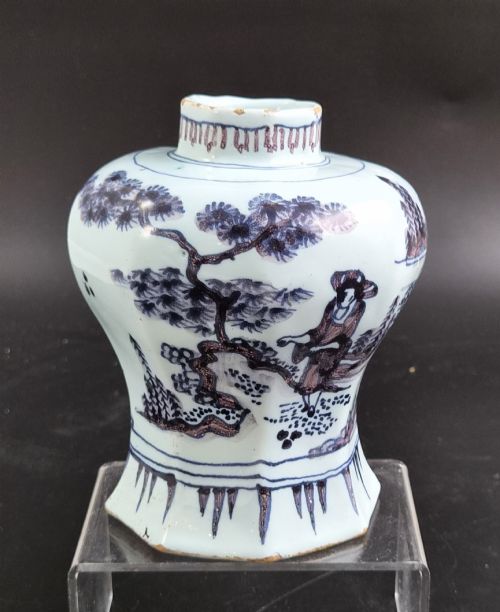
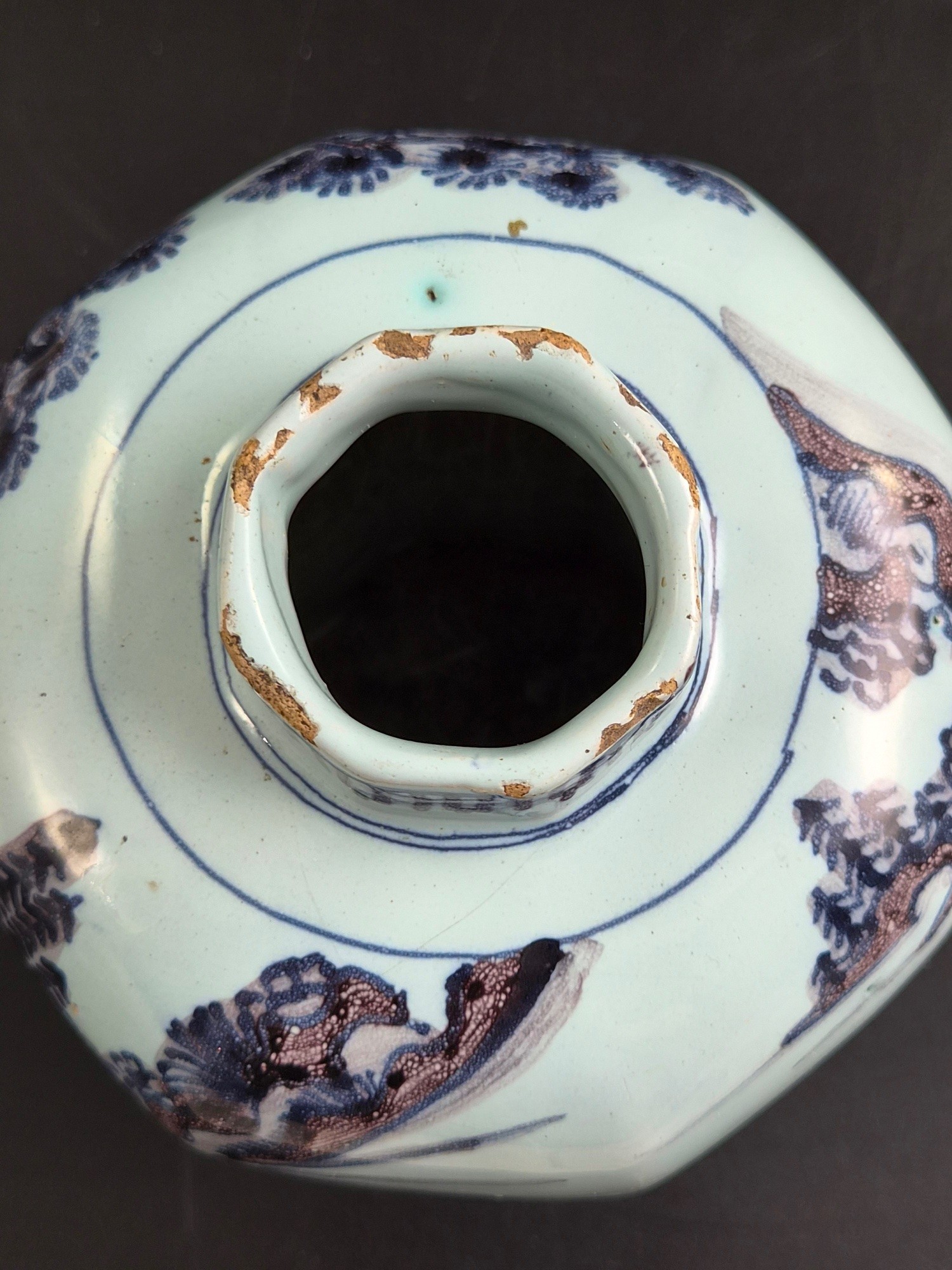
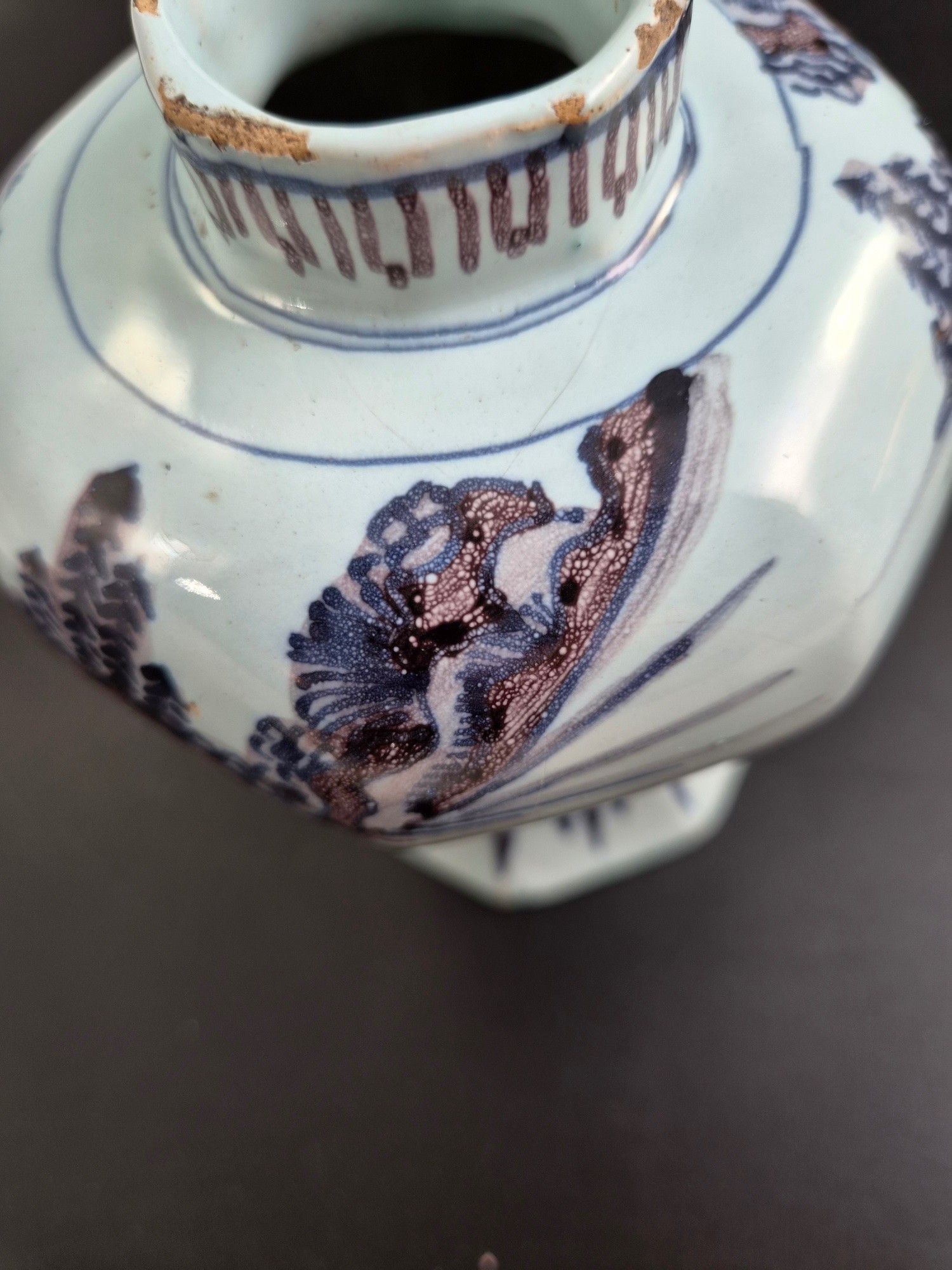
Dimensions: height 13.8 cm; diameter 11.2 cm; weight 386 g. Condition: very good original antique condition for its age. There are small losses to the tin glaze around the upper rim and further glaze losses around the lower rim, all shown in the photographs. There are fine hairlines to the body [add location and whether visible inside]. The glaze and painted decoration remain well preserved. Please study the accompanying photographs carefully as they form an integral part of this description. If you have any questions, we will be happy to answer them. The item will be shipped with full tracking and insurance. Shipping costs include handling, packaging and postage.

Declaration

Ritas Bazaar has dated this Dutch Delft Baluster Vase to the 18th Century.

Reference Numbers
Sellingantiques Reference
SA1236693
Description
An authentic late 17th-century Dutch Delftware vase of octagonal waisted baluster form on a spreading foot, made in the Netherlands, circa 1680-1700. The vase is painted in manganese-purple and cobalt-blue over a milky tin glaze.
“
The continuous scene is hand-painted in the Chinese Transitional style, depicting a seated Chinese scholar in a watery landscape with rocks, dwellings and stylised pine trees.
Ritas Bazaar

The lower neck carries a pendant border, matched by a stiff-leaf band above the flared base.

fig 1. An octagonal antique Dutch Delft tin-glazed earthenware baluster vase painted in blue and manganese depicting a Chinese scholar.
fig 1. Antique Dutch Delft Blue and Manganese Octagonal Baluster Vase, Chinese Scholar, C.1680

The underside of the glazed base bears a hand-painted manganese numeral 7, probably a workshop or production numeral. The pale blue-white tin glaze covers the entire underside, with wear at the footrim revealing the yellow-buff earthenware body. This construction is consistent with 17th-century Dutch Delftware, whose biscuit-fired bodies were dipped in opaque tin glaze before painting and final firing. Fingerprints are visible in the glaze on the underside, evidence of the vessel having been dipped by hand during production.

fig 2. An octagonal antique Dutch Delft tin-glazed earthenware baluster vase painted in blue and manganese depicting a Chinese scholar.
fig 2. Antique Dutch Delft Blue and Manganese Octagonal Baluster Vase, Chinese Scholar, C.1680

The vase belongs to the blue-and-manganese Delftware tradition of the later 17th century. The use of manganese-purple alongside cobalt-blue, the carefully painted Chinese-inspired landscape and the octagonal profile reflect the Dutch response to Chinese Transitional porcelain. The scene is a European interpretation of Chinese landscape painting, created for the Dutch market.

fig 3. An octagonal antique Dutch Delft tin-glazed earthenware baluster vase painted in blue and manganese depicting a Chinese scholar.
fig 3. Antique Dutch Delft Blue and Manganese Octagonal Baluster Vase, Chinese Scholar, C.1680

During the 17th century, Delft became the ceramic capital of Europe. When civil war in China disrupted the trade in Ming porcelain, Delft potters answered the demand for the oriental aesthetic by combining local clays with imported calcareous marl beneath a dense, brilliant tin glaze. Delftware of this early period was highly prized, turning ordinary earthenware into decorative objects for fashionable European interiors. Early manganese-painted examples such as this represent an important milestone in European ceramic history.

fig 4. An octagonal antique Dutch Delft tin-glazed earthenware baluster vase painted in blue and manganese depicting a Chinese scholar.
fig 4. Antique Dutch Delft Blue and Manganese Octagonal Baluster Vase, Chinese Scholar, C.1680

Dimensions: height 13.8 cm; diameter 11.2 cm; weight 386 g. Condition: very good original antique condition for its age. There are small losses to the tin glaze around the upper rim and further glaze losses around the lower rim, all shown in the photographs. There are fine hairlines to the body [add location and whether visible inside]. The glaze and painted decoration remain well preserved. Please study the accompanying photographs carefully as they form an integral part of this description. If you have any questions, we will be happy to answer them. The item will be shipped with full tracking and insurance. Shipping costs include handling, packaging and postage.

Date of Manufacture

Ritas Bazaar has dated this Dutch Delft Baluster Vase to the 18th Century.

Reference Numbers
Sellingantiques Ref
SA1236693
Ritas Bazaar
Sellingantiques verified Since Nov 2025
Dealer Profile

You can view the stock and full dealer information on the Ritas Bazaar Profile Page
PDF SHARE
SAVE
An octagonal antique Dutch Delft tin-glazed earthenware baluster vase painted in blue and manganese depicting a Chinese scholar.
1 / 12
Archive I An octagonal antique Dutch Delft tin-glazed earthenware baluster vase painted in blue and manganese depicting a Chinese scholar.

Antique Dutch Delft Blue and Manganese Octagonal Baluster Vase, Chinese Scholar, C.1680
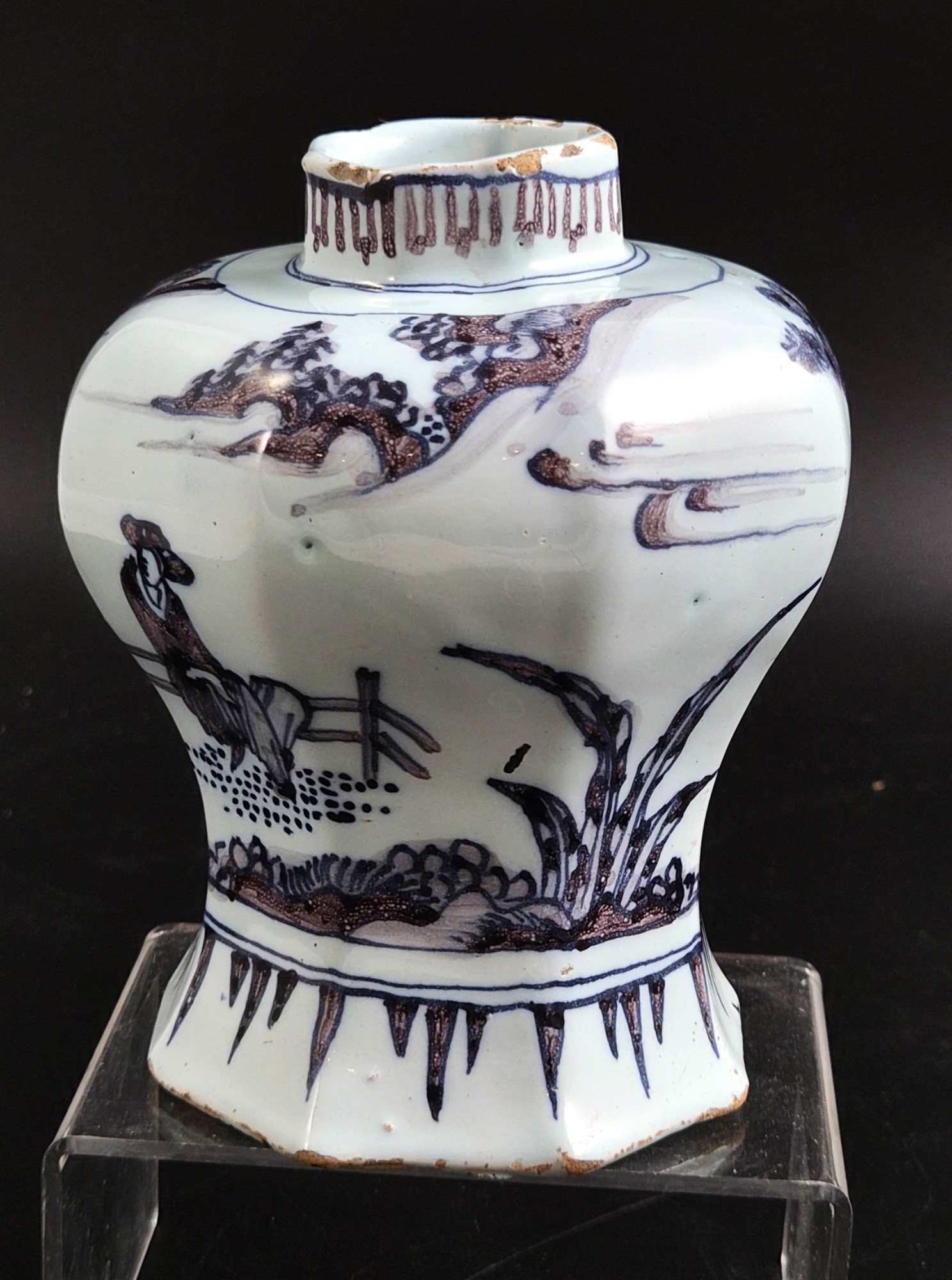
Archive II An octagonal antique Dutch Delft tin-glazed earthenware baluster vase painted in blue and manganese depicting a Chinese scholar. View II
Archive III An octagonal antique Dutch Delft tin-glazed earthenware baluster vase painted in blue and manganese depicting a Chinese scholar. View III
Archive IV An octagonal antique Dutch Delft tin-glazed earthenware baluster vase painted in blue and manganese depicting a Chinese scholar. View IV
Archive V An octagonal antique Dutch Delft tin-glazed earthenware baluster vase painted in blue and manganese depicting a Chinese scholar. View V
Archive VI An octagonal antique Dutch Delft tin-glazed earthenware baluster vase painted in blue and manganese depicting a Chinese scholar. View VI
Archive VII An octagonal antique Dutch Delft tin-glazed earthenware baluster vase painted in blue and manganese depicting a Chinese scholar. View VII
Archive VIII An octagonal antique Dutch Delft tin-glazed earthenware baluster vase painted in blue and manganese depicting a Chinese scholar. View VIII
Archive IX An octagonal antique Dutch Delft tin-glazed earthenware baluster vase painted in blue and manganese depicting a Chinese scholar. View IX
Archive X An octagonal antique Dutch Delft tin-glazed earthenware baluster vase painted in blue and manganese depicting a Chinese scholar. View X
Archive XI An octagonal antique Dutch Delft tin-glazed earthenware baluster vase painted in blue and manganese depicting a Chinese scholar. View XI
Archive XII An octagonal antique Dutch Delft tin-glazed earthenware baluster vase painted in blue and manganese depicting a Chinese scholar. View XII
Enlarged Archival View
Telephone 07434 626011
Location
Hertfordshire
United Kingdom
Verified Since Nov 2025
Items For Sale 260
Items Sold 46
Ritas Bazaar
Verified Since Nov 2025
View Dealer Info
Location: Hertfordshire, United Kingdom
Verified
Nov 2025
For Sale
260
Sold
46
An octagonal antique Dutch Delft tin-glazed earthenware baluster vase painted in blue and manganese depicting a Chinese scholar.
Antique Dutch Delft Blue and Manganese Octagonal Baluster Vase, Chinese Scholar, c.1680
Ref: SA1236693
An octagonal antique Dutch Delft tin-glazed earthenware baluster vase painted in blue and manganese depicting a Chinese scholar.
Detail View 1
Detail View 2
Detail View 3
Detail View 4
Detail View 5
Detail View 6
Detail View 7
Detail View 8
Detail View 9
Detail View 10
Detail View 11
Archival Detail
Every single antique dealer on our platform is individually approved by our internal team. We verify their professional trade history, ethical standards, and photographic quality to ensure a secure, high-standard buying environment. Upon joining, every dealer agrees to a strict 9-point code of conduct. While issues can occasionally arise, our dealers typically resolve them swiftly and directly with the buyer. In fact, since our founding in 2002, Sellingantiques has only had to step in to help resolve an issue on roughly five occasions—a true testament to the quality of our dealers and their dedication to your happiness.
Our dealers are highly experienced in packing and shipping fragile, high-value antiques. Because you are in direct contact with the dealer, you will be able to easily go through all available shipping and insurance options together to ensure your item arrives safely.
Antiques are the ultimate green purchase. By choosing historical pieces over newly manufactured goods, you completely eliminate the carbon footprint of modern mass production while preserving exceptional, timeless craftsmanship.
Written by Sellingantiques from the dealer’s photographs and listing
  • ObjectVases
  • Period18th century
  • StyleBaroque
  • MaterialTin-glazed Earthenware, Ceramic
  • ColourWhite, Blue, Manganese
  • MotifsOctagonal body, Chinese scholar figure, Baluster shape, Manganese line detail

Produced primarily in Delft, Netherlands, during the seventeenth century, these ceramics were created to emulate Chinese Kraak and Transitional porcelain imported by the Dutch East India Company. Artisans developed distinctive tin-glazed earthenware painted with cobalt blue and manganese oxides depicting Oriental figures and landscapes.

Seventeenth-century Delftware was formed from local clay into an earthenware body, then coated in an opaque white tin glaze. Hand-painted decorations were applied using metallic oxides, such as cobalt for blue and manganese for purple-brown, prior to a final clear glaze firing.

Authentic period pieces feature a soft earthenware body beneath a thick tin glaze, frequently exhibiting minor rim chips, glaze crawling, or pinholes. Hand-painted motifs display variations in brushwork density, and the unglazed base or foot ring reveals the underlying earthenware fabric.

A Delft baluster vase serves as a classical accent when placed on a mantelpiece, sideboard top, or within a curated shelf display. Placing blue and manganese ceramics against natural timber surfaces or neutral backdrops creates balanced visual contrast.

Clean tin-glazed ceramics using a soft, dry cloth or a cloth lightly dampened with lukewarm water. Avoid soaking porous earthenware, and keep pieces away from harsh detergent chemicals and modern dishwashers.
items
Add keywords to the filter
Price
£100
£250000
Era
Period
Style
Material
Origin
Stock Location
Recently Added
Online Payments
Categories