
Antique Blue and White Vases
Vases painted in cobalt under a clear glaze, made in China, Japan and Europe for display on mantels and in cabinets, singly, in pairs and in matched sets.
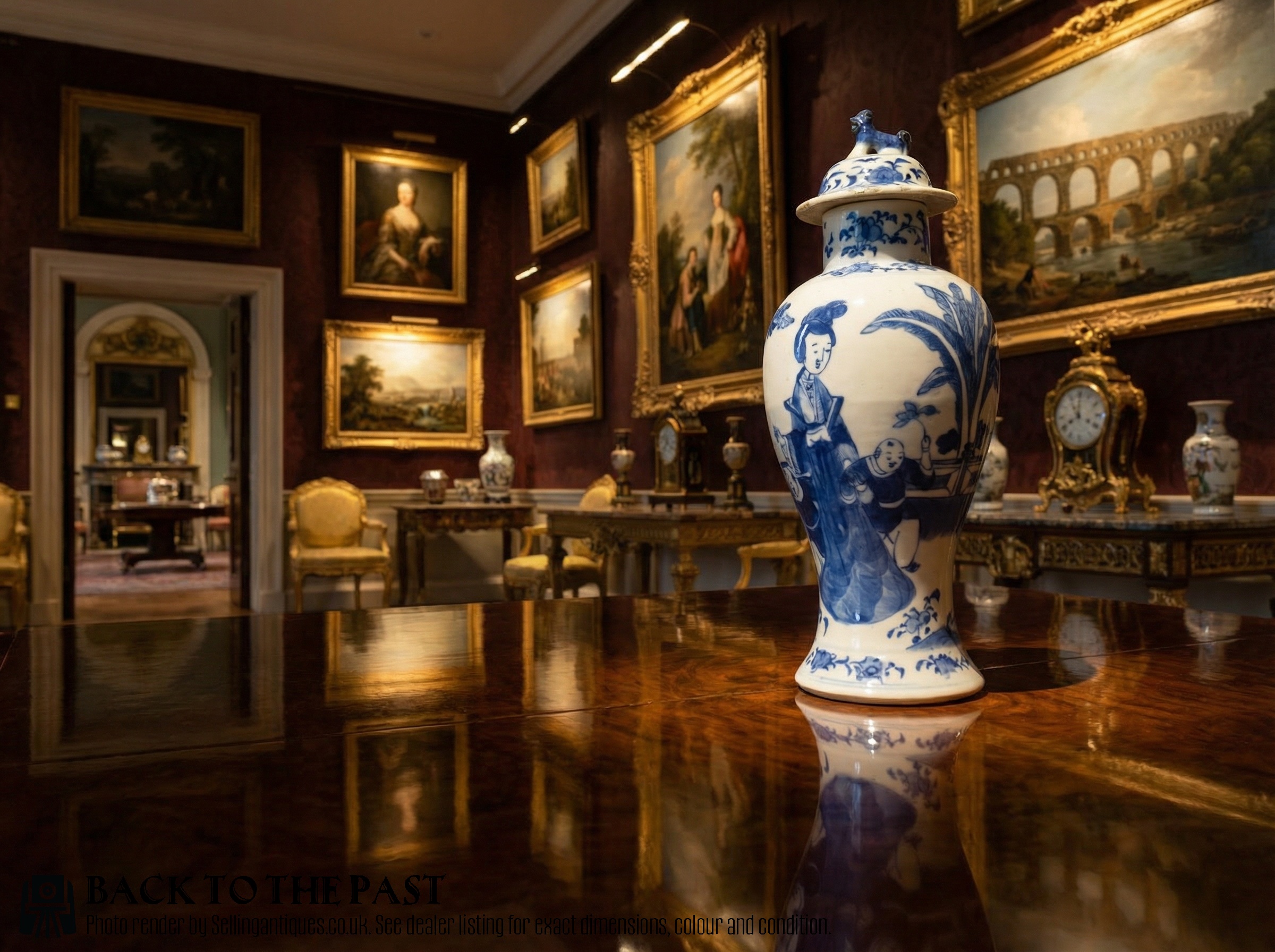
Antique Blue and White Vases
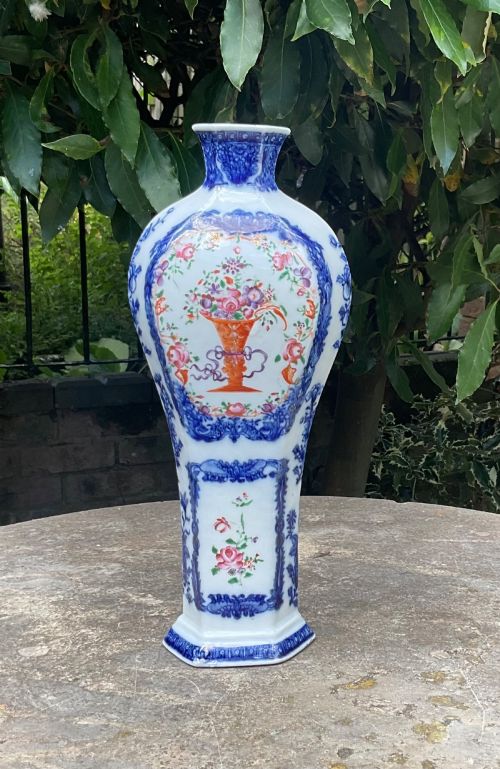
Blue and white means cobalt painted on the body and sealed under a clear glaze. China was making it from the 14th century and exporting it to Europe in quantity from the 17th, and potters at Delft and elsewhere answered with tin-glazed earthenware in the same palette. Vases in this palette were display pieces from the start.
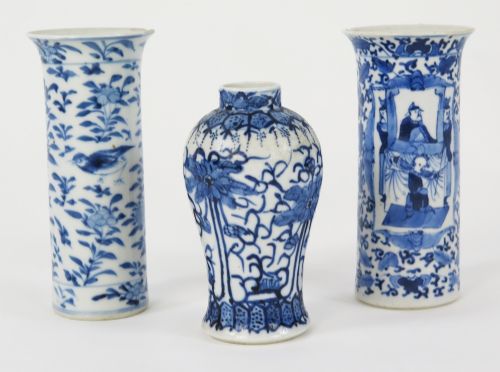
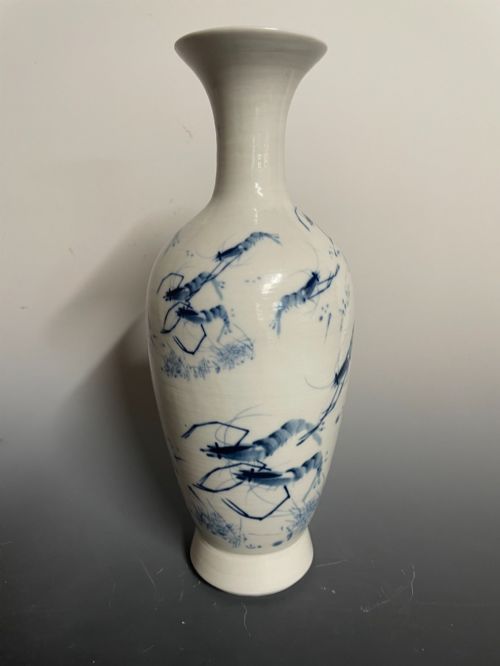
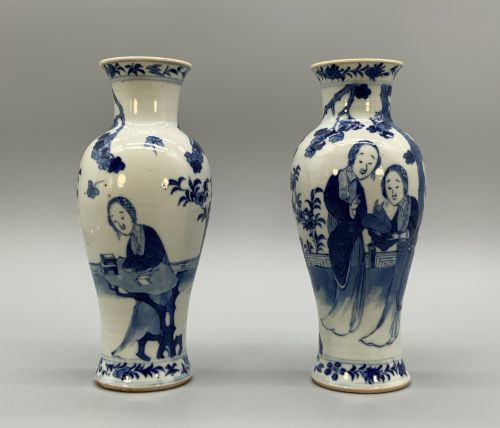
The listing you are most likely to meet is a Chinese porcelain vase of the 19th century, single or one of a pair. Chinese entries make up roughly a third of the category, and the 19th century is by some way the largest block of dates. Baluster, bottle, sleeve, beaker, double gourd and covered forms carry the titles.
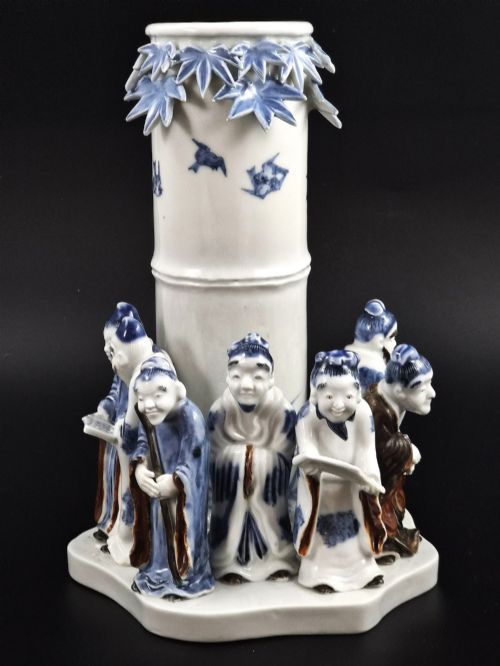
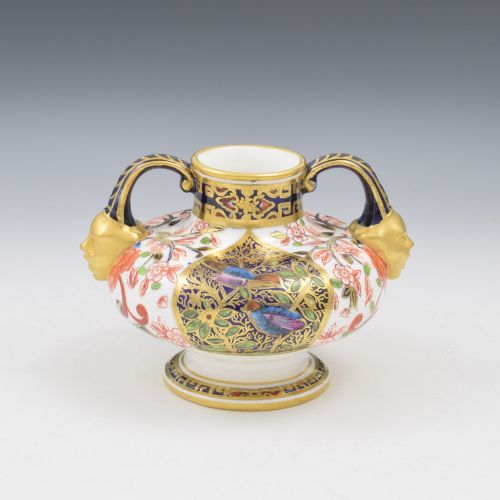
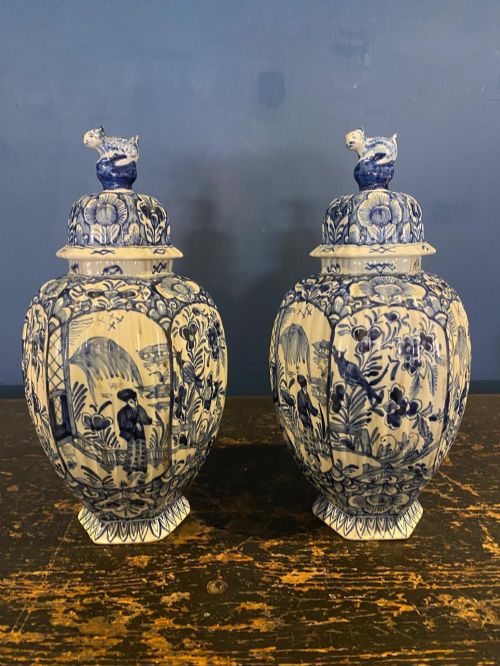
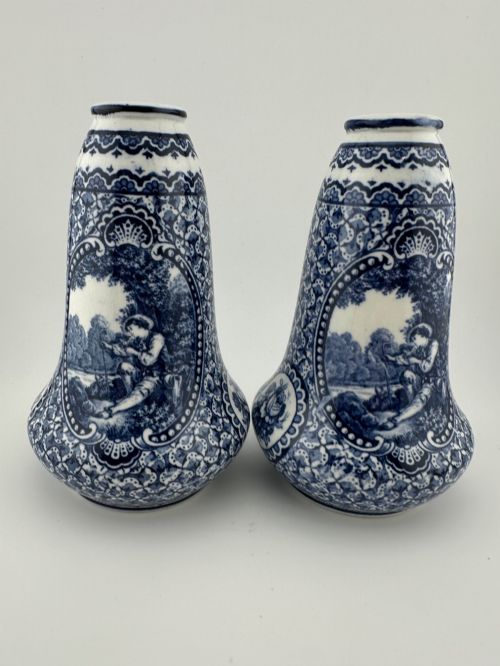
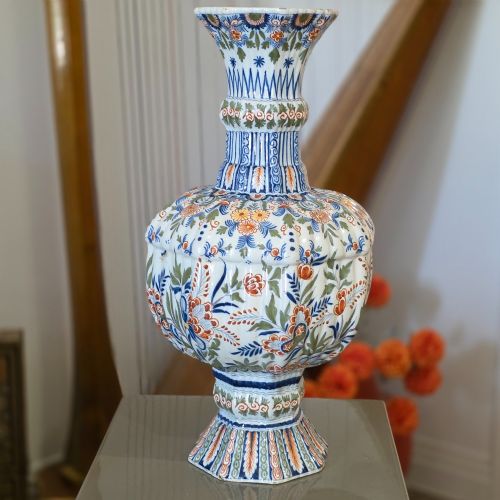
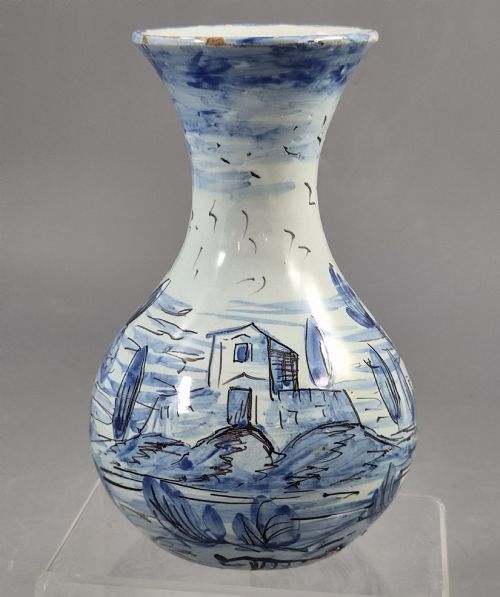
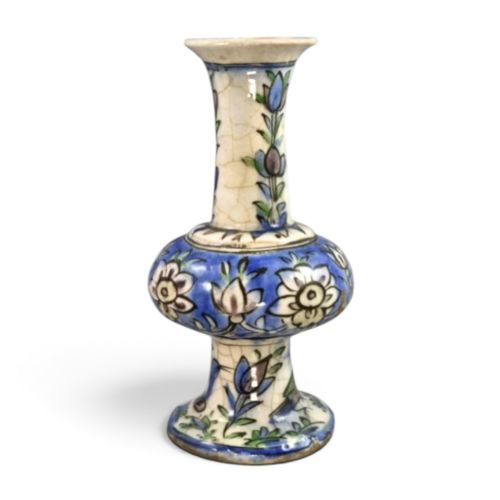
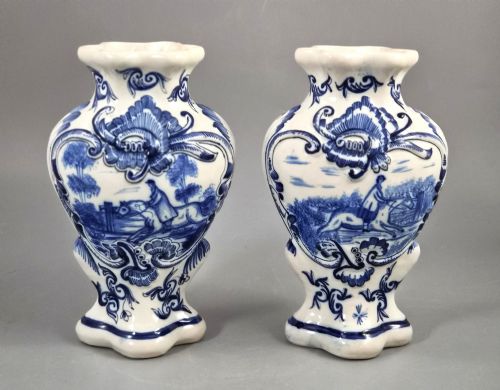
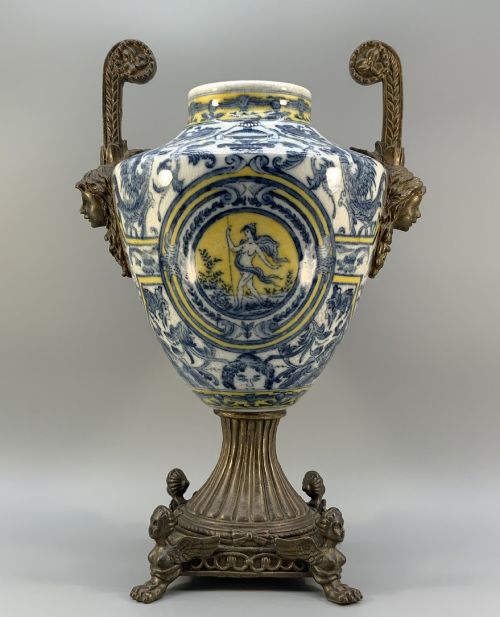
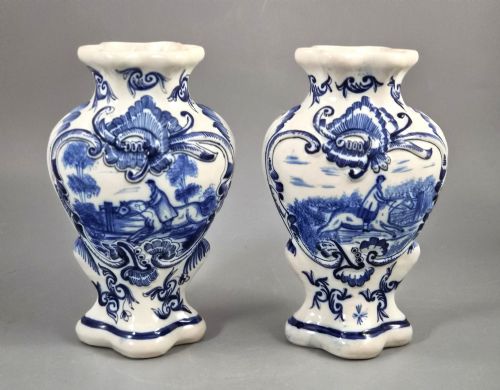
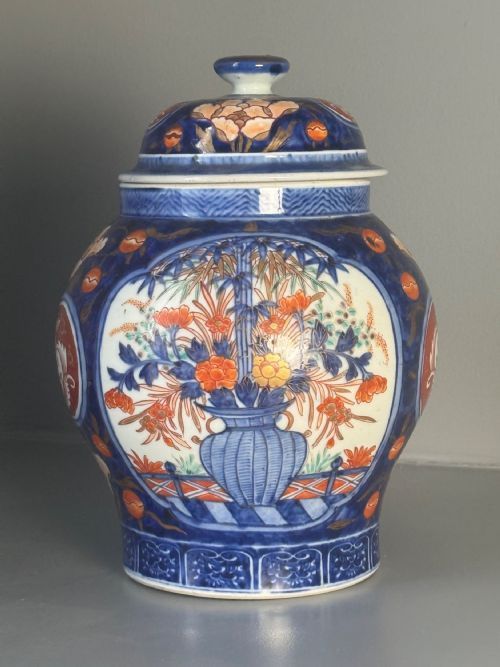
Japanese porcelain is about a fifth, chiefly Imari and Arita, with Meiji and Edo period titles. Dutch and English delft accounts for about one in seven: octagonal chinoiserie, ribbed beakers, lidded baluster forms, garnitures and the occasional tulipiere. Continental faience and maiolica appear less often, taking in Italian Savona, Spanish Talavera and French pieces. A small visible minority under the heading are not blue and white at all, but other decorative vases carried alongside.
Dating is coarse. Fifty-one listings are filed only as "19th Century", eight as 17th and a handful as 18th, and the dated field runs 1700 to 1940. Some titles carry a circa year far tighter than the record behind them, and a few dated fields are placeholders rather than the object's date. Around eighteen come to market on Sellingantiques in a year, listed by fifty-nine different dealers, so no one stockholder sets the tone.
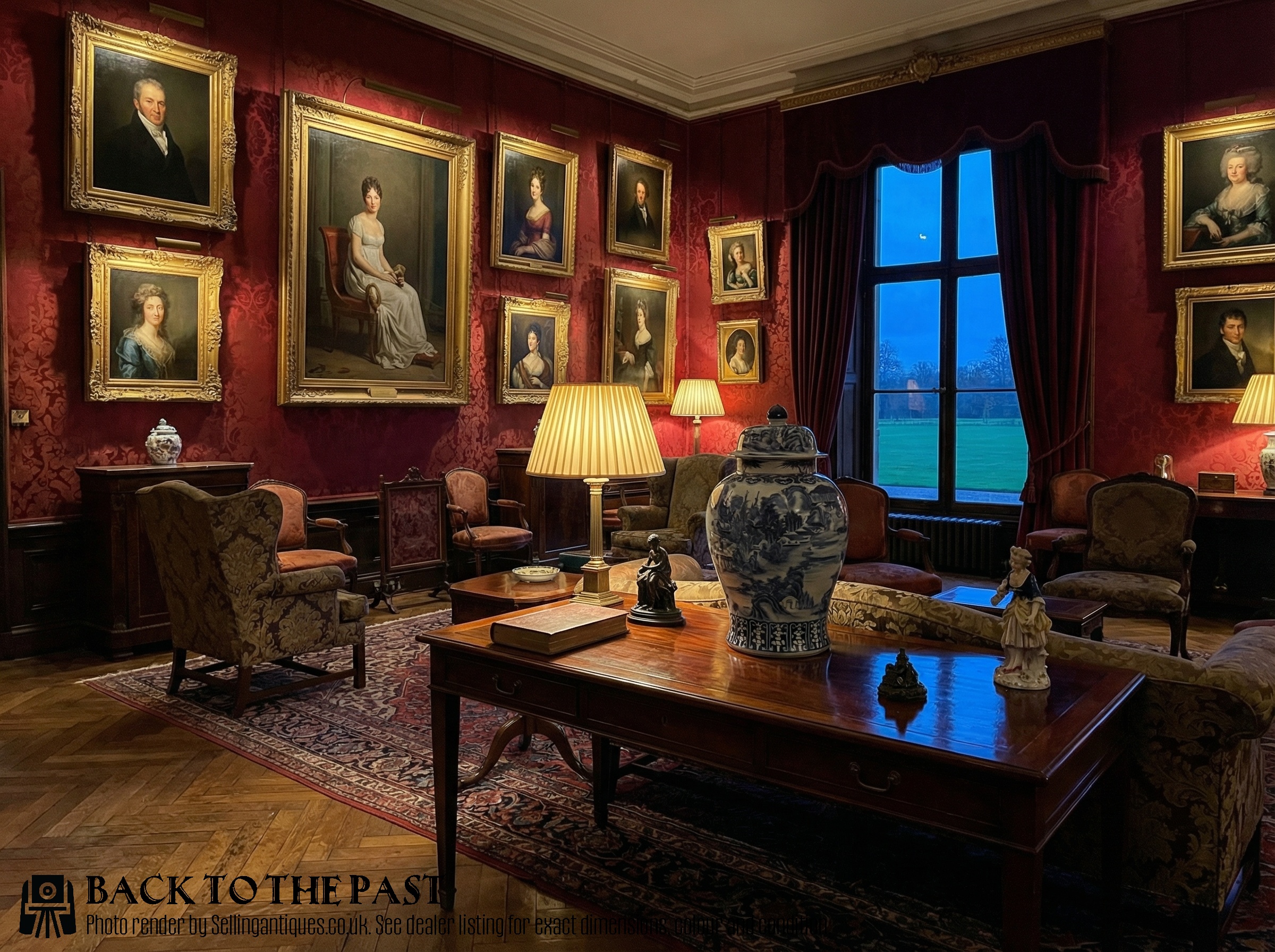
What Moves Value
Scale does a lot of the work. "Large" sits in a fifth of titles, and the words that go further, enormous, monumental, floor standing, cluster at the top with the stated measurements: 58 inches high, 60.5cm. A small posy vase and a floor-standing baluster are different propositions under the same heading.
Completeness counts twice over. Pairs are close to a third of the record and stand above singles, while larger groupings sit higher again, among them a five-piece delft garniture with its original lids and a collection of seven Japanese Imari vases offered together. Covers surviving pulls the same way: "and cover", "with original lids" and similar run through the Chinese, Japanese and delft branches.
Then there is what the title can name. Kangxi, Wanli, Transitional, Guangxu, Meiji and Arita attributions gather toward the upper part of the range, as does age, with the eight 17th century listings appearing disproportionately there. The plainest entries are titled "Blue and White Vase" with a century and nothing more, and they sit near the bottom.
Antique Blue and White Vases Retail Price Guide 2026
Typical UK retail prices for blue and white vases, calculated from the Sellingantiques database of over a million retail prices indexed since 2003. This retail price guide relies exclusively on Sellingantiques data; no external sources or auction records are used, so the figures do not describe the wider market.
Around eighteen blue and white vases are listed on Sellingantiques each year, and fifty-nine different dealers have listed them.
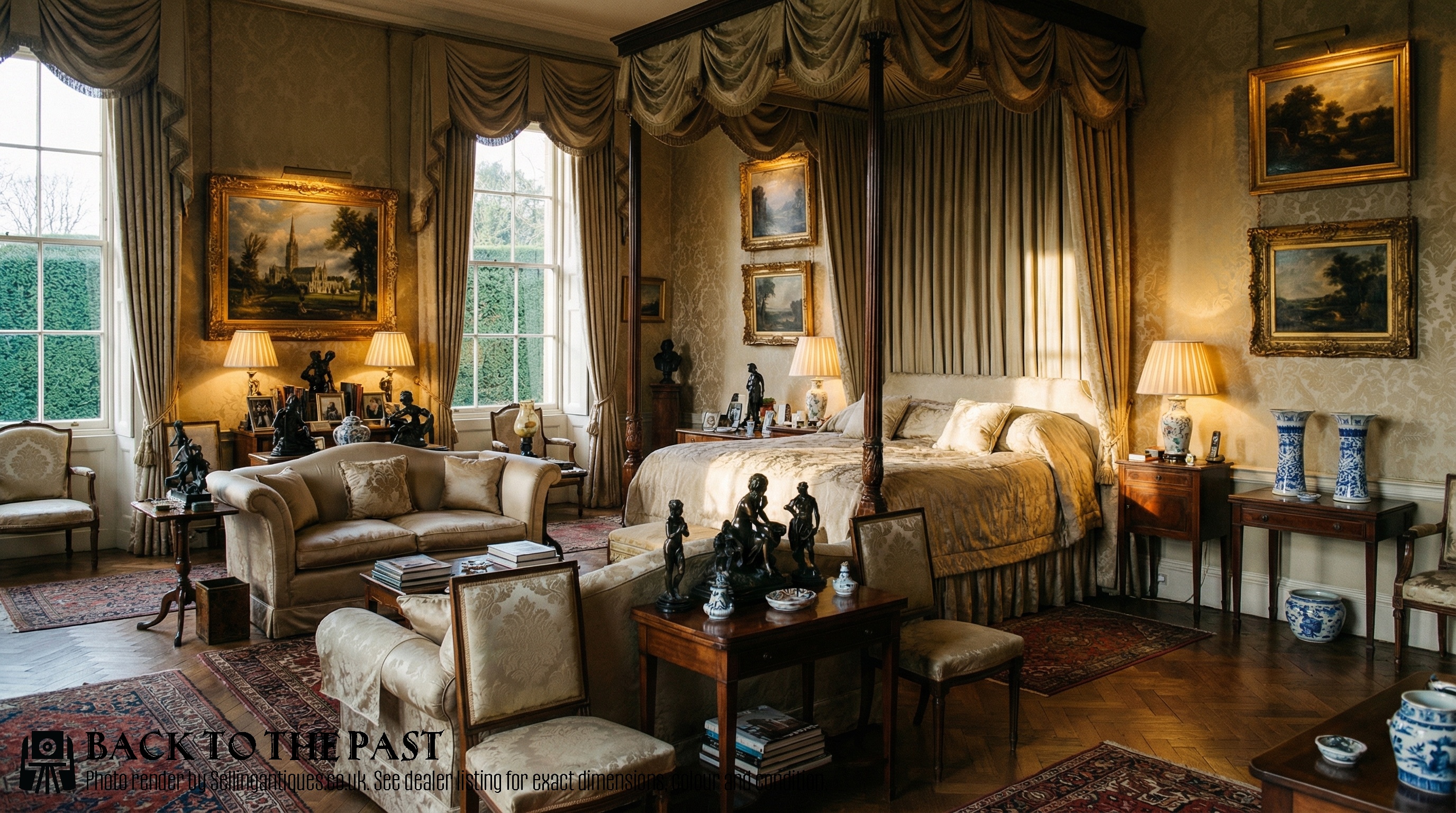
The Antique Blue and White Vases Glossary
- Pair
- Two matching vases sold together, named in nearly a third of titles. A "matched pair" means two brought together rather than made as one.
- Baluster
- A swelling body narrowing to the neck, the commonest named Chinese and Japanese shape in this category.
- Sleeve vase
- A straight cylindrical form, named in Chinese listings of the 19th century and earlier.
- Delft
- Tin-glazed earthenware painted in blue, Dutch or English, and not porcelain. Faience and maiolica are the French and Italian names for the same body.
- Beaker vase, or gu
- A flaring trumpet shape after an archaic bronze, turning up in both Chinese and Dutch delft titles.
- Garniture
- A matched set of vases for a mantel, usually an odd number. One set of five has appeared, along with a tiered tulipiere, a flower vase with separate spouts for individual stems.
Antique Blue and White Vases: Frequently Asked Questions
Are these vases porcelain or earthenware?
Both. The Chinese and Japanese entries are porcelain, and together they account for roughly half the category.
Delft, faience and maiolica are tin-glazed earthenware, painted in blue on an opaque white glaze rather than under one. Delft alone is about one in seven titles.
How often do pairs come up?
Pairs are named in close to a third of titles, so they turn up steadily rather than occasionally.
Larger groupings are scarcer. The record holds a five-piece delft garniture with its original lids and one collection of seven Japanese Imari vases offered together.
What period do most of them date from?
The 19th century dominates. Fifty-one listings are filed under it, against a handful given as 18th century and eight as 17th.
The dated field runs 1700 to 1940 overall, with decade-level entries clustering in the 1900s, 1920s and 1890s.
Which shapes appear most in the titles?
Baluster leads among the Chinese and Japanese pieces, followed by bottle, sleeve, beaker, double gourd and meiping.
Delft brings its own vocabulary: octagonal chinoiserie forms, ribbed beakers, lidded baluster vases and the occasional tiered tulipiere.
Do any come from outside China, Japan and Holland?
Yes, though in ones and twos. Spanish Talavera, Italian Savona, French faience, Swedish transferware and Persian Qajar pottery each appear.
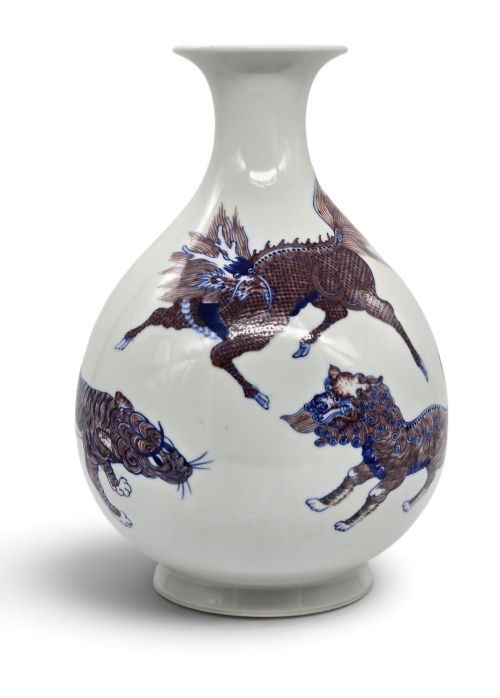
One-offs include a garlic-mouth vase in underglaze blue with copper red, and a pair of Iznik-style vases made in Belgium.
How big do they get?
Size is stated often enough to count as a category habit, with "large" in a fifth of titles.
The biggest measured examples run to 58 inches high and 60.5cm, described as floor standing or monumental, and they sit at the top of the range.