Antique Worcester Vases
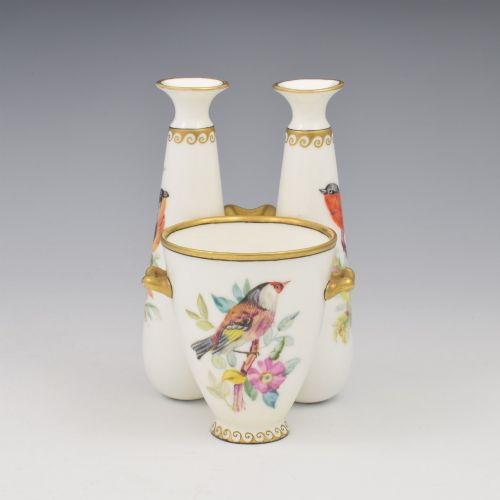
Porcelain vases made in Worcester for display rather than use, from small spill and bud vases to large covered pot pourri vases and pairs, most of them hand-painted and many signed by the painter.

What You're Looking At
Porcelain has been made at Worcester since the mid-18th century, and ornamental vases became a staple of the output alongside tea and table wares. The word 'royal' carries nine titles in ten on Sellingantiques, so the vase you are most likely to meet is a Royal Worcester one with painted decoration and, often, a painter's signature on the body.
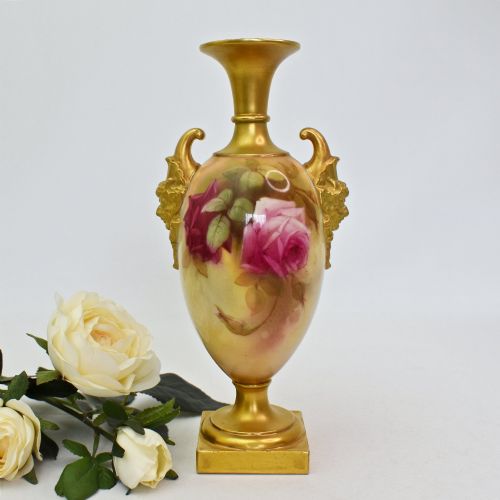
Painting is the defining feature. Painted appears in more than a quarter of titles and signed in around a sixth. Fruit still life is the largest single subject, named in a fifth of titles, followed by the Stinton-family animal and bird work: Highland cattle above all, with sheep and pheasants behind. Roses, storks and swans turn up throughout.
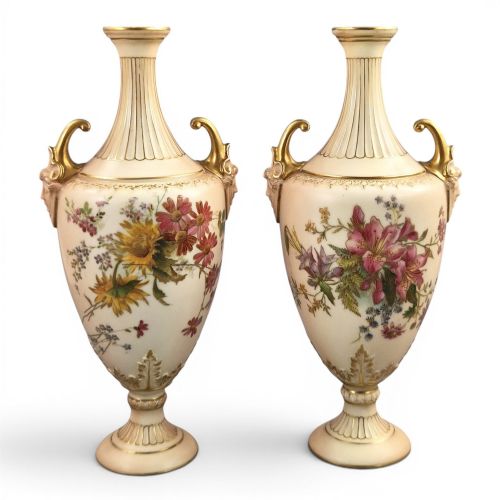
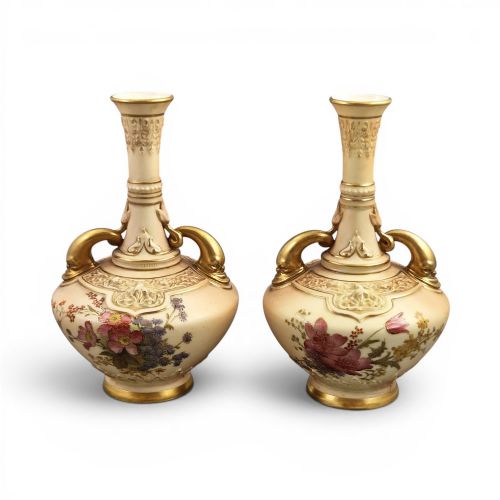
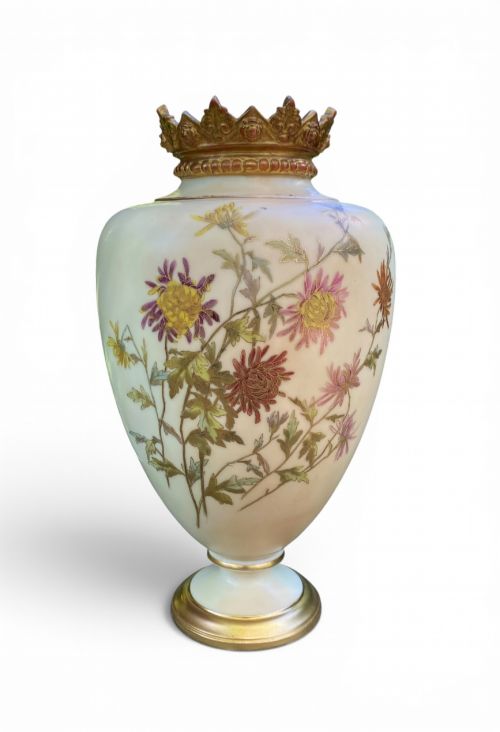
Behind those sits a second population of blush ivory grounds, the soft shaded cream-to-peach finish, about a tenth of the archive and commonly paired with a cover or a pedestal. Singles dominate, but pairs are a category of their own at a fifth of listings, and covered pot pourri forms account for roughly a sixth.
Dates run from 1800 to 1960, with the 1910s, 1920s and 1900s heaviest. The 1960s is the fourth-busiest decade, so a good slice of what trades was made within living memory. Earlier Worcester firms - Flight Barr & Barr, Chamberlain, Grainger, Hadley, Locke, Royal China Works - sit in the small non-royal remainder, along with a handful of First Period pieces of about 1760.

What Sets Them Apart
A painter's name does more than anything else. The upper end of the range almost always carries one - Baldwyn, Davis, John Stinton, Owen, Freeman, Ayrton - while the plainest listings say nothing more than 'hand painted vase'. Signature and subject travel together: swans, storks, stags, Highland cattle and elaborate fruit cluster at the top, trumpet, stem and bud vases at the bottom.
Form counts next. Covered vases sit above open ones, and three-piece pot pourri with both an inner and outer cover sits above those again; covers are stated in the title rather than assumed, which tells you how much weight the trade puts on them. Pairs push upward against comparable singles, and a garniture of three has surfaced once in the whole archive.
Size pulls in the same direction, with 'large' recurring through the upper titles and small, bud and miniature at the other end. Reticulated openwork is the outlier: only fourteen titles use the word, and the pierced work attributed to George Owen sits at the very top.
Retail Price Guide 2026
Typical UK retail prices for worcester vases, calculated from the Sellingantiques database of over a million retail prices indexed since 2003. This retail price guide relies exclusively on Sellingantiques data; no external sources or auction records are used, so the figures do not describe the wider market.
The 1960s is the fourth-busiest decade for Worcester vases on Sellingantiques, so plenty of what trades was made within living memory.

Harry Stinton·James Stinton·Kitty Blake·Harry Davis·John Stinton·Charles Baldwyn·John Freeman·Edward Raby·Austin·Moseley
The Antique Worcester Vases Glossary
- Blush ivory
- The soft cream-to-peach shaded ground, found on 58 titles, usually with painted flowers and gilding.
- Pot pourri vase
- A covered vase for scented petals, often with an inner pierced cover as well as an outer one. Named in 85 titles.
- Three-piece
- A pot pourri made up of vase, inner cover and outer cover, a phrase that recurs in the upper-range titles.
- Spill vase
- A small straight vase, originally for the paper spills used to carry a flame. Nineteen titles.
- Reticulated
- Pierced openwork walls, sometimes double-walled. Fourteen titles use the word.
- First Period
- The earliest Worcester porcelain, roughly the 18th century, and a label that appears on only a handful of listings.
Frequently Asked Questions
Are Worcester vases usually signed by the painter?
Signed appears in 93 of the 536 titles, and 'artist signed' in another fourteen, so a signature is common without being the rule.
Where a name is given it tends to be a fruit painter or one of the Stinton family. Plenty of other listings say only 'hand painted', with no painter recorded.
What subjects were painted on them?
Fruit still life is the largest group, named in a fifth of titles: apples, pears, grapes and blackberries. Highland cattle comes next, named in 34 titles.
Sheep, pheasants, storks, swans and roses all turn up throughout. Blush ivory grounds with painted flowers form their own sizeable group.
How old are most of them?
The dated field runs from 1800 to 1960, and 400 of the listings carry a clean year rather than a period label.
The 1910s, 1920s and 1900s are the heaviest decades. The 1960s is fourth-busiest, ahead of the 1930s, so a large slice of this category was made well within living memory.
Vaguer labels sit alongside the years: '19th Century' on 32 listings, Edwardian on 27, Victorian on 20.
Do they come in pairs?
Pairs are common enough to count as a category of their own, named in 113 titles, around a fifth of the archive.
Sampled pairs sit well above comparable singles in the range. A garniture of three appears once in the whole archive.
What does pot pourri mean on a Worcester vase?
It means a covered vase made to hold scented petals, and the term is used in 85 titles.
The better ones are three-piece, with a pierced inner cover under the outer one. Covers in general are specified in the title rather than taken for granted, appearing in 84 listings.
Which Worcester factories other than Royal Worcester appear?
Royal Worcester carries nine titles in ten, so everything earlier is hiding in the small remainder.
That remainder includes Flight Barr & Barr, Chamberlain, Grainger, Hadley, Locke & Co and Royal China Works, with Georgian, Regency and a few First Period pieces of about 1760 and 1770.