


Antique Delft Vases
Tin-glazed earthenware vases painted in cobalt blue or in colours, made from the seventeenth century onward as an affordable answer to imported Chinese blue-and-white, for chimneypieces and cabinet tops.
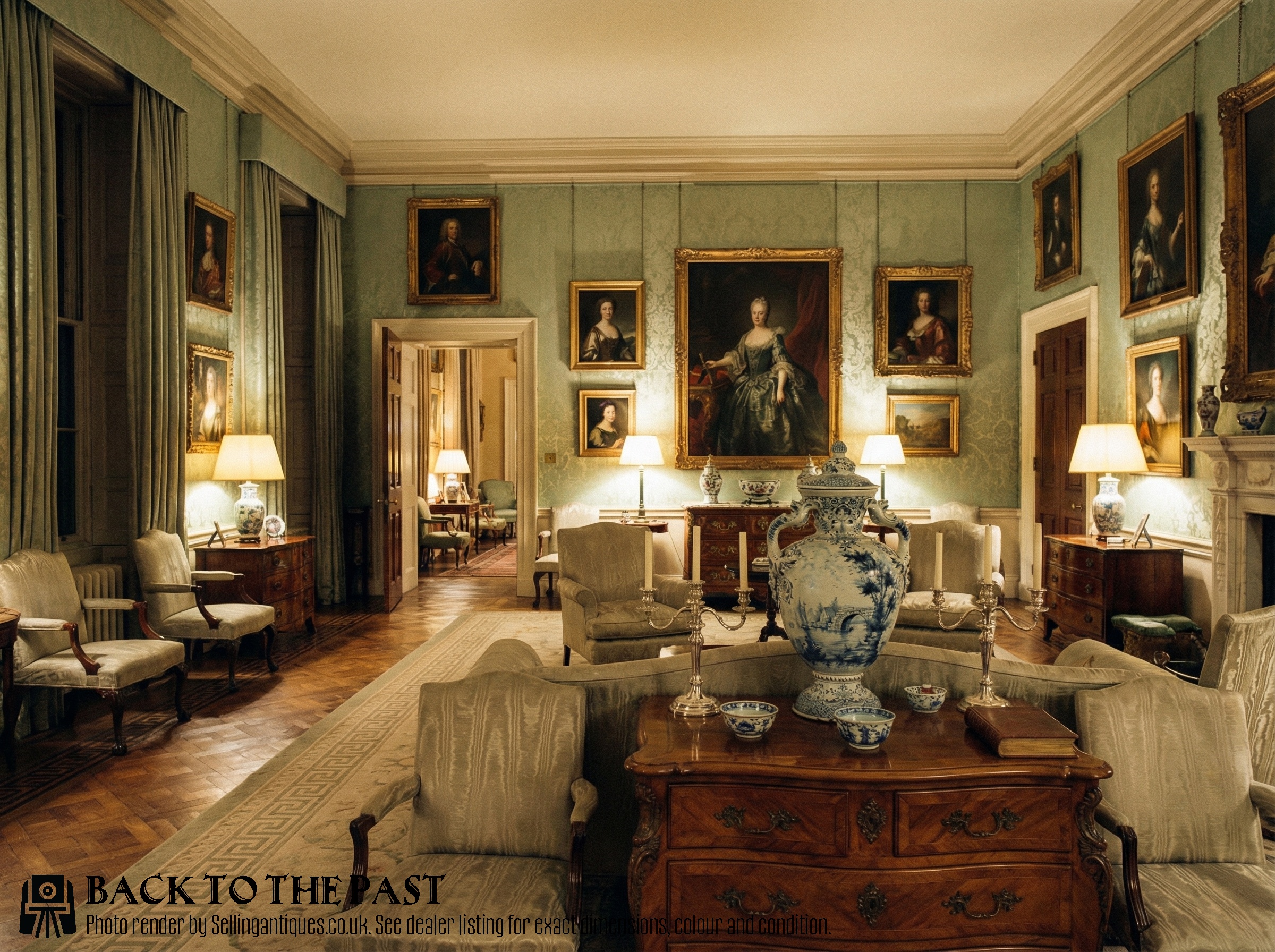
Antique Delft Vases
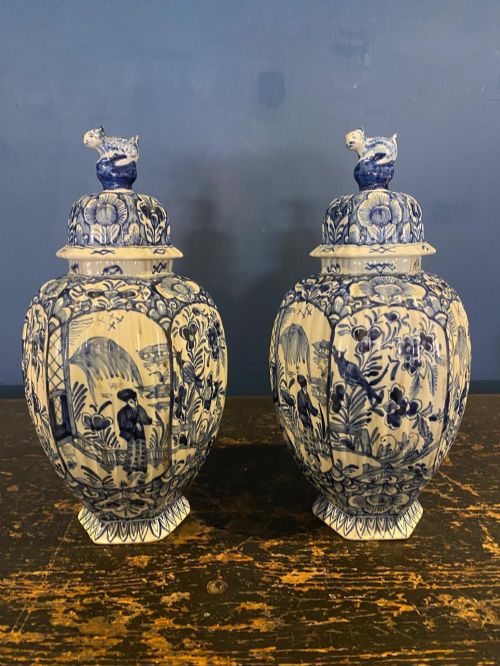
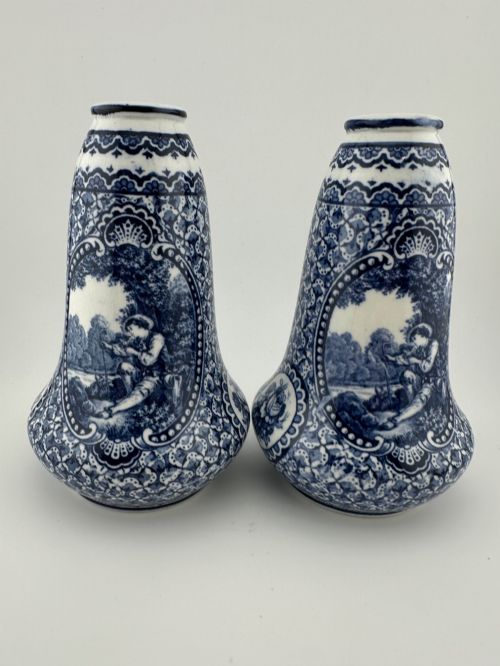
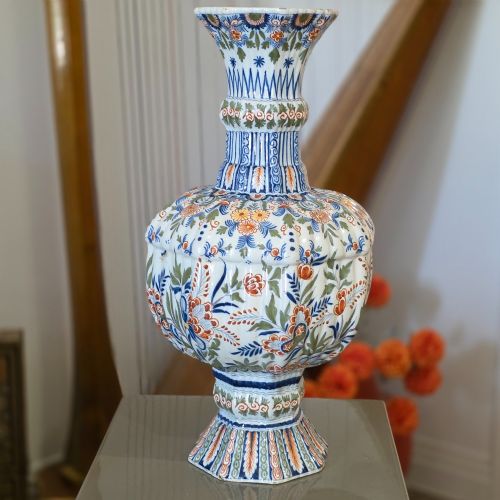
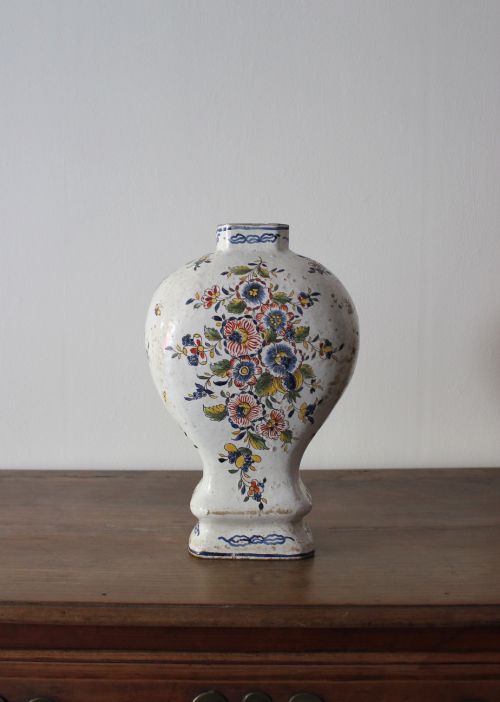
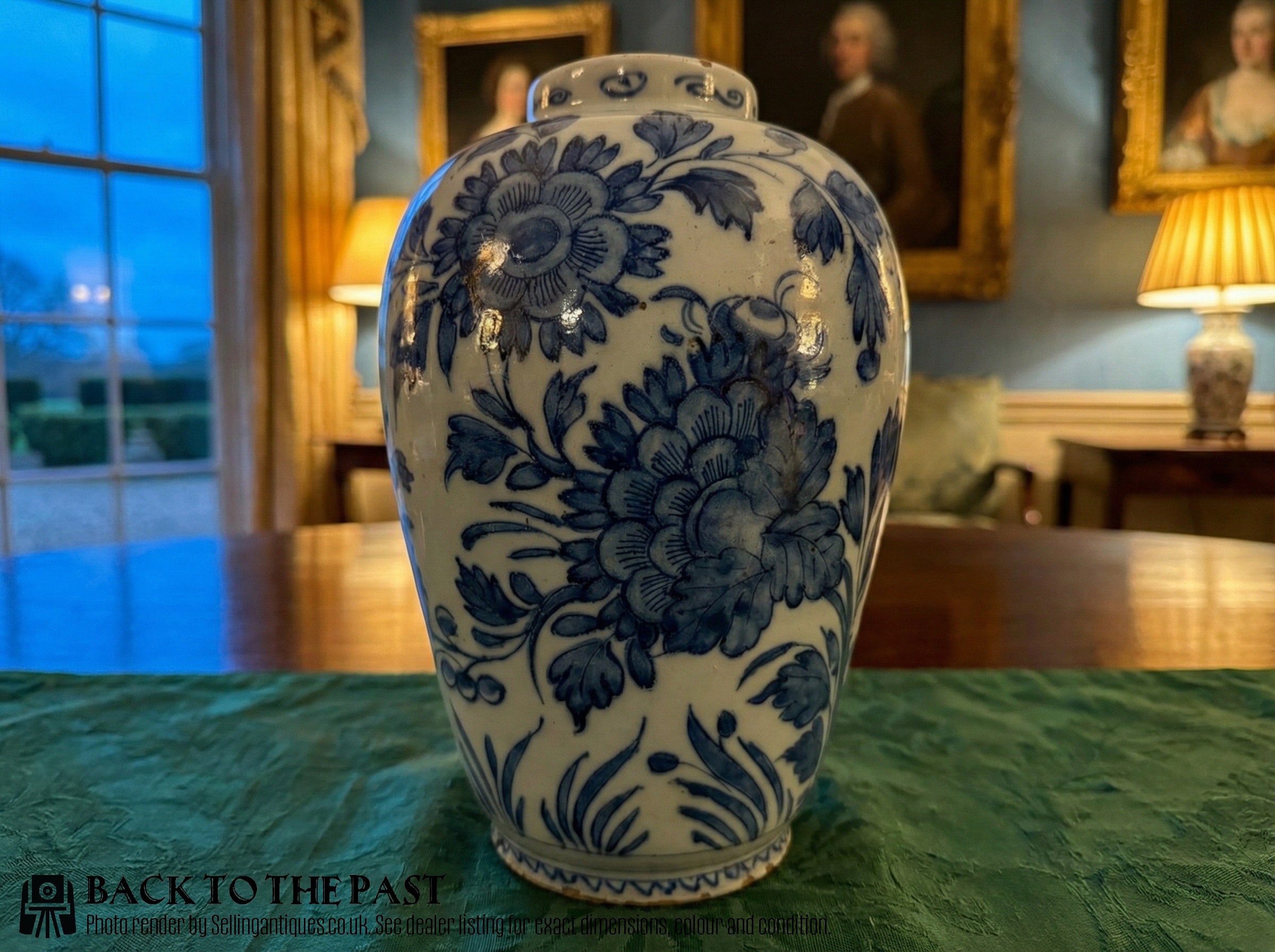
The body is buff earthenware under an opaque white tin glaze, painted in cobalt blue or in polychrome. That white surface was the point: it gave European potters a ground close enough to porcelain to carry Chinese-style painting, and vases were made singly, in pairs and in matching sets.
On Sellingantiques the single 18th-century blue-and-white vase, without a cover, is what you'll meet first. The word "18th" turns up in more than half of all titles, and the listings are often as short as that suggests. Pairs are the next most likely encounter, in a third of titles, and sets of three and five-piece garnitures turn up throughout the record.
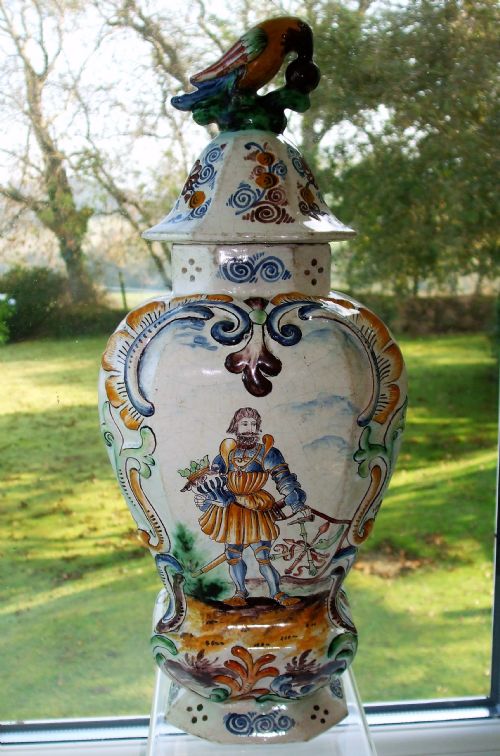
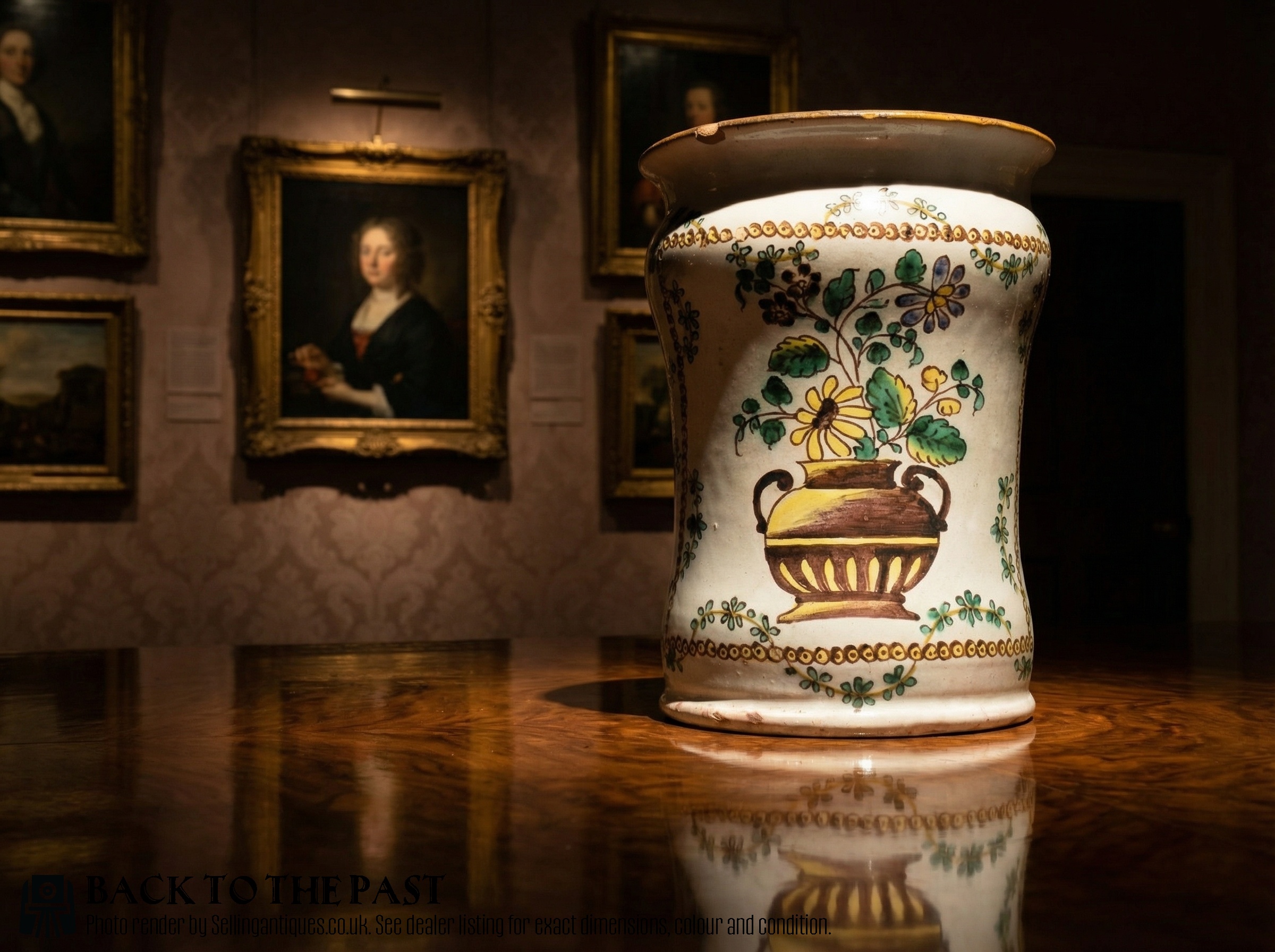
Polychrome painting appears in about one title in ten. Covered vases are scarcer, with a cover or lid named in fewer than a tenth. Beyond that the shapes stay largely domestic and modest in scale, with named forms such as gourd, melon, octagonal, onion and ribbed beaker cropping up only occasionally.
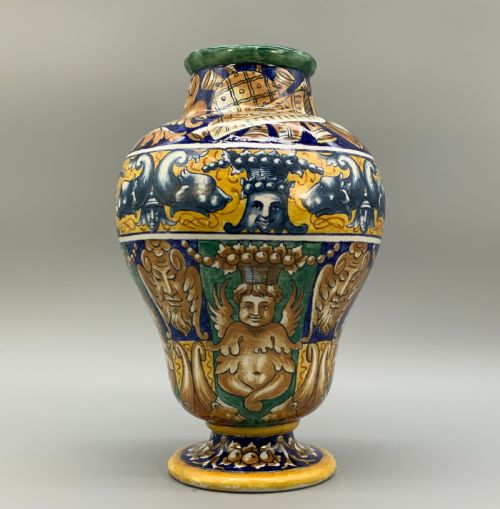
The heading takes in more than Dutch work. Only a small share of titles say "dutch", and English delft, French and Italian faience and "Delft style" pieces of around 1900 sit under the same name. Dates lean hard on the eighteenth century, but "18th Century" and the round years 1700, 1750 and 1800 read as era shorthand rather than years of making, so title and dated field are worth reading together.
Where Value Sits
Completeness does most of the work. Single vases fill the lower half of the range on Sellingantiques, while sets of three and five-vase garnitures cluster at the top, one of them recorded as keeping its original lids. Covers are the scarcity across the archive, and covered examples sit well above plain singles.
Size pulls in the same direction. "Large" appears in a minority of titles, and descriptions like very large, large pair and considerable size sit high, while small and miniature examples, including a set of three miniatures, gather at the cheaper end.
After that it comes down to specificity. Most titles name no factory and no pattern; the exceptions, a handful of named Dutch factories, tightly dated pieces of the 1680s or the 1730s to 1780s, and named subjects or unusual forms such as Thousand Flower, Long Eliza, twisted handles or a tiered tulipiere, sit in the middle and upper part of the range.
Antique Delft Vases Retail Price Guide 2026
Typical UK retail prices for delft vases, calculated from the Sellingantiques database of over a million retail prices indexed since 2003. This retail price guide relies exclusively on Sellingantiques data; no external sources or auction records are used, so the figures do not describe the wider market.
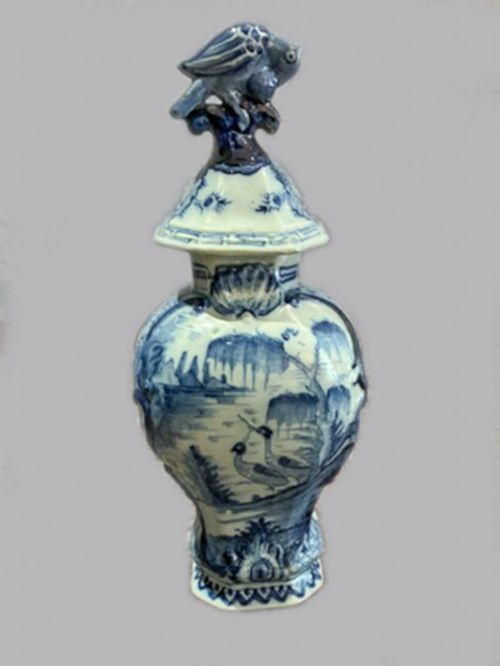
Covers are the scarce part of the Delft vase archive on Sellingantiques: eleven titles mention one, and a garniture of five kept its original lids.
The Antique Delft Vases Glossary
- Tin glaze
- An opaque white glaze over an earthenware body, the surface that defines the whole family. Titles also phrase it as "tin glazed earthen ware" or "tin-glazed pottery".
- Faience
- The same tin-glazed technique under its French and Italian name, used in several listings for the non-Dutch pieces carried under this heading.
- Delftware
- The ware rather than the town. It shows up in phrasing such as "Delftware Vase and Cover".
- Garniture
- A matching set for a mantel or cabinet top, most often three or five vases. Sets of both sizes recur, and they account for the largest groupings recorded.
- Chinoiserie
- European painting in a Chinese manner, named in several titles alongside "Chinese Scene" and "Chinese Style".
- Long Eliza
- The tall, slender female figures of a Chinese-derived pattern. Named once across the archive.
Antique Delft Vases: Frequently Asked Questions
Are all Delft vases Dutch?
No. Only a small share of titles in this category say "dutch", and the heading also carries English delft, French and Italian faience, and "Delft style" wares of around 1900.
Tin-glazed earthenware was made across Europe, and "delft" has long been used loosely for the whole family rather than for the town alone.
What period do most of these come from?
The eighteenth century dominates. "18th" appears in more than half of all titles, and the dated field returns fifty-one listings as "18th Century" plus twenty-four in the 1750s.
The nineteenth century follows with twenty-three listings, and there are 1920s, 1900s, 1890s and 1930s pieces too. The dated field spans 1700 to 1940 in all.
How often do covered Delft vases appear?
Rarely. A cover or lid is mentioned in eleven of the one hundred and forty-five titles, phrased as "vase & cover", "lidded vases", "with original lids" or in one case "Parrot Lids".
Covered examples sit well above plain single vases in the sampled range, and one five-vase garniture is described as retaining its original lids.
Do these come as pairs or sets?
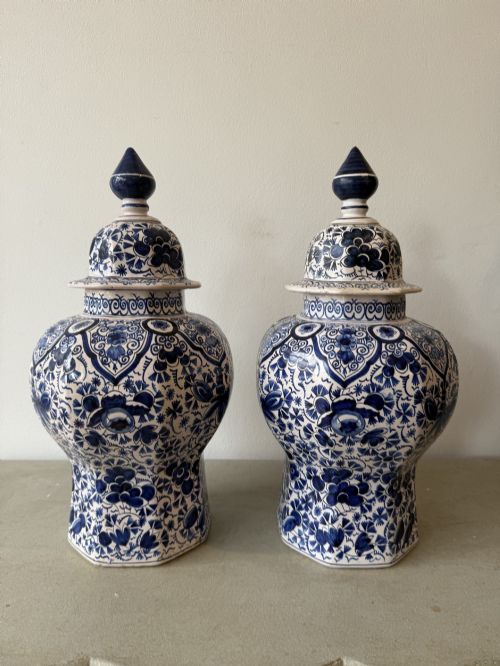
Often. The word "pair" appears in forty-four titles, close to a third of the archive.
Sets of three and five-piece garnitures also turn up, and they account for the largest and highest-priced groupings recorded on Sellingantiques.
Is polychrome Delft common in this category?
It's a minority. "Polychrome" appears in fourteen titles, about one in ten, against the blue-and-white cobalt decoration the category runs on.
Samples include a polychrome vase and cover as well as uncovered polychrome pieces.
Are factory names given in the listings?
Seldom. Most titles name no factory at all. A small scattering names one in words, including the Hatchet factory, De Klauuw, the Three Bells, De Grieka A and Louis Victor.
Those are too few and too scattered to form a pattern. Painted marks, monograms and numbers go unrecorded across the archive.