5,404  PAGES BROWSED TODAY PAGES TODAY 0  ANTIQUES UPLOADED TODAY NEW ARRIVALS
ID #SA1082575
FOR SALE
£700
Email
Save
Antique Delft Tin-glazed Pottery Vase, Mid-18th Century.
Gillers Antiques Ltd
for sale €819     $889
£700
Gillers Antiques Ltd

Gillers Antiques Ltd

Sellingantiques Verified Since Mar 2023
View Dealers Stock Page
Id #SA1082575
PDF SHARE
SAVE

Antique Delft Tin-glazed Pottery Vase, Mid-18th Century.

18th century
Description

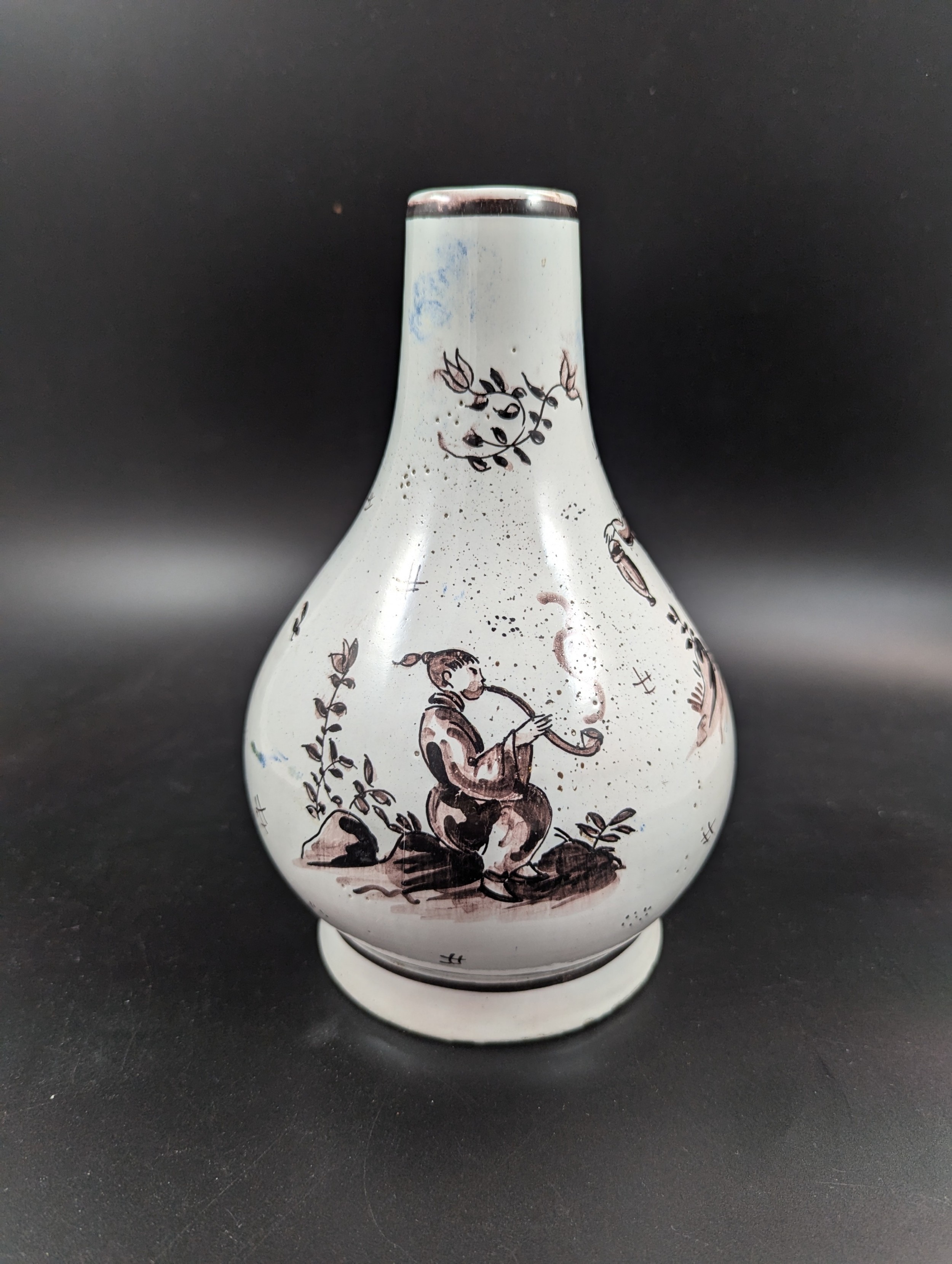
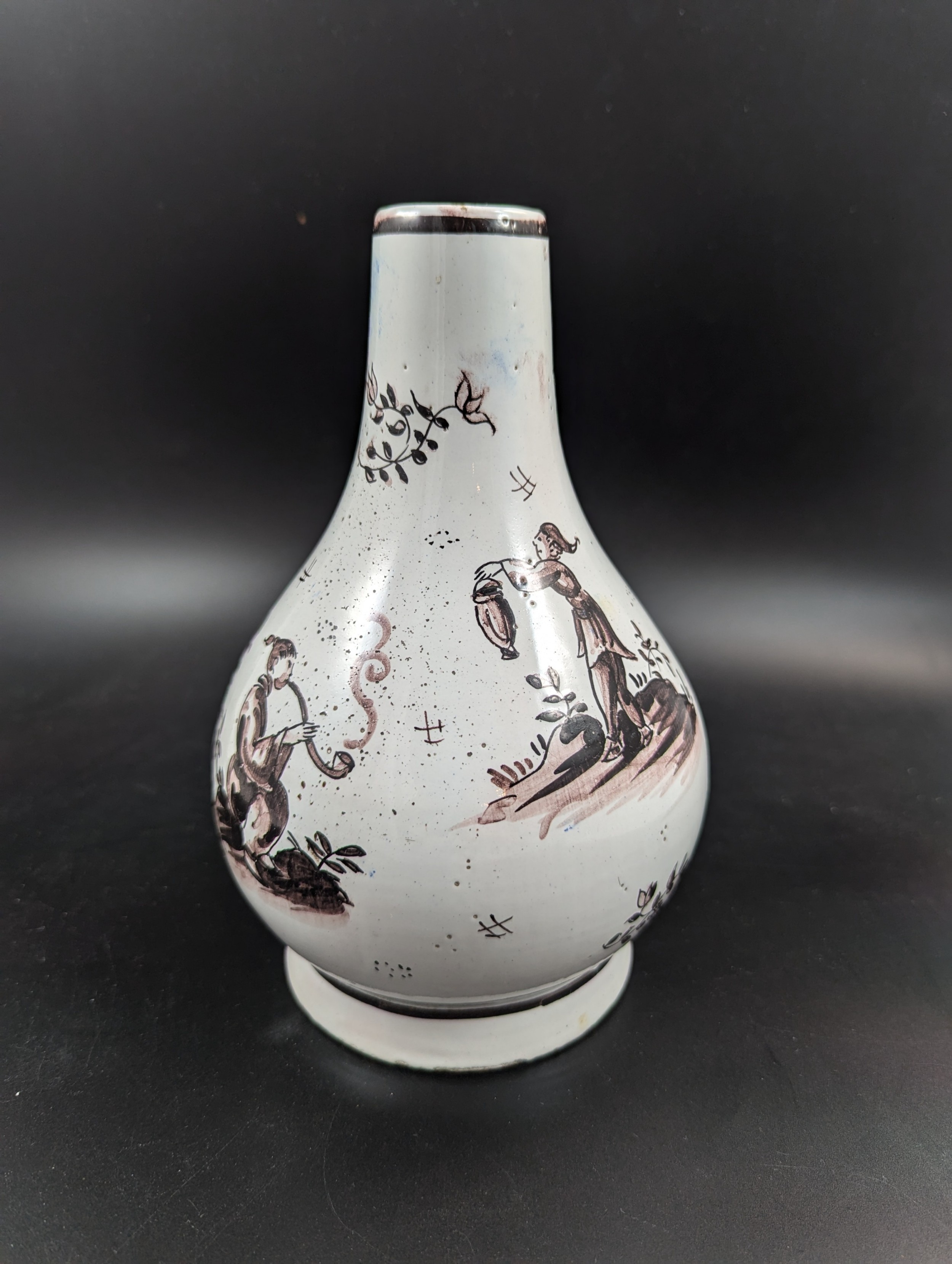
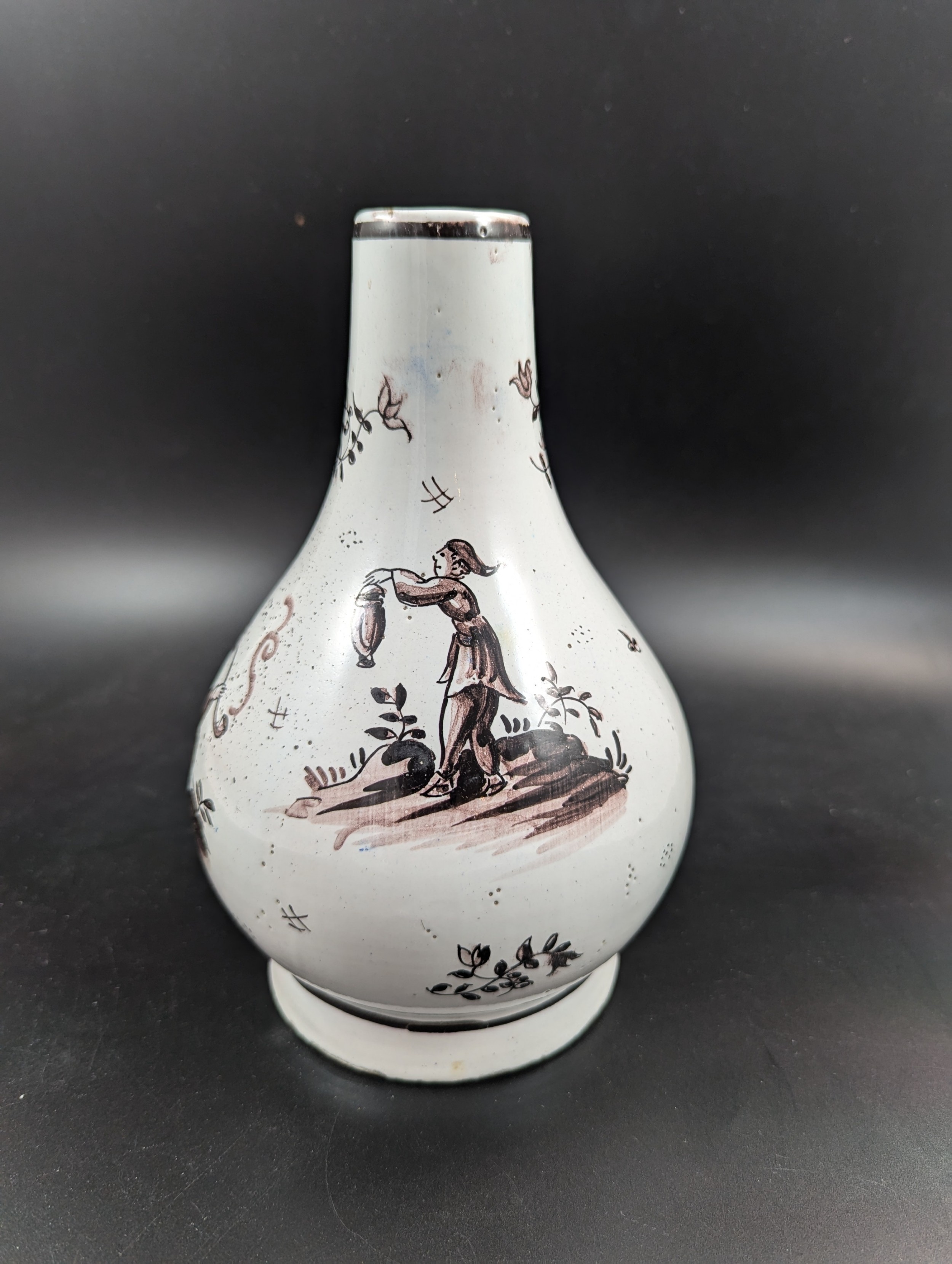
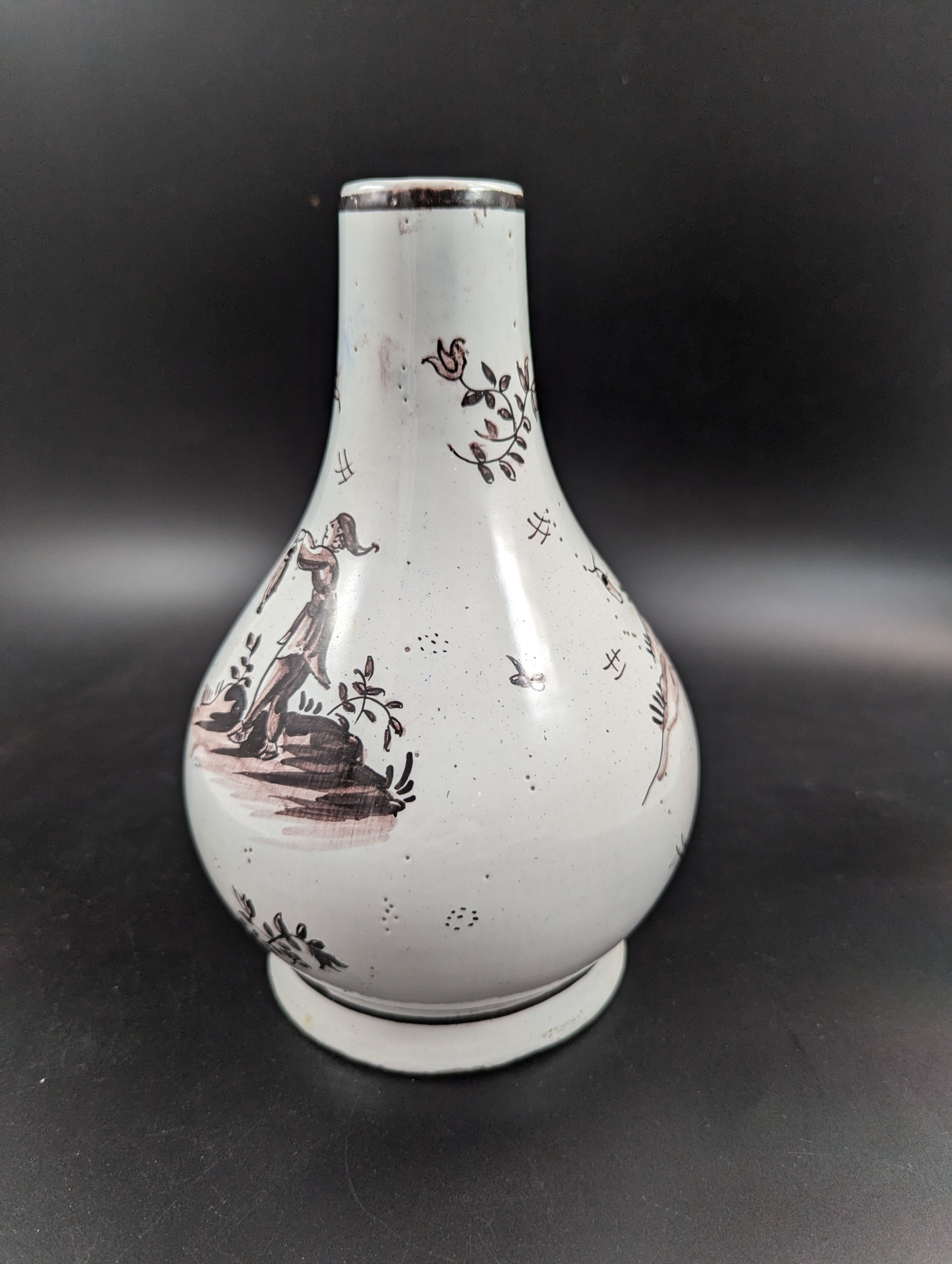
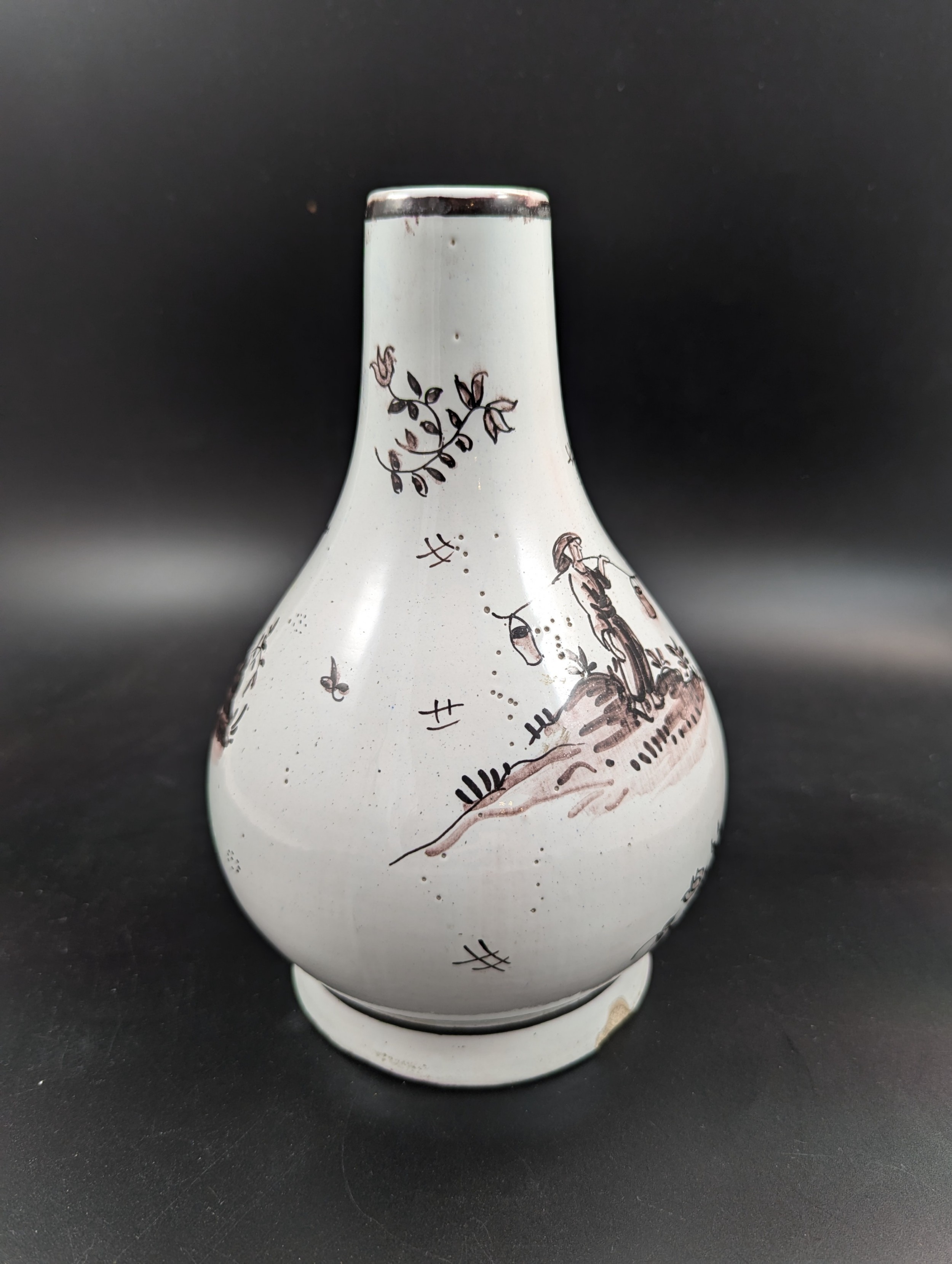
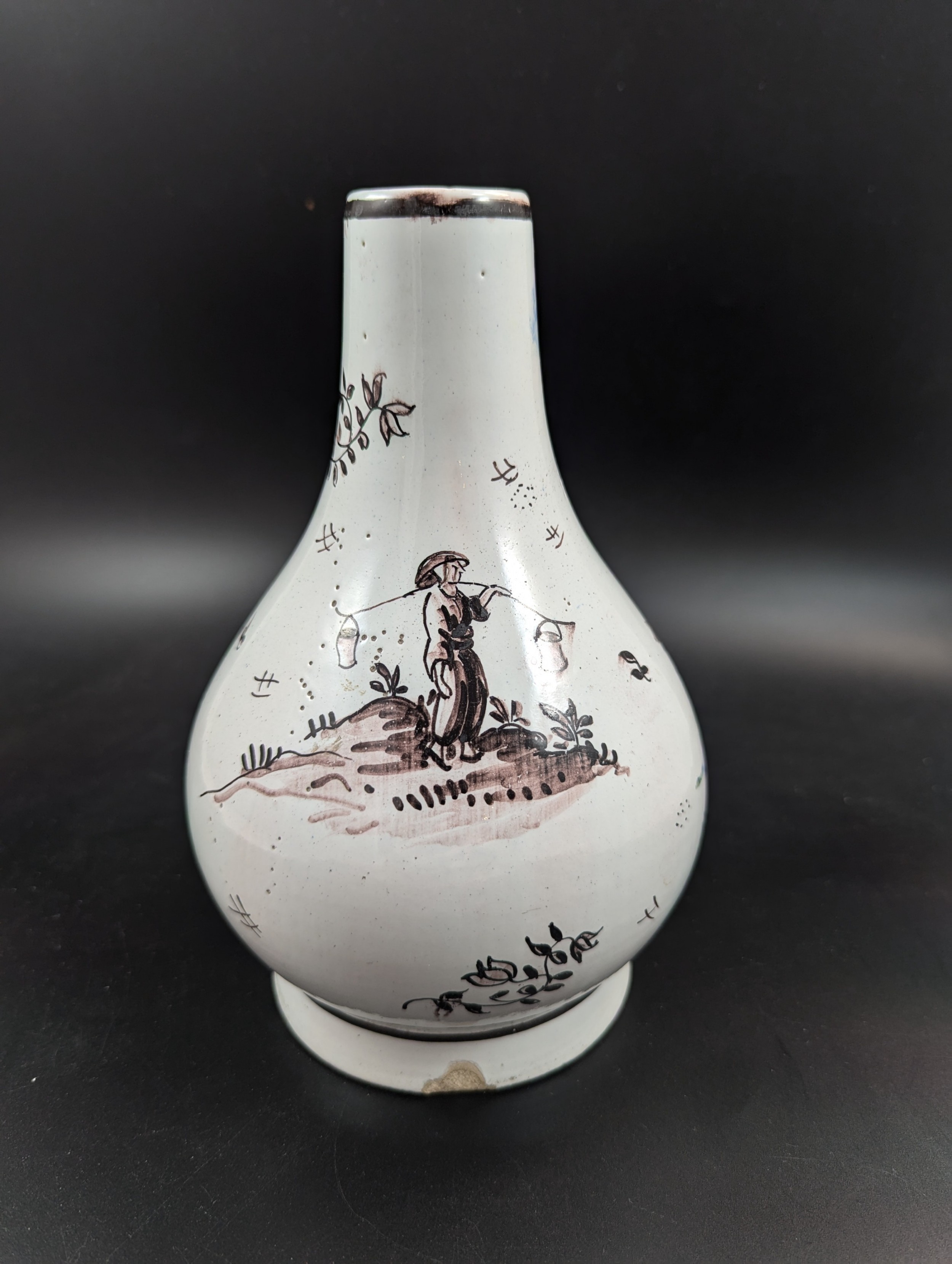
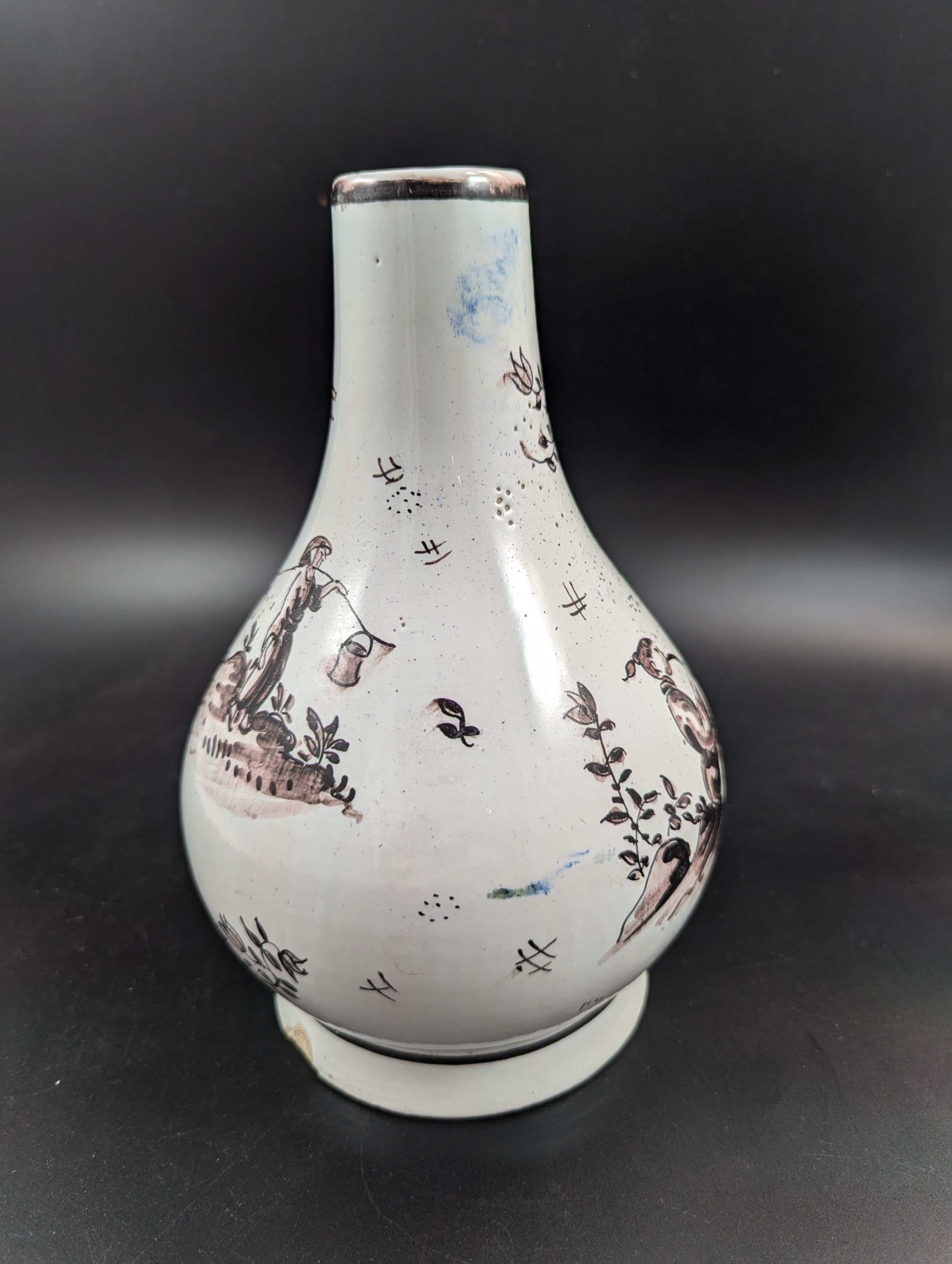
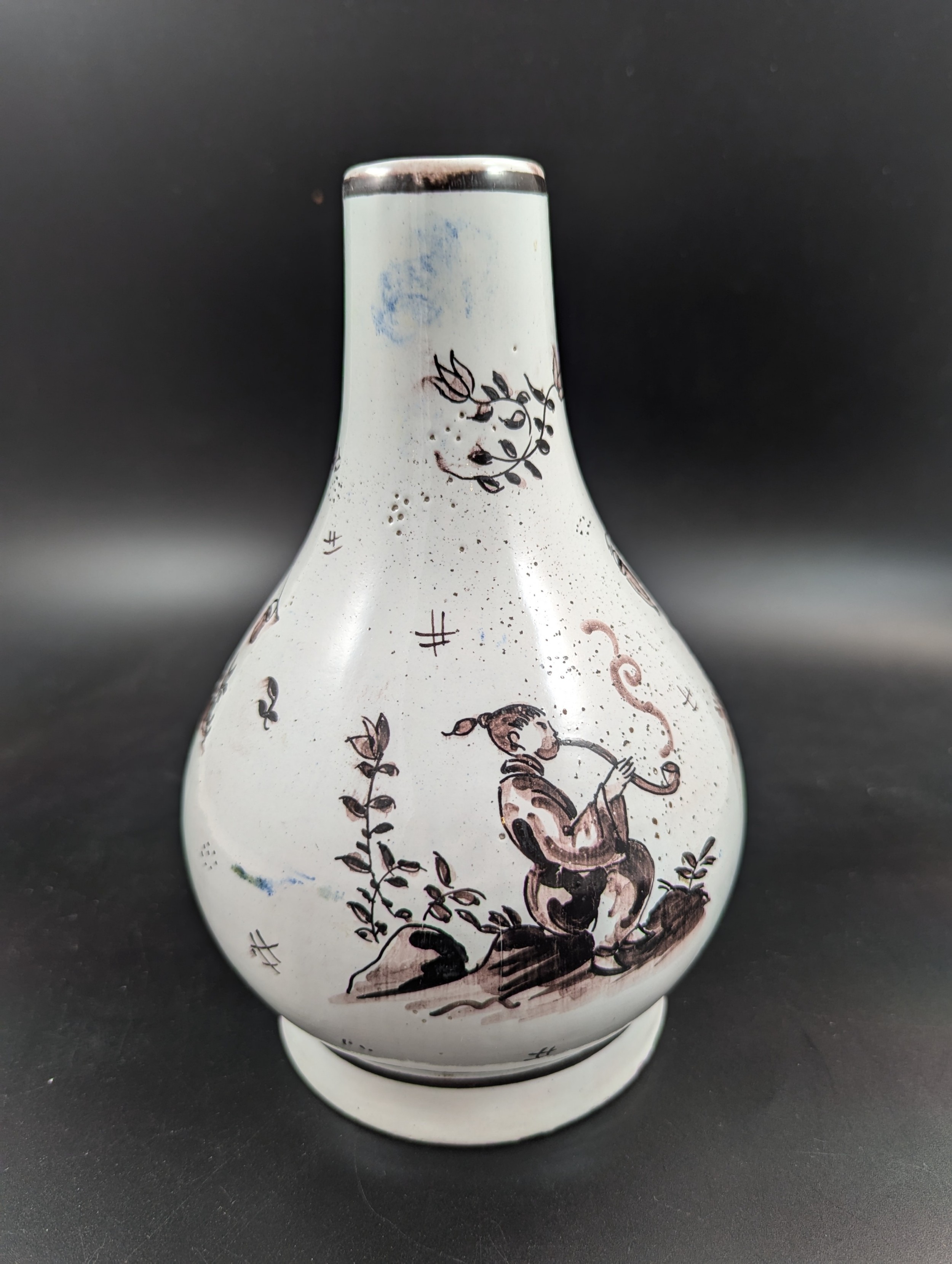
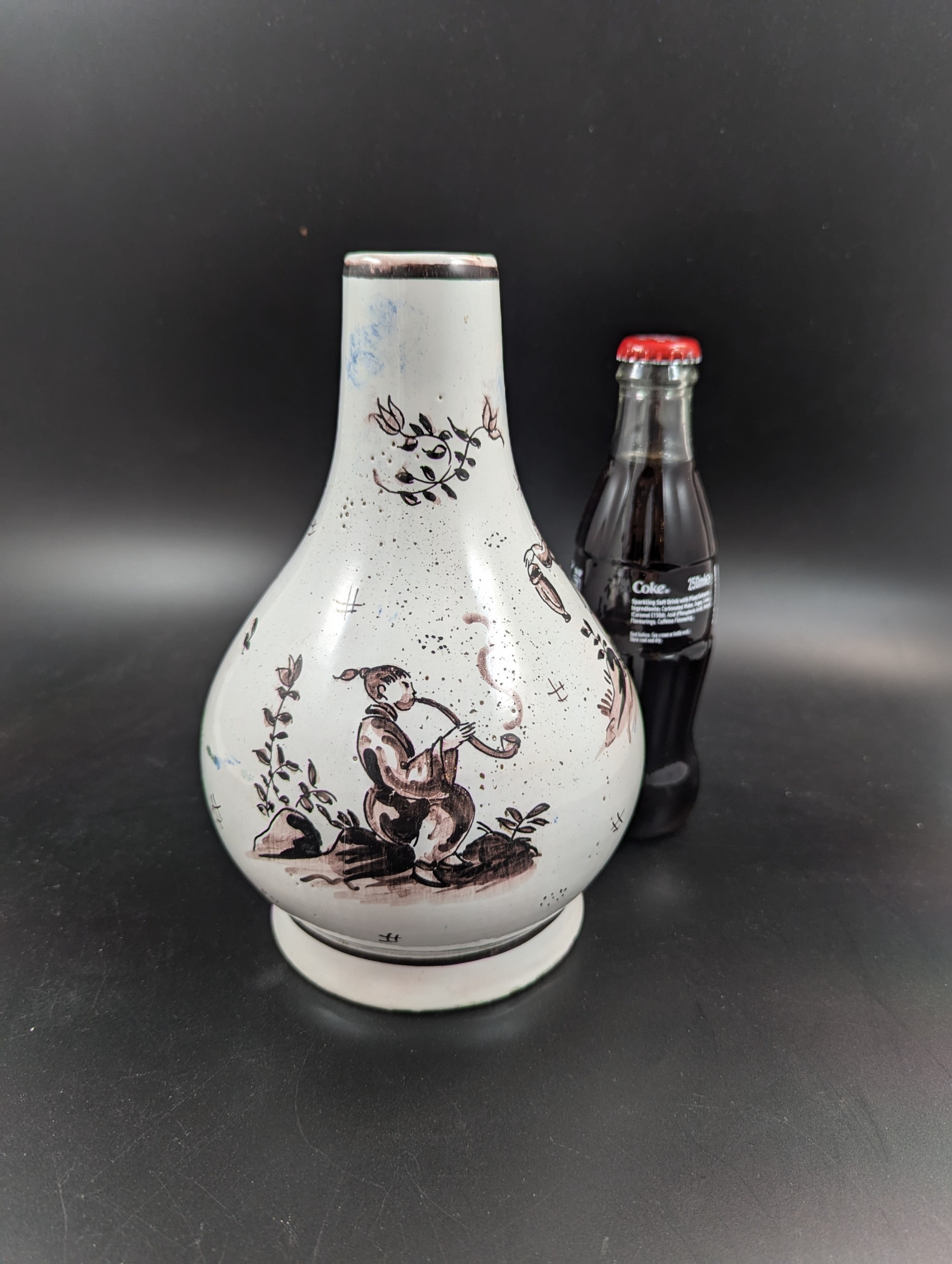
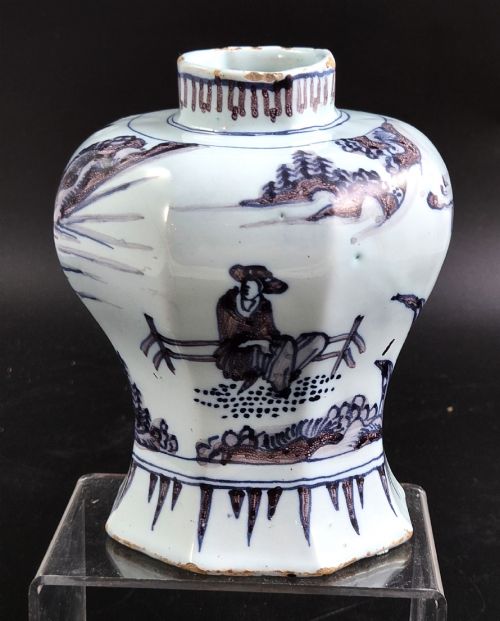
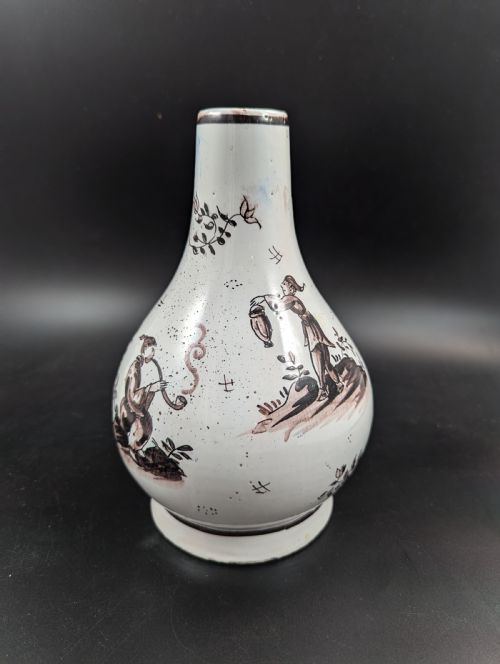
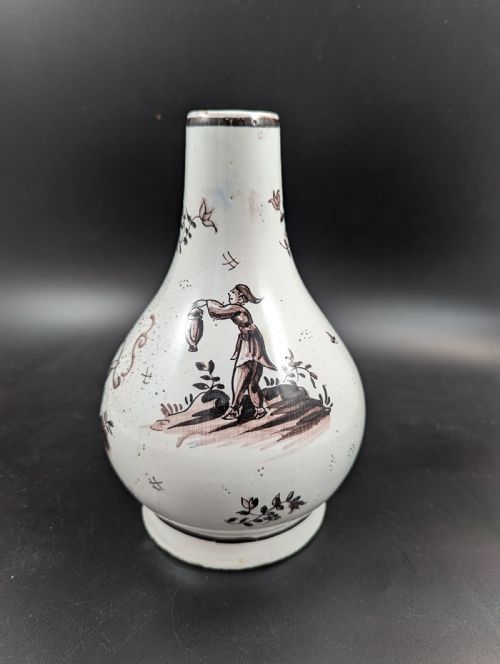
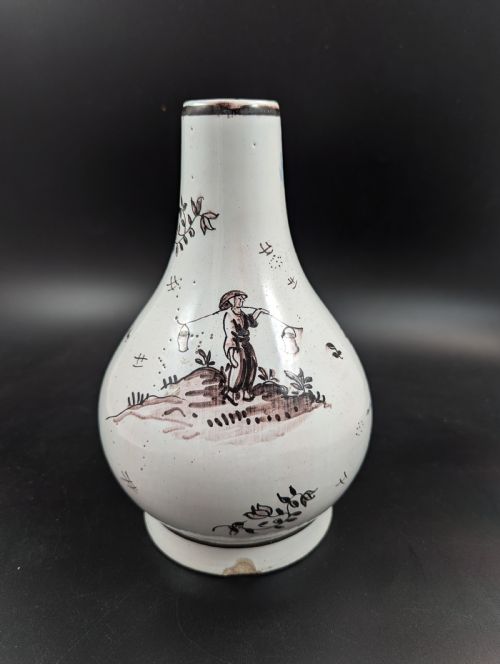
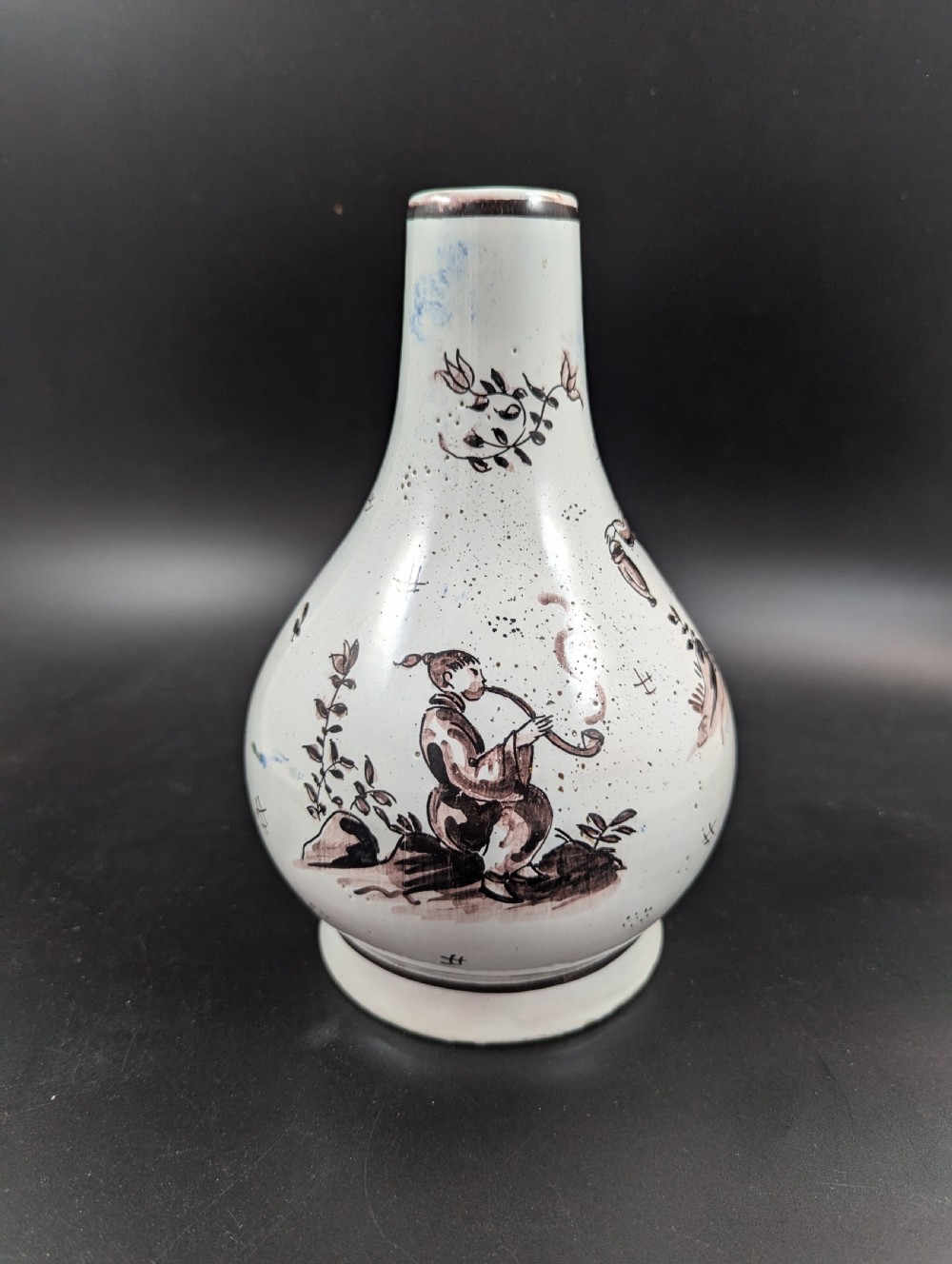
A pear-shaped faience vase, decorated in black and brown on a white background with pictures in Chinoiserie style. Hand-painted images depict three Chinese figures: one smoking a long pipe with smoke rising up, another carrying two buckets of water on a balance beam, and a woman holding something. The landscape is represented by a few rocks and bushes with scattered tree branches. Black spots and dots on the body of the vase are peculiarities of the technological process of glazing during the manufacture of the piece.
The first ships carrying Chinese porcelain arrived in the Netherlands around 1600. The new luxury pottery was very popular, and makers in Delft soon started trying to develop a good imitation. The Chinese porcelain was made of very fine white clay known as kaolin, but that was not available in the Netherlands. So to make 'Hollants porceleyn' (Dutch porcelain), the potters in Delft used tin glaze – an opaque white glaze containing tin oxide. This technique was used in Delft until around 1850. That is why objects made between 1620 and 1850 are known as antique Delftware. After 1850, Delftware was made using another technique and is known as modern Delftware.
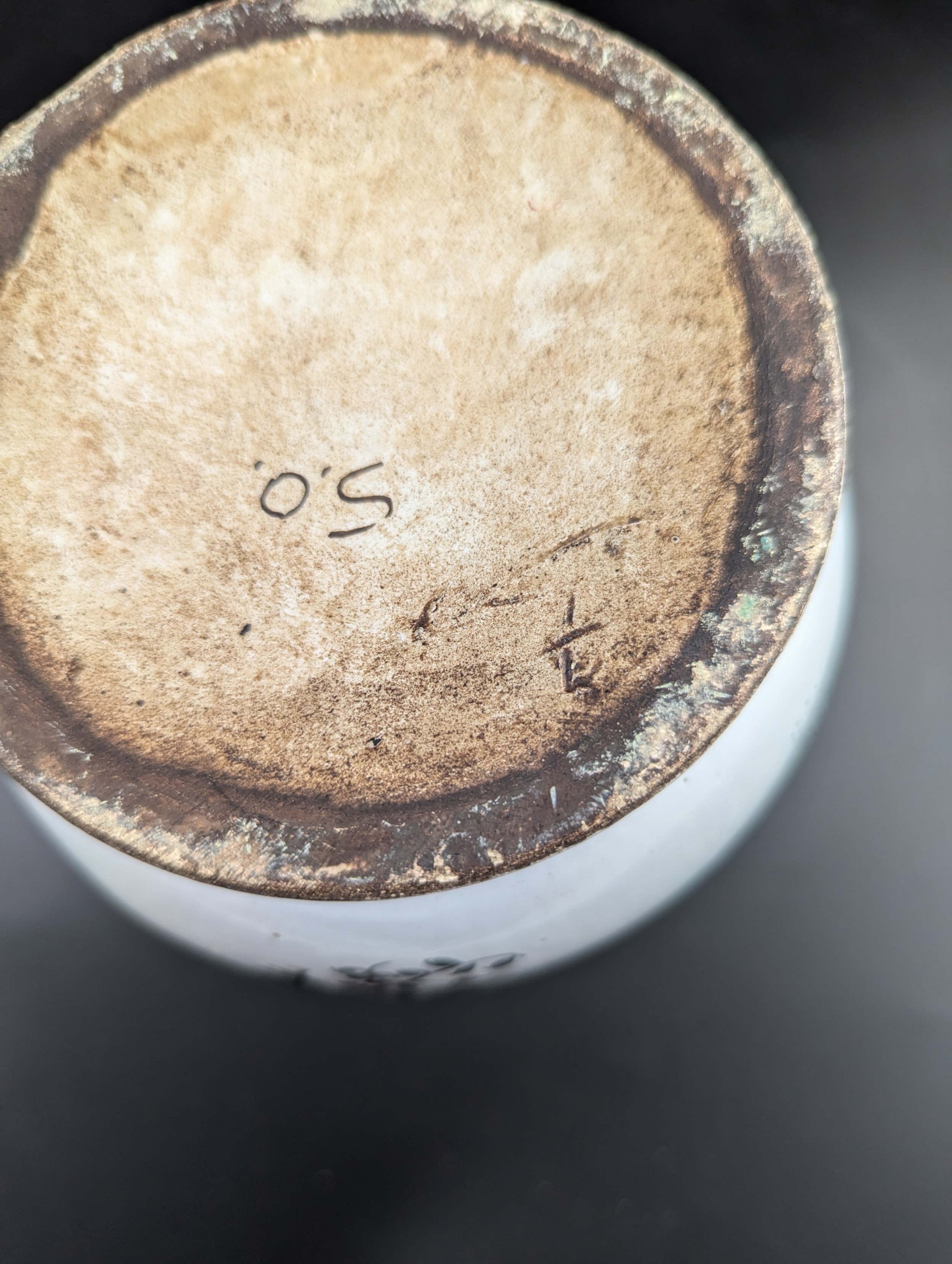
Delftware was made using clay that turned yellow when fired. It was then dipped in a bath of white, opaque tin glaze to cover it completely. The earthenware objects were fired at around 1000 degrees Celsius. This was not enough to fuse the clay and the glaze completely, so the glaze could easily flake off. This caused slight damage, where the yellow of the clay can often be seen. This is a good way of identifying antique Delftware.
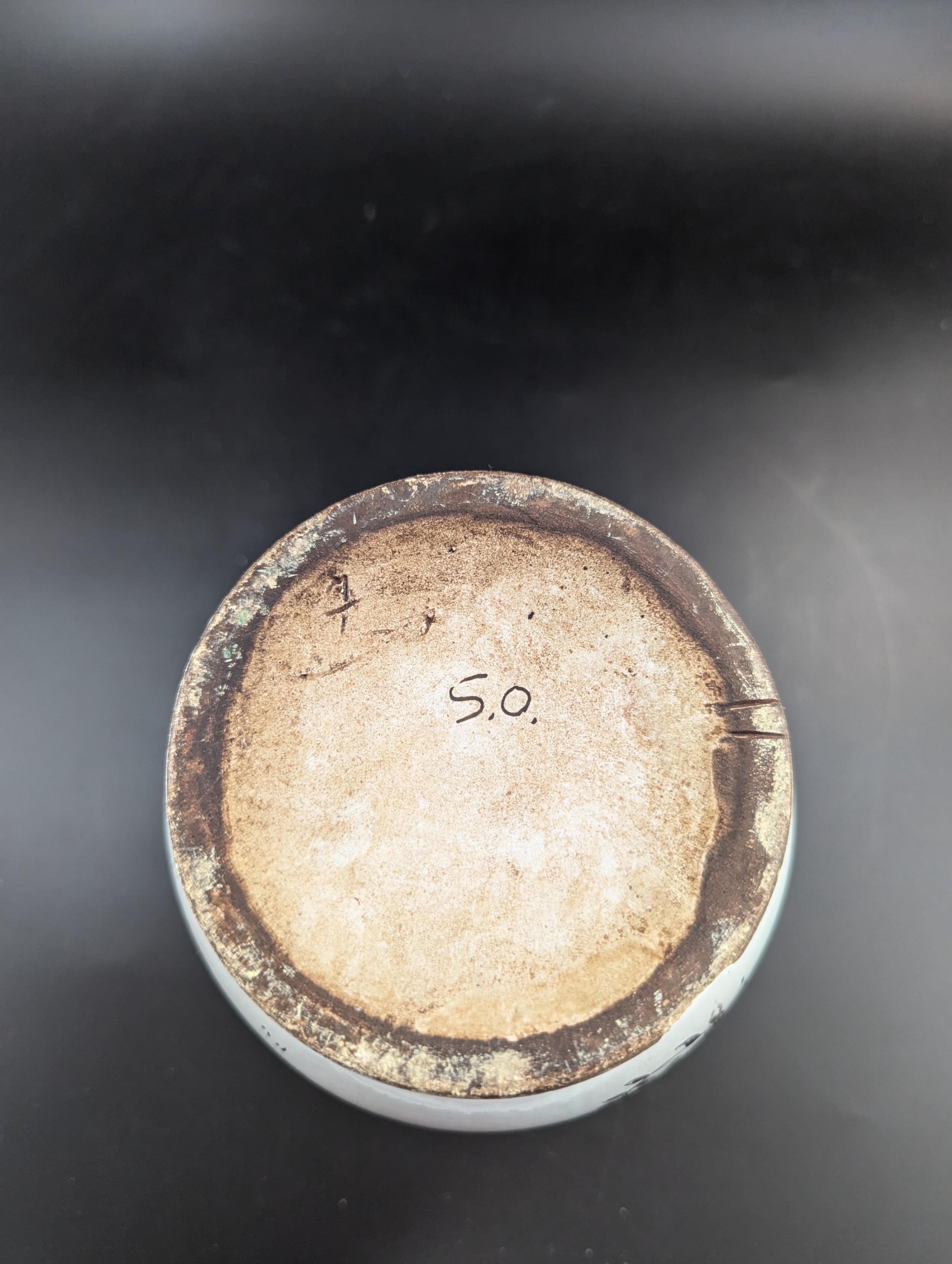
Dutch Delftware might have a mark – but not necessarily. Only a few of the maker's marks have ever been officially recorded, and at least half the antique Delftware made never had a mark. Surviving ledgers of Delft potteries show that their products were sold to neighbouring countries, and also to Denmark, Poland, and even as far afield as Curacao and Boston. Soy sauce from Japan was, for example, packed in Delftware bottles. It is therefore no wonder that Dutch Delftware is found in museum and private collections the world over.
Height: 22.5 cm, Diameter: 14.3 cm. Weight: 943 grams

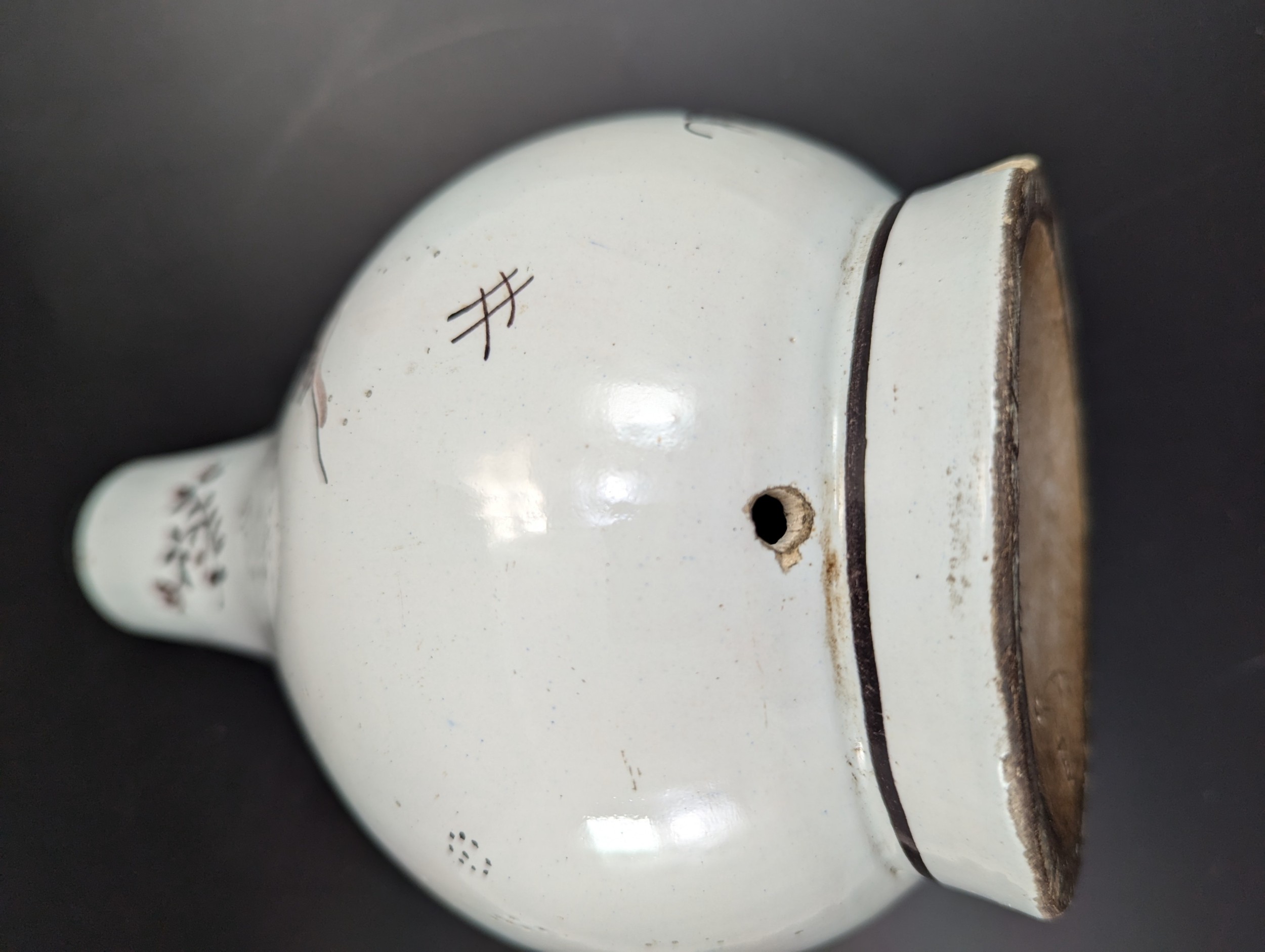
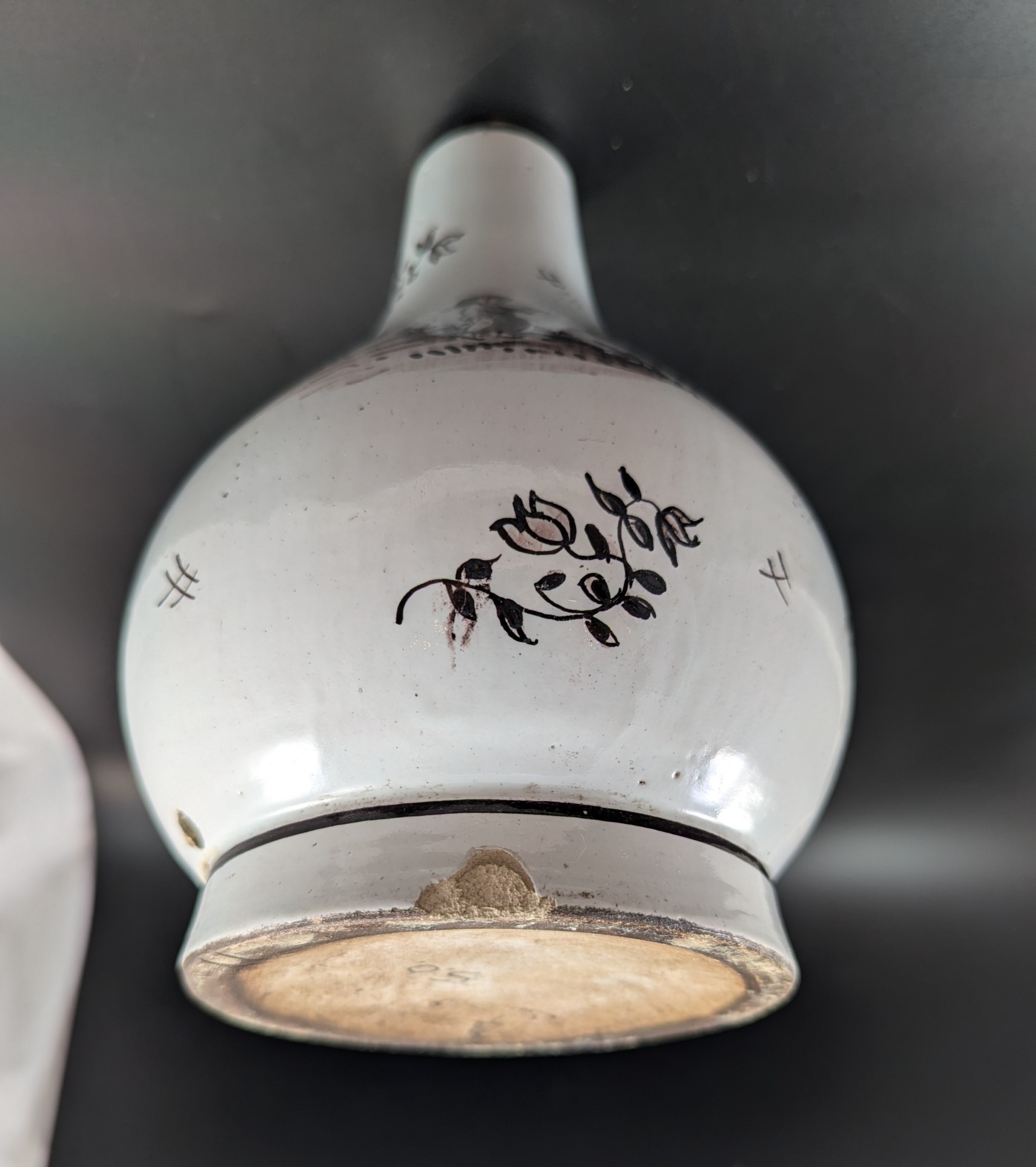
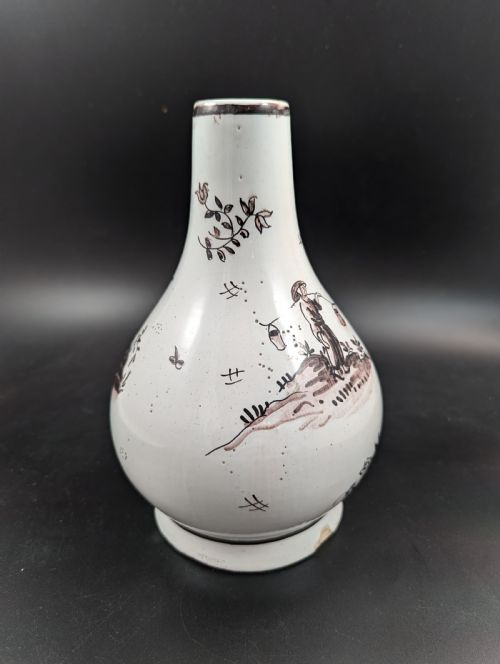
Condition: Chip on the bottom rim, drilled hole in the lower part, in two places small traces of blue paint. Scuffing of brown paint on the upper rim. Traces of firing in some places. Otherwise excellent antique condition consistent with age.
Please study the accompanying photographs carefully as they form an integral part of this description. The item will be shipped with full tracking and insurance. It is important to note that shipping costs include labour, packaging, and postage.

Declaration

Gillers Antiques Ltd has dated this Antique Delft Pottery Vase to the 18th Century.

Reference Numbers
Sellingantiques Reference
SA1082575
Description
A pear-shaped faience vase, decorated in black and brown on a white background with pictures in Chinoiserie style.
Hand-painted images depict three Chinese figures: one smoking a long pipe with smoke rising up, another carrying two buckets of water on a balance beam, and a woman holding something.
Gillers Antiques Ltd

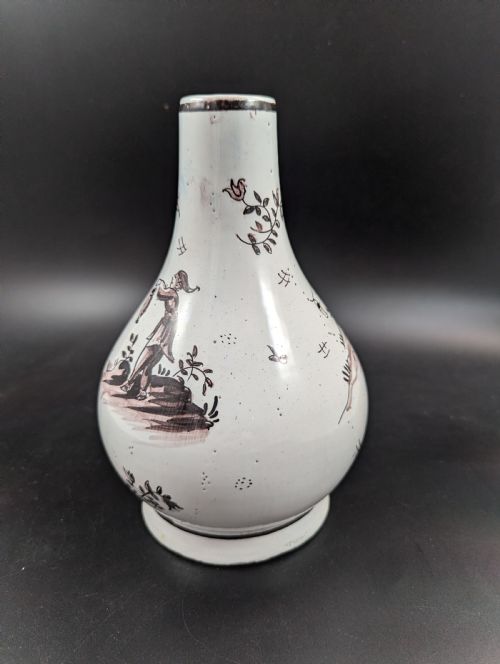
The landscape is represented by a few rocks and bushes with scattered tree branches. Black spots and dots on the body of the vase are peculiarities of the technological process of glazing during the manufacture of the piece.

fig 1. A mid-18th-century tin-glazed earthenware vase with a pear-shaped body, decorated with hand-painted manganese Chinoiserie figures.
fig 1. Antique Delft Tin-glazed Pottery Vase, Mid-18th Century.

The first ships carrying Chinese porcelain arrived in the Netherlands around 1600. The new luxury pottery was very popular, and makers in Delft soon started trying to develop a good imitation. The Chinese porcelain was made of very fine white clay known as kaolin, but that was not available in the Netherlands. So to make 'Hollants porceleyn' (Dutch porcelain), the potters in Delft used tin glaze – an opaque white glaze containing tin oxide. This technique was used in Delft until around 1850. That is why objects made between 1620 and 1850 are known as antique Delftware. After 1850, Delftware was made using another technique and is known as modern Delftware.

fig 2. A mid-18th-century tin-glazed earthenware vase with a pear-shaped body, decorated with hand-painted manganese Chinoiserie figures.
fig 2. Antique Delft Tin-glazed Pottery Vase, Mid-18th Century.

Delftware was made using clay that turned yellow when fired. It was then dipped in a bath of white, opaque tin glaze to cover it completely. The earthenware objects were fired at around 1000 degrees Celsius. This was not enough to fuse the clay and the glaze completely, so the glaze could easily flake off. This caused slight damage, where the yellow of the clay can often be seen. This is a good way of identifying antique Delftware.

fig 3. A mid-18th-century tin-glazed earthenware vase with a pear-shaped body, decorated with hand-painted manganese Chinoiserie figures.
fig 3. Antique Delft Tin-glazed Pottery Vase, Mid-18th Century.

Dutch Delftware might have a mark – but not necessarily. Only a few of the maker's marks have ever been officially recorded, and at least half the antique Delftware made never had a mark. Surviving ledgers of Delft potteries show that their products were sold to neighbouring countries, and also to Denmark, Poland, and even as far afield as Curacao and Boston. Soy sauce from Japan was, for example, packed in Delftware bottles. It is therefore no wonder that Dutch Delftware is found in museum and private collections the world over.

fig 4. A mid-18th-century tin-glazed earthenware vase with a pear-shaped body, decorated with hand-painted manganese Chinoiserie figures.
fig 4. Antique Delft Tin-glazed Pottery Vase, Mid-18th Century.

Height: 22.5 cm, Diameter: 14.3 cm. Weight: 943 grams

Condition: Chip on the bottom rim, drilled hole in the lower part, in two places small traces of blue paint. Scuffing of brown paint on the upper rim. Traces of firing in some places. Otherwise excellent antique condition consistent with age.

fig 5. A mid-18th-century tin-glazed earthenware vase with a pear-shaped body, decorated with hand-painted manganese Chinoiserie figures.
fig 5. Antique Delft Tin-glazed Pottery Vase, Mid-18th Century.

Please study the accompanying photographs carefully as they form an integral part of this description. The item will be shipped with full tracking and insurance. It is important to note that shipping costs include labour, packaging, and postage.

Date of Manufacture

Gillers Antiques Ltd has dated this Antique Delft Pottery Vase to the 18th Century.

Reference Numbers
Sellingantiques Ref
SA1082575
Gillers Antiques Ltd
Sellingantiques verified Since Mar 2023
Dealer Profile

You can view the stock and full dealer information on the Gillers Antiques Ltd Profile Page
PDF SHARE
SAVE
A mid-18th-century tin-glazed earthenware vase with a pear-shaped body, decorated with hand-painted manganese Chinoiserie figures.
1 / 13
Archive I A mid-18th-century tin-glazed earthenware vase with a pear-shaped body, decorated with hand-painted manganese Chinoiserie figures.

Antique Delft tin-glazed Pottery Vase, mid-18th century.

Archive II A mid-18th-century tin-glazed earthenware vase with a pear-shaped body, decorated with hand-painted manganese Chinoiserie figures. View II
Archive III A mid-18th-century tin-glazed earthenware vase with a pear-shaped body, decorated with hand-painted manganese Chinoiserie figures. View III
Archive IV A mid-18th-century tin-glazed earthenware vase with a pear-shaped body, decorated with hand-painted manganese Chinoiserie figures. View IV
Archive V A mid-18th-century tin-glazed earthenware vase with a pear-shaped body, decorated with hand-painted manganese Chinoiserie figures. View V
Archive VI A mid-18th-century tin-glazed earthenware vase with a pear-shaped body, decorated with hand-painted manganese Chinoiserie figures. View VI
Archive VII A mid-18th-century tin-glazed earthenware vase with a pear-shaped body, decorated with hand-painted manganese Chinoiserie figures. View VII
Archive VIII A mid-18th-century tin-glazed earthenware vase with a pear-shaped body, decorated with hand-painted manganese Chinoiserie figures. View VIII
Archive IX A mid-18th-century tin-glazed earthenware vase with a pear-shaped body, decorated with hand-painted manganese Chinoiserie figures. View IX
Archive X A mid-18th-century tin-glazed earthenware vase with a pear-shaped body, decorated with hand-painted manganese Chinoiserie figures. View X
Archive XI A mid-18th-century tin-glazed earthenware vase with a pear-shaped body, decorated with hand-painted manganese Chinoiserie figures. View XI
Archive XII A mid-18th-century tin-glazed earthenware vase with a pear-shaped body, decorated with hand-painted manganese Chinoiserie figures. View XII
Archive XIII A mid-18th-century tin-glazed earthenware vase with a pear-shaped body, decorated with hand-painted manganese Chinoiserie figures. View XIII
FURTHER BROWSING

Visitors also looked at these ⇣

Enlarged Archival View
Telephone 07738 009924
Location
Buckland House
Buntingford
Hertfordshire
SG9 0PY
United Kingdom
Verified Since Mar 2023
Items For Sale 401
Items Sold 564
Gillers Antiques Ltd
Verified Since Mar 2023
View Dealer Info
Location: Buckland House, Buntingford, Hertfordshire, SG9 0PY, United Kingdom
Verified
Mar 2023
For Sale
401
Sold
564
A mid-18th-century tin-glazed earthenware vase with a pear-shaped body, decorated with hand-painted manganese Chinoiserie figures.
Antique Delft tin-glazed Pottery Vase, mid-18th century.
Ref: SA1082575
A mid-18th-century tin-glazed earthenware vase with a pear-shaped body, decorated with hand-painted manganese Chinoiserie figures.
Detail View 1
Detail View 2
Detail View 3
Detail View 4
Detail View 5
Detail View 6
Detail View 7
Detail View 8
Detail View 9
Detail View 10
Detail View 11
Detail View 12
Archival Detail
Every single antique dealer on our platform is individually approved by our internal team. We verify their professional trade history, ethical standards, and photographic quality to ensure a secure, high-standard buying environment. Upon joining, every dealer agrees to a strict 9-point code of conduct. While issues can occasionally arise, our dealers typically resolve them swiftly and directly with the buyer. In fact, since our founding in 2002, Sellingantiques has only had to step in to help resolve an issue on roughly five occasions—a true testament to the quality of our dealers and their dedication to your happiness.
Our dealers are highly experienced in packing and shipping fragile, high-value antiques. Because you are in direct contact with the dealer, you will be able to easily go through all available shipping and insurance options together to ensure your item arrives safely.
Antiques are the ultimate green purchase. By choosing historical pieces over newly manufactured goods, you completely eliminate the carbon footprint of modern mass production while preserving exceptional, timeless craftsmanship.

Tin-glazed Delftware is a style of Dutch earthenware ceramic coated with an opaque white glaze achieved through the addition of tin oxide, often painted with cobalt blue or manganese oxide decoration.

These vessels were crafted from local refined earthenware clay, dipped in a tin-lead oxide glaze mixture, and hand-painted with metal oxide pigments prior to a final firing process.

Authentic period pieces typically feature a soft reddish or yellowish earthenware body visible at chipped edges, minor pinholes or glaze pops, hand-painted irregularities, and characteristic base marks or maker initials.

Display the vessel as a standalone accent on a sideboard top, curated bookshelf, or mantelpiece alongside period timber furniture, fine metalware, or minimalist neutral backgrounds to highlight its graphic hand-painted detail.

Dust gently with a soft dry cloth, avoiding immersion in water or chemical cleansers that could penetrate crazed glaze lines or destabilise historic restoration work.
items
Add keywords to the filter
Price
£100
£250000
Era
Movements
Material
Origin
Stock Location
Freshness
Online Payments
Categories