

Antique Chinese Vases
Chinese porcelain and enamel vases made for display, from small cloisonné pieces to monumental floor vases, and reaching the UK market in quantity from the 19th-century export trade.
Antique Chinese Vases
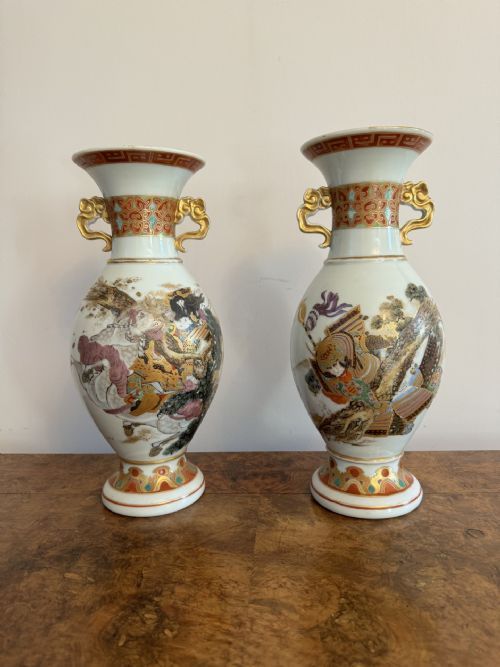
Vases have been made in China for millennia, but the ones that reach the Western market in numbers are porcelain and enamelled wares of the Ming period onward. Nineteenth-century production at Canton and elsewhere was aimed at export to Europe, which is why decorative pairs and matched garnitures are so common in dealer stock.
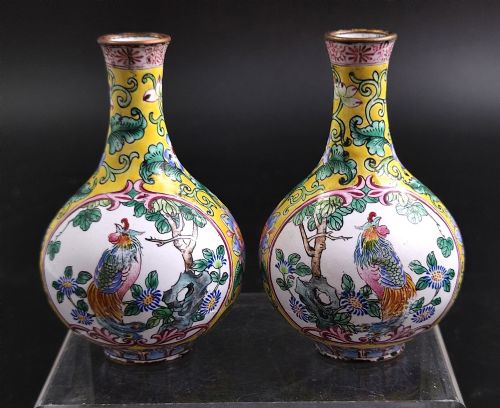
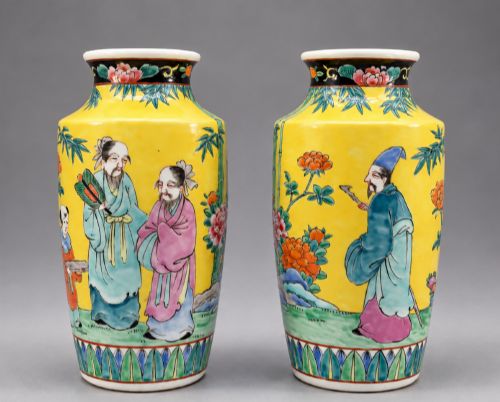
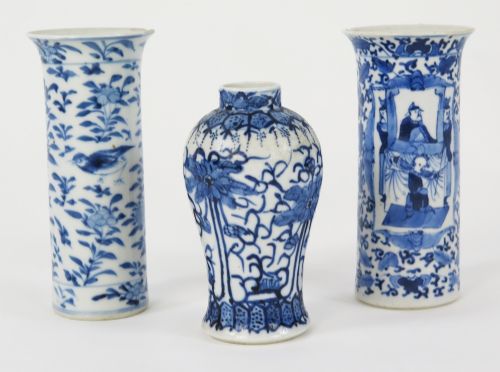
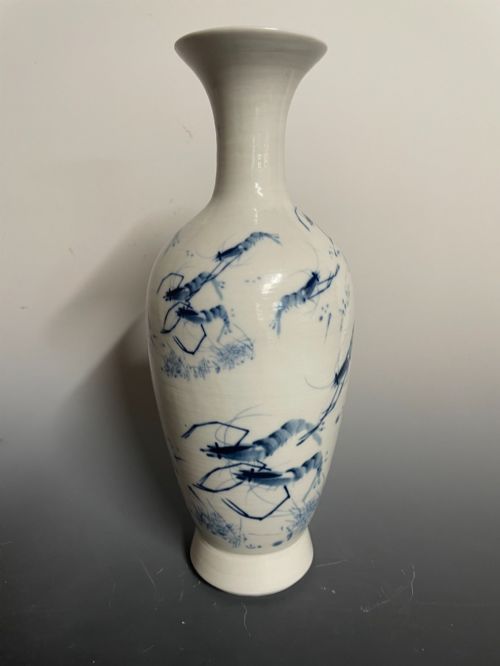
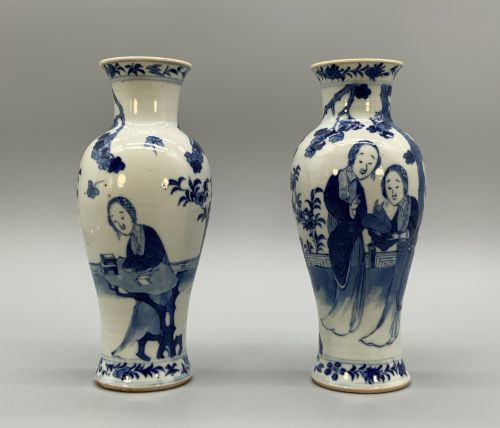
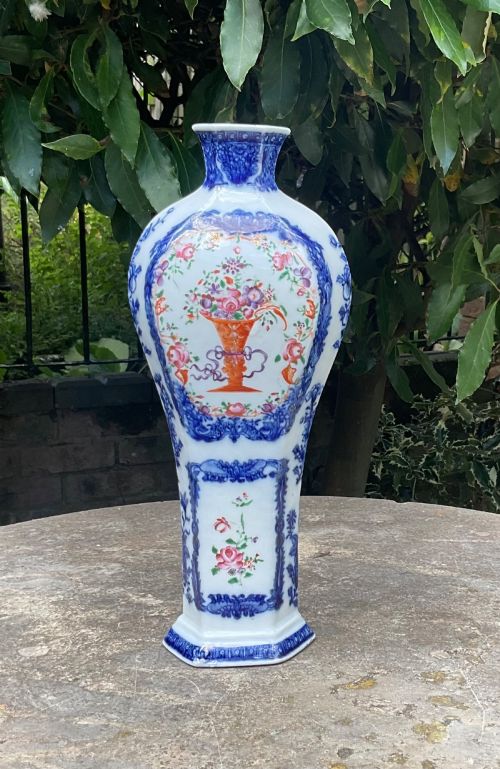
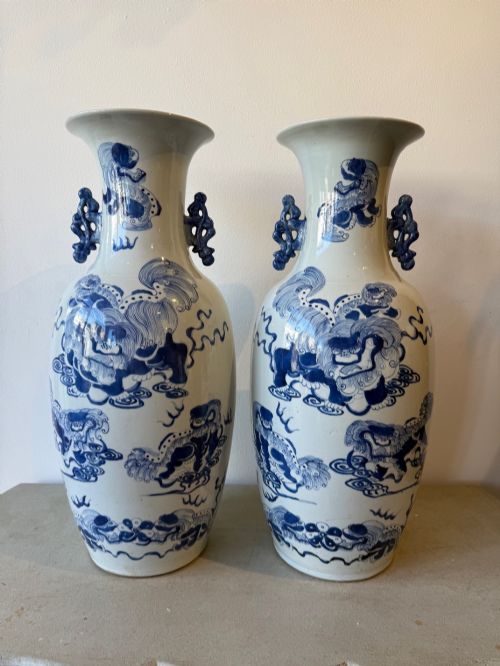
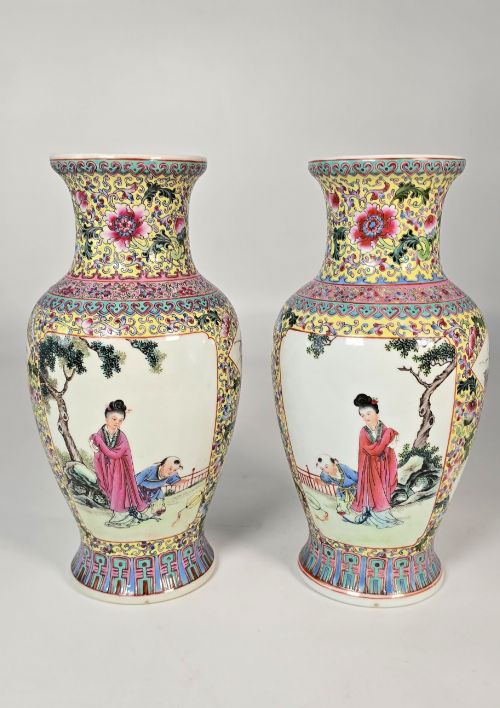
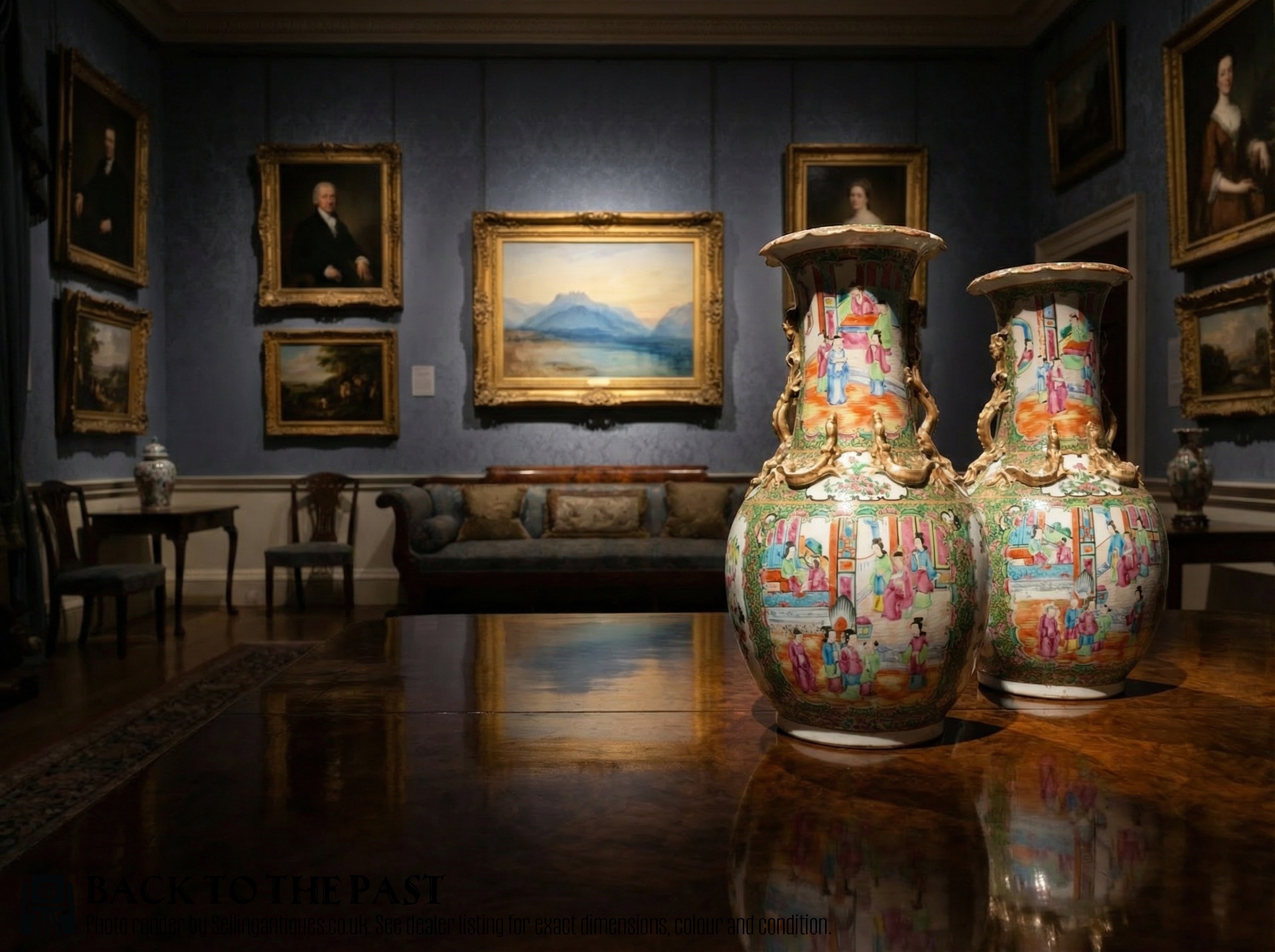
The form you're most likely to meet is a 19th-century porcelain vase painted in famille rose enamels or underglaze blue and white, offered as one of a pair. 'Pair' turns up in a third of titles on Sellingantiques, '19th' in over a quarter, and 'large' in around a fifth.
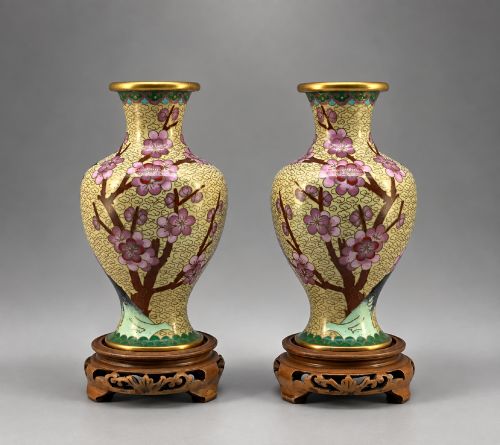
Beyond porcelain, the category takes in cloisonné and champlevé enamel on metal, bronze, cinnabar and red lacquer, and monochrome-glazed stonewares in celadon, sang de boeuf, flambé, crackle glaze and tea dust. These bodies turn up regularly but never in bulk. A recurring sub-type is the vase converted or offered as a lamp, sometimes on ormolu mounts.
Dating is broad rather than precise. Only 110 of 257 listings carry a clean year, and 98 sit in an undifferentiated 19th-century bucket, so a great many pieces are placed in a century rather than a reign. Where a reign is named, Kangxi leads, with Qianlong, Guangxu, Tongzhi, Daoguang, Wanli and Shunzhi appearing more thinly, and often it is the mark or the style being cited.
The Range
Two things separate the top of the range from the bottom, and neither is subtle. The first is number: pairs sit well above singles, and 'large pair' is its own recurring phrase. The second is scale. Titles climb from miniature cloisonné and small porcelain pairs through 'large', 'huge' and 'enormous' to explicitly monumental floor vases, with stated heights running past a metre and, in one export lacquer pair of temple vases, to 86 inches.
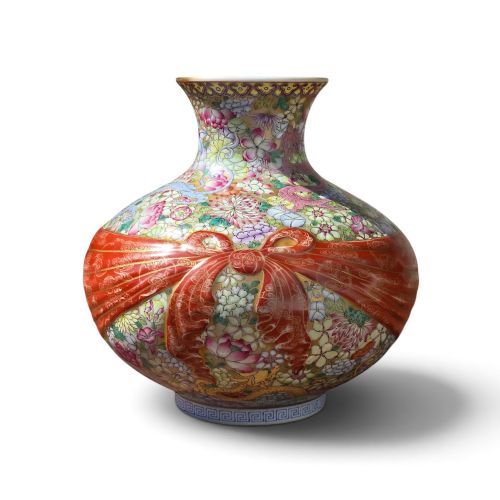
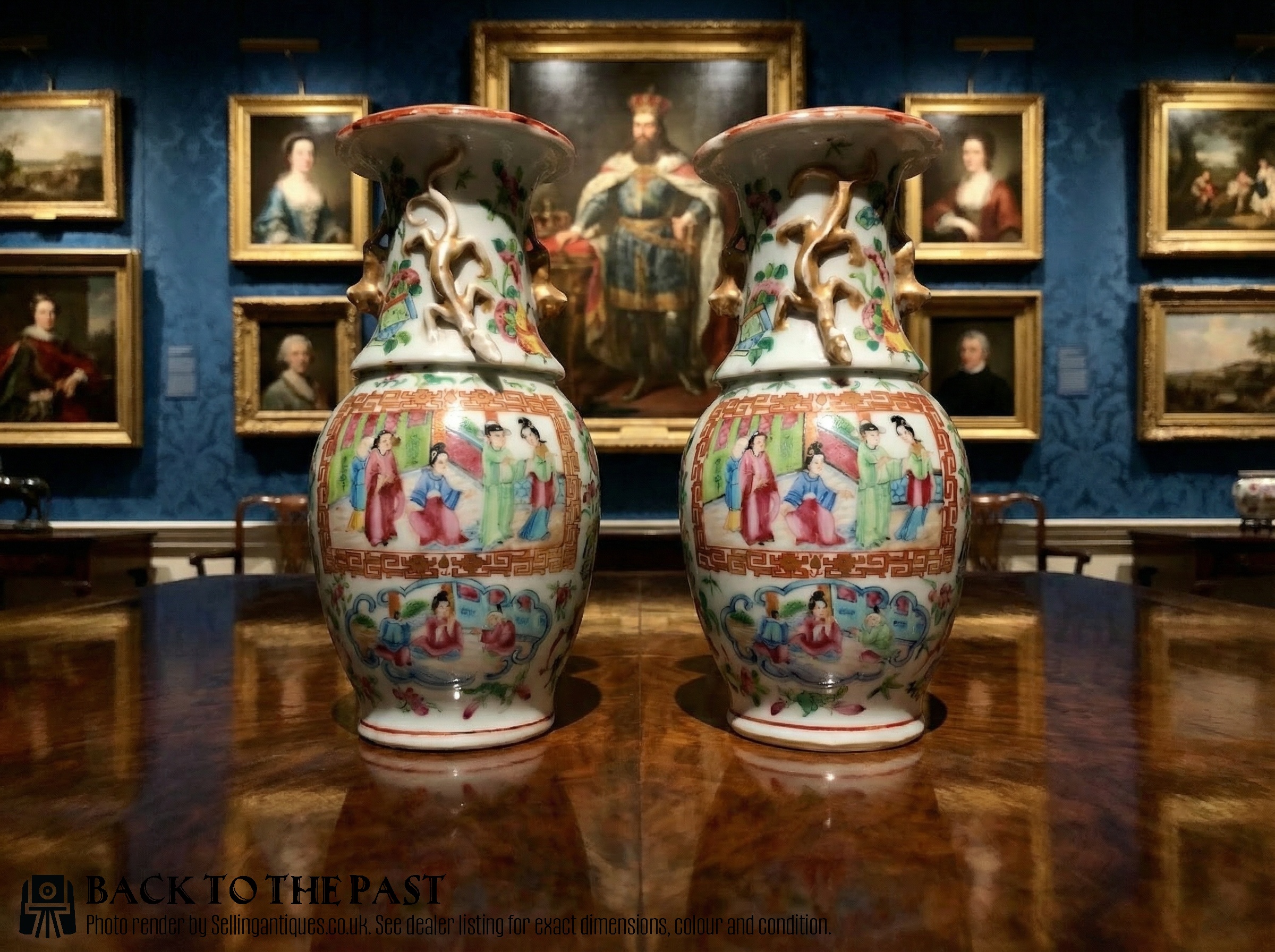
Decoration does the rest of the work. Densely enamelled Cantonese porcelain, rose medallion and Rose Mandarin panels, millefleurs grounds and figural scenes cluster at the top, alongside large blue and white double-gourd and dragon vases. Plain single monochromes and small cloisonné pieces sit at the bottom of the range.
Attribution and completeness both count. A title naming Kangxi, Qianlong, Shunzhi or the Transitional period sits above a generically dated 19th-century vase. So does a vase that still has what it was made with: covers, hardwood or marble stands, ormolu mounts, or a garniture kept together as a set.
Antique Chinese Vases Retail Price Guide 2026
Typical UK retail prices for chinese vases, calculated from the Sellingantiques database of over a million retail prices indexed since 2003. This retail price guide relies exclusively on Sellingantiques data; no external sources or auction records are used, so the figures do not describe the wider market.
Celadon takes its name from Celadon, a shepherd in an old French play who wore pale green ribbons.
The Antique Chinese Vases Glossary
- Famille rose
- Overglaze enamel palette dominated by opaque pink and white. It's the commonest decoration named in this category, appearing in around 40 titles.
- Blue and white
- Cobalt painted under a clear glaze. 'Blue' and 'white' each turn up in over 40 titles, sometimes separately, sometimes as the paired phrase.
- Baluster
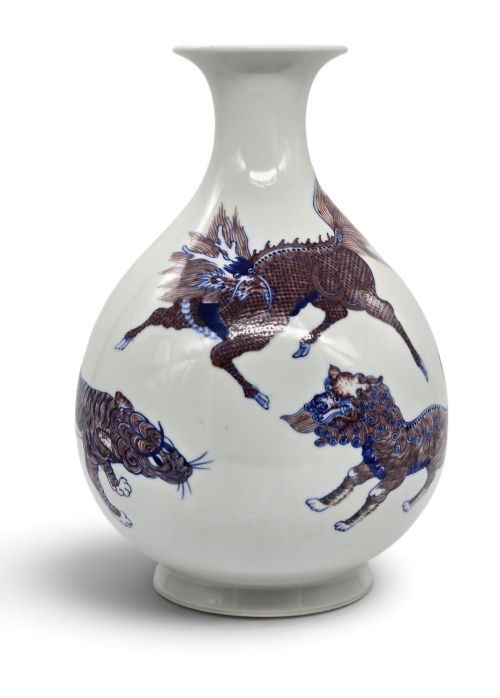
- A swelling body with a waisted neck, named in 13 titles. Bottle vases, with a globular or pear body and long narrow neck, appear in a similar number.
- Rose medallion
- A Canton famille rose pattern of reserved panels holding figures and flowers. All ten titles using it sit in the upper part of the range.
- Cloisonné
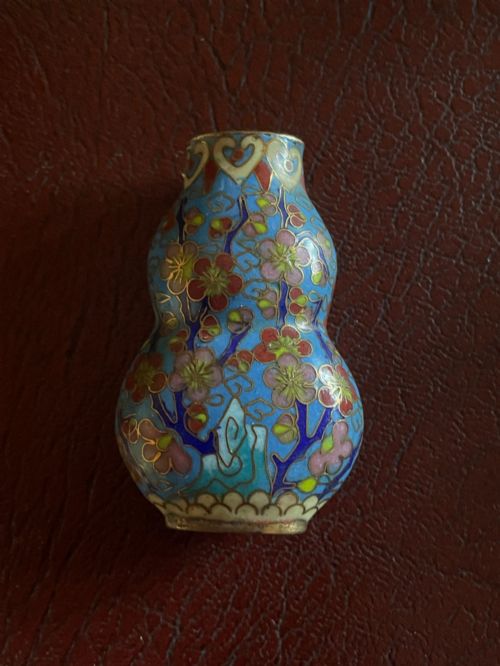
- Enamel held in wire cells soldered to a metal body. Champlevé, where the enamel sits in cast recesses instead, appears alongside it.
- Meiping, gu, rouleau, double gourd
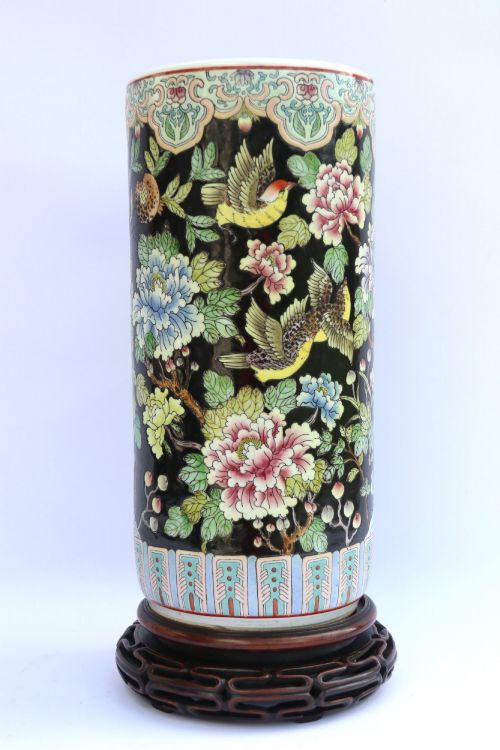
- Named Chinese silhouettes: tall-shouldered, beaker, cylindrical and waisted twin-bulb. All four are used in these titles.
Antique Chinese Vases: Frequently Asked Questions
Why are so many sold in pairs?
Nineteenth-century Canton production was aimed at the European export trade, and matched pairs and garnitures were made for mantels and cabinet tops.
The habit shows in the record. 'Pair' appears in around a third of all titles on Sellingantiques, and 'large pair' is common enough to be its own recurring phrase.
What does the 19th Century date usually mean?
It usually means the century and nothing narrower. Of 257 listings, 98 sit in an undifferentiated 19th-century bucket, and only 110 carry a clean year at all.
The dealer date field runs from 1700 to 1940. Decade buckets are thin and spread, with the 1900s, 1930s, 1920s and 1880s each holding a modest handful.
'Late' and 'early' turn up in titles as the finer grain most pieces get.
How large do these vases get?
Very. Stated sizes in the listings include 60.5cm, 92cm, a lacquered vase over a metre tall, and a pair of export lacquer temple vases at 86 inches.
The language escalates with the size, from 'large' through 'huge' and 'enormous' to explicitly monumental floor vases and temple jars.
Are there named makers for Chinese vases?
No. A scan of the descriptions across this category returned no maker, workshop or kiln business at all.
What listings name instead is the palette, the body, the shape and, where a dealer feels able, a reign or dynasty.
What does a Kangxi mark on a vase indicate?
Kangxi leads the reign names here, in 14 titles, with single appearances for Shunzhi, Wanli, Yongzheng, Tongzhi, Daoguang and Transitional wares.
Dealers often cite the mark or the style rather than making a dated attribution, and the wording in the description tends to say which is meant.
Which types sit at each end of the range?
The top is occupied almost entirely by Cantonese rose medallion pairs and large blue and white double-gourd and dragon vases.
The bottom holds small single cloisonné pieces and plain monochromes. Between them sit the great mass of 19th-century famille rose and blue and white porcelain.