7,310  PAGES BROWSED TODAY PAGES TODAY 0 ANTIQUES UPLOADED TODAYNEW ARRIVALS
Painted Vases
Painted Vases
LATEST STOCK
Sort Order
Items Per Page
Browse Categories
Sort order
Items per page
Home > Vases > Painted Vases > Page 1

Antique Painted Vases

423 items · page 1 of 27
Page 1 of 27

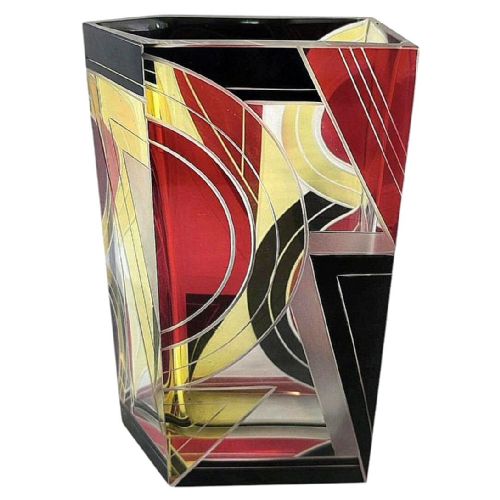
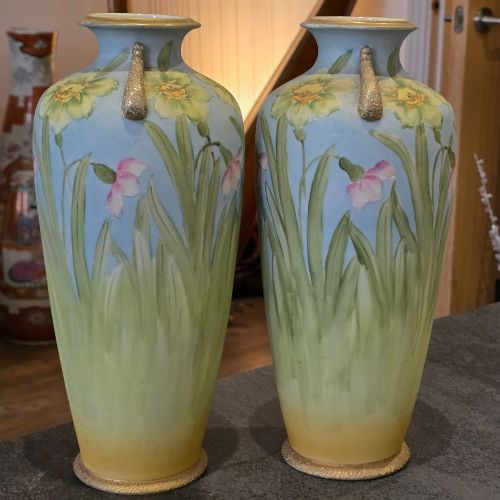
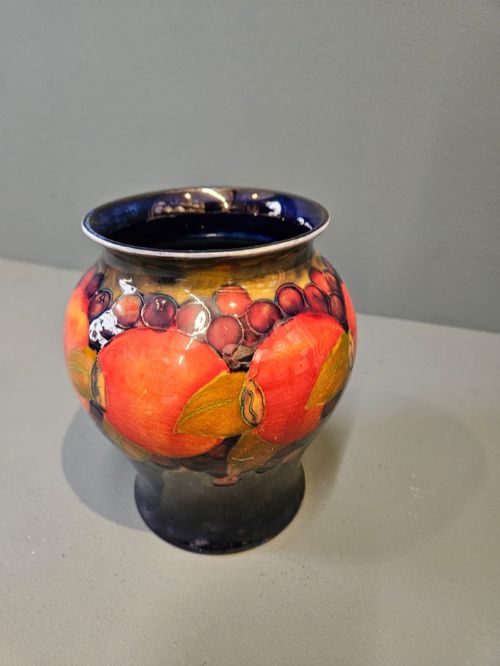
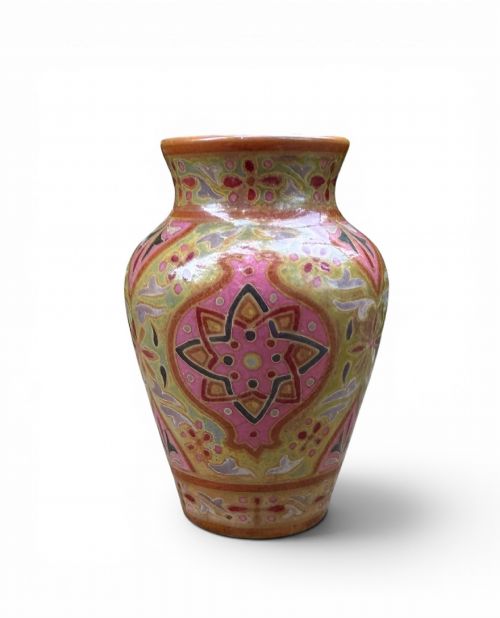
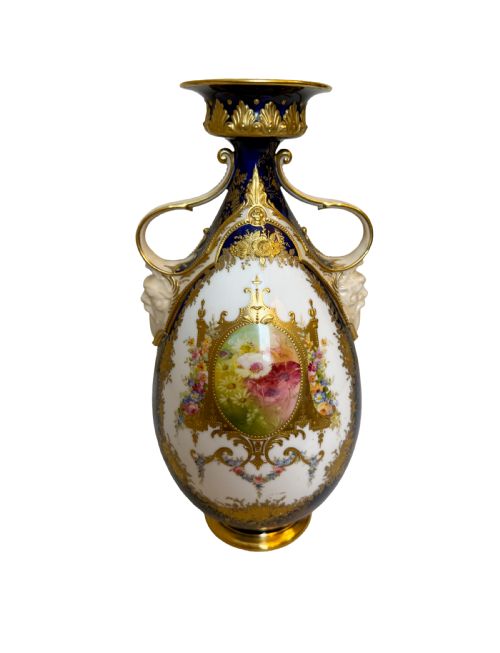
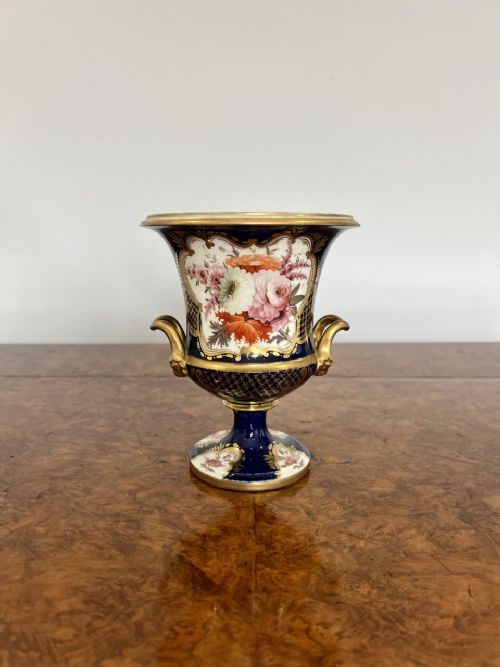
A display vase whose whole point is the painting on it, whether a factory-painted English porcelain panel of fruit or a hand-decorated Japanese earthenware ground.

£169
3 DAYS AGO
vases

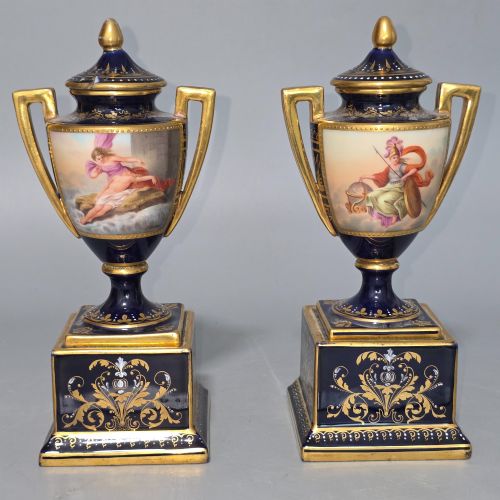
Covered forms are a category of their own on Sellingantiques: many titles say cover, pot pourri or lidded, so plenty of these vases were never meant to stand open.

£395
2 WEEKS AGO
vases
£360
2 WEEKS AGO
vases
£380
1 MONTH AGO
vases
£285
1 MONTH AGO
vases
1 2 3 4 5 ... 27
Sellingantiques  ·  Guide 1652026/2027 edition
Vases

Antique Painted Vases

A display vase whose whole point is the painting on it, whether a factory-painted English porcelain panel of fruit or a hand-decorated Japanese earthenware ground.

Superb Large Falcon Ware “Misty Morn” Mallard Painted Vase
Plate I  ·  Superb Large Falcon Ware “Misty Morn” Mallard Painted Vase, 1930Eclectic Antiques
The category

What They Are

Vases made to be looked at rather than used, and painted decoration was the main way of adding value to them. By the 19th century the painted mantel or cabinet vase, made singly, in pairs or in three-piece garnitures, was standard furnishing. Flowers, fruit, landscapes and figures do most of the work.

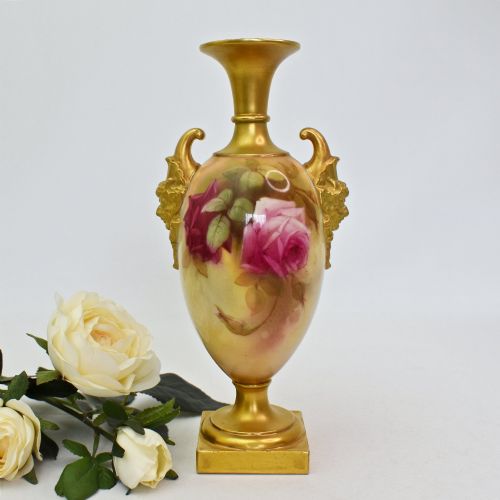
The grouping on Sellingantiques is dominated by hand-painted English porcelain, and within that by Royal Worcester. The commonest single thing you'll meet is a Royal Worcester painted-fruit vase, often a pot pourri form with a cover, and often one of a pair. Roses, game birds and cattle recur as subjects, and 47 titles say the painting is signed by its decorator.

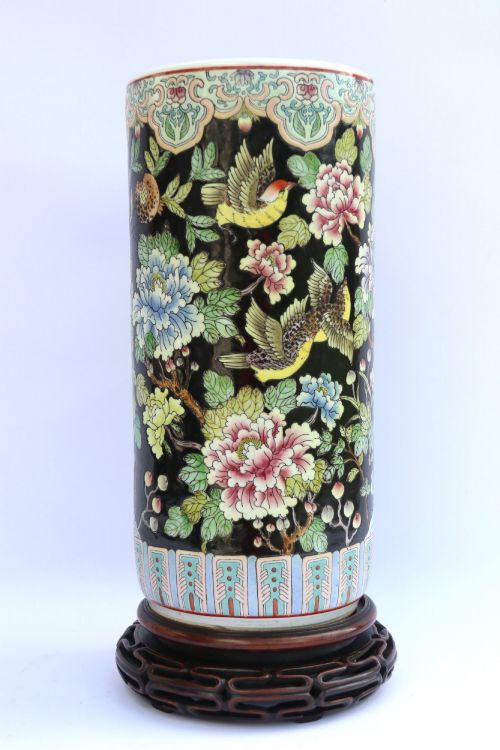
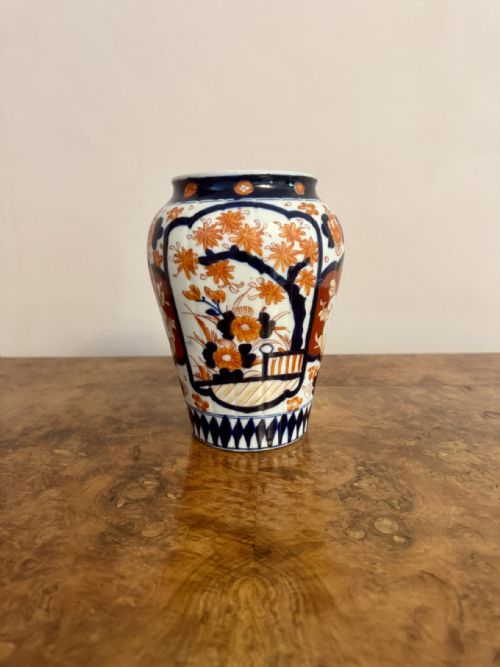
The second big block, and the largest part of current stock, is Japanese: Satsuma with its crackled cream glaze, Imari in blue, iron red and gilt, and Kutani in red and gold. Kyoto is the decorating centre named most often. Behind those sit Continental porcelain in the French and Viennese taste, usually lidded and sometimes in garnitures, then Chinese blue and white, famille rose and Canton wares, then a scatter of other English factories and art pottery.

Dating is loose in places. The dated field runs 1800 to 1960, but the largest single label is the imprecise "19th Century", used on 123 listings, with "Victorian" and "Edwardian" working the same way. Decade counts cluster around the 1900s and 1920s, and there's a sizeable mid-century tail in the 1950s and 1960s, almost all of it English painted fruit.

Good and large Japanese vase, Satsuma vase circa 1890.Meiji period.
Plate II  ·  Good and Large Japanese Vase, Satsuma Vase Circa 1890.Meiji Period, VictorianFrank Craig Antiques
What sets them apart

Top And Bottom

A decorator's name is the strongest divider. The upper reaches of the range are almost all signed or attributed painters; unsigned titles that say only "hand painted vase" sit at the bottom. Subject matter tracks the same way on Worcester, where painted fruit, highland cattle, storks and swans lead, and plainer flower and rose painting sits lower.

Number and scale come next. Pairs run through 203 titles, and the highest-placed entries are repeatedly pairs, garnitures of three or four-piece sets. Size does the same job: sampled tops include Japanese floor vases at 38 inches, lidded Continental vases at 102cm and one Imari at 4ft 10in, while miniature, bud and specimen vases only a few inches high sit at the foot.

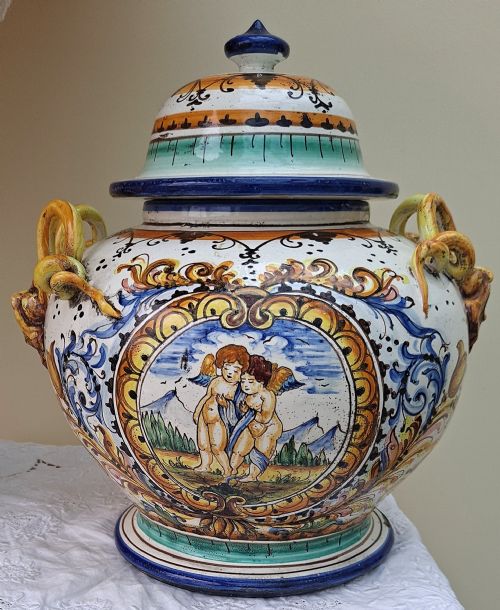
Covers matter more here than in most vase categories. With 54 titles mentioning a cover, 52 a pot pourri and 37 lidded, a good many of these were never meant to stand open, and the covered and lidded forms carry the higher-priced Continental and Imari entries.

The market

Retail Price Guide 2026

Entry-levelUnder £300
Typical prices£300 – £3,400
Premium examplesOver £3,400

Typical UK retail prices for painted vases, calculated from the Sellingantiques database of over a million retail prices indexed since 2003. This retail price guide relies exclusively on Sellingantiques data; no external sources or auction records are used, so the figures do not describe the wider market.

From the Sellingantiques archive

19th Century is the period label used most on Sellingantiques for painted vases, with the 1900s next and the 1920s third.

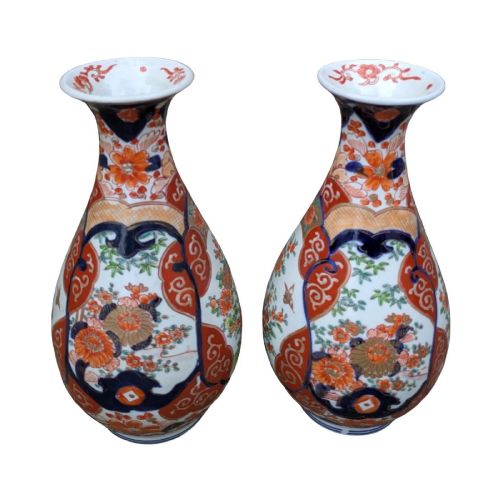
Antique Japanese Imari Vase
Plate III  ·  Antique Japanese Imari Vase, 1880Rams Head Antiques
Notable makers of painted vases

James Stinton and the Stinton family·Freeman·Kinkozan·Moseley

Terms antiques dealers use

The Antique Painted Vases Glossary

Pot pourri vase
A covered vase, often with a pierced inner lid, meant to hold scented petals. It accounts for 52 titles, so the cover is part of the form rather than an extra.
Pair
Two matching vases sold together, and with 203 titles saying it, the default expectation for several of these types.
Blush ivory
Royal Worcester's shaded cream-to-peach ground colour, named in 29 titles. It sits under painted flowers and fruit as often as not.
Signed
Bearing a decorator's name rather than only a factory mark. Used in 47 titles, and the wording that separates the top of the English porcelain from the rest.
Garniture
A matched set, usually of three or five vases, meant to stand together on a mantel. The archive holds three-piece and four-piece sets.
Meiji
The Japanese period from 1868 to 1912, and the dating most often given to Satsuma and Imari in these listings.
Questions people ask

Frequently Asked Questions

Which maker turns up most often?

Royal Worcester, by a wide margin. Some 213 titles carry the full name, and painted fruit is the commonest decoration on it.

Japanese wares are the next largest group, with Satsuma, Imari and Kutani between them accounting for well over a hundred titles.

Are these vases usually sold in pairs?

Pairs are named in 203 titles, close to a third of everything in the category. Garnitures of three and four also appear.

Singles are common too, particularly among the smaller Worcester forms and the miniature and bud vases at the bottom of the range.

How big do painted vases get?

The spread is wide. Sampled titles at the top include a pair of Japanese floor vases at 38 inches, lidded Continental vases at 102cm and one Imari given as 4ft 10in.

At the other end sit specimen, bud and miniature vases only a few inches high.

What does a signed vase mean?

It means the piece carries a decorator's name as well as, or instead of, a factory mark. Forty-seven titles use the word.

Signed and attributed pieces dominate the upper part of the range. Unsigned pieces are described simply as hand painted.

Why are 1950s and 1960s vases in an antiques category?

There's a distinct mid-century tail: 44 listings dated to the 1960s and 31 to the 1950s.

Almost all of it is English painted-fruit porcelain, which kept being made and signed by named decorators long after the Victorian and Edwardian pieces.

Is everything in the category porcelain?

Porcelain and pottery account for nearly all of it, including Japanese earthenware and French and Italian tin-glazed wares.

Other bodies appear as one-offs. A Kashmiri papier mâché vase, carved and painted limewood, and a handful of opaline and enamelled glass vases each turn up rarely.

65,789
Antiques For Sale
0
Antiques Approved Today
1,455
Antique Uploads This Month
438,840
Total Antiques Sold
items
Add keywords to the filter
Price
£100
£250000
Era
Movements
Material
Origin
Stock Location
Freshness
Online Payments
Categories