

Antique Art Nouveau Vases
Decorative vases in the Art Nouveau taste, made for domestic display between the 1880s and the 1920s, mostly in pottery and stoneware with a smaller run of art glass.
Antique Art Nouveau Vases
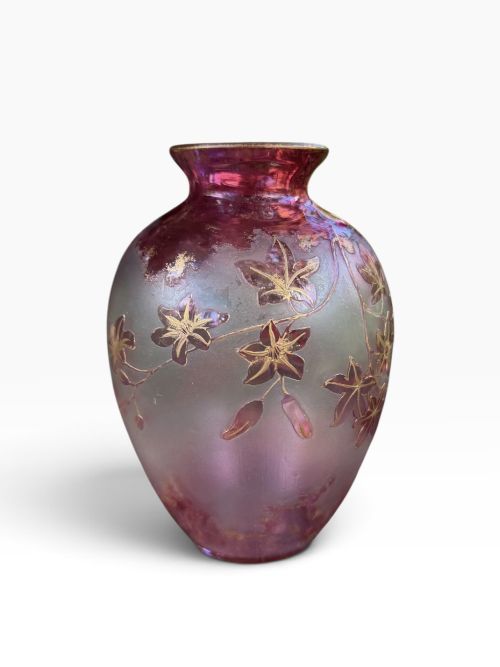
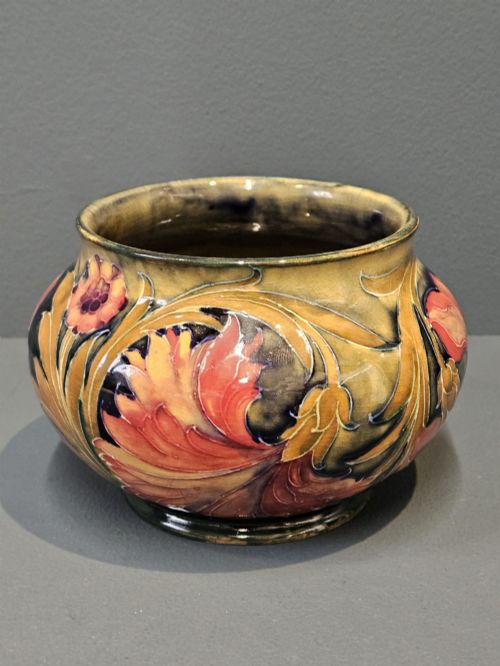
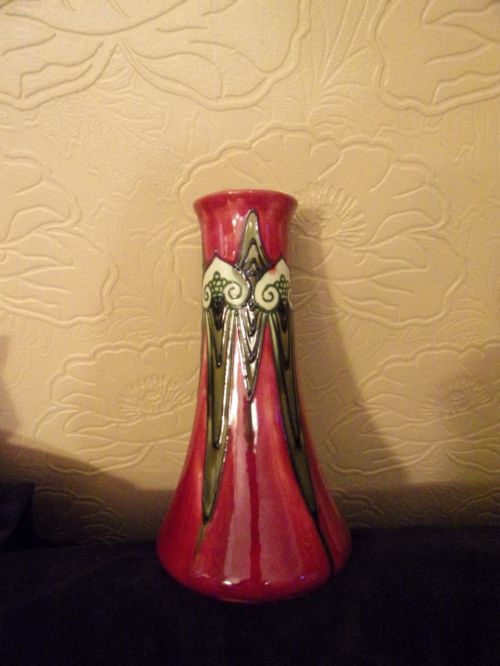
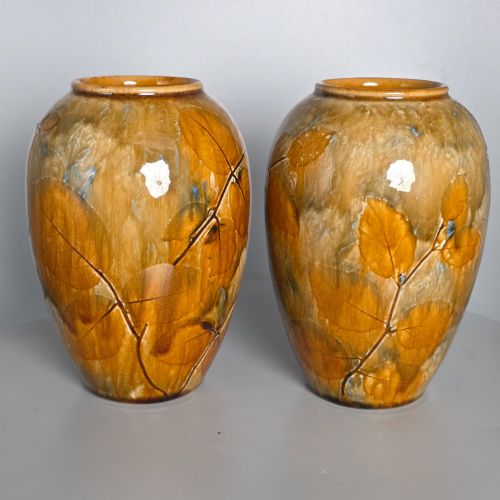
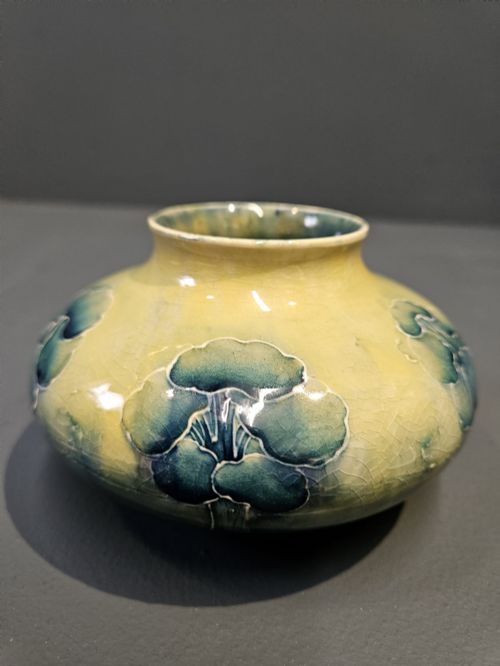
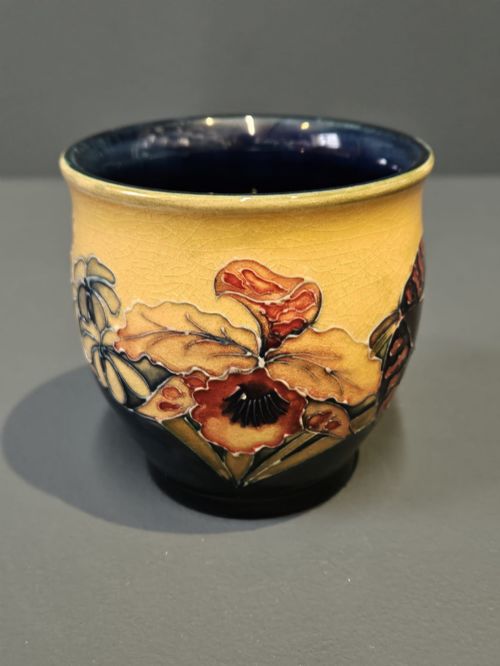
Art Nouveau ran from the 1890s to roughly the First World War, putting sinuous plant and figure forms onto everyday objects. Vases were among the most-produced of them, turned out by potteries and glasshouses across Britain and continental Europe. The category on Sellingantiques follows that: mostly ceramic, in stoneware, art pottery, earthenware and porcelain, with art glass and the odd metal piece alongside.
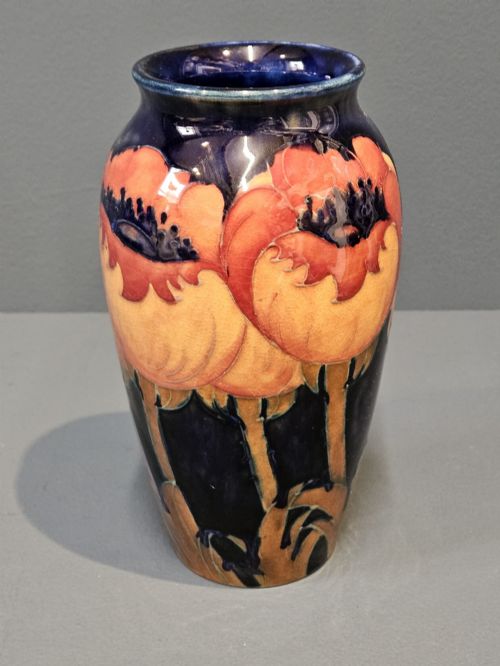
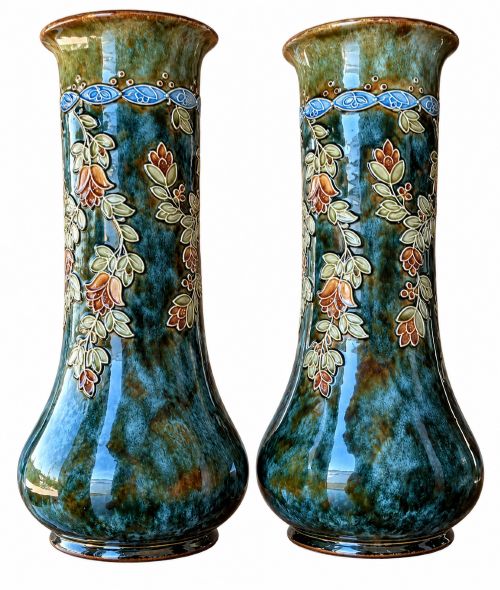
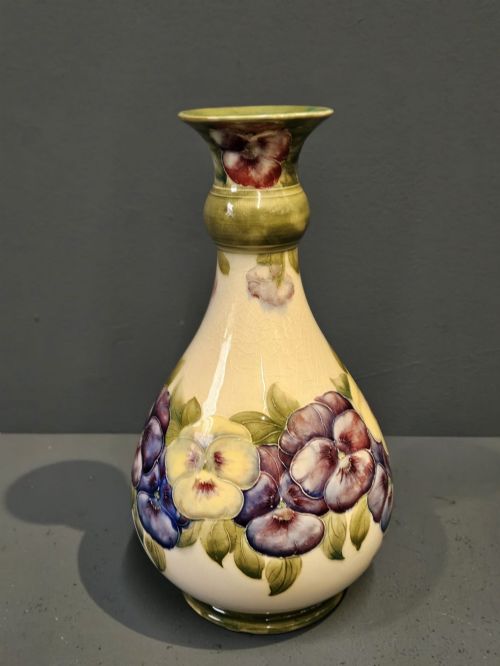
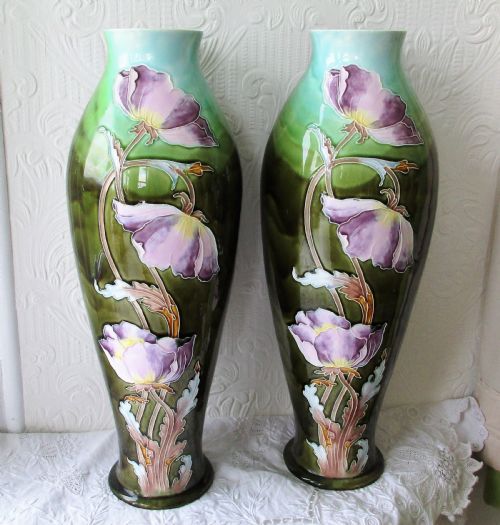
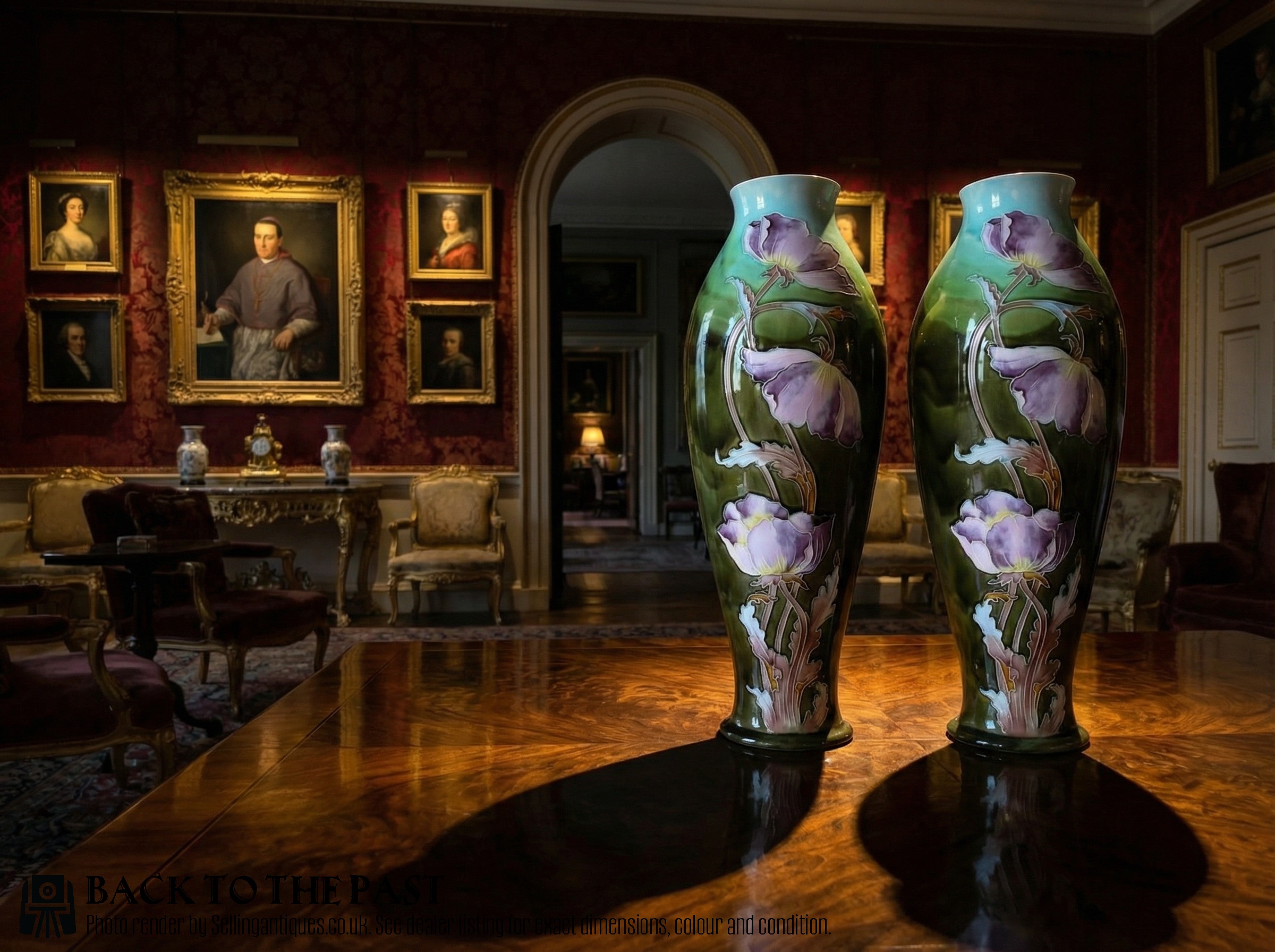
The piece you are most likely to meet is an English pottery vase carrying a factory name at the front of the title and a date in the 1900s or 1910s. Lambeth stoneware is one strong strand, often with a decorator's initials and an impressed shape number. Florian-era wares from the Burslem potteries are another, usually named by pattern: Cornflower, Poppies, Claremont, Hazeldene, Pomegranate.
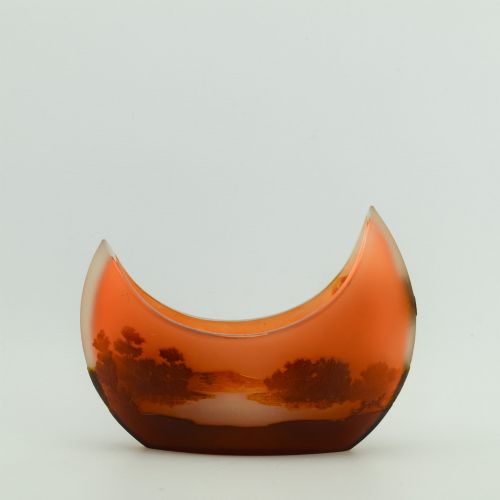
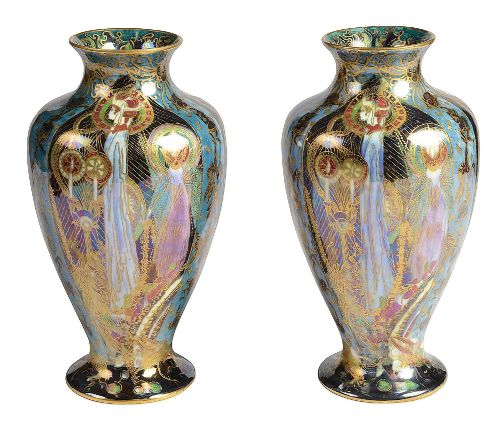
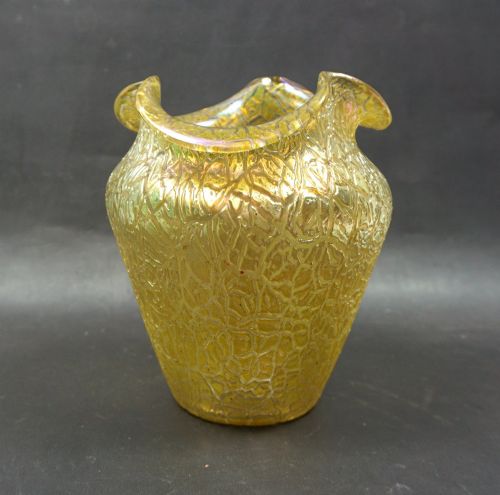
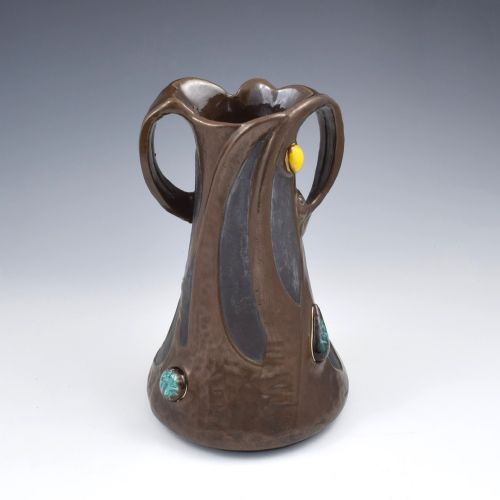
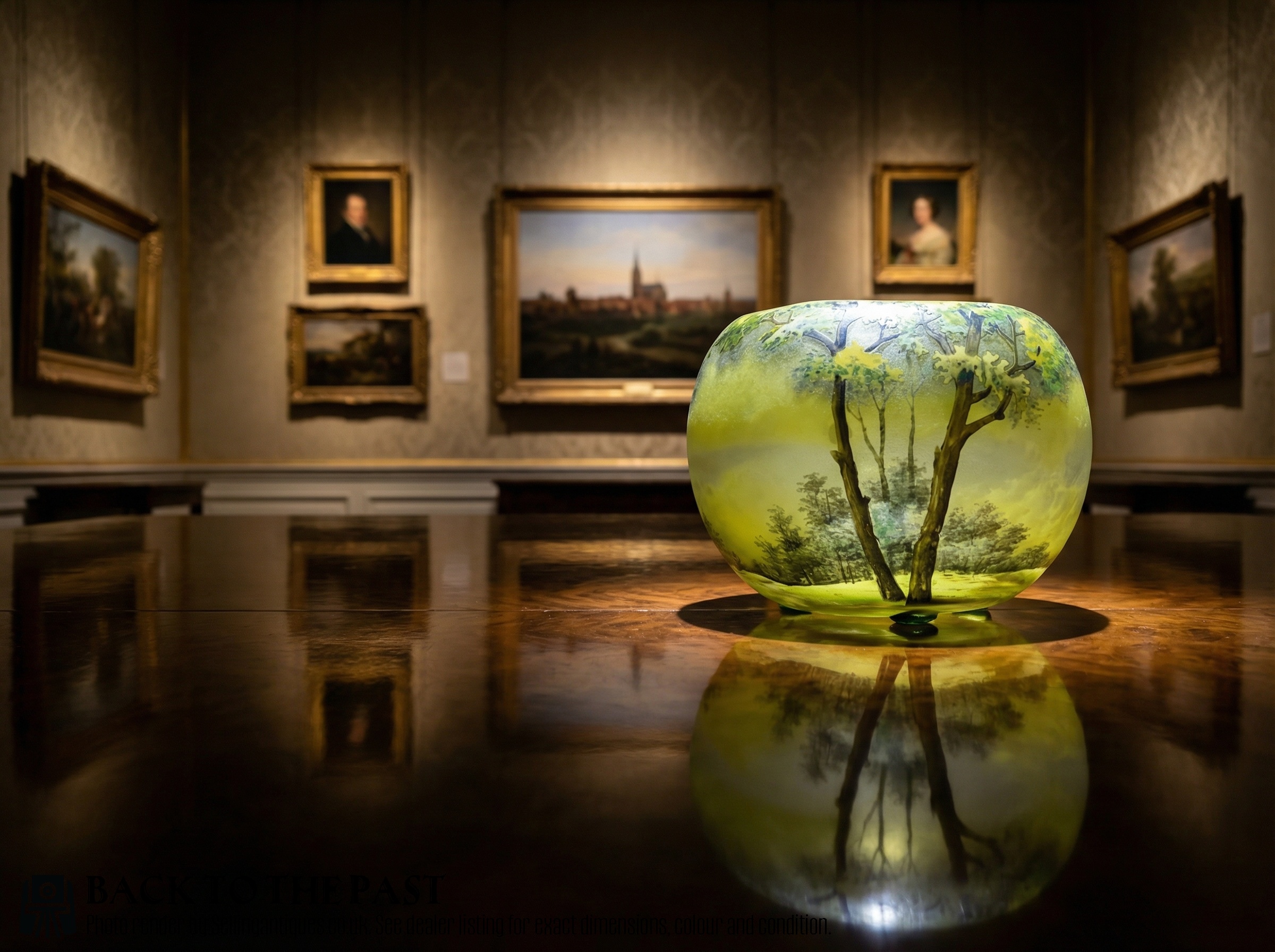
Austrian and Bohemian ceramics make up a third strand, with Turn Vienna and Pergamon model numbers, Royal Dux Bohemia and Paul Dachsel among the names in titles. Glass is a smaller run, cameo and iridescent, and it sits high in the range. Beyond that, single appearances for Bretby Clanta, Brannam, Wileman Intarsio, Elton, Carlton and Wedgwood lustre.
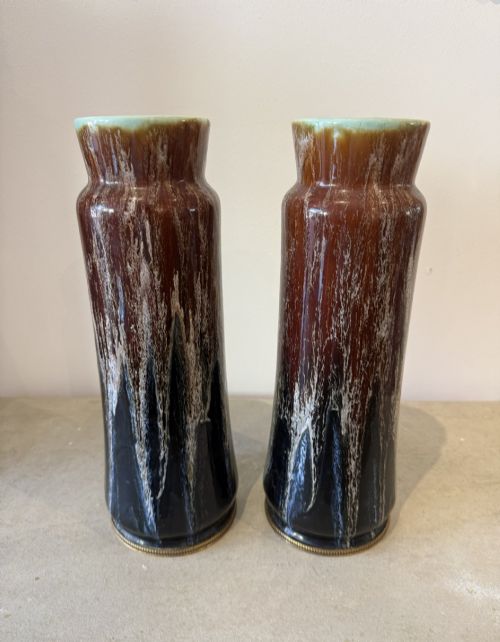
Pairs matter here. The word appears in more than a quarter of titles, and current stock is more pair-heavy than the archive. Dates run 1880 to 1930, though only two listings are pinned to a single year; the rest give a decade, or an era label like Edwardian or Victorian that should be read as approximate.
What Separates Them
A hand named alongside the factory lifts a ceramic vase. The titles at the top of the range add a decorator or designer, and decorators are unusually visible in this category, with Eliza Simmance, Louisa Wakely, Bessie Newbery, Ethel Beard, Florrie Jones, John H. Plant, Daisy Makeig-Jones and John Wadsworth all turning up. The plainest entries give the factory and the body and nothing more.
Specificity does the same work. A named pattern with a shape or model number sits well above a title reading only the maker's name and the word vase. A recorded retail association, made for a London store, attaches to several of the higher Florian-era pieces. Scale follows suit: large, tall, monumental and a stated inch measurement cluster at the top, while miniature and posy examples sit at the bottom.
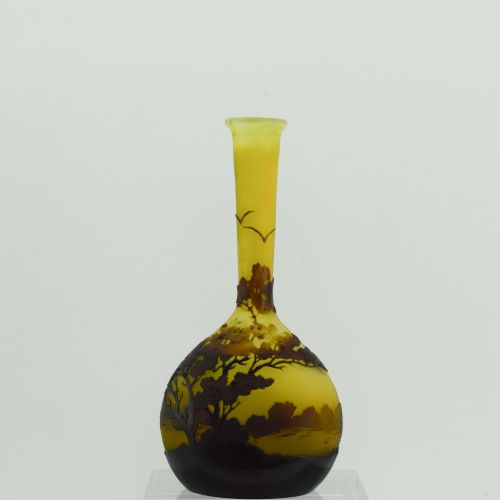
Glass is a small share of listings but a concentrated one. Cameo and iridescent pieces gather in the upper half of the range, and Wedgwood lustre, though only a few listings, occupies the very top. A plain undated Lambeth stoneware vase marks the other end.
Antique Art Nouveau Vases Retail Price Guide 2026
Typical UK retail prices for art nouveau vases, calculated from the Sellingantiques database of over a million retail prices indexed since 2003. This retail price guide relies exclusively on Sellingantiques data; no external sources or auction records are used, so the figures do not describe the wider market.
The most expensive Art Nouveau vase ever sold on Sellingantiques was a poppies vase, in May 2018.
Ernst Wahliss
The Antique Art Nouveau Vases Glossary
- Pair
- Two vases sold together, and the word appears in more than a quarter of titles. Matched pair means they were brought together later rather than made as one.
- Stoneware
- High-fired dense pottery, the body behind the Lambeth vases in this category. It takes a salt or matt glaze and holds crisp relief work.
- Baluster
- A swelling, waisted profile that narrows towards the neck. It turns up in several Lambeth and Wedgwood titles.
- Florianware
- Slip-outlined floral decoration made at Macintyre, where the raised lines hold the colours apart. The term recurs through the Burslem titles.
- Cameo glass
- Layered glass cut back so the design stands raised against a contrasting ground. The word appears on the French pieces in the category.
- Papillon
- A spotted iridescent surface on Bohemian art glass, named in titles alongside Candia. Iridescence generally is a metallic lustre worked into the glass surface.
Antique Art Nouveau Vases: Frequently Asked Questions
Are these vases usually sold in pairs?
Pairs are close to half the picture. The word appears in more than a quarter of titles across the archive, and current stock is more pair-heavy still.
Singles are common too, and a few oddities turn up: a bud-vase trio, a pair of ewers, an oval pedestal stand.
What dates do the listings carry?
The dealer-supplied dates run from 1880 to 1930. The 1900s account for the largest block, then the 1910s, then the 1920s.
Only two listings are tied to a single year. Everything else is a decade or an era label such as Edwardian, Victorian or 19th Century, and several titles hedge with c1900 or late 19th century.
Is the category mostly ceramic or glass?
Mostly ceramic. Stoneware, art pottery, earthenware and porcelain make up the bulk, with British and Austrian factories dominating the front of titles.
Glass is a small run, cameo and iridescent, though it sits high in the range. Metal is rarer still, with isolated silver and pewter entries.
Why do decorators' names appear in the titles?
Lambeth stoneware was decorated by named hands, and dealers put those names in the title because they carry weight. Eliza Simmance, Louisa Wakely, Bessie Newbery, Ethel Beard, Florrie Jones and John H. Plant all appear.
Other factories contribute designers rather than decorators, among them Daisy Makeig-Jones and John Wadsworth. A named hand alongside the factory sits above a factory name on its own.
Where were Art Nouveau vases made?
England and Austria supply the bulk. Lambeth and Burslem cover the English side; Turn Vienna and Bohemia cover the continental one.
Origins recorded once each include Ireland, Holland, Hungary, Italy and Czechoslovakia.
How many come up for sale?
Around thirteen are listed a year on Sellingantiques.
Fifty-four different dealers have handled one, so no single dealer defines what the category looks like.