
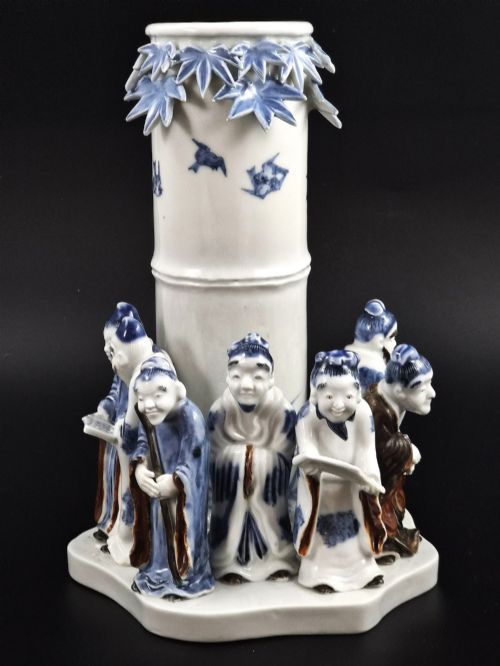
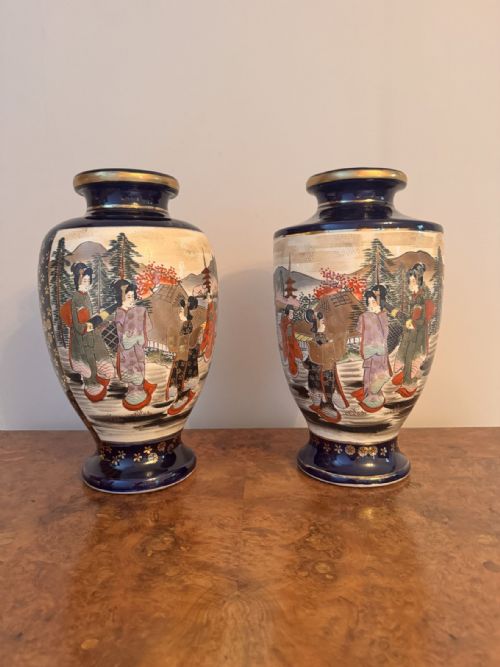
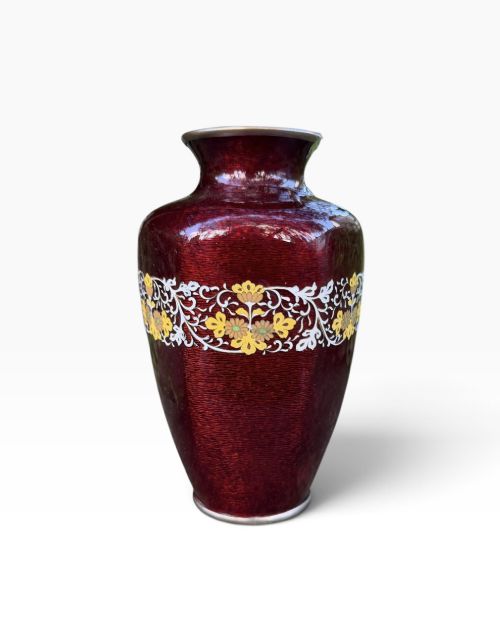
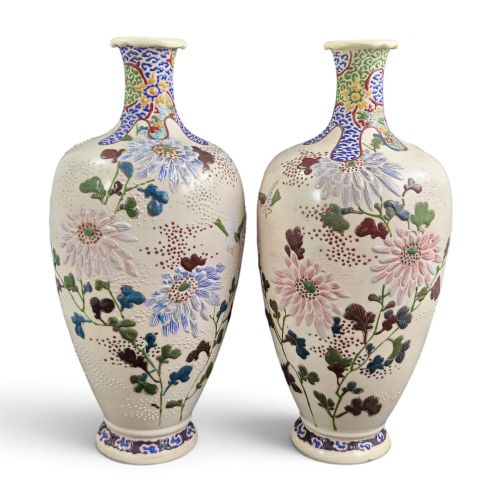


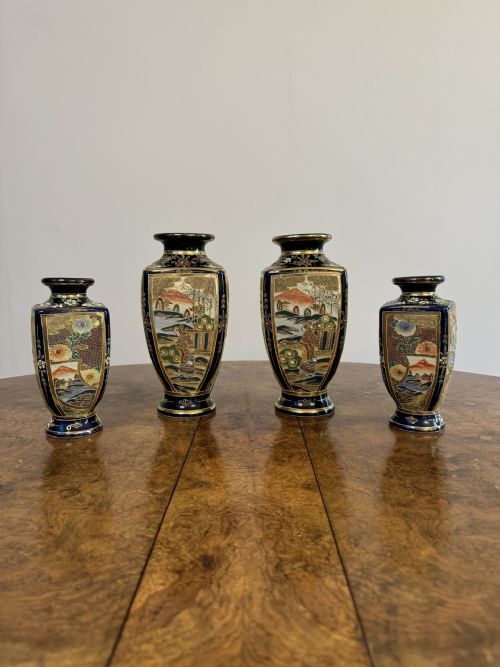
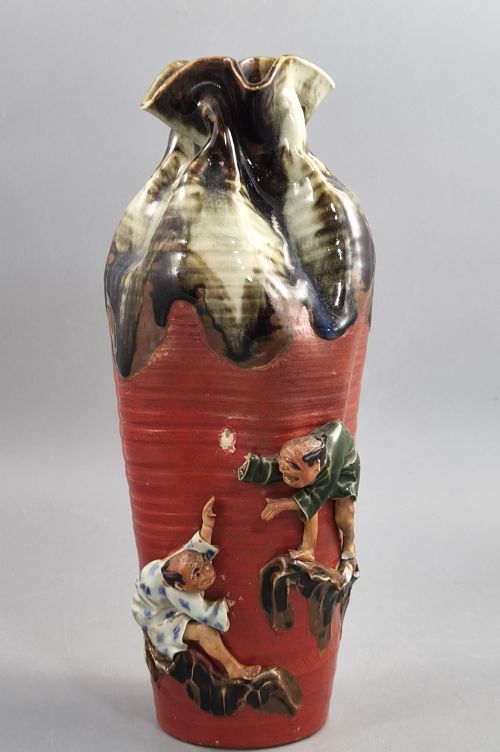
Antique Japanese Vases
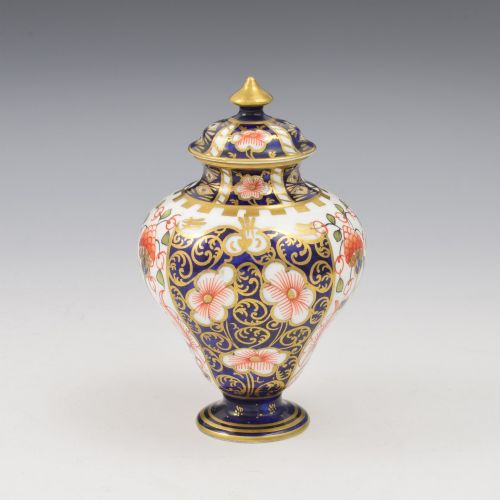
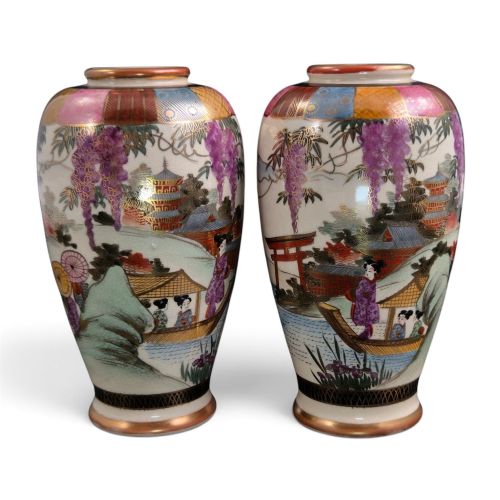
Japanese vases on the market in Britain are mostly late Edo to Taishō decorated ceramics, Imari porcelain and Satsuma pottery above all, made as display pieces for Western rooms.
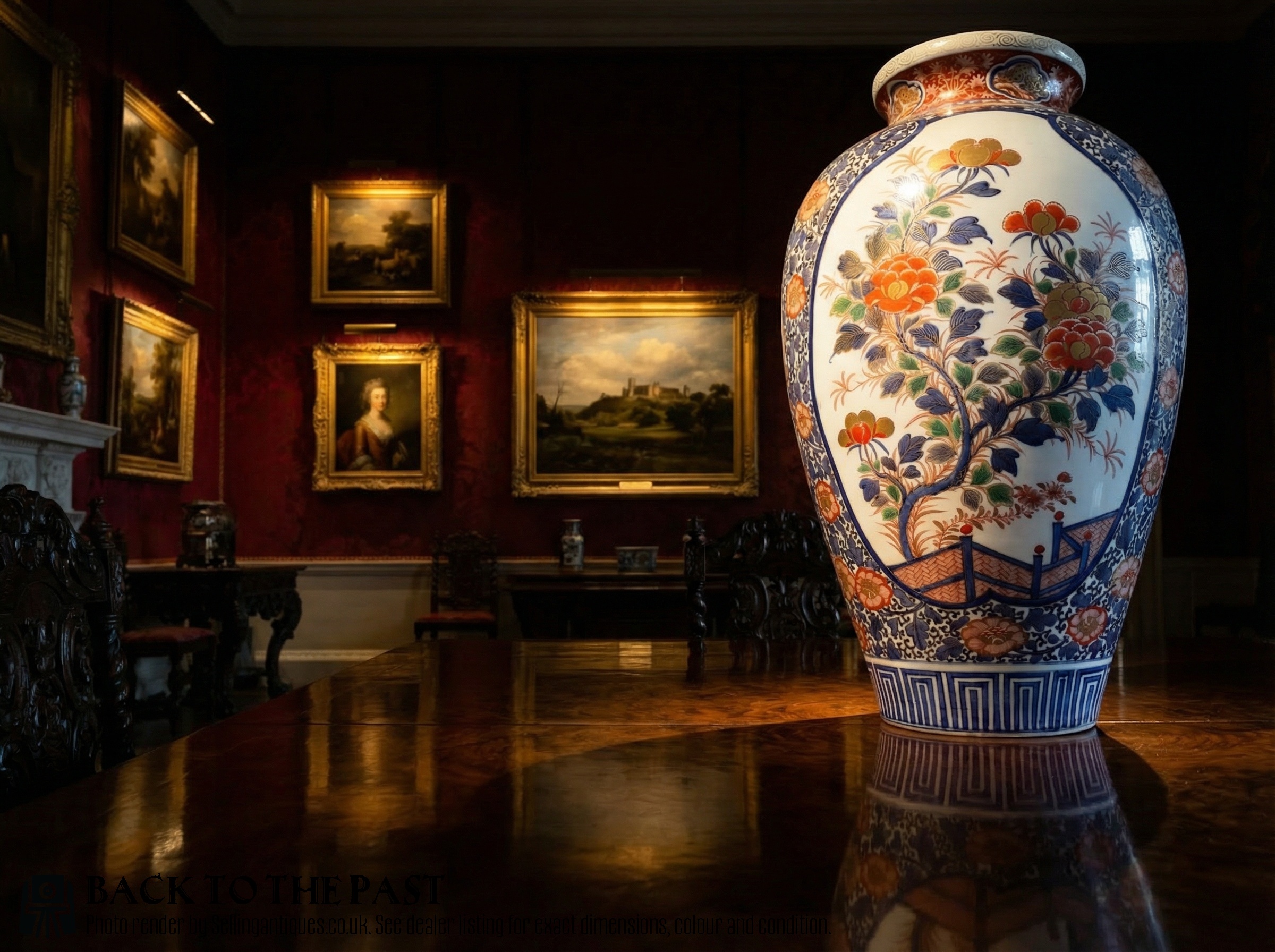
Antique Japanese Vases
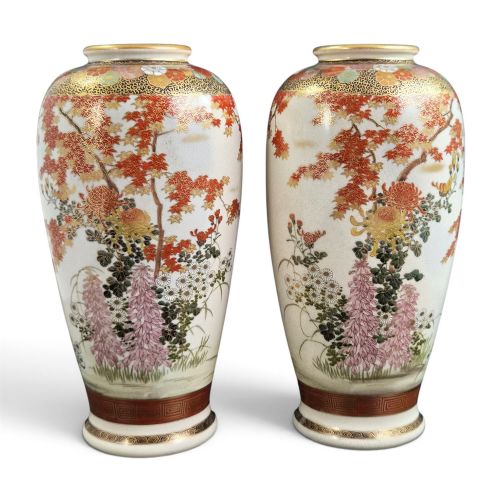
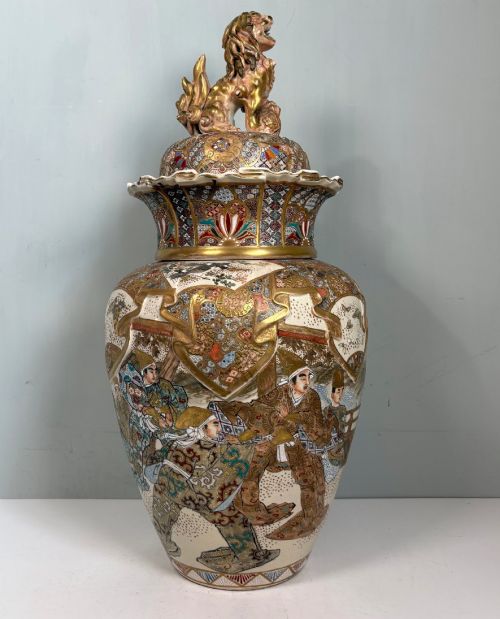
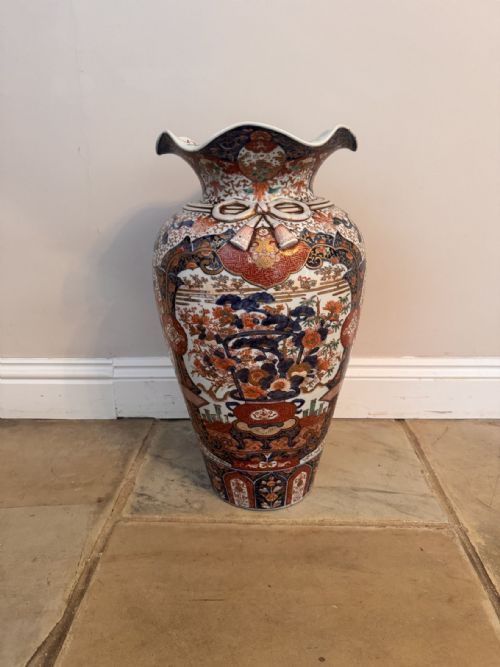
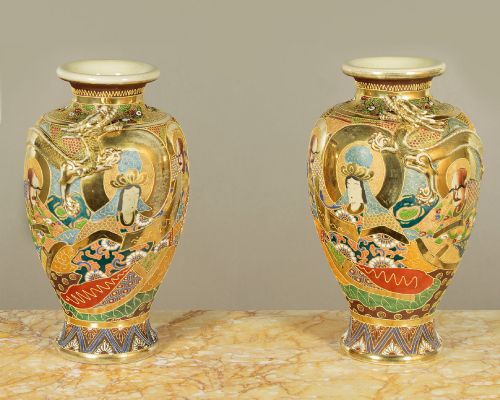
Two ware names carry most of the field. Of 642 listings on Sellingantiques, Imari appears in 211 titles and Satsuma in 188, with Kutani a clear third at 47. So the vase you are most likely to meet is a Meiji-period ceramic in the blue, red and gilt Imari palette, or cream crackle-glazed Satsuma with painted and gilt enamels.
Pairs are close to the default. 253 titles describe two vases rather than one, and the samples also record garnitures and groups of three, four, five, six and seven. Lids come up often enough to count as a standard variant, with 40 titles calling a vase lidded and 22 of those Imari.
Dating clusters tightly. Where a clean year is given, the 1900s account for 192 listings and the 1890s 85, with the 1880s and 1910s behind them; 'Meiji' is the period label on 142 titles. Another large block is dated only as 19th century, which is best read as a century rather than a decade. Seventeenth and eighteenth-century datings together cover just 25 listings, so early Edo Arita and Genroku Imari are the thin seam here.
Metalwork runs under the pottery as a steady undercurrent: bronze in 32 titles, cloisonné in 20, mixed metal in 12, taking in silver-inlaid and damascened iron, shakudo, ginbari, wireless enamel and plique-à-jour. Scale spans miniatures and small singles at one end and floor-standing vases with stated heights well over a metre at the other.

What Sets Them Apart
A name does more than anything else. Only 22 titles across the archive use the word signed, and the upper reaches are held almost entirely by named Satsuma hands, while the middle of the field is filled by titles that read simply 'Antique Japanese Imari Vase' or 'Japanese Satsuma Vase' with no maker attached at all.
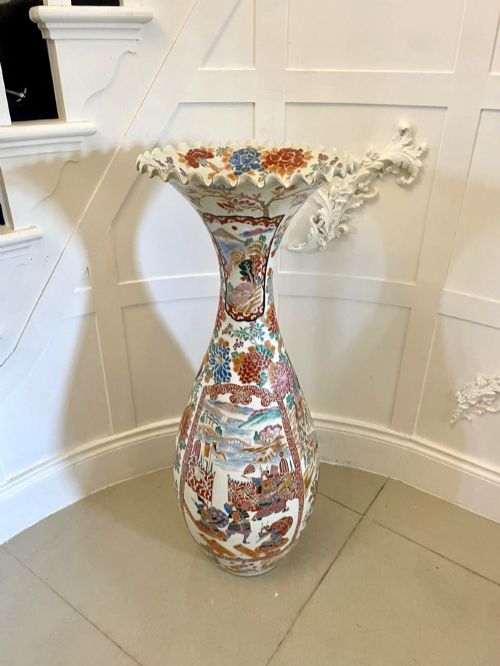
Scale and number then sort the rest. 'Large' qualifies 157 titles and 'floor standing' 11, and the highest-priced sampled pieces cite heights such as 147cm, 152cm and a pair at 93cm, or reach for words like monumental and massive. A matched pair beats a single, and a garniture of three, five or seven beats a pair.
Material tells too. Bronze, mixed metal and cloisonné titles cluster in the upper part of the range, particularly damascened iron, shakudo, plique-à-jour and Shibayama-inlaid work. Early date pulls the same way: sampled Genroku and early-Edo Arita sit well above the mass of c.1900 export material.
Antique Japanese Vases Retail Price Guide 2026
Typical UK retail prices for japanese vases, calculated from the Sellingantiques database of over a million retail prices indexed since 2003. This retail price guide relies exclusively on Sellingantiques data; no external sources or auction records are used, so the figures do not describe the wider market.
About 78 Japanese vases are listed on Sellingantiques each year, and 91 different dealers have handled them.
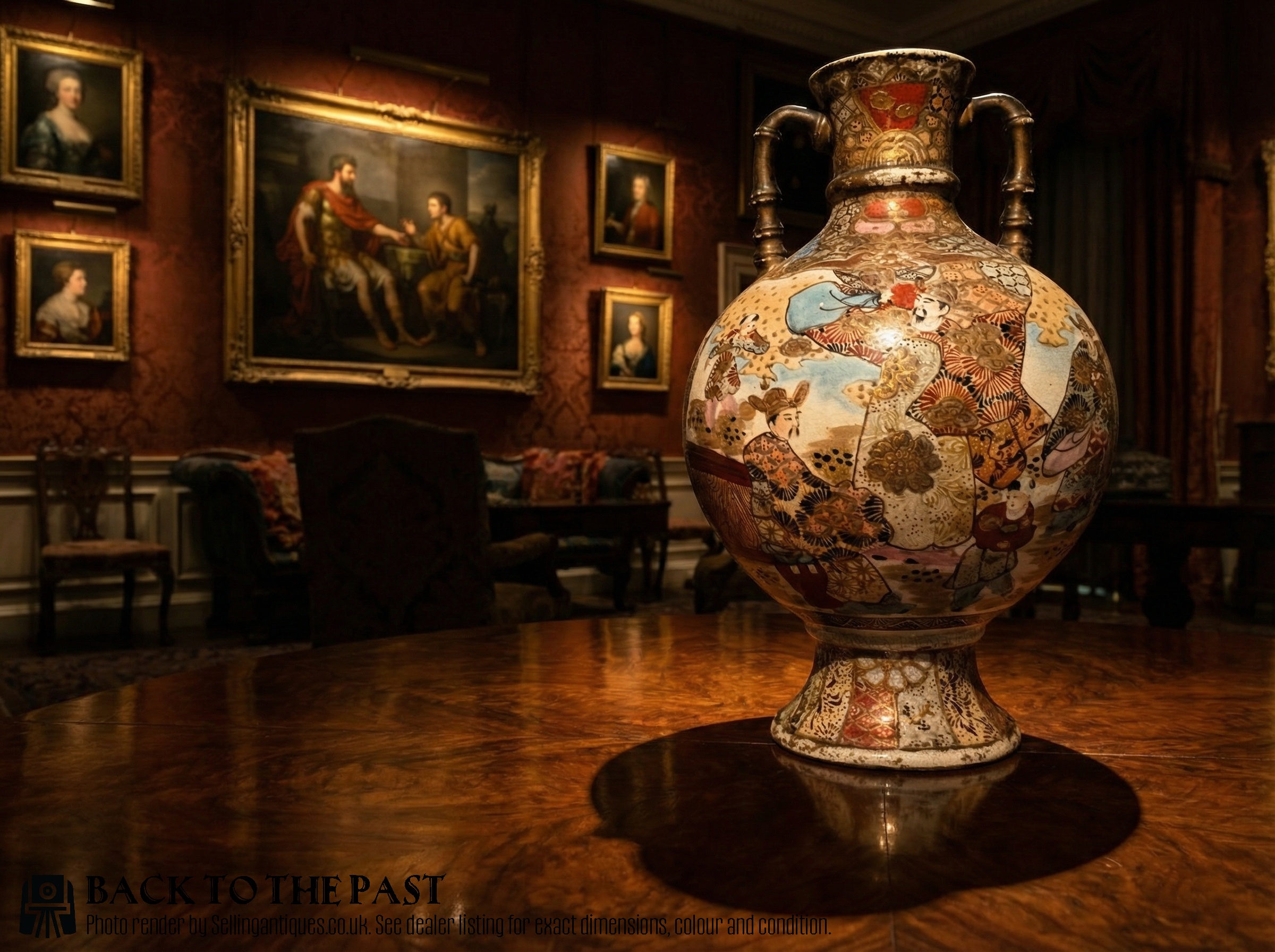
Kinkozan·Kizan·Fukagawa
The Antique Japanese Vases Glossary
- Imari
- The blue, iron-red and gilt palette of Arita-district porcelain. In these listings it usually describes a palette or pattern rather than a place of making.
- Satsuma
- Cream crackle-glazed earthenware painted in enamels and gilt. The word appears in 188 titles, often with figural or floral subjects.
- Kutani
- Porcelain from the Kaga region, typically painted in red and gold with figures or foliage. Named in 47 titles, including thousand-faces, marine-life and samurai subjects.
- Meiji
- The 1868 to 1912 era, and the centre of gravity of the whole category. It is the period label on 142 titles.
- Baluster
- The commonest profile word here: a swelling body over a narrow foot.
- Moriage
- Raised slip or enamel standing proud of the surface, named in Satsuma and cloisonné titles alike.
Antique Japanese Vases: Frequently Asked Questions
Which Japanese wares turn up most often?
Imari-palette porcelain and Satsuma earthenware dominate. Between them they account for most of the 642 listings, at 211 and 188 titles.
Kutani is the clear third at 47 titles. After that come the metalwork vases: bronze, cloisonné and mixed metal.
Why are so many sold as pairs?
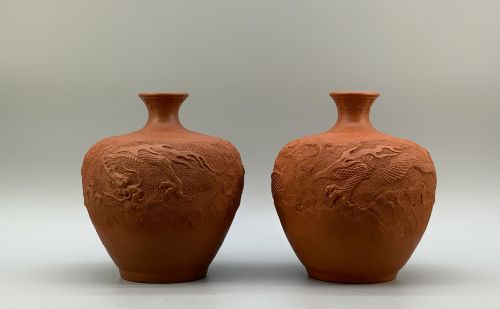
They were made as pairs for display, and they survived that way. 253 titles on Sellingantiques describe two vases rather than one, so a pair is close to the default here.
Larger matched sets appear too. The samples record garnitures and collections of three, four, five, six and seven vases.
How old is a typical Japanese vase?
The dated field runs from 1700 to 1950, but the weight sits around 1880 to 1910. The 1900s carry 192 listings and the 1890s 85.
A large block is dated only as 19th century, which is a century rather than a decade. Genuinely early pieces are scarce: 17th and 18th-century datings cover 25 listings in all.
Are most of these signed or attributed?
No. The word signed appears in only 22 titles out of 642, so an attributed vase is the minority case.
A great many listings are simply 'Antique Japanese Imari Vase' or 'Japanese Satsuma Vase' with no maker named. The names that do appear come through as marks or as attributions in the description.
What sizes do they come in?
The range is wide. Miniatures and small single vases sit at the bottom, and 'large' qualifies 157 titles.
At the top are floor-standing vases, 11 titles' worth, with recorded heights such as 147cm, 152cm and a pair at 93cm. Heights are given only sporadically, and in a mix of centimetres, inches and feet.
What forms other than baluster show up?
Baluster is the commonest profile, often with a flared neck, and lidded versions are a standing variant with 40 titles.
Less often you get the double or triple gourd, the moon flask, the garlic-head vase, the reticulated vase and the beaker or trumpet form.