Gillers Antiques Ltd has dated this piece to the 19th Century.
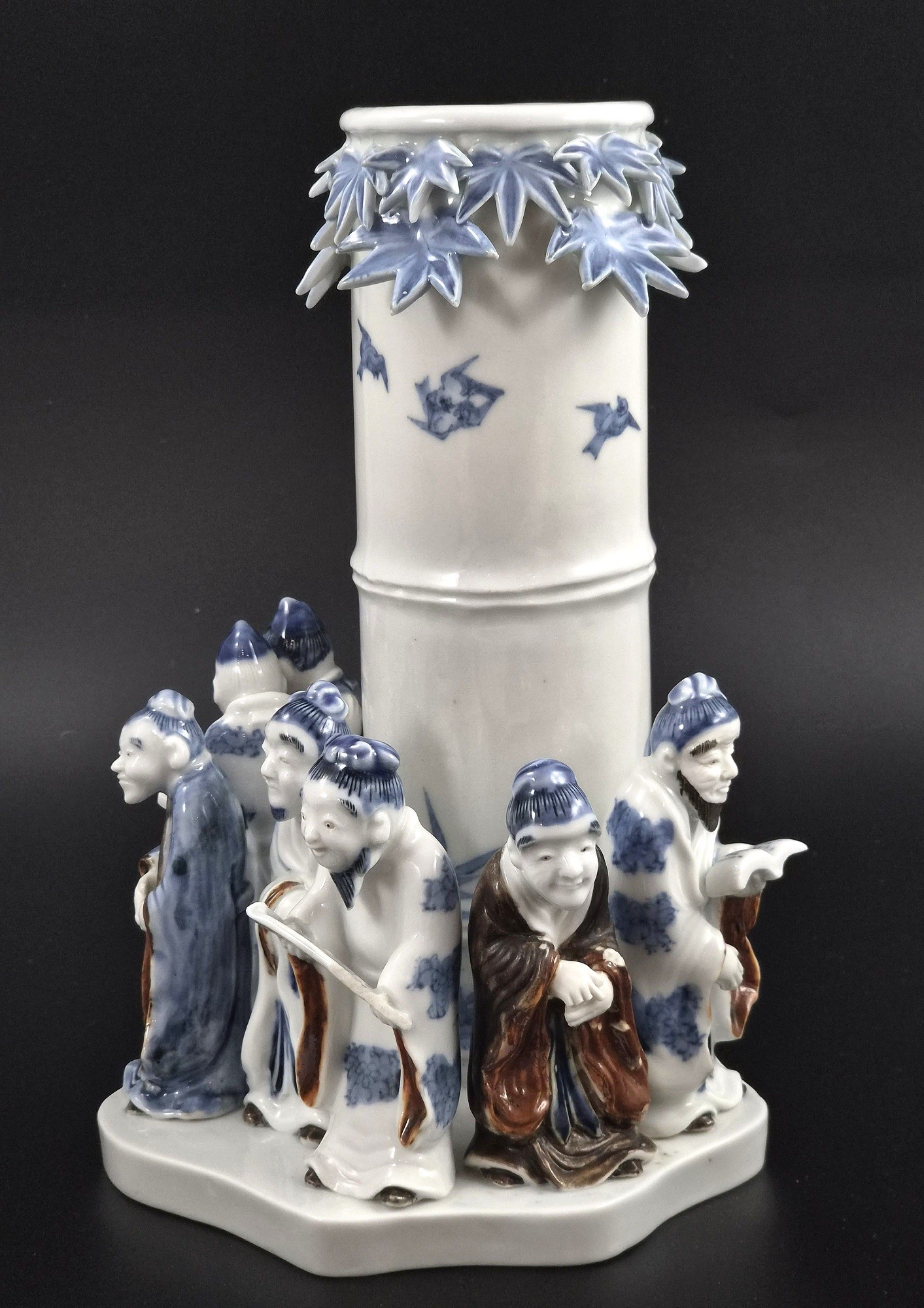
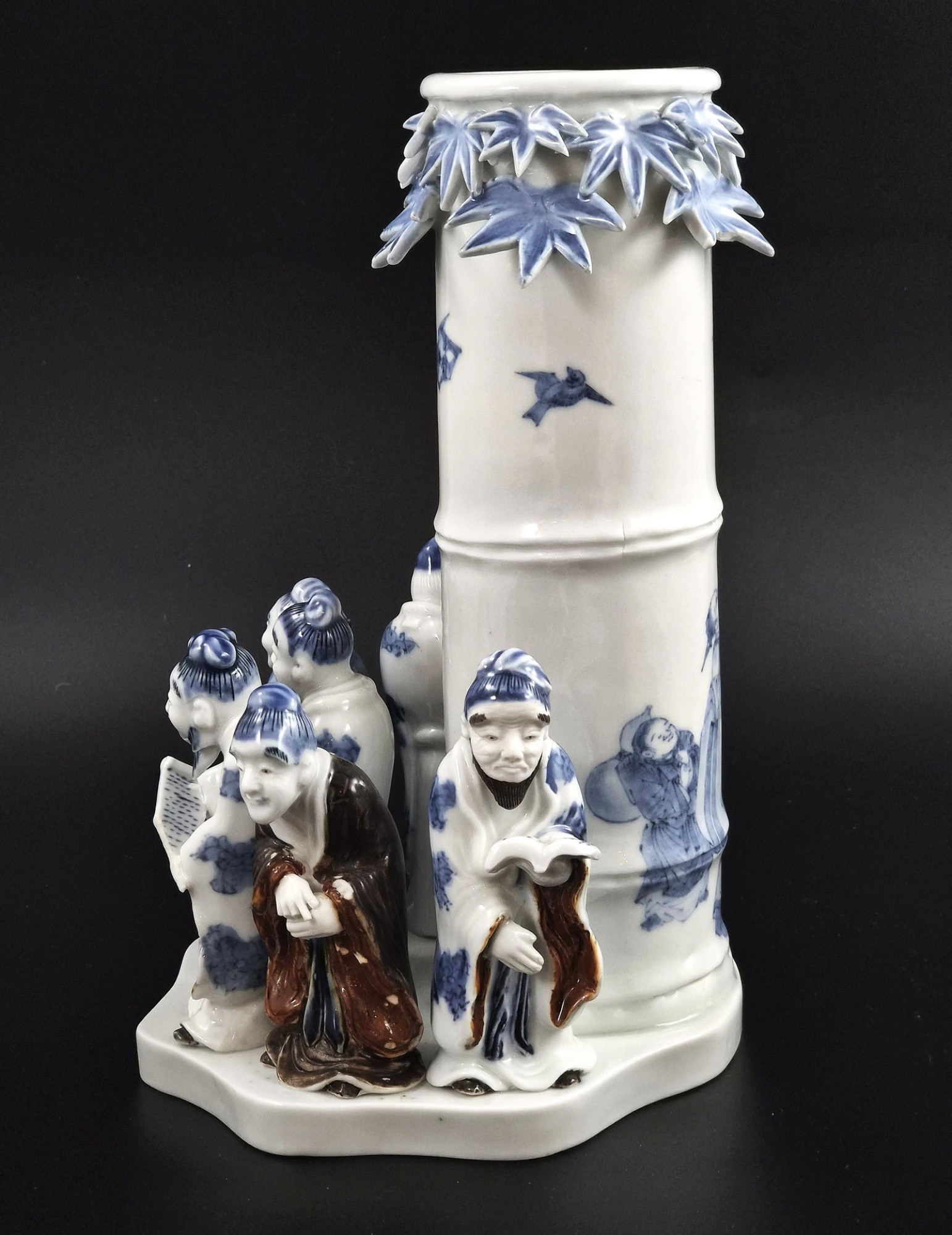
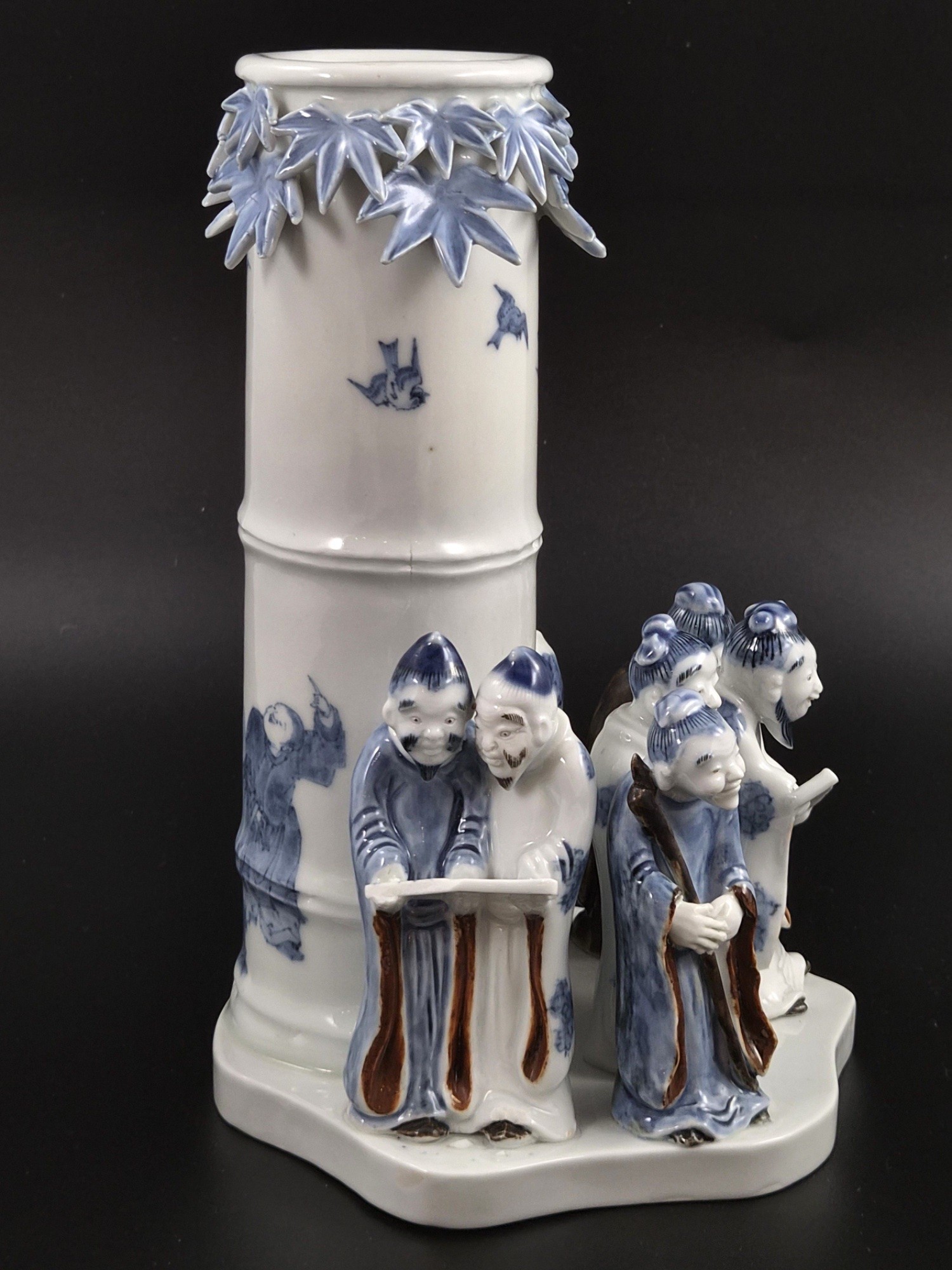
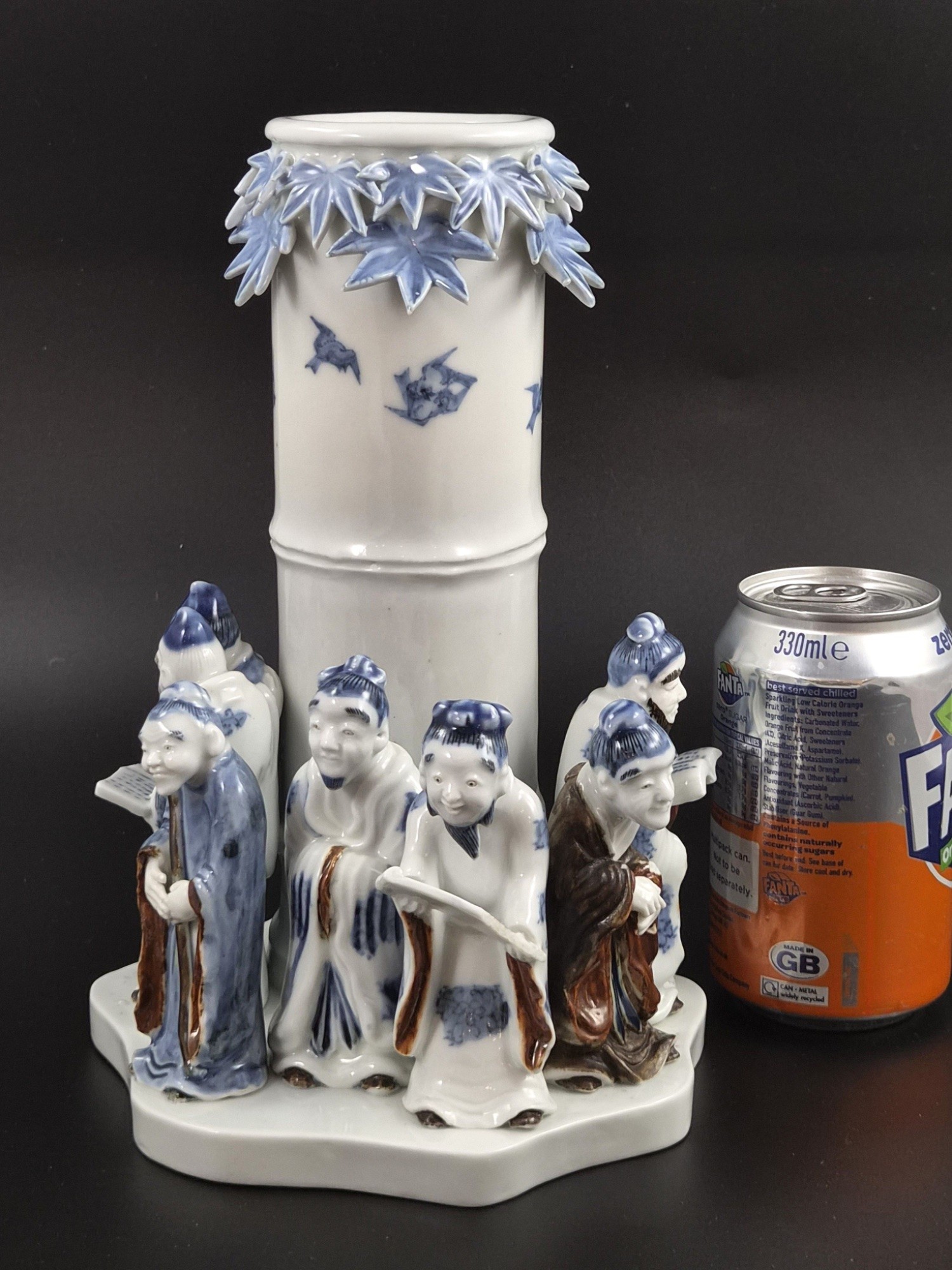
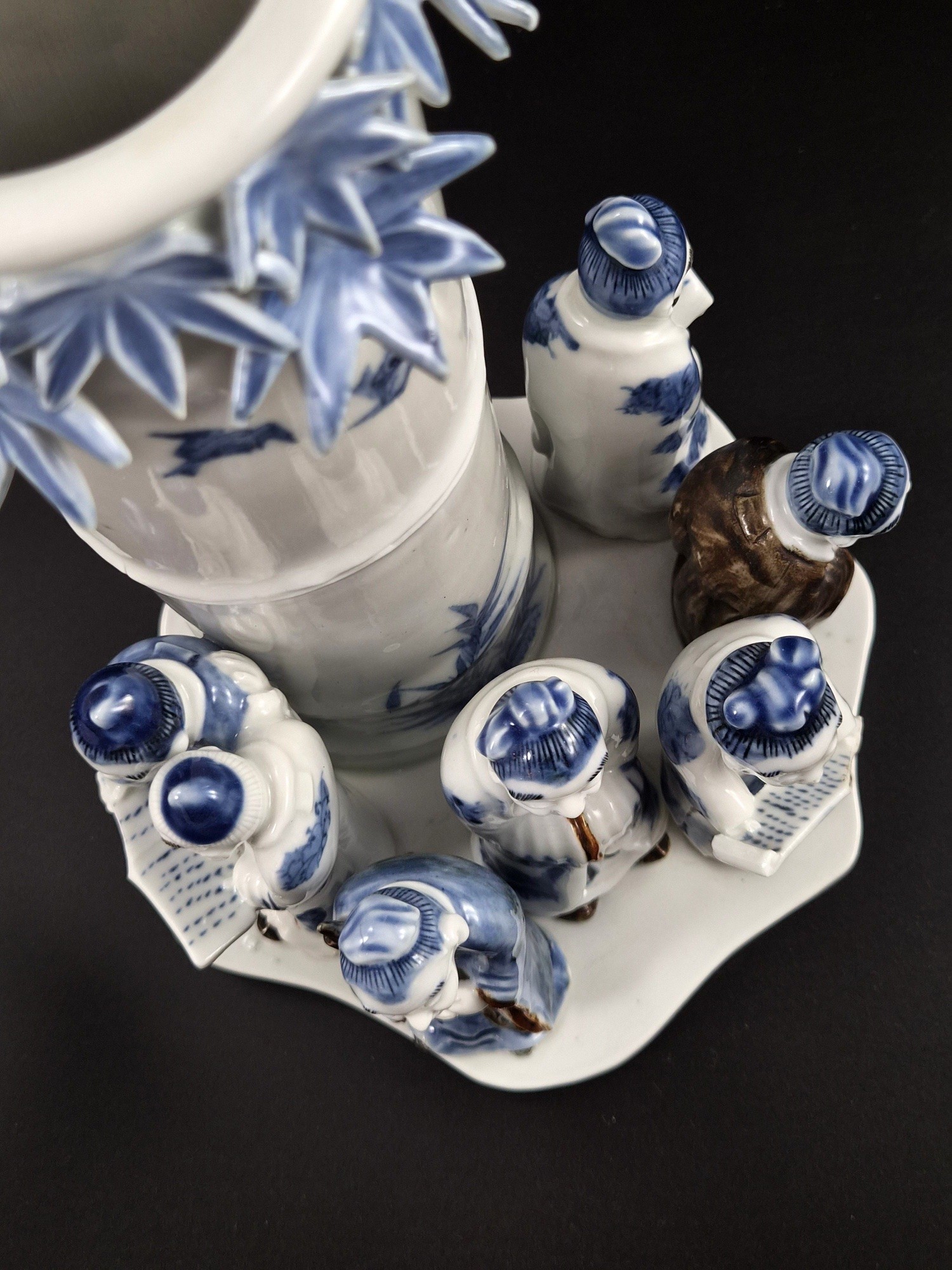
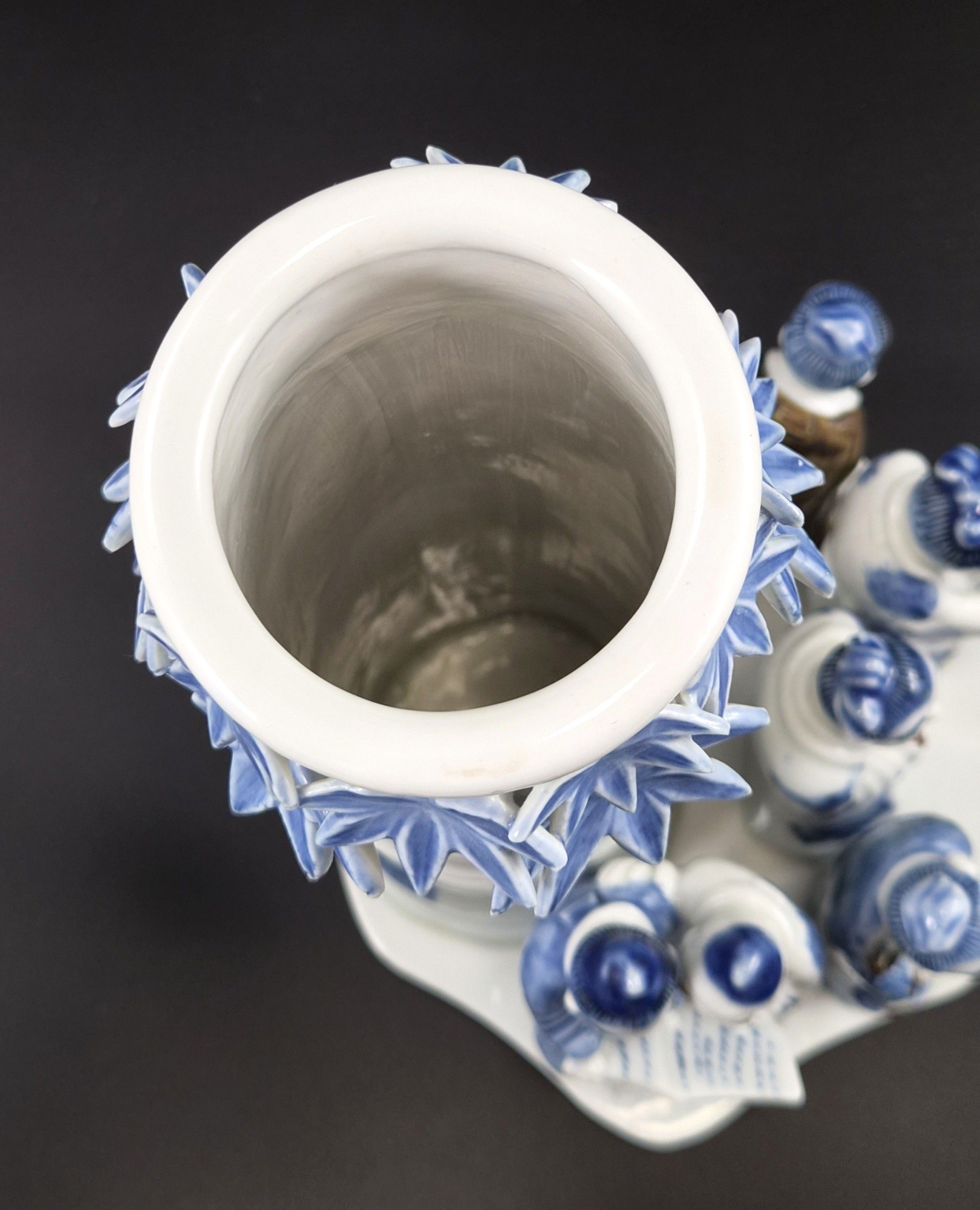
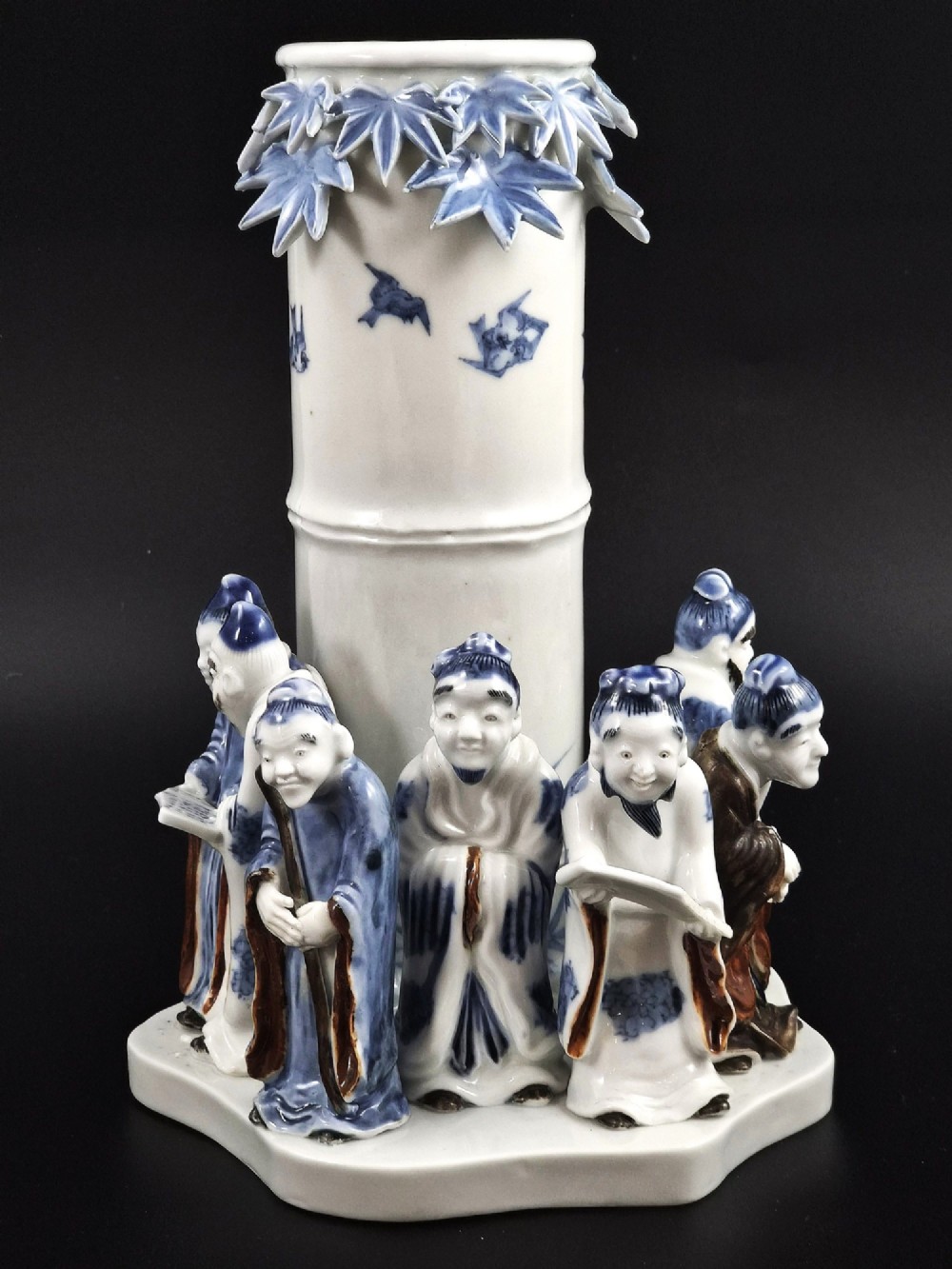
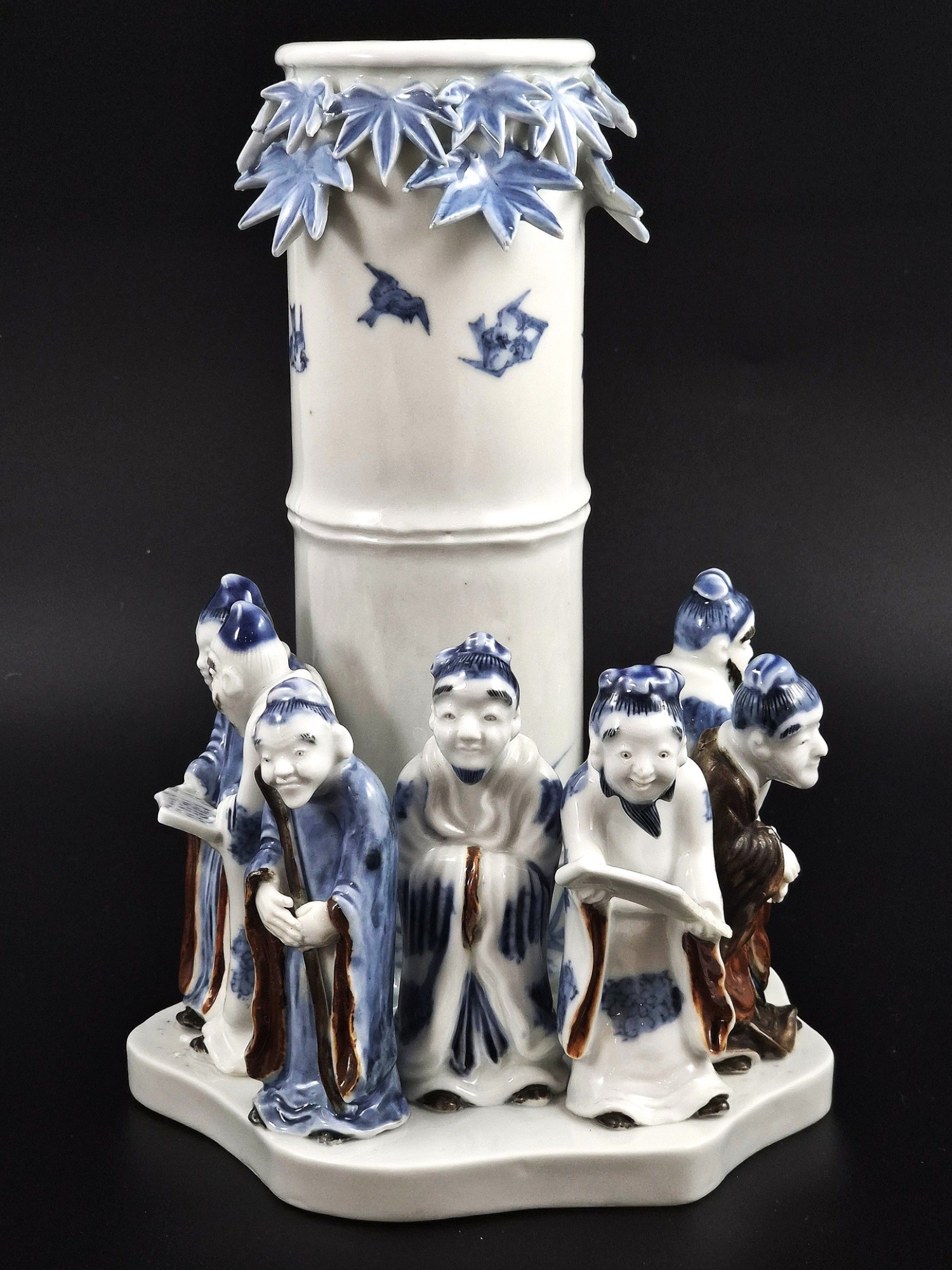
The vessel is conceived as a tall bamboo trunk rising from an irregular porcelain plinth.
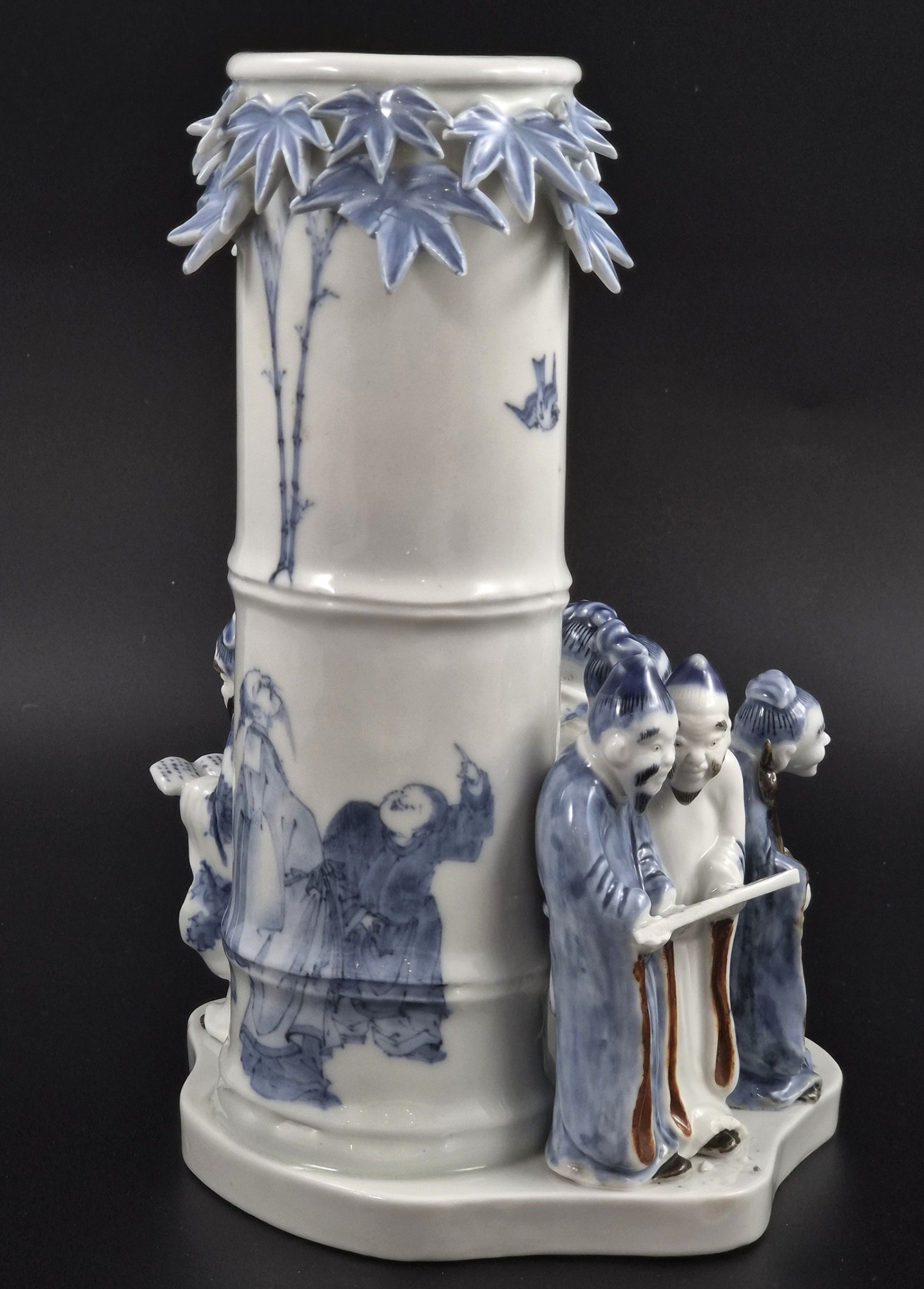
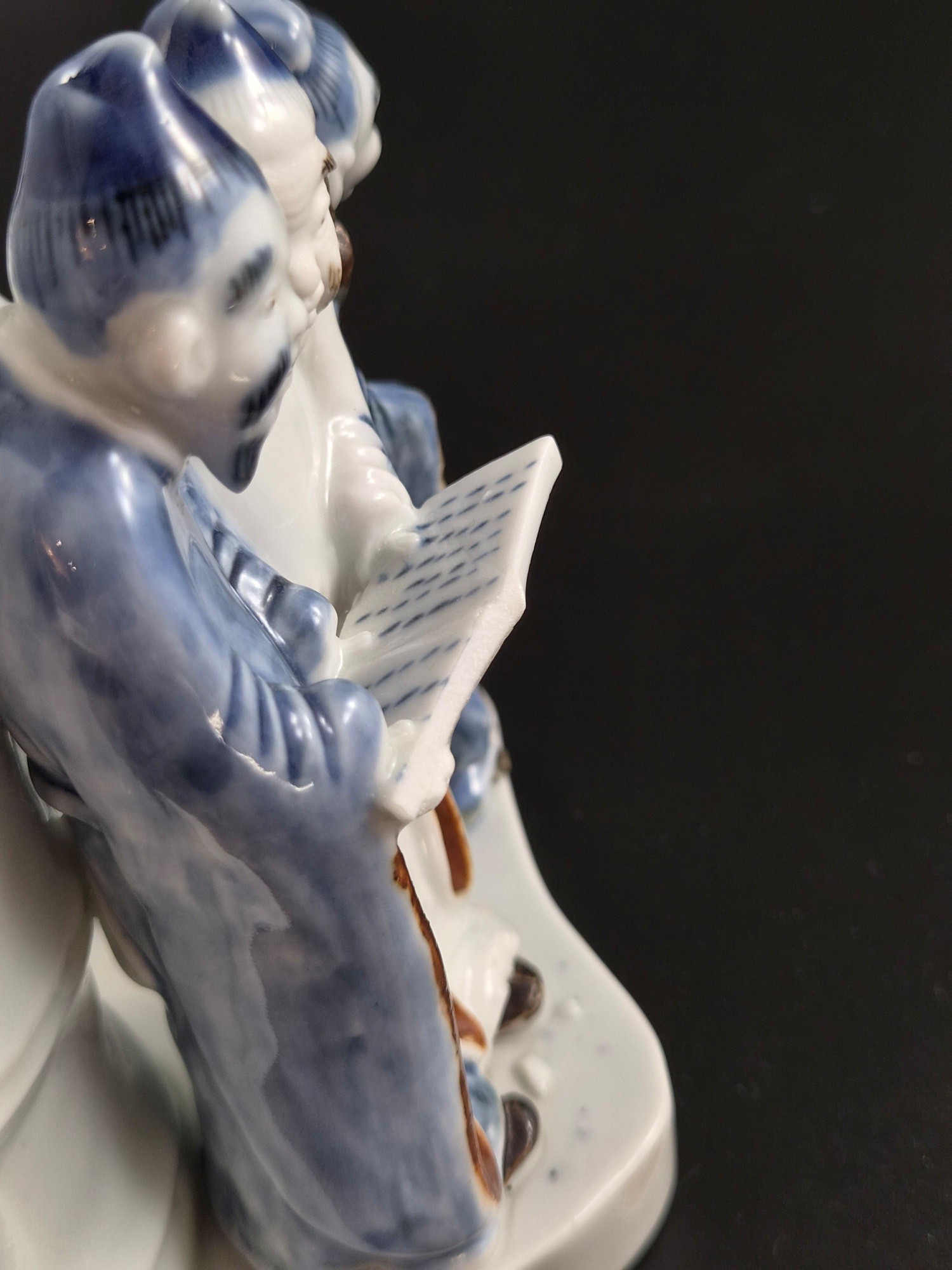
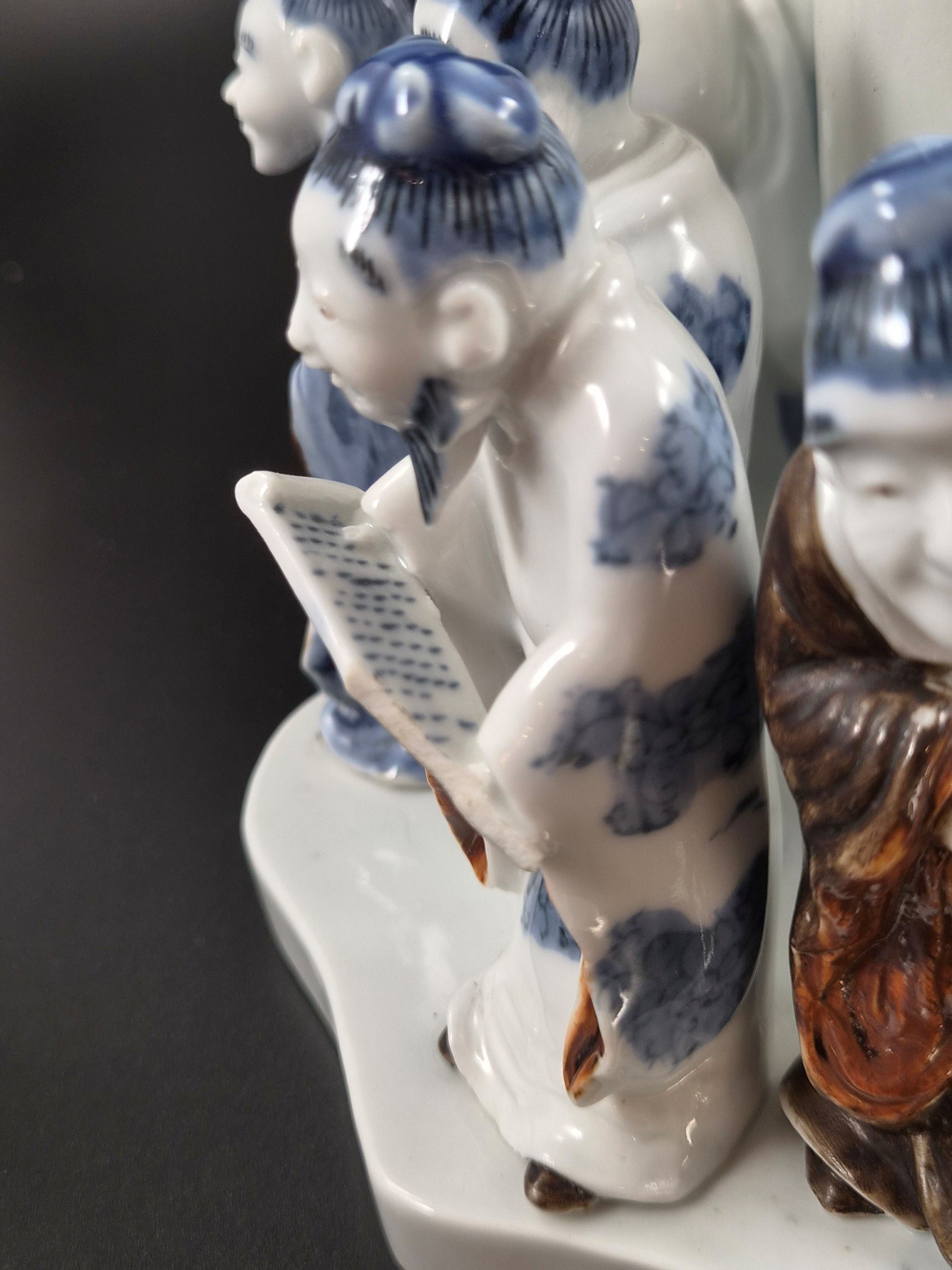
Each figure has an individual face, hairstyle, pose and arrangement of robes. The scholars turn, lean and interact with one another rather than forming a static group.
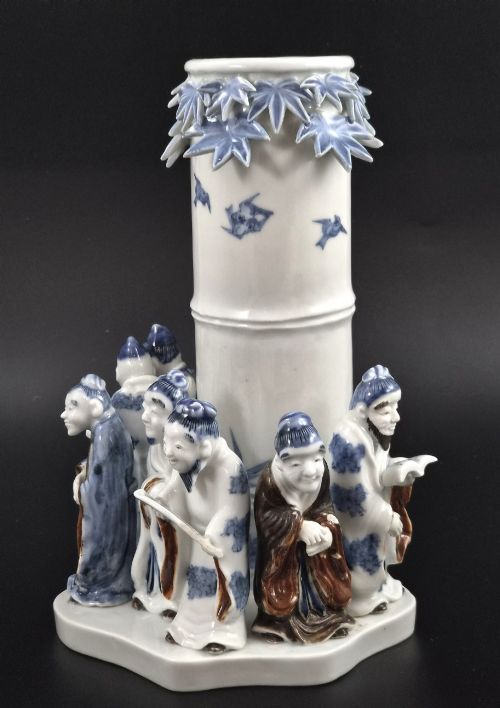
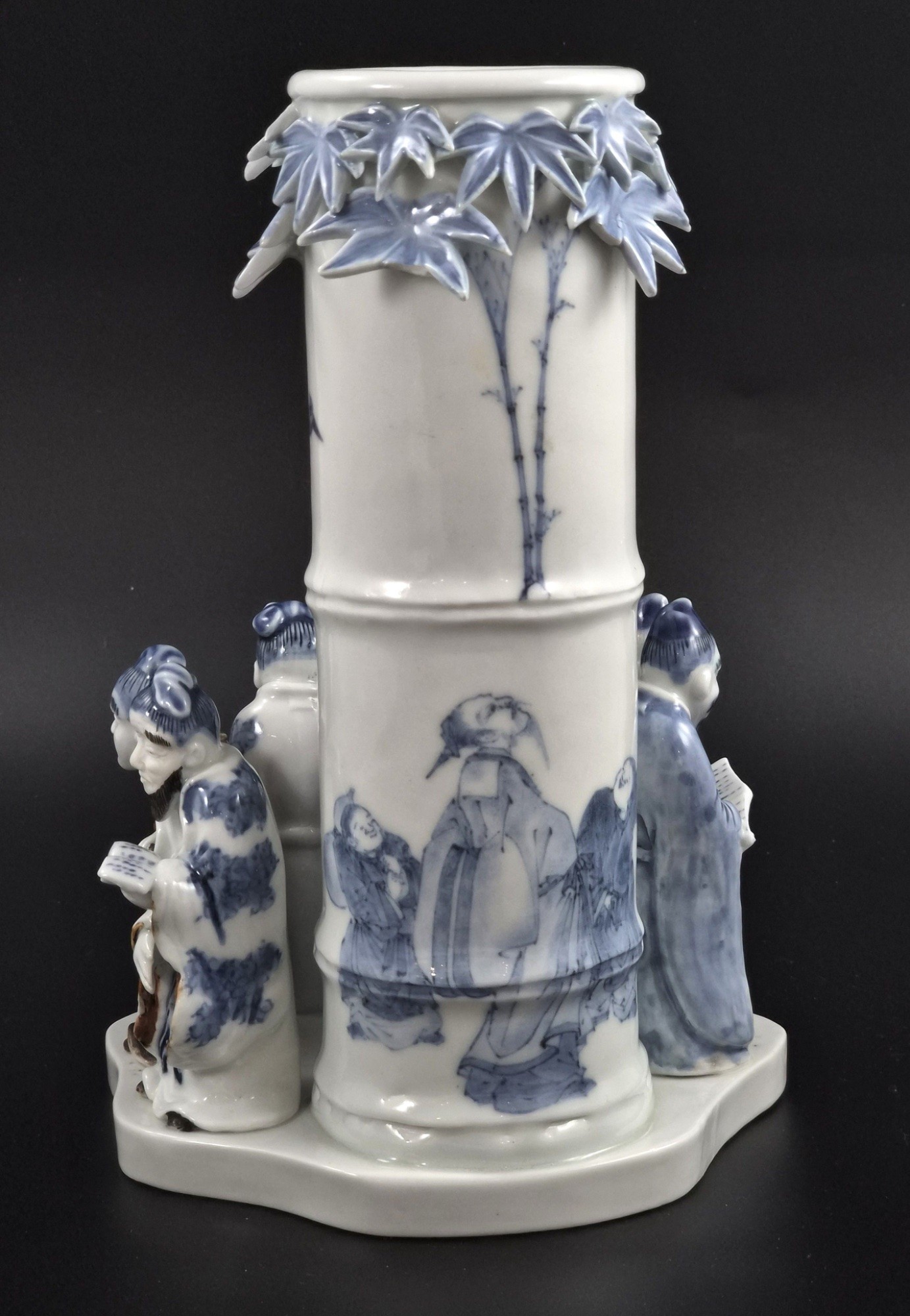
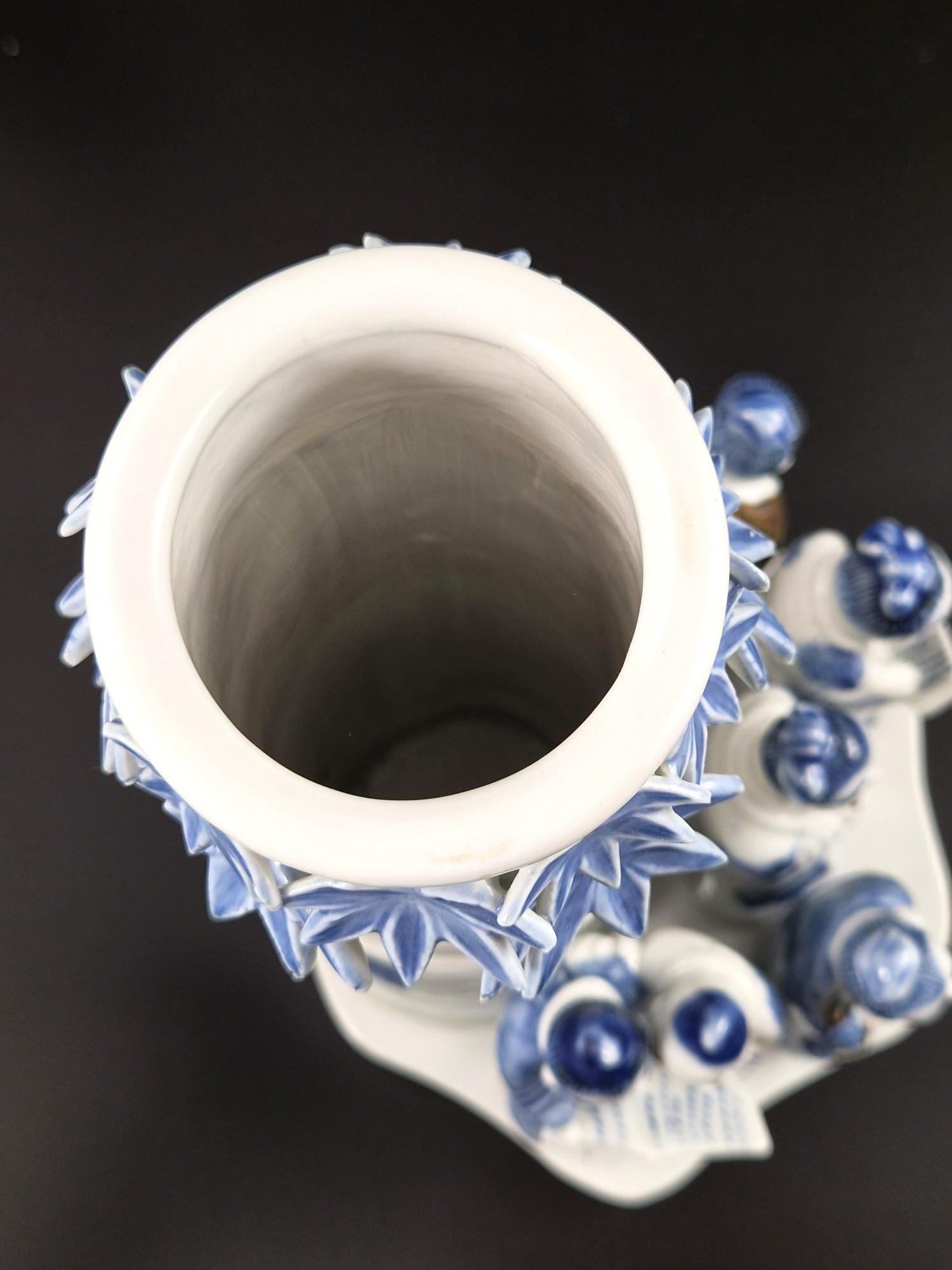
The bamboo-form vessel is finely painted in underglaze cobalt blue with birds, bamboo and a scene showing a scholar accompanied by two boys, one of whom gestures towards a bird in flight. Selective blue and iron-brown glaze accents emphasise the robes and sculptural details. Around the upper rim is an elaborate collar of individually modelled overlapping bamboo leaves, delicately shaded in blue.
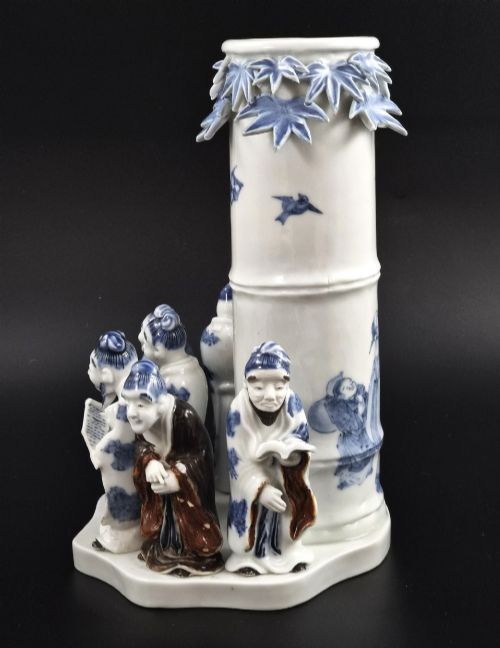
The Seven Sages of the Bamboo Grove were third-century Chinese scholars, poets and intellectuals who withdrew from official life to drink wine, play music and engage in philosophical conversation. They became an enduring symbol of intellectual independence and withdrawal from corrupt public life. The subject was greatly admired in Edo-period Japan and became established in painting, porcelain and other decorative arts.
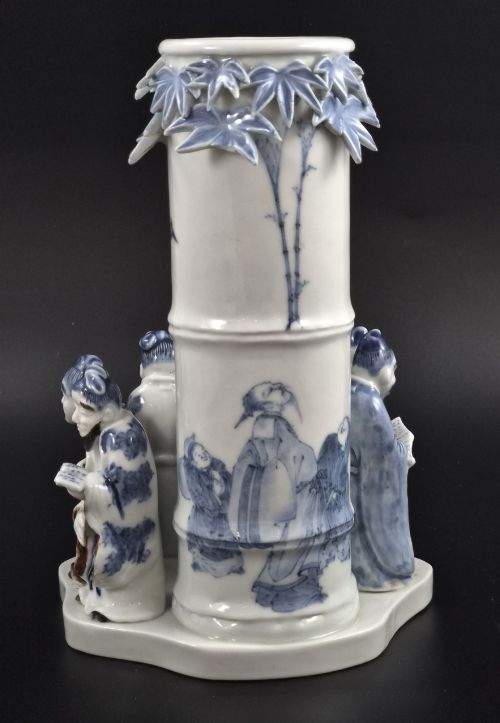
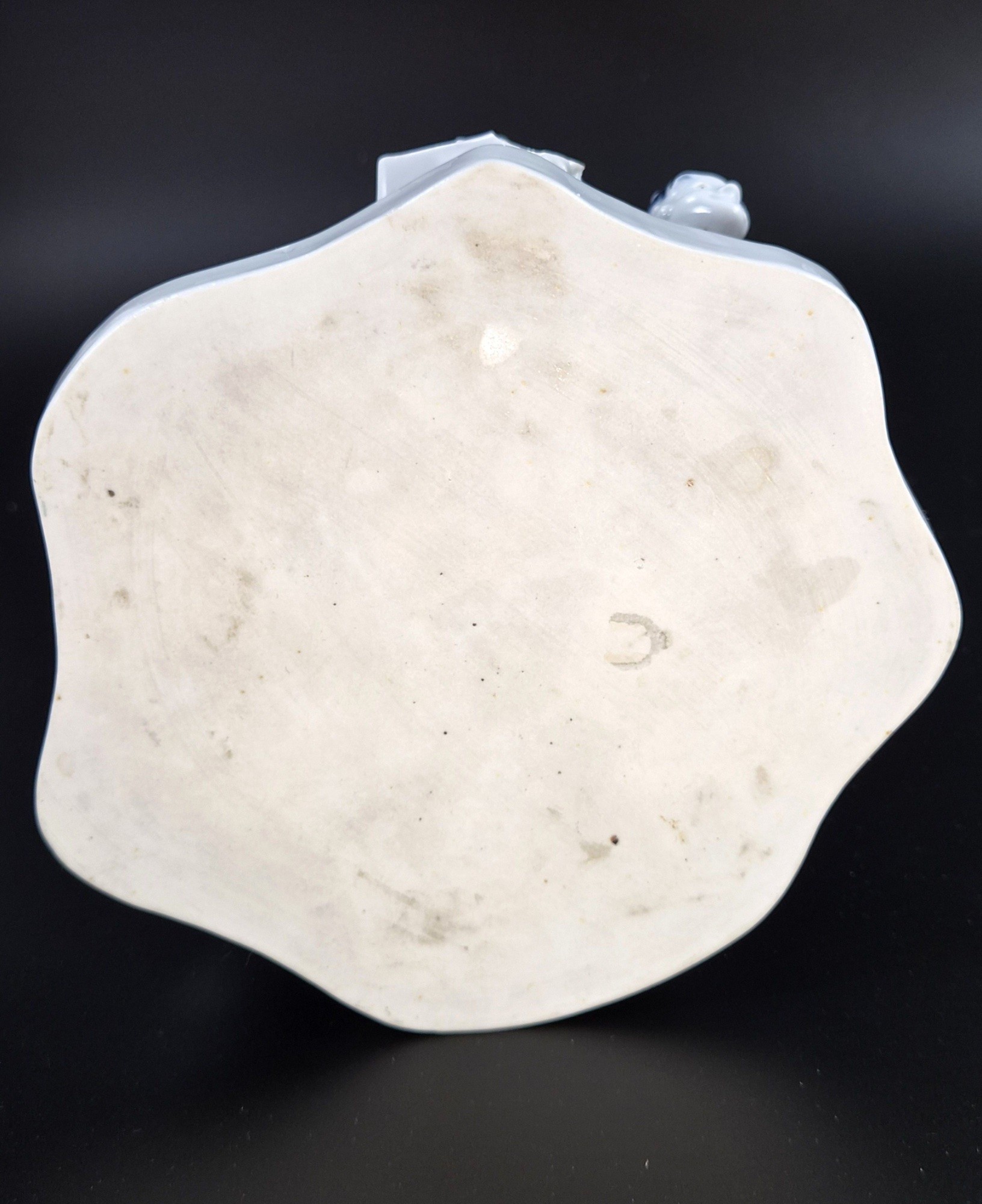
The Metropolitan Museum of Art preserves several Hirado vessels painted with the Seven Sages, including a mizusashi dated to the second half of the 18th century. The Toguri Museum in Tokyo preserves a closely related Edo-period Mikawachi brush pot in which seven separately modelled sages surround a cylindrical bamboo grove. Related sculptural groups are also preserved in the Sasebo City collection. These museum parallels show the rarity and technical ambition of this distinctive Mikawachi sculptural tradition. The underside is unmarked.
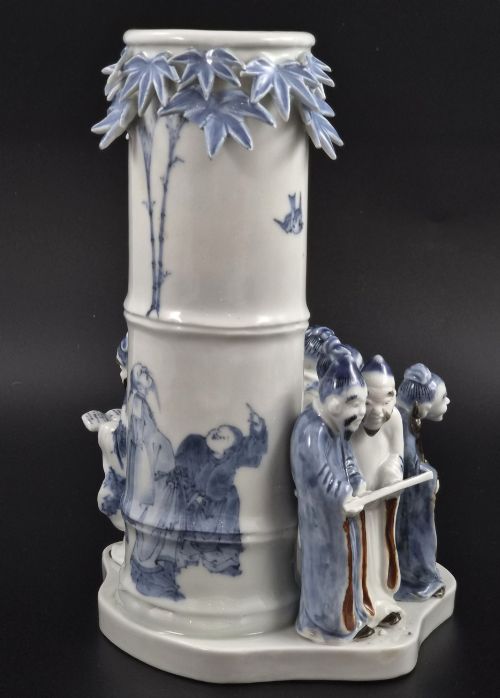
Dimensions: height 24.3 cm; width 16.3 cm; depth 15.7 cm; weight 1842 g. Condition: one applied bamboo leaf at the upper rim has a small loss to its tip. Each of the two manuscripts held by the scholars has a small chip to one corner. The scholar wearing the brown robe has a small chip to his right sleeve. A fine short vertical line at one of the moulded bamboo nodes is a kiln-related firing flaw rather than a post-firing structural crack. Inspection under ultraviolet light revealed no evidence of restoration, filling or overpainting. Otherwise in excellent antique condition. Please study the accompanying photographs carefully as they form an integral part of this description. If you have any questions, we will be happy to answer them. The item will be shipped with full tracking and insurance. Shipping costs include handling, packaging and postage.
Gillers Antiques Ltd has dated this piece to the 19th Century.

You can view the stock and full dealer information on the Gillers Antiques Ltd Profile Page
Rare Japanese Hirado Seven Sages Figural Bamboo Vase, Mikawachi, Edo Period C.1800