
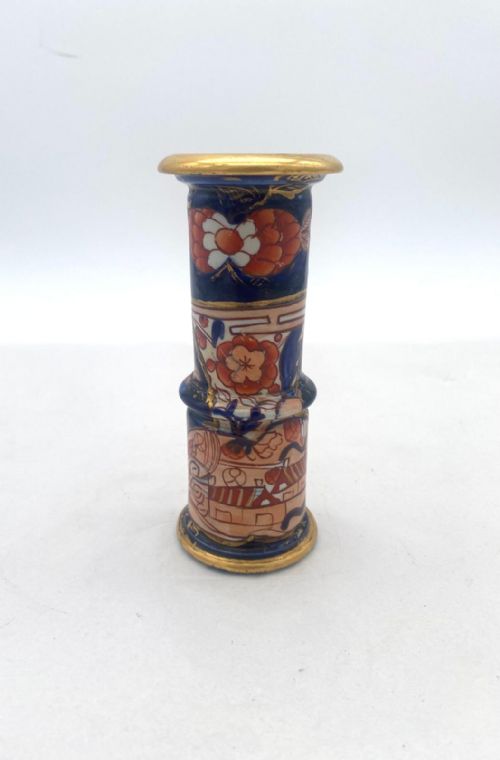
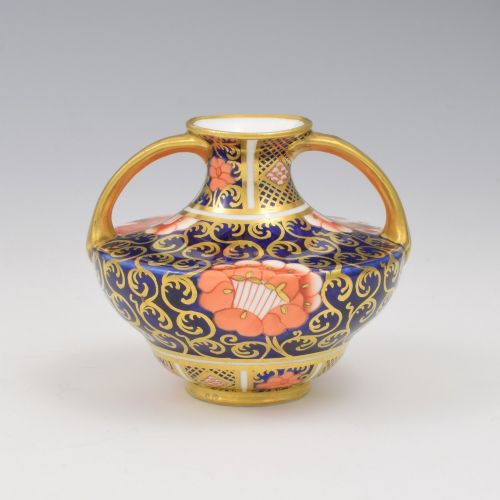
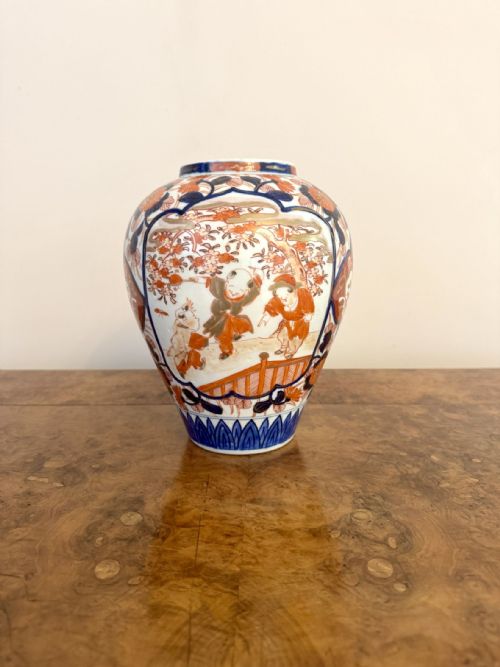
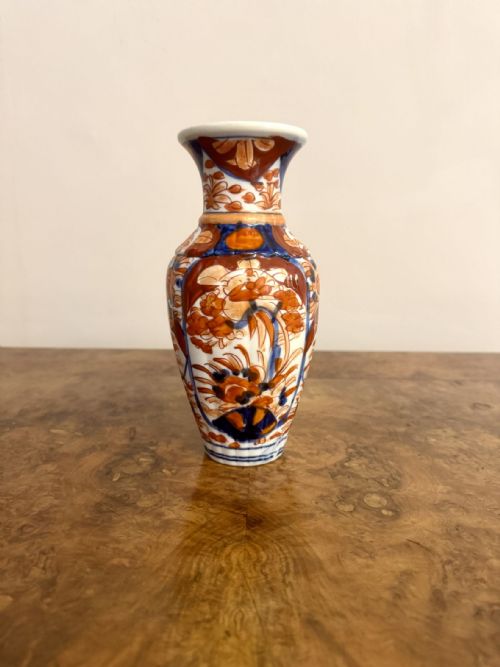
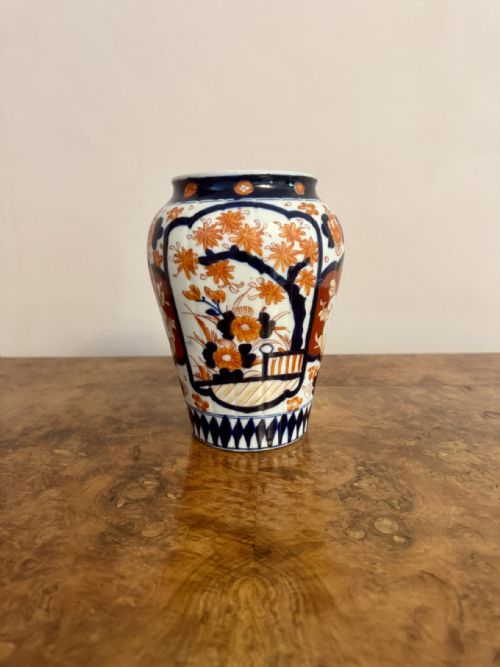
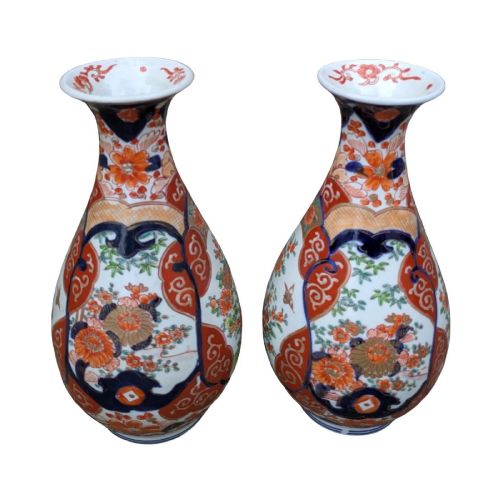
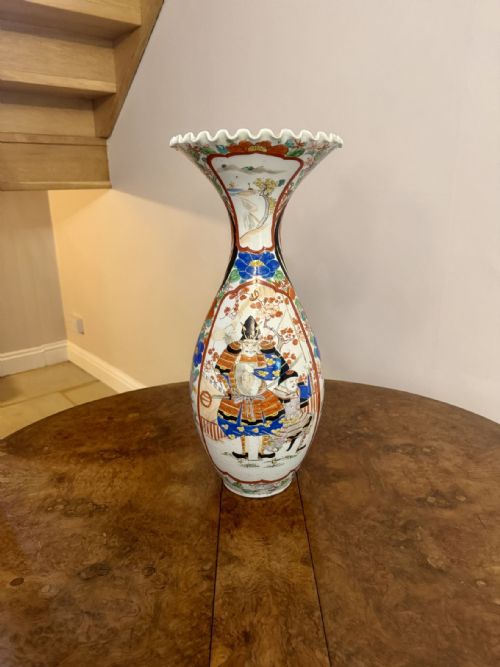
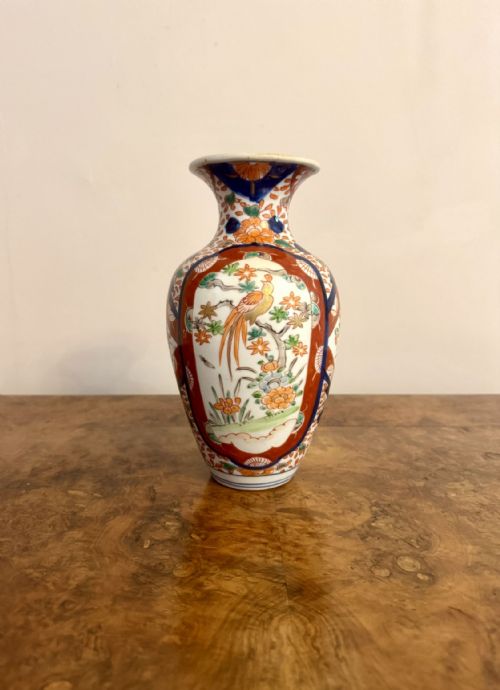
Antique Imari Vases
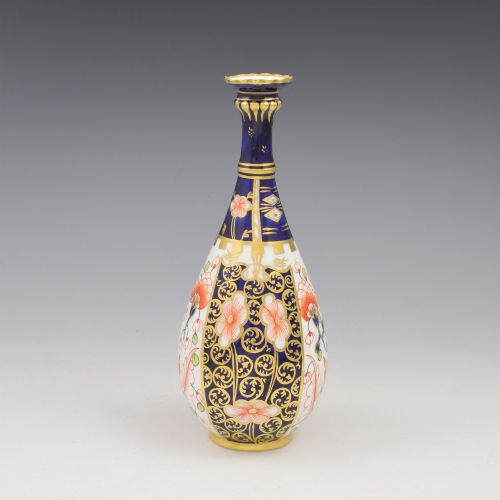
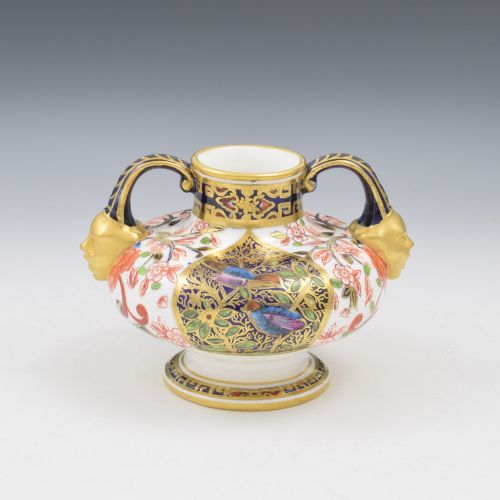
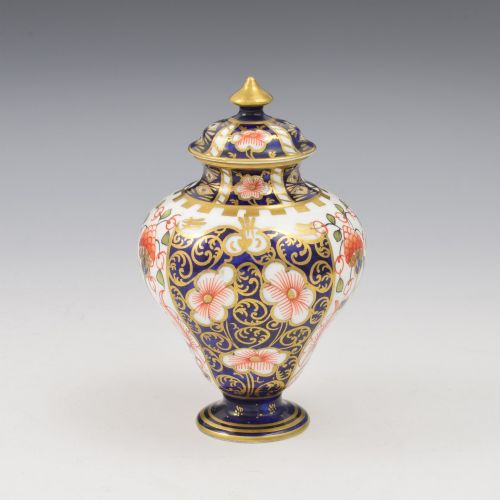
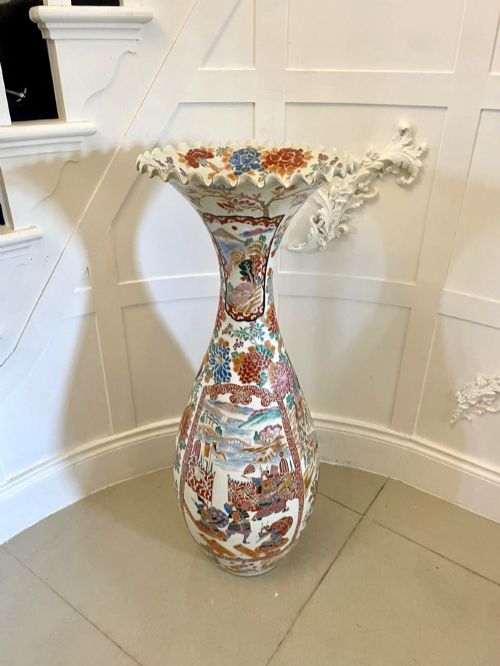
Japanese porcelain vases painted in underglaze blue with iron-red and gold, made for export and sold for display, from small spill vases up to floor-standing pieces well over a metre tall.
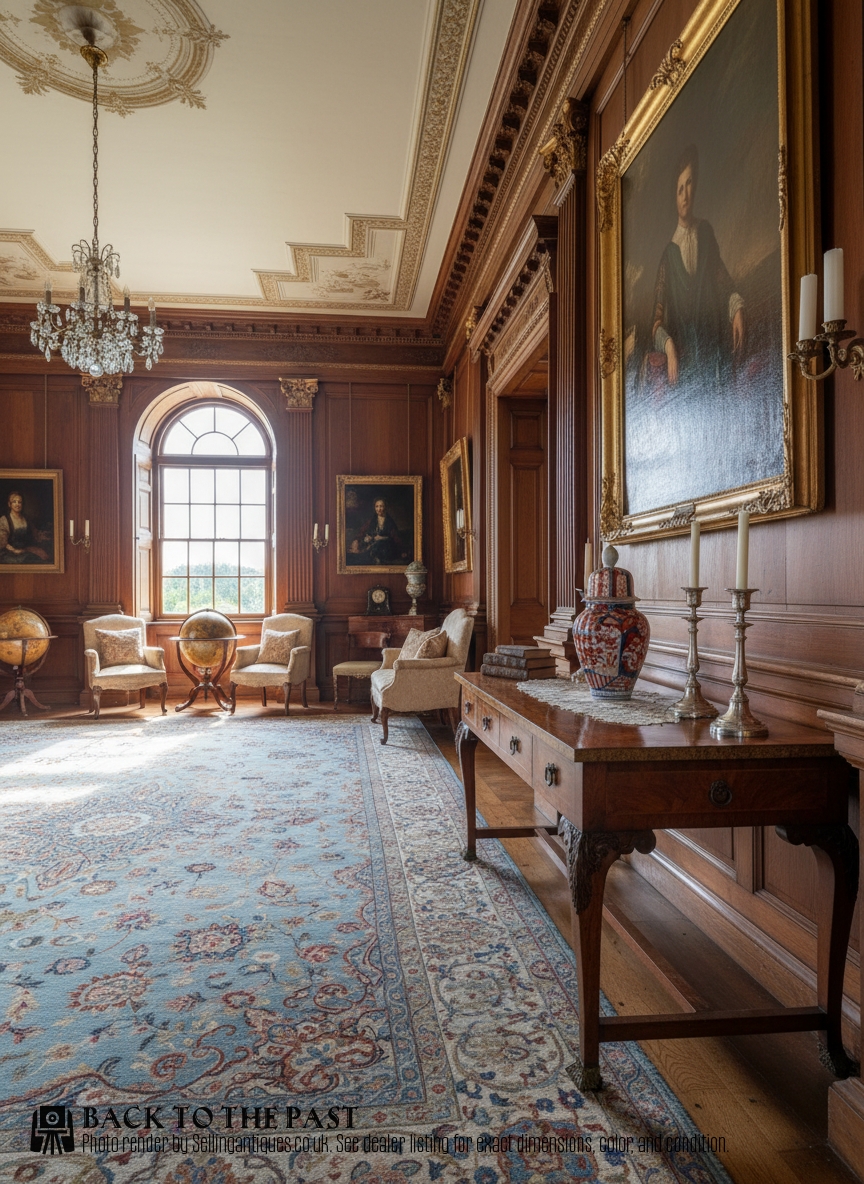
Antique Imari Vases
Imari is the Western name for Japanese porcelain made around Arita and shipped from the port of Imari, decorated in underglaze blue with overglaze iron-red and gilding. It went to Europe in quantity from the later 17th century, and the palette was copied by Chinese and European factories afterwards. Both the Japanese originals and the copies sit under this heading.
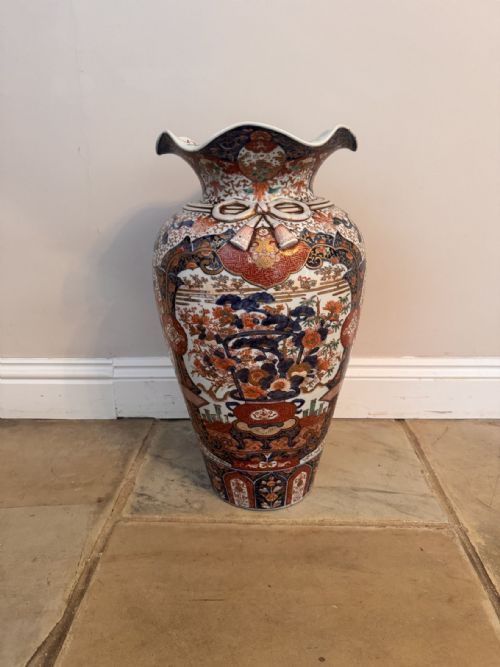
Japanese pieces dominate. The word appears in 197 of 343 titles on Sellingantiques, and 141 titles say "pair". So the vase you are most likely to be looking at is one of a Japanese pair, 19th century or turn of the century, without a cover, and reasonably large: "large" turns up in 94 titles. Forms named include baluster, bottle, trumpet, double gourd, hexagonal, octagonal, fluted and ribbed.
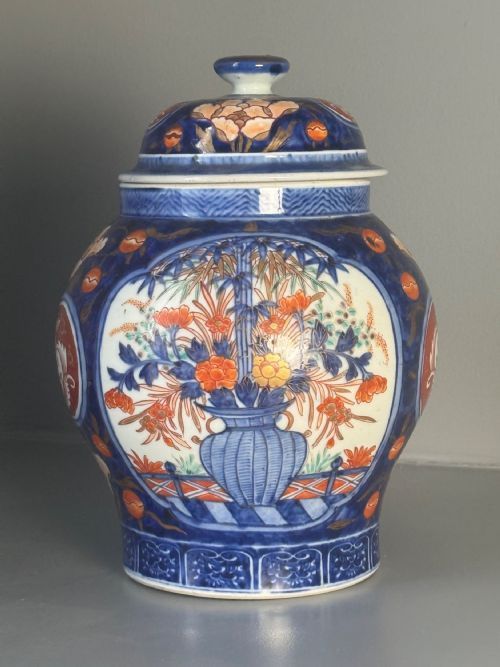
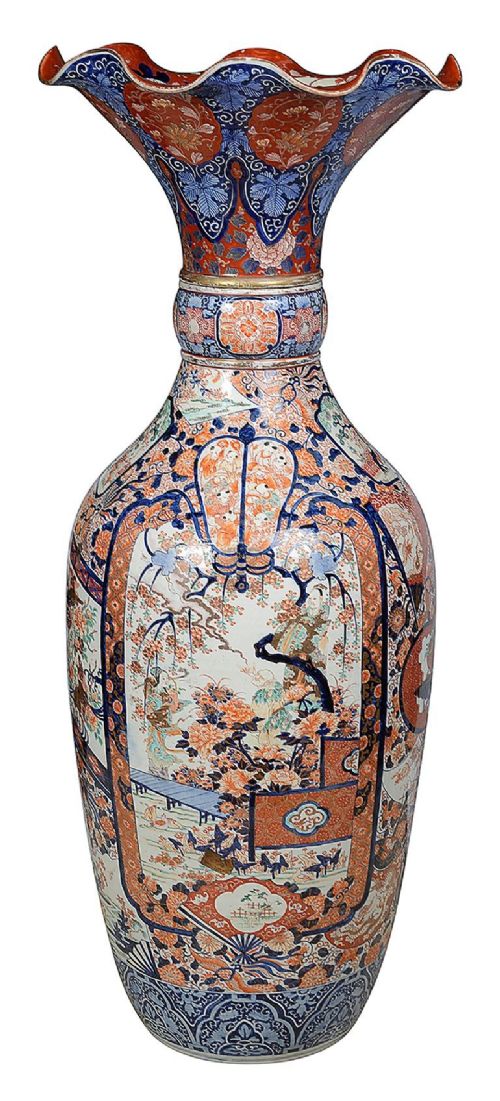
Around one in six carries a cover, listed as lidded, or as a vase and cover, or as a covered jar. Beyond pairs sit trios, five- and seven-piece collections and full chimneypiece garnitures. A smaller band stands on the floor rather than a shelf, with stated heights running to 93cm, 147cm and 152cm.
Dating is loose at this end of the market. The dated field runs 1700 to 1930, and its two biggest buckets are the vaguest, "1900s" and "19th Century", with many round-1900 entries working as placeholders rather than researched dates. Firmer decades cluster in the 1870s to 1890s. An early seam of Arita, Edo and Genroku pieces runs back through the 18th century, one title reaching circa 1680, and a European and Chinese seam in the same palette shows up in titles through the words "palette" and "pattern".
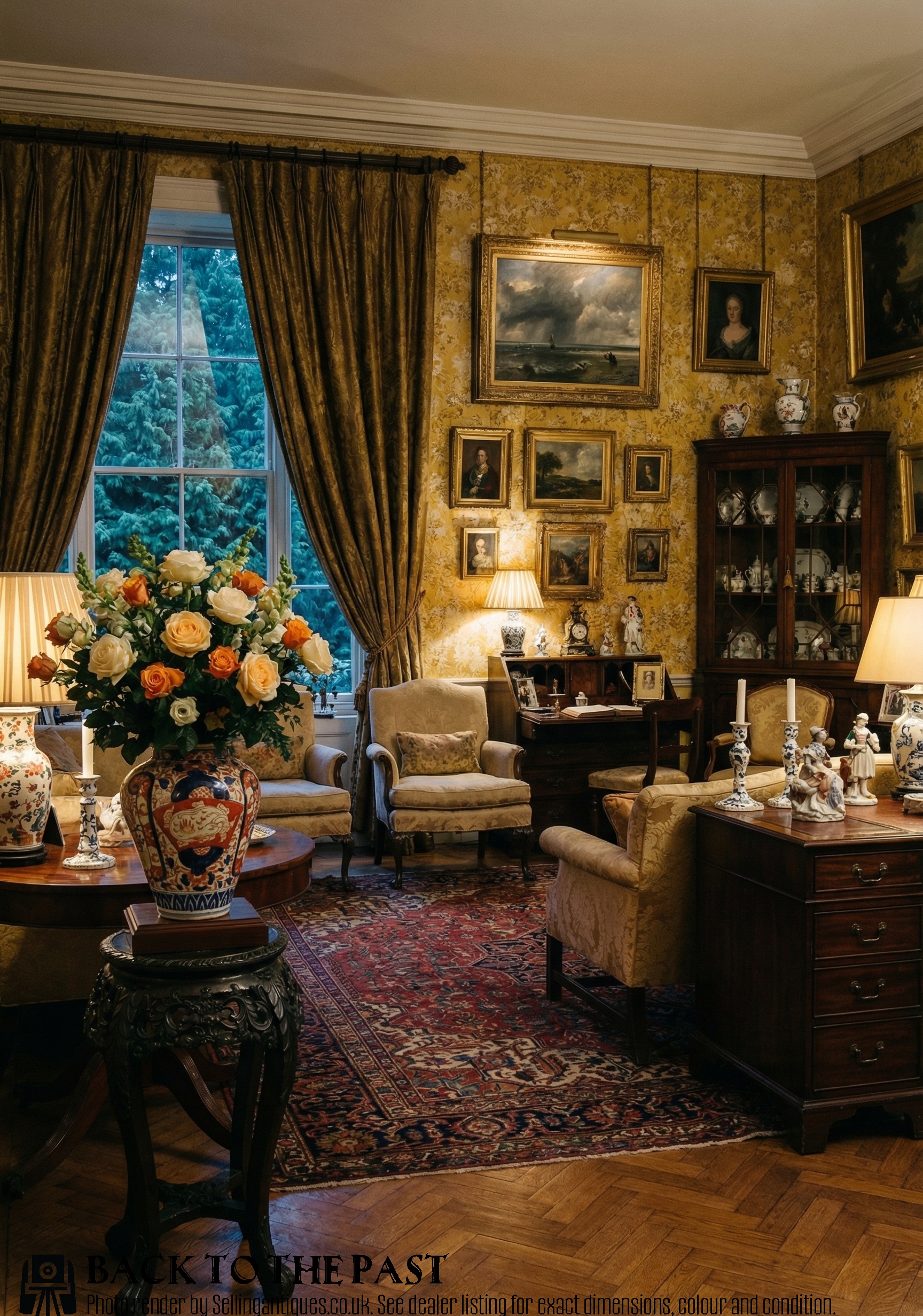
What Sets Them Apart
Scale and number do most of the work. Large sells above small, and the floor-standing group with stated heights in the 60cm to 152cm range sits at the top of the range, while bud vases, spill vases and matchpots of a few inches sit at the bottom. A pair sits above a single vase of the same description, and trios, five-piece sets and garnitures climb again from there.
Date separates the mass from the seam. The great bulk is Japanese work of the 19th century through Meiji and the Edwardian years, and it is priced as a body rather than piece by piece. The early Arita, Edo and Genroku vases of about 1680 to 1750 are a handful across the whole archive, and they sit well above the rest.
After that it comes down to what the vase does that a plain one doesn't. A cover that has survived with the vase pushes it up the range. So does a named or unusual form: reticulated openwork, an ormolu mount, twin handles, a hexagonal bulb bottle, a dragon. Titles that describe a shape sit above titles that simply say vase.
Antique Imari Vases Retail Price Guide 2026
Typical UK retail prices for imari vases, calculated from the Sellingantiques database of over a million retail prices indexed since 2003. This retail price guide relies exclusively on Sellingantiques data; no external sources or auction records are used, so the figures do not describe the wider market.
About forty-nine Imari vases are listed on Sellingantiques each year, and sixty-three different dealers have handled them.

The Antique Imari Vases Glossary
- Imari palette
- Underglaze blue with overglaze iron-red and gilding. The word "palette" in a title often flags a European or Chinese piece made in the Japanese manner rather than a Japanese one.
- Baluster
- The swelling, waisted body shape, narrowing towards the neck. One of the most frequently named forms in these titles.
- Garniture
- A matched set for a chimneypiece, usually three or five pieces, often mixing covered jars with trumpet or beaker vases. Five-piece sets appear in the archive.
- Meiji
- The Japanese period from 1868 to 1912, named in 27 titles and the commonest period label attached to Japanese pieces here.
- Arita
- The porcelain-making district in Japan behind the early wares. Named in 11 titles, generally on the older end of the category.
- Spill vase
- A small straight vase made to hold paper spills for lighting a fire. Also listed as a matchpot.
Antique Imari Vases: Frequently Asked Questions
Are Imari vases usually sold in pairs?
Very often. Of 343 listings on Sellingantiques, 141 say "pair" in the title, so nearly half the archive is sold in multiples.
Beyond pairs there are trios, five-piece and seven-piece collections, and full chimneypiece garnitures. Sets sit above single vases of comparable description.
How big do these vases get?
The range is wide. At one end sit bud vases and spill vases a few inches high; at the other, floor-standing pieces with stated heights of 93cm, 147cm and 152cm.
The word "large" appears in 94 titles, so a good-sized vase is the norm rather than the exception here.
What does the Imari palette actually mean?
Underglaze blue applied before glazing, then overglaze iron-red and gold added afterwards. That combination is what the name describes.
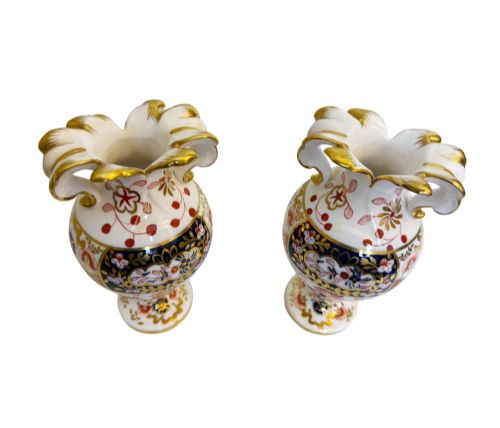
Because it is a colour scheme rather than a factory, English, French and Chinese makers used it too. Titles carrying "palette" or "pattern" tend to be those pieces.
Why are so many listed as circa 1900?
The dated field spans 1700 to 1930, and its two largest groups are "1900s" and "19th Century". Many of the 1900 entries are round-number placeholders rather than researched dates.
Firmer decades do exist in the archive, mostly the 1850s through the 1890s. Read 1900 as a band covering the turn of the century.
Which are the earliest pieces in this category?
The early Arita, Edo and Genroku vases of roughly 1680 to 1750. They are a small seam, around one in twelve listings, and one title reaches back to circa 1680.
They sit high in the range against the mass of later Japanese work.
Do lidded Imari vases turn up often?
Roughly one in six. Titles use "lidded", "cover" or "covers", and covered jar shapes are part of the same group.
Covers recur through the upper half of the range, and they are a regular component of garnitures.