
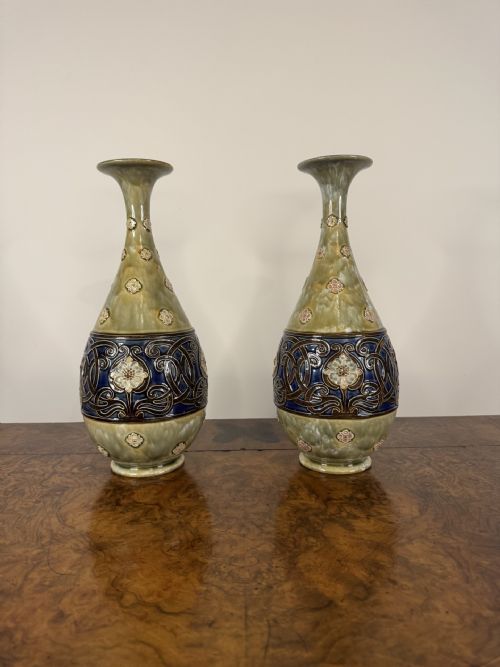
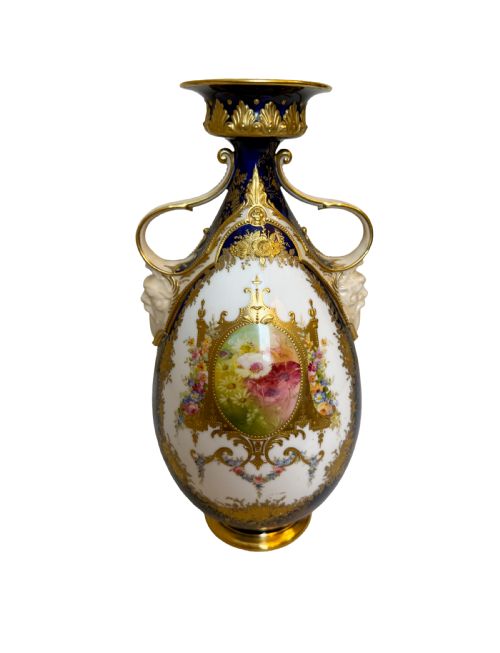


Antique Doulton Vases
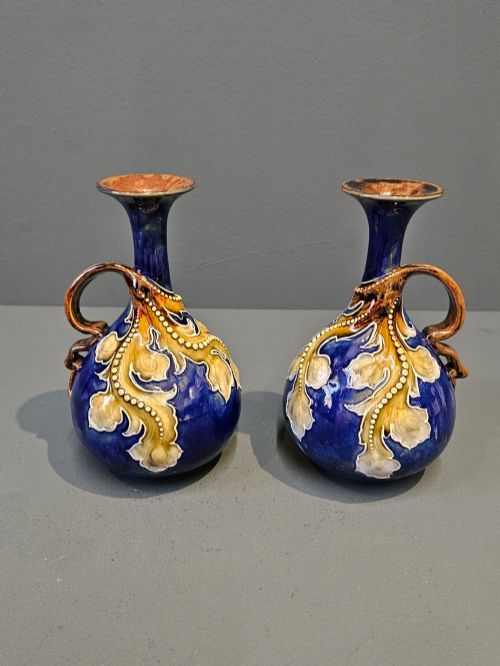
Ornamental vases from Doulton's Lambeth and Burslem potteries, made for the mantelpiece and often in matched pairs, commonly carrying both a factory mark and the initials of the decorator who painted or incised them.
What They Are
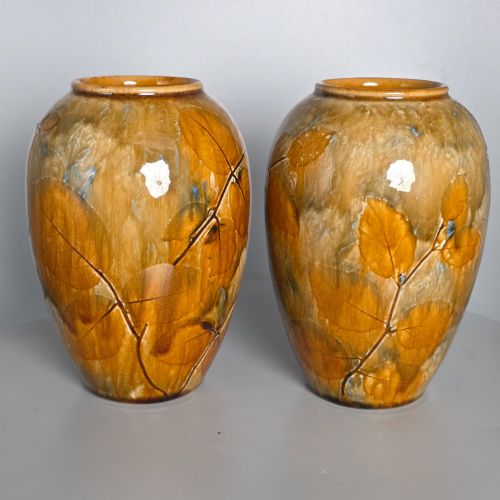
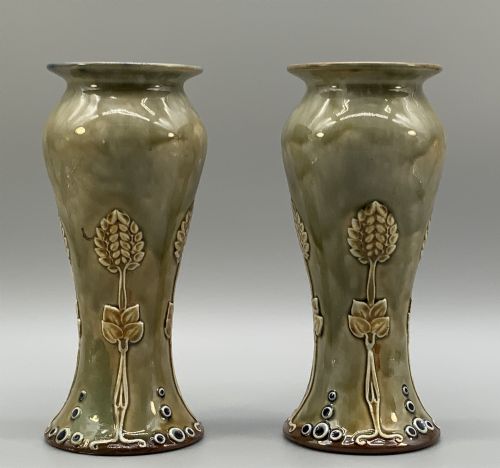
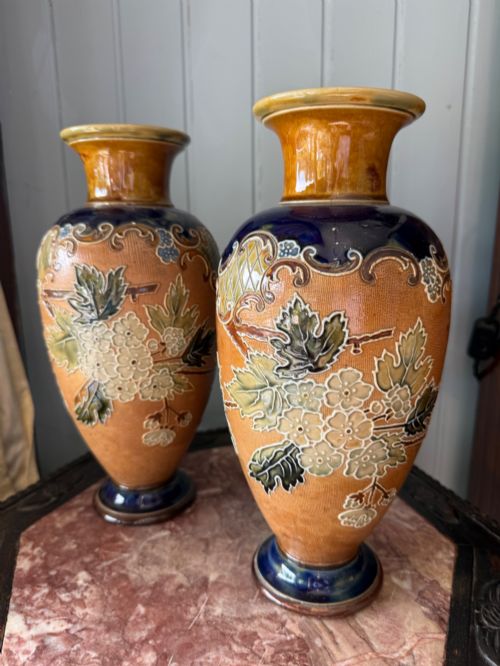
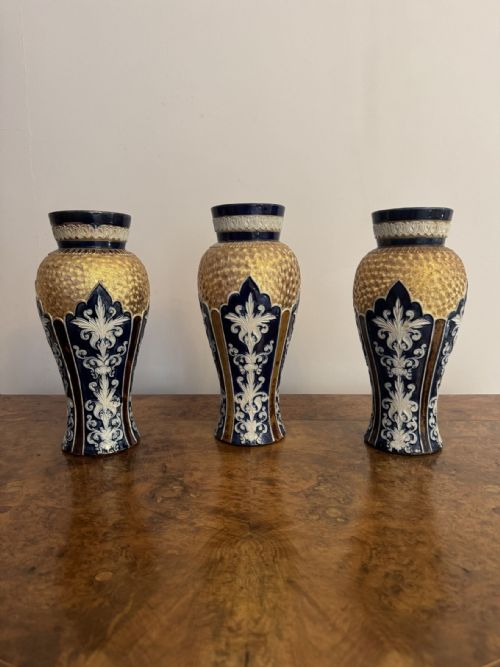
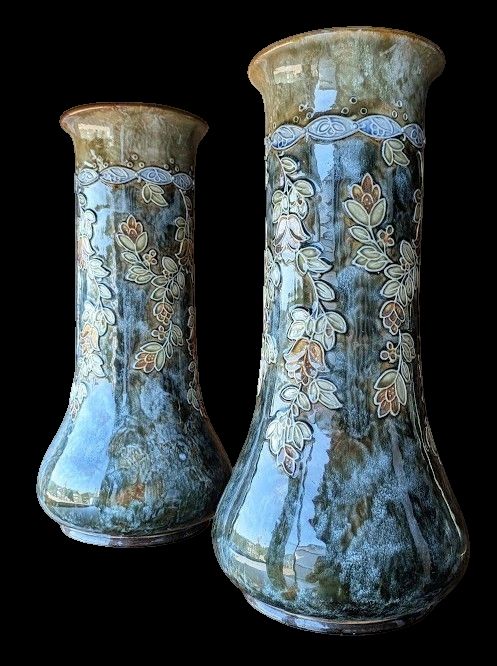
The likeliest thing you'll meet is a pair rather than a single vase. 'Pair' turns up in 77 of 148 titles on Sellingantiques, usually a modest-sized baluster or bottle shape in salt-glazed or slip-decorated stoneware. Larger baluster forms appear too, and one garniture of three.
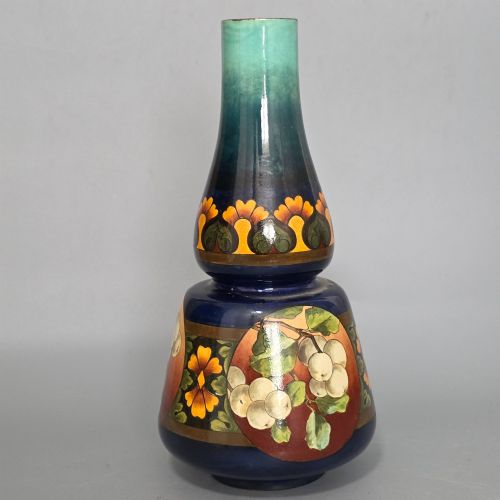
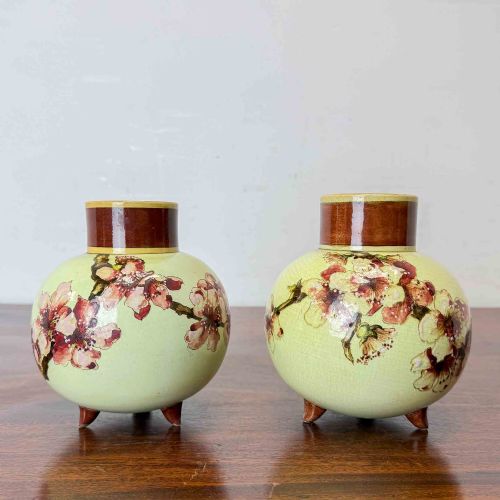
Two works stand behind the heading. Lambeth in London made the salt-glazed and faience art wares, and 'Lambeth' is in 38 titles, with 'stoneware' in 17. Burslem in Staffordshire supplied the painted faience and china art wares, a smaller group that includes Flambe, Sung, Titanian and Mandarin Ware. 'Royal' appears in 79 titles, the name used after the 1901 royal warrant.
Dates cluster tightly. The dated field runs 1870 to 1930, with the 1880s accounting for 44 listings and the 1900s 29, then the 1920s and 1910s. Another 22 are given only as '19th Century', 'Edwardian' or 'Victorian', which are period words rather than years, so the title text and the date are worth reading together.
Alongside the vases sit a few related ornaments: a jardiniere, an umbrella stand, a planter. Art Nouveau decoration is named in 17 titles, and Slater's Patent shows up in several, sometimes with a pattern number such as X5337 or No.6114.

Where The Range Sits
A name does more than anything else. Around a third of titles carry a decorator's name or monogram, and the pieces at the top of the range are the attributed ones. The earliest in the archive, a Lambeth vase bearing an 1875 monogram, sits at the very top, roughly eight times the next highest-priced listing. An unattributed pair of Royal Doulton vases sits at the bottom end.
Then number and scale. Matched multiples push upward, which is why pairs are the norm and why the single garniture of three sits near the top of the range. 'Large' appears in 30 titles, with stated sizes up to 42cm and 39cm, and the biggest are described as huge or massive.
Date and named process do the rest. Early Lambeth work carries further than the 1920s and 1930s pieces, which cluster low, and an identified line, Slater's Patent, Flambe, Sung, Titanian, faience or pate-sur-pate style, lifts a piece above the plainly decorated. Named Burslem art ranges surface in only a handful of listings; Lambeth stoneware is the everyday encounter.
Retail Price Guide 2026
Typical UK retail prices for doulton vases, calculated from the Sellingantiques database of over a million retail prices indexed since 2003. This retail price guide relies exclusively on Sellingantiques data; no external sources or auction records are used, so the figures do not describe the wider market.
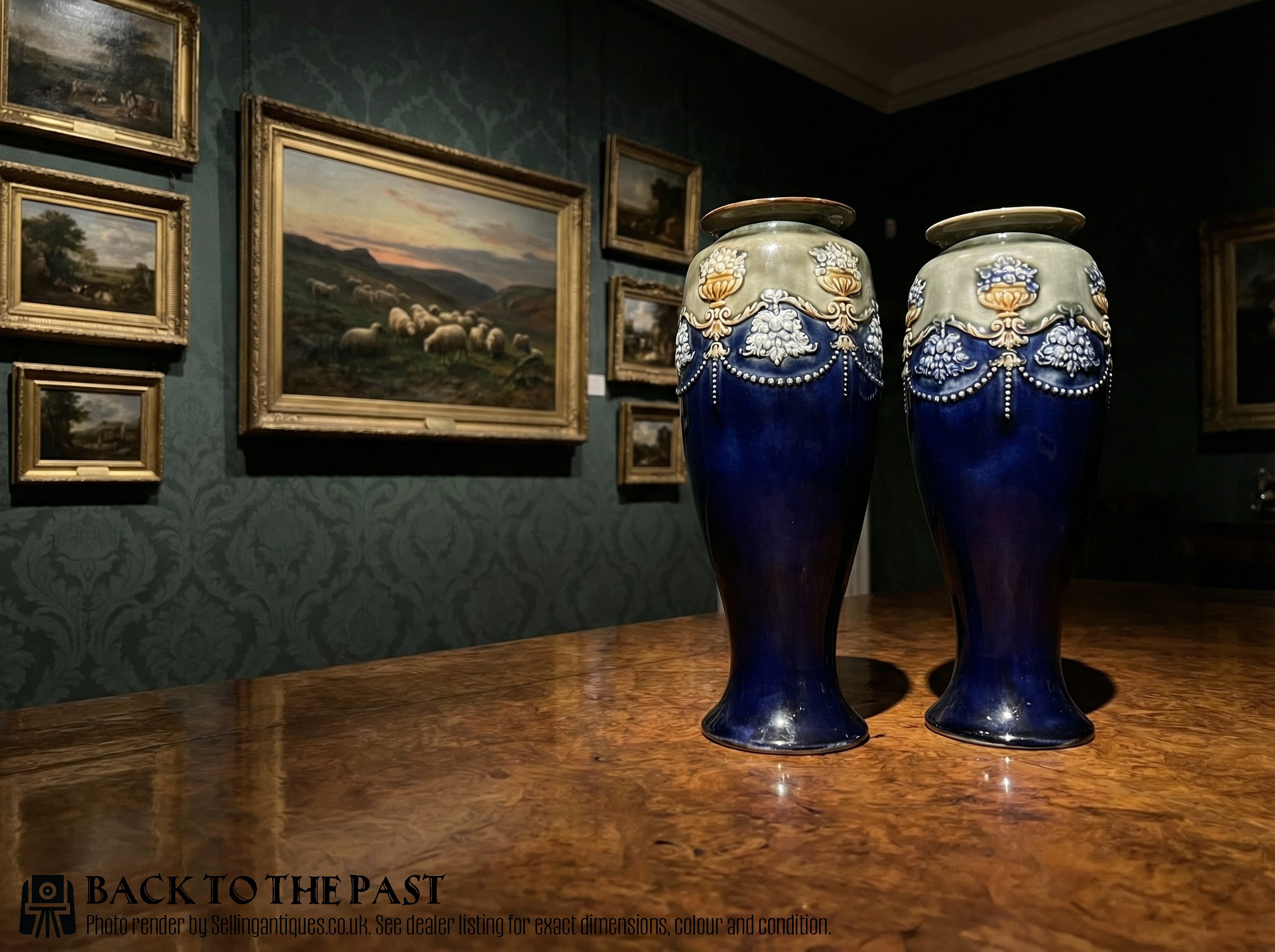
Ethel Beard is the decorator named by the most dealers on Sellingantiques, turning up across three of them. Eliza Simmance appears four times.
Ethel Beard
The Antique Doulton Vases Glossary
- Doulton Lambeth
- The London works, whose salt-glazed and faience art wares carry a Lambeth mark. Named in 38 titles on Sellingantiques.
- Royal Doulton
- The mark used after the 1901 royal warrant, so a rough dividing line between earlier and later pieces. It appears in 79 titles.
- Stoneware
- Dense high-fired clay body, usually salt-glazed at Lambeth. Named in 17 titles, and the everyday material in this category.
- Salt glaze
- Glaze formed by throwing salt into the kiln, which gives Lambeth wares their slightly pitted 'orange peel' surface.
- Slater's Patent
- A Doulton decorating process named in a run of titles, often quoted with a pattern number such as X5337 or 7903.
- Garniture
- A matched set of three or more vases for a mantelpiece. One appears in the archive, against 77 titles reading 'pair'.
Frequently Asked Questions
Are Doulton vases usually sold in pairs?
Yes. 'Pair' appears in 77 of the 148 titles, so a matched pair is the likeliest encounter rather than the exception.
Singles do come up, and 'large pair' is used in ten listings. One garniture of three has passed through, and it sat among the highest-priced pieces.
What is the difference between Lambeth and Burslem?
Lambeth was the London works, producing decorative salt-glazed stoneware and faience with a studio of individual decorators. Its mark is in 38 titles.
Burslem in Staffordshire supplied painted faience and china art wares, including the Flambe, Sung, Titanian and Mandarin Ware ranges. That group is small, under a tenth of the archive.
When were most of these vases made?
The dated field runs 1870 to 1930, and 118 of 148 listings carry a clean year. The 1880s dominate with 44, followed by the 1900s with 29.
The 1920s and 1910s account for most of the rest. The 1890s, 1870s and 1930s are thin, and 22 listings are given only as '19th Century', 'Edwardian' or 'Victorian'.
Why do listings name an individual decorator?
Lambeth employed a large studio of decorators who marked their work with incised or painted initials, so a vase can carry both the factory mark and an artist's monogram.
About a third of titles name a decorator or quote a monogram, phrased as signed, as a maker's mark, or simply as attributed. The attributed pieces sit at the top of the range.
How big do they get?
Twenty of the titles use the word 'large'. Stated sizes include 42cm for a pate-sur-pate-style vase and 39cm for a pair.
Other recorded measurements are 15in, 37cm and 31.5cm. These are one-off sizes rather than a standard set of heights, and the biggest are described as huge or massive.
Does Slater's Patent mean anything on a listing?
It names a Doulton decorating process, and it turns up in several titles, sometimes with a pattern number such as X5337 or No.6114.
Pattern and shape numbers are quoted only occasionally in this category. Most pieces are identified by decorator or by shape instead.