

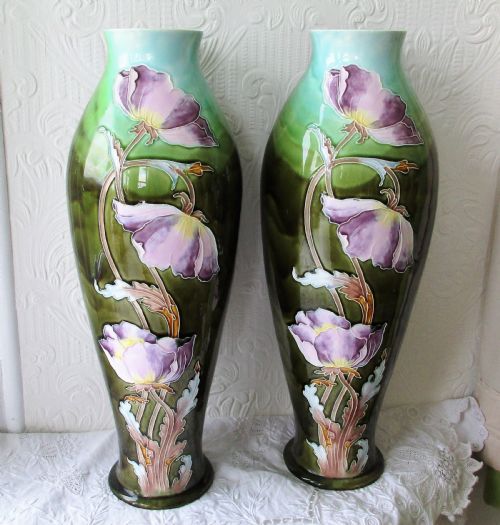
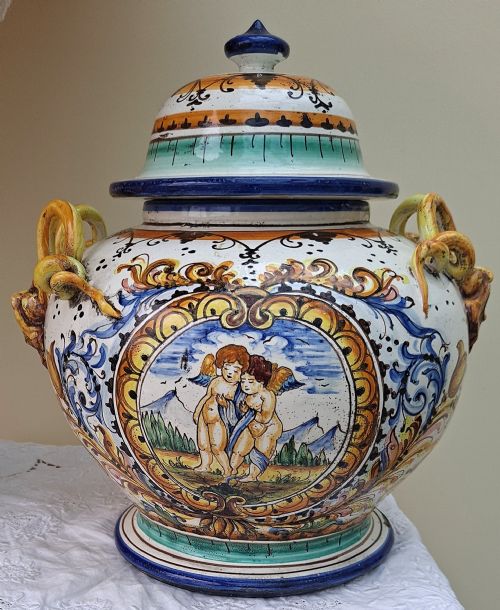


Antique Majolica Vases
Brightly glazed or tin-glazed earthenware vases, mostly 19th-century, made for display on a hall floor, a mantel or a dining table.
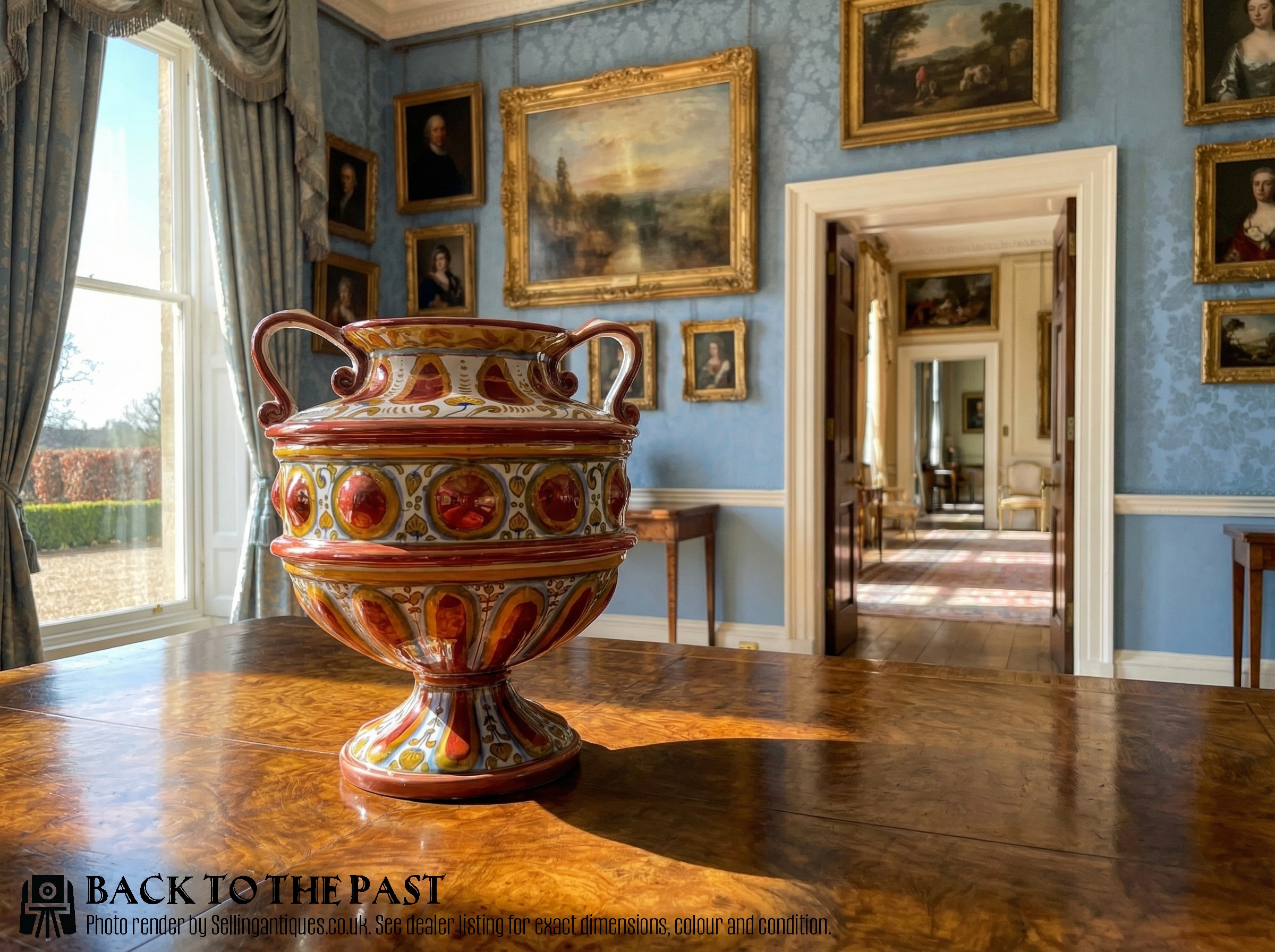
Antique Majolica Vases
Two traditions sit under the one heading. Maiolica is the Italian tin-glazed painted earthenware that developed in the Renaissance for decorative and display wares. Majolica is the brightly coloured lead-glazed earthenware that British and Continental potteries produced in the 19th century, and it is the default spelling in these titles.
The piece you are most likely to meet is a single large Italian vase described by nationality and century and little else. Italian origin accounts for 11 of 35 titles on Sellingantiques, the word large for another 11, and the two often land in the same listing. Pairs are the strong second population, a quarter of the titles.
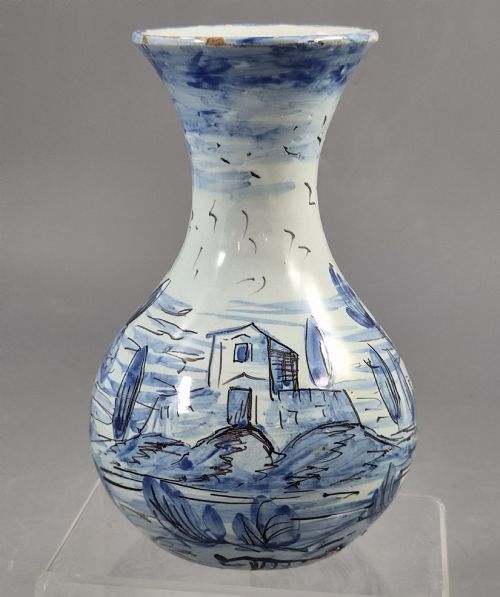
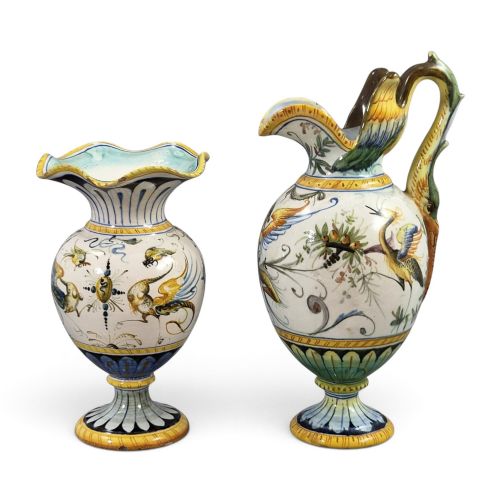
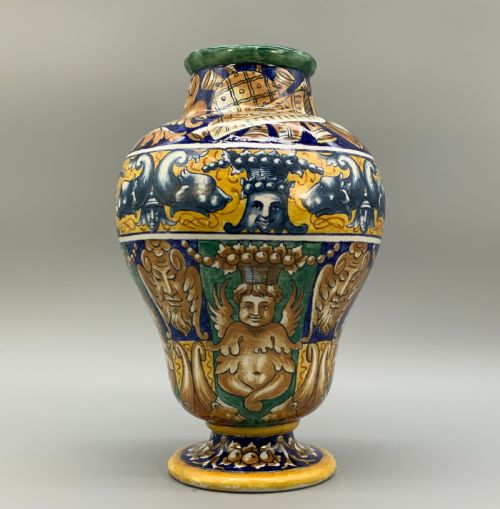
Around a third of the archive is Italian work in the tin-glazed tradition, including Savona blue-and-white, Garofano carnation decoration, polychrome bottle vases and pieces sold as Renaissance or 17th-Century Revival. Victorian and English majolica makes up around a fifth, and Austrian, Bohemian, Czech and German potteries a sixth. Two French faience Art Nouveau pairs turn up as well.
The dated field is more often a century than a year. "19th Century" covers 13 listings, and the clean years run only from 1870 to 1930. Five listings carry the 17th or 18th century, while separate titles describe pieces as revivals of those periods, so the label alone does not settle whether a vase is of its period or after it.
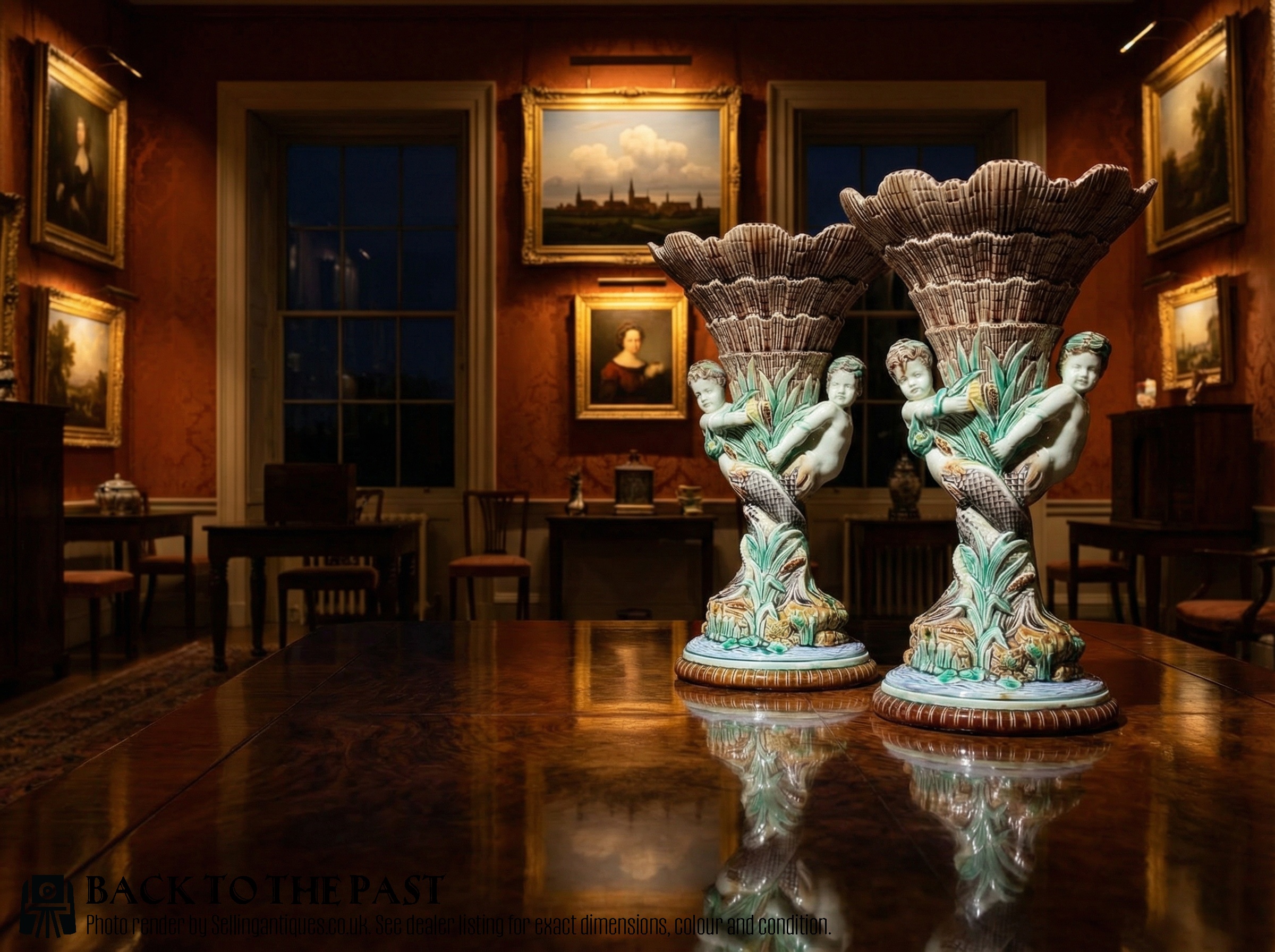
What Sets Them Apart
Scale does most of the work. Eleven titles say large, and the language escalates from there to impressively large, Enormous, Monumental and one vase standing on its own pedestal. Those sit at the top of the range, and the English hall vase is the extreme of it: a floor-standing piece rather than a shelf ornament.
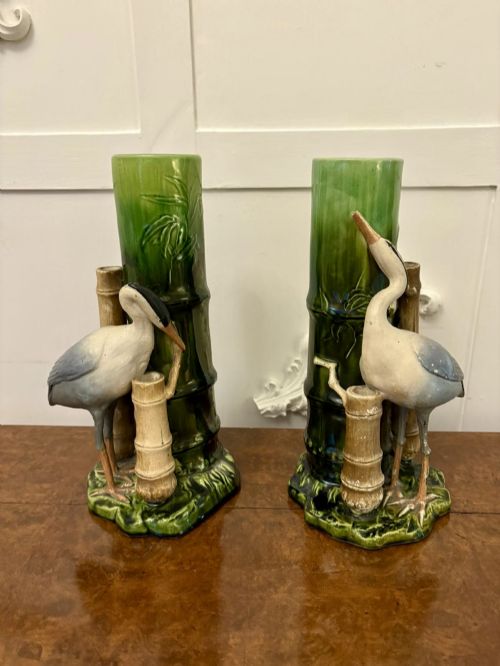
Modelling counts almost as much. Dolphin handles, a serpent cylindrical vase, a pair of snake bottle vases, demon-face handles, a clam and a nautilus shell centrepiece all lift a listing above a plain body with painted decoration. A surviving cover does the same, and only three titles carry one.
The rest is attribution and age. A named pottery in the title sits high, while the unattributed 19th-century Italian vase sits mid-range. Genuinely early tin-glazed Italian and Savona pieces dated to the 17th and 18th centuries sit well above the vases sold as revivals of the same styles, and pairs sit above singles.
Antique Majolica Vases Retail Price Guide 2026
Typical UK retail prices for majolica vases, calculated from the Sellingantiques database of over a million retail prices indexed since 2003. This retail price guide relies exclusively on Sellingantiques data; no external sources or auction records are used, so the figures do not describe the wider market.
The top sale of the last year on Sellingantiques was an enormous English majolica hall vase, circa 1860-70, in May 2026.
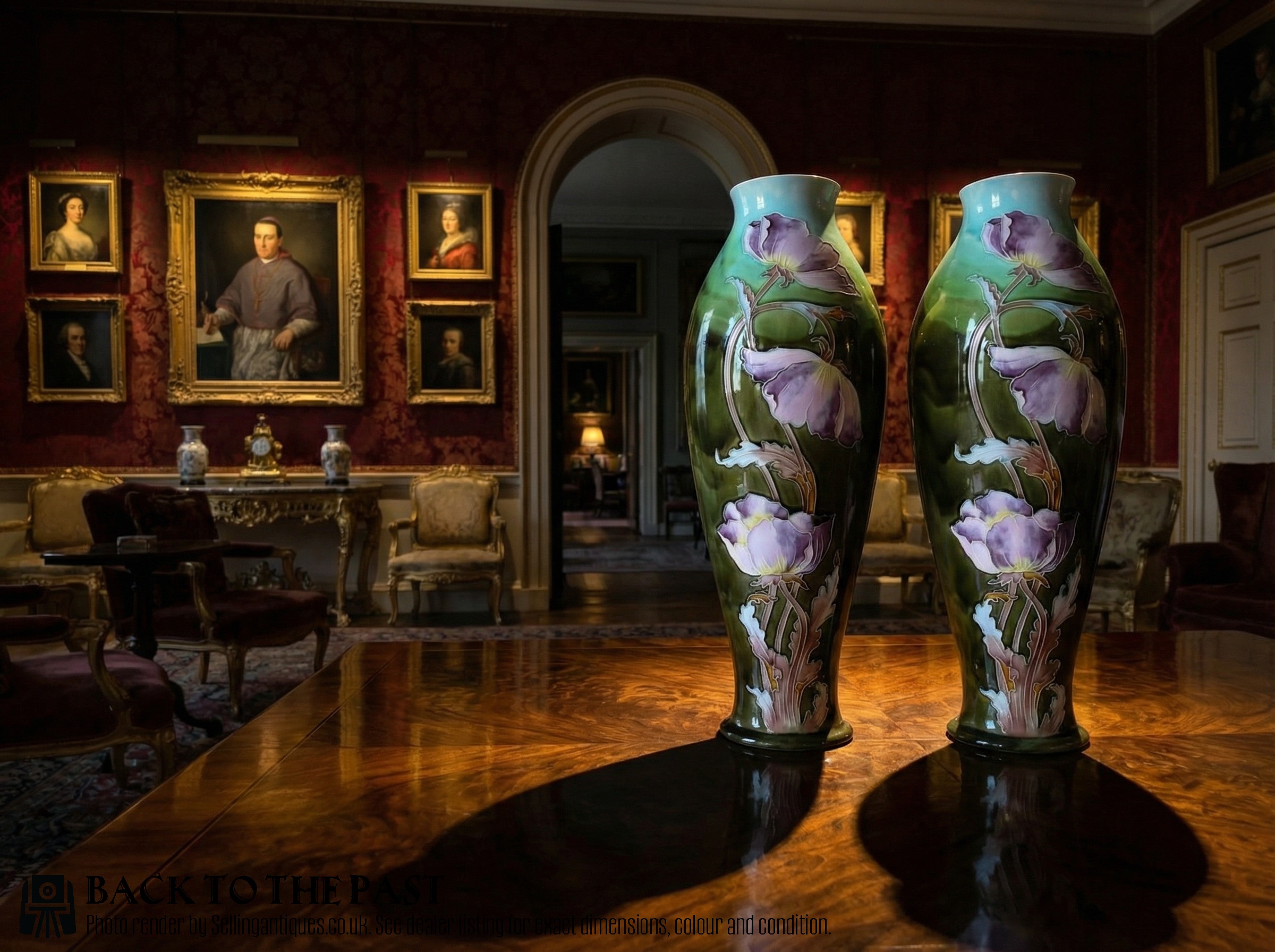
The Antique Majolica Vases Glossary
- Majolica
- The 19th-century colour-glazed earthenware, and the usual spelling across these titles.
- Maiolica
- The Italian tin-glazed painted tradition. It appears in five listings, generally where the vase is being sold as Italian ware, and sometimes for the same kind of object as majolica.
- Faience
- Tin-glazed earthenware. Used in these titles for French pieces and for some Italian and Continental ones.
- Bottle vase
- A narrow-necked, swelling form. Three titles use it, including a pair modelled with snakes.
- Hall vase
- An oversized floor-standing vase rather than a shelf piece. One appears in the archive, an English example.
- Garofano
- Carnation-pattern Italian decoration, named once. Savona, the Ligurian blue-and-white style, turns up in two titles.
Antique Majolica Vases: Frequently Asked Questions
Is majolica the same thing as maiolica?
They overlap in these listings. Maiolica is the Italian tin-glazed painted tradition; majolica is the brightly coloured glazed earthenware revived by British and Continental potteries in the 19th century.
Both spellings are in active use. Majolica is the default, and maiolica appears in five titles, generally where the vase is sold as Italian tin-glazed ware.
Where do most of these vases come from?
Italy leads. The word italian appears in 11 of 35 titles, more than any other origin, and it often sits next to the word large in the same listing.
Victorian and English majolica accounts for around a fifth. Central European potteries in Austria, Bohemia, Czechoslovakia and Germany cover six listings, and France a small handful of faience pairs.
How often do pairs come up?
A quarter of the titles say pair, which is high for a form usually met singly. They include pairs of large vases, snake bottle vases and French faience Art Nouveau vases.
Paired lots appear repeatedly in the upper half of the sampled range.
What does a 19th Century date label actually mean?
It is a broad shelf label rather than a date. Thirteen listings carry it, more than any other period entry, and Victorian is used the same way in three more.
Only 11 listings give a clean year, and those run from 1870 to 1930. Titles sometimes narrow things further than the field does, with c.1860-1880, c.1884 and c.1890 all appearing.
Can a vase be dated earlier than the 19th century?
Five listings carry the 17th or 18th century in the dated field, mostly Italian and Savona pieces described by century alone rather than by year.
Separately, two titles sell themselves as 17th-Century Revival or Renaissance Revival. Early dates and early styles are two different things in this archive.
Which shapes turn up besides the standard vase?
Forms run from bottle and cylindrical vases to lidded vases and a jardiniere sold as a vase, the two functions overlapping.
The one-offs are worth knowing: an early 19th-century pharmacy or apothecary jar, a nautilus shell centrepiece, a tulip vase and a Garofano vase, each appearing once and nowhere else.