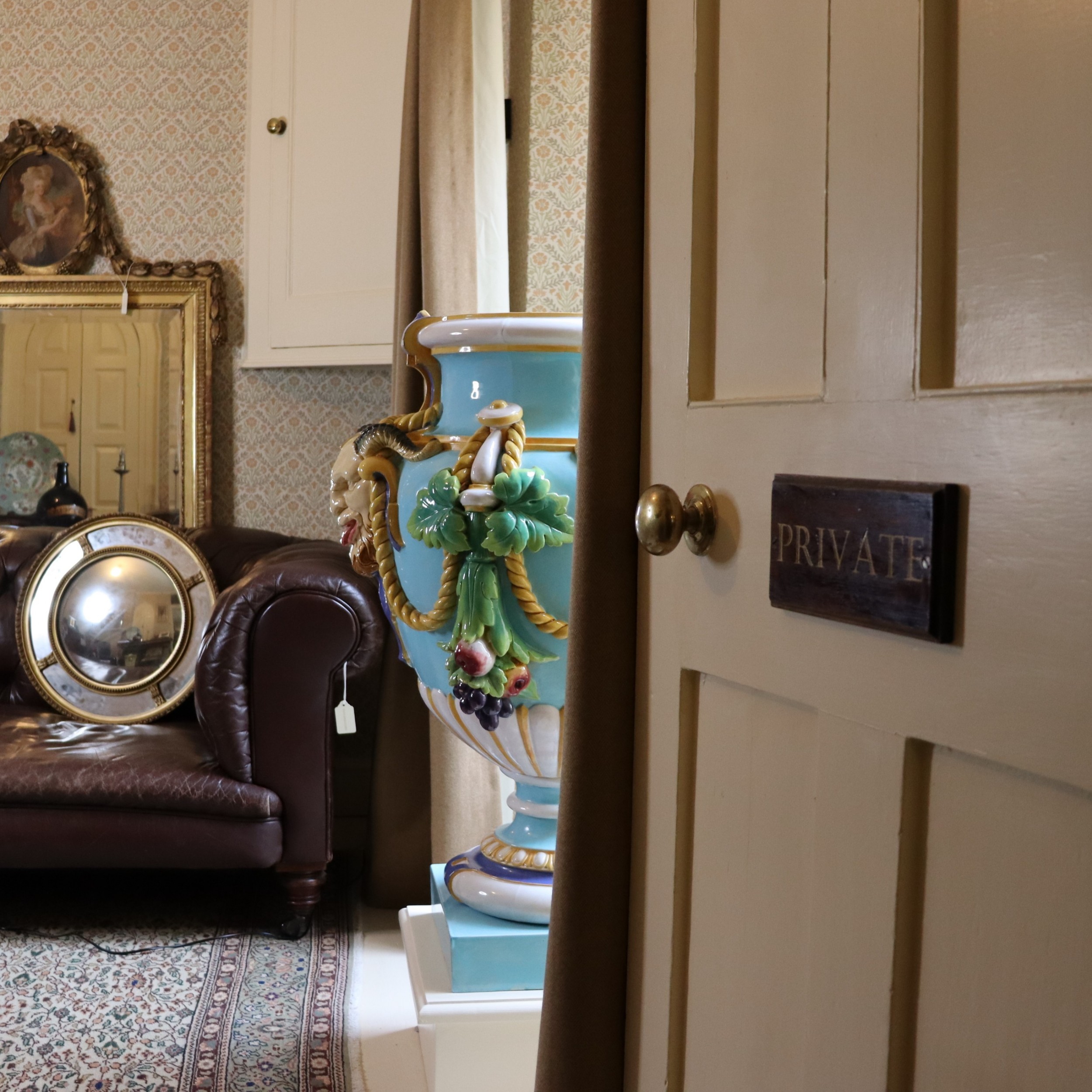
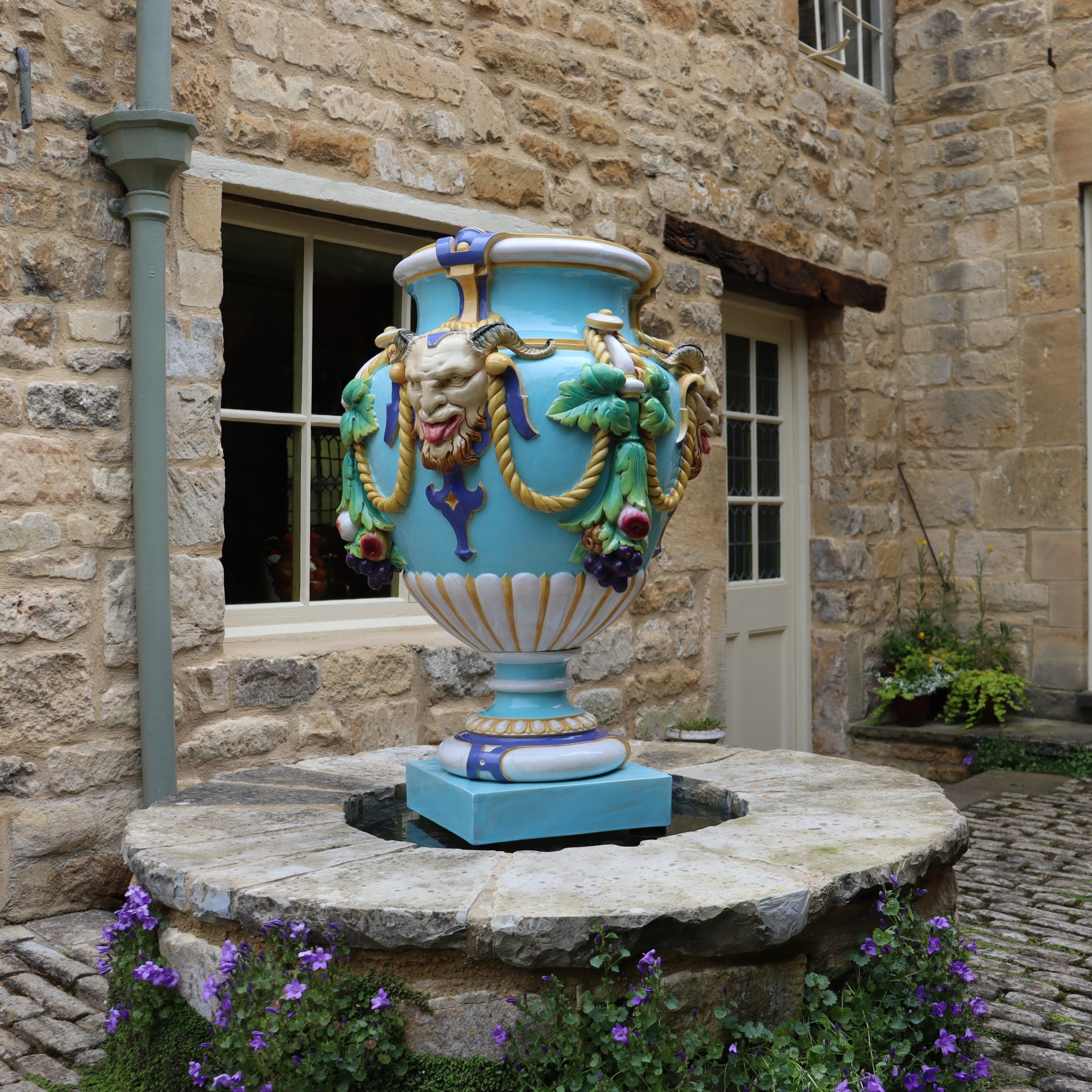
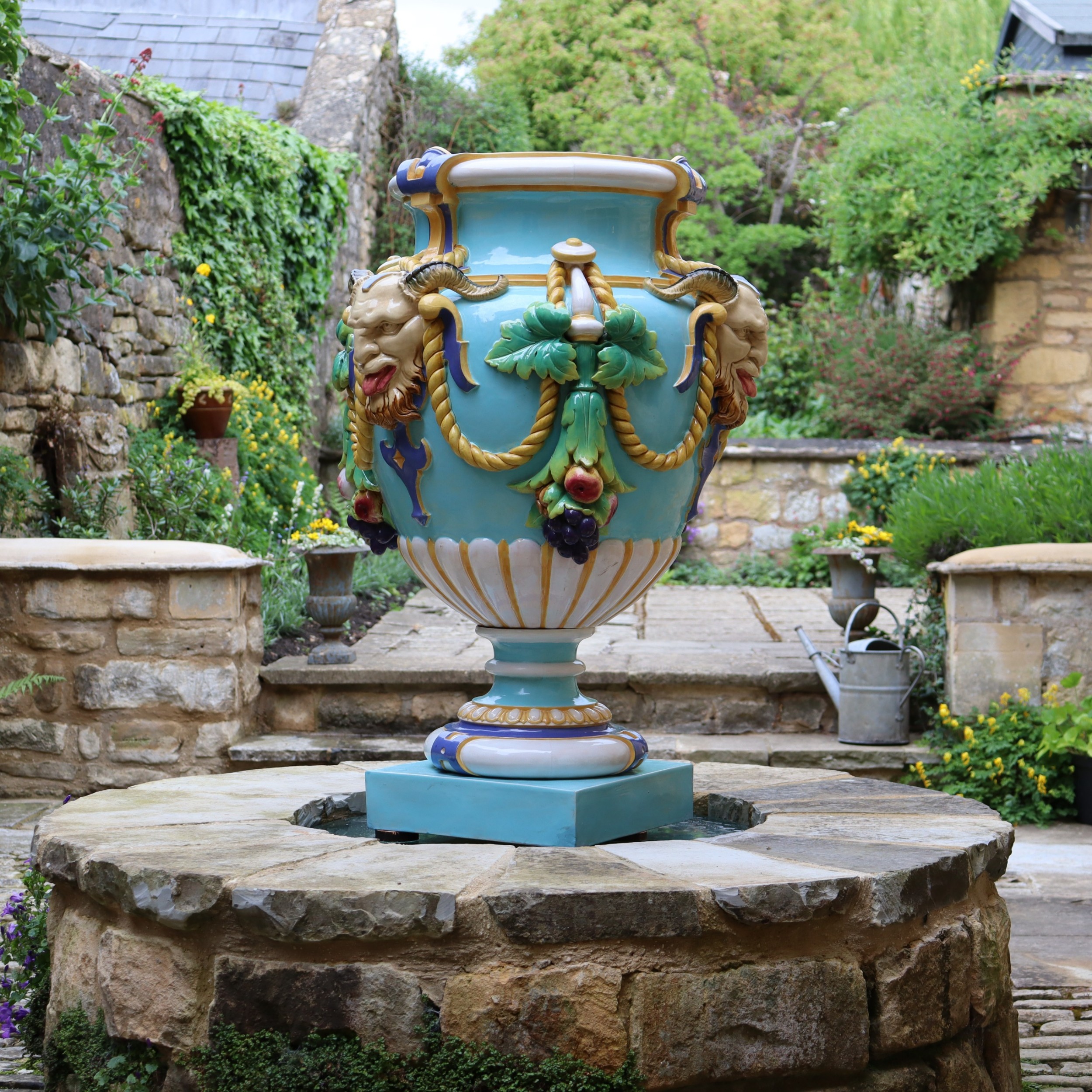
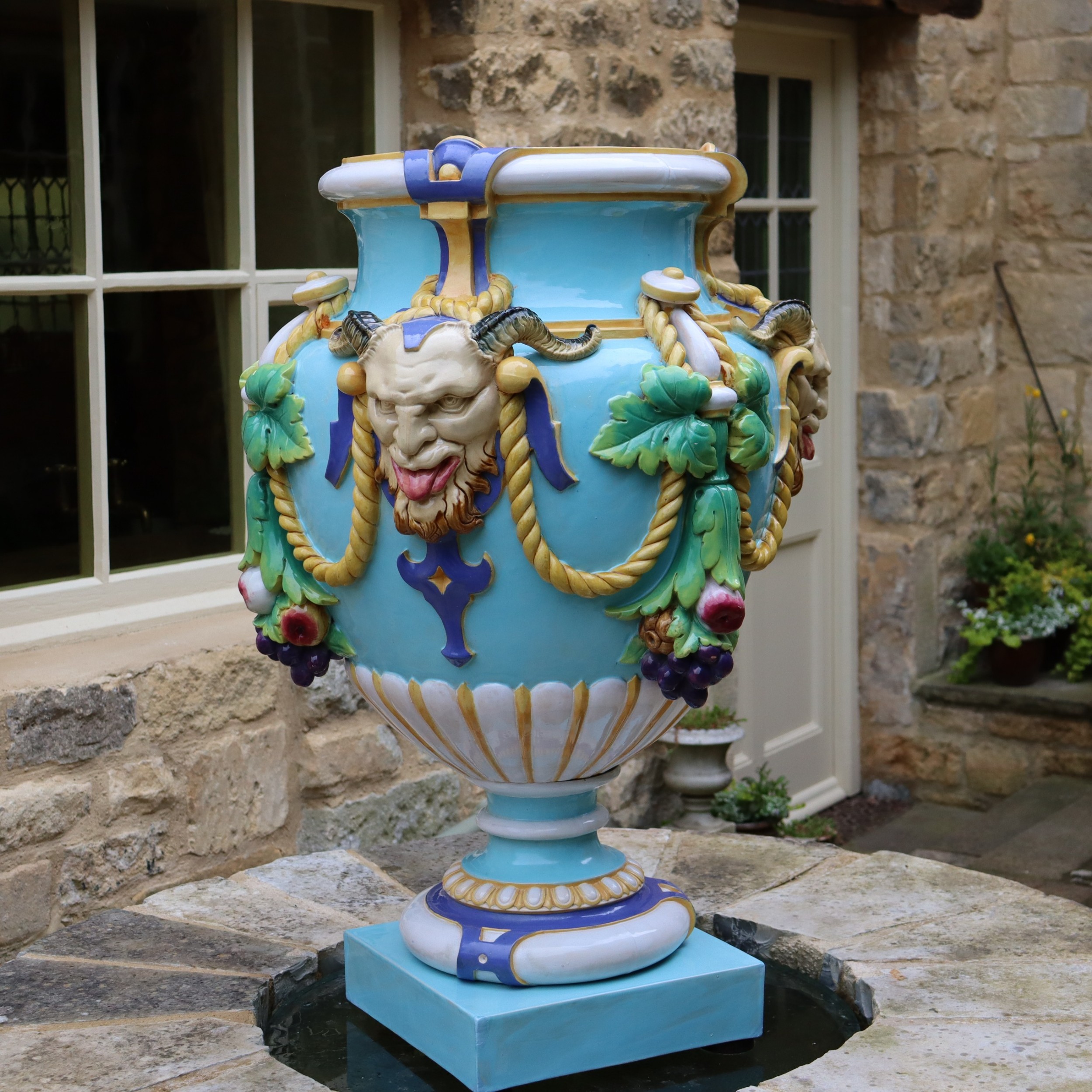
Kendall House Antiques Ltd. has dated this Minton Majolica Bacchus Vase to the 1880s.
94.5cm High.
One of Minton’s most significant achievements in the 19th century was the development and production of ‘Majolica ware’: ceramics decorated with bold, colourful lead glazes inspired by the bright colours of Italian ‘maiolica’ and Renaissance ceramicists Luca Della Robbia and Bernard Palissy.
It was an art form which appealed to the opulent spirit of the Victorian era.
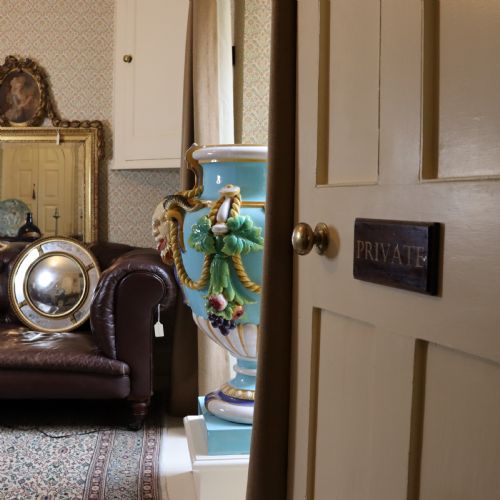
This large and striking vase or wine cooler is a tribute to 'Bacchus' (also known as Dionysus), god of the grape harvest and wine. The design was in production from at least 1865 and was produced in a variety of glazes.

Another example can be found on display in the V&A Museum’s own Café (the first café to be attached to a Museum) the Café designed and decorated by Minton.
Notes on Bacchus (Dionysus) and Satyr (silenus or silenos)
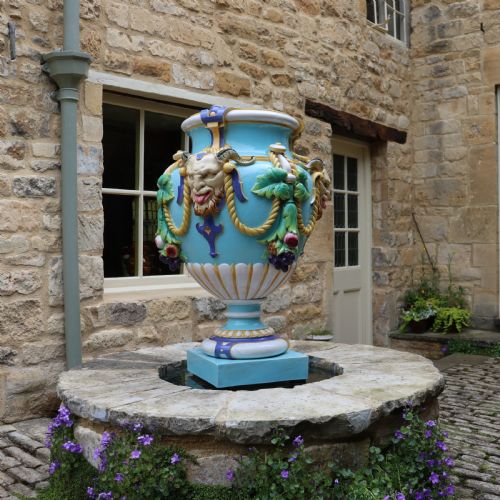
Dionysus is the god of the grape-harvest, winemaking, orchards and fruit, vegetation, fertility, insanity, ritual madness, religious ecstasy, festivity, and theatre in ancient Greek religion and myth, also known as Bacchus by the Greeks.
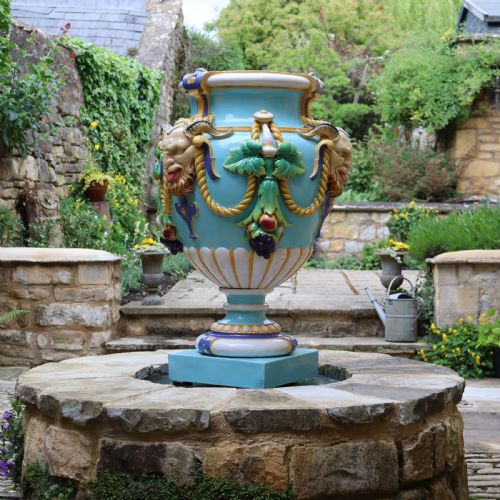
In Greek mythology, a satyr, also known as a silenus or silenos, is a male nature spirit. Satyrs were characterized by their ribaldry and were known as lovers of wine, music, dancing, and women. They were companions of the god Dionysus and were believed to inhabit remote locales, such as woodlands, mountains, and pastures. Since the Renaissance, satyrs have been most often represented with the legs and horns of goats. Representations of satyrs cavorting with nymphs have been common in western art, with many famous artists creating works on the theme.
Kendall House Antiques Ltd. has dated this Minton Majolica Bacchus Vase to the 1880s.
Kendall house antiques a traditional shop in the north cotswold’s market town of chipping campden.
You can view the stock and full dealer information on the Kendall House Antiques Ltd. Profile Page

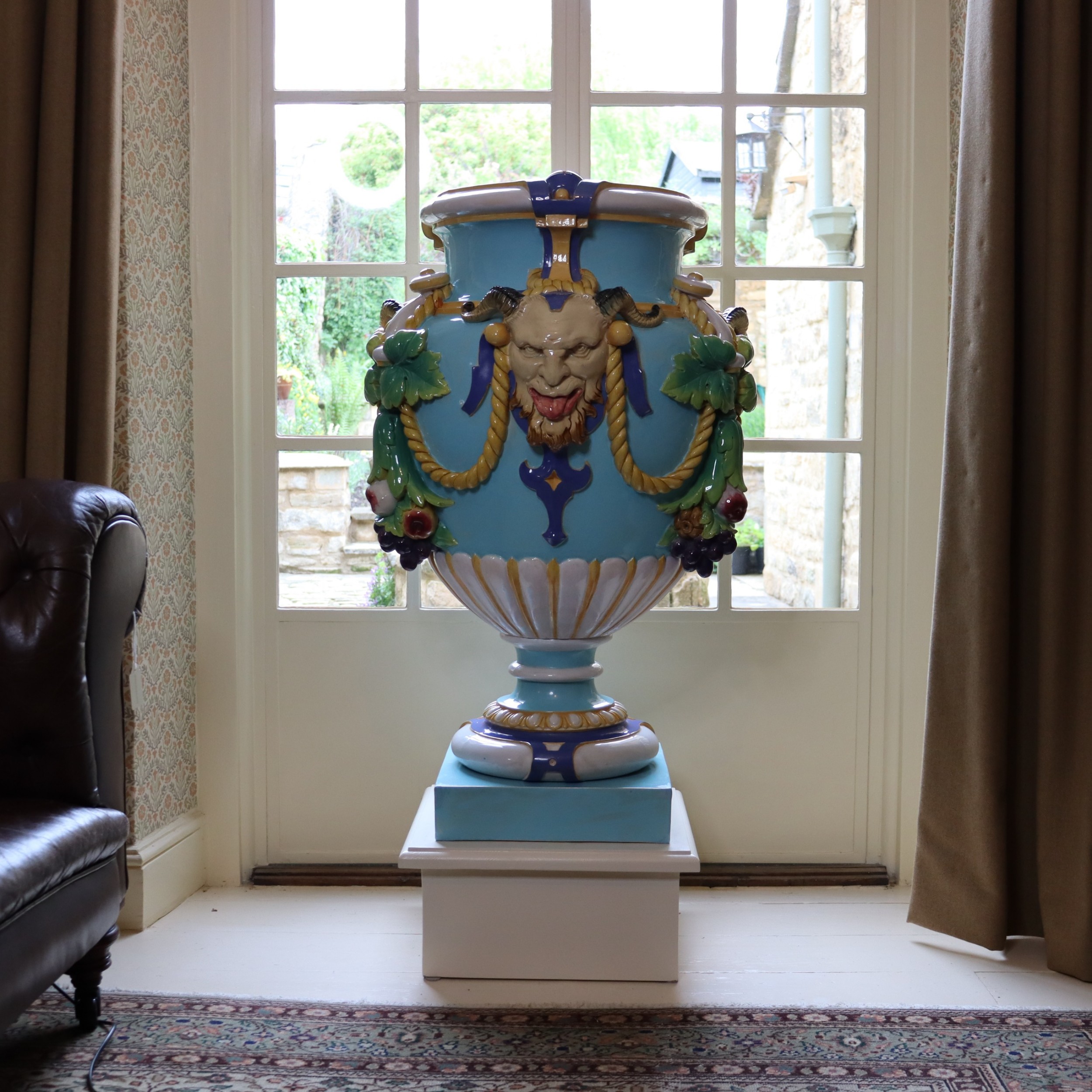
A Monumental Minton Majolica 'Bacchus' Vase Circa 1880