


Antique Minton Majolica
Antique Minton majolica pieces are vibrant glazed earthenware ceramics combining rich Victorian naturalism and classical figures that collectors prize for their sculptural modelling and bold palettes.
Antique Minton Majolica
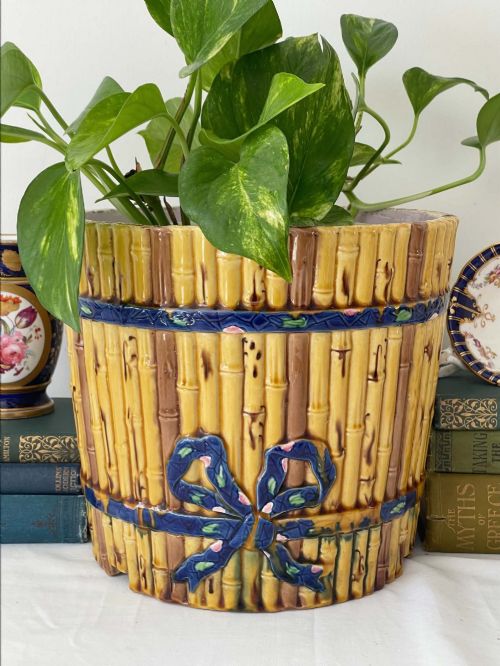
When you search for antique minton majolica, you encounter an array of nineteenth-century decorative forms dominated by large jardinieres, wall brackets, and figural centrepieces. The examples on this page span the Victorian era, bringing together domestic planters and elaborate vases with date marks chiefly from the eighteen-seventies and eighteen-eighties.
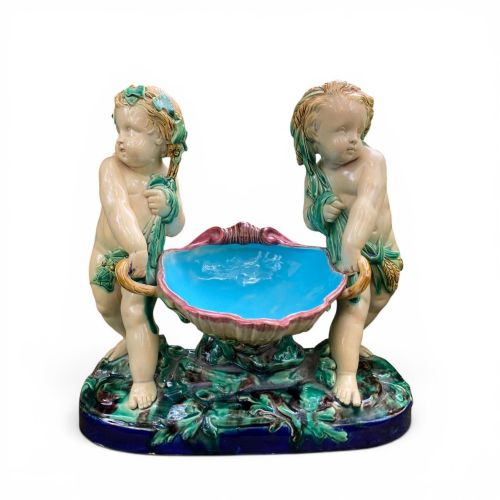
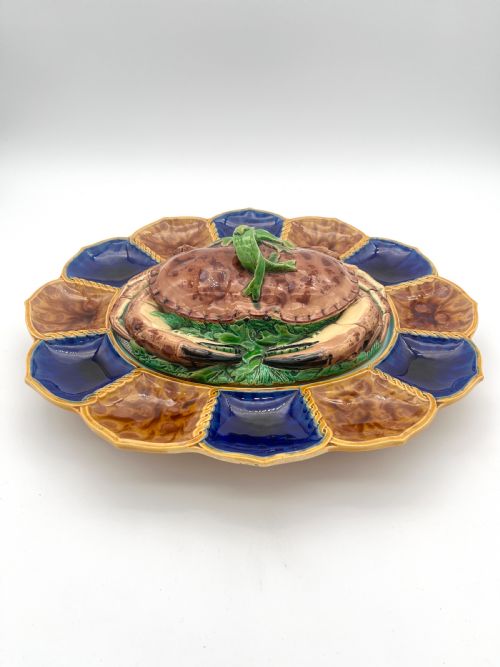
The objects take many shapes, including bamboo-moulded planters, crab tureens, dancing jugs, and compotes supported by cherubs. You also find larger monumental pieces such as the Bacchus vase, alongside oyster plates finished in white and pink glazes.
Victorian naturalism and classical themes heavily influence these designs, running from putti and Bacchanalian cupids through to botanical motifs and figurative works modelled by artists such as Albert Carrier. The overarching aesthetic is rich, colourful, and substantial, intended to catch the eye in reception rooms and conservatories.
How they were made
Potters shaped these objects from earthenware bodies, applying coloured lead glazes directly onto the biscuit fired clay. This majolica glaze technique allowed multiple metallic oxide colours to fuse together in the kiln, producing deep greens, blues, browns, and ochres.
Moulders worked the ceramic into complex sculptural forms, rendering delicate details like cherubs, crab shells, and bamboo stalks with high relief. The pieces were then fired at high temperatures to achieve their characteristic glossy finish.
One crab found contentment in becoming a tureen, holding dinner while glaring perpetually at the dining room.
What varies in quality
Quality rests primarily on the crispness of the modelling and the depth of the glaze application. Pieces where the sculptural details remain sharp and the coloured glazes pool evenly show the superior skill of the factory modellers.
Scale and ambition also set pieces apart, moving from smaller tableware items like oyster plates up to monumental vases, figural compositions, and matched jardinieres with stands. The ambition of the design and the complexity of the figural work define the upper end of the range.
Minton·Albert Carrier
The Antique Minton Majolica Glossary
- Majolica glaze
- A coloured lead glaze applied to earthenware ceramics, developed in the nineteenth century to create vibrant, glossy surfaces. It allows metallic oxides to blend during firing for rich polychrome effects.
- Jardiniere
- An ornamental pot or stand used for holding plants and flowers, often produced in large sizes during the Victorian period. These often sit alongside matching pedestals in interior displays.
- Compote
- A raised dish or bowl used for serving fruit or sweets, frequently supported by figural columns such as cherubs. They function as centrepieces on dining tables.
- Tureen
- A deep covered bowl used for serving food, transformed in majolica ware into naturalistic animal forms like crabs. These combine utilitarian shapes with sculptural modelling.
- Wall bracket
- An architectural shelf mounted to a wall to display decorative objects. Minton versions often feature moulded scrollwork and figural elements.
Antique Minton Majolica: Frequently Asked Questions
How do I date antique minton majolica?
Look for impressed factory ciphers, shape numbers, and year symbols on the underside of the ceramic body. Many pieces also carry specific date marks that pinpoint the exact year of production.
Comparing the recorded styles, from early Victorian naturalism through to later Art Nouveau influences, helps narrow down the decade when precise marks are absent.
Where were these pieces displayed originally?
Victorian households placed large jardinieres, wall brackets, and monumental vases in entrance halls, drawing rooms, and glasshouses. Their bright glazes and botanical motifs suited the taste for indoor greenery.
Tableware items such as compotes, oyster plates, and tureens appeared on dining tables for formal meals, serving both decorative and practical functions.
How do I care for glazed earthenware?
Dust the surface gently with a dry, soft cloth and avoid using harsh chemical cleaners that can damage the lead glaze. Keep the pieces away from direct sunlight to preserve the richness of the coloured oxides.
Handle figural elements with care because protruding parts like cherubs and handles are vulnerable to impact.
What defines the Victorian naturalism style?
This design approach copies organic forms closely, using realistic representations of plants, animals, and marine life. On these ceramics, you see realistic crab shells, bamboo stalks, and oyster plates rendered in naturalistic colours.
The style reflects a nineteenth-century fascination with the natural world, translated into heavy glazed earthenware.