
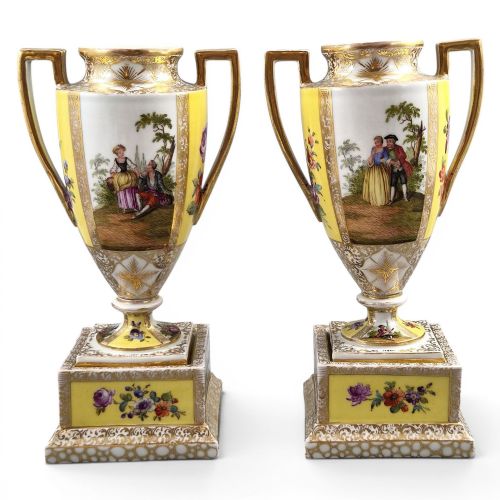
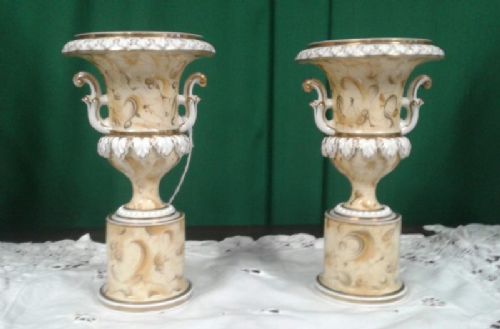


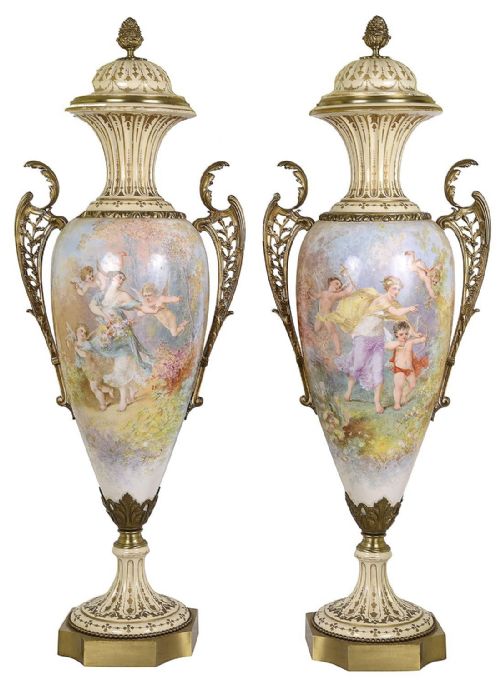


Decorative Ceramic Pedestal Vase
These decorative ceramic pedestal vase examples bring nineteenth-century Victorian elegance to any room through classical forms and intricate porcelain work.
Decorative Ceramic Pedestal Vase
A decorative ceramic pedestal vase combines classical proportions with raised footed bases, drawing on nineteenth-century design vocabulary. These pieces frequently manifest as campana urns, ewers, and lidded vessels produced during the Victorian era.
Most examples originate from major European factories and workshops working in porcelain and earthenware. Buyers encounter forms ranging from monumental majolica figures to delicate blush ivory ewers.
The aesthetic leans heavily towards Neoclassical, Rococo Revival, and Victorian styles. Makers applied elaborate surface treatments including gilding, enamel, and bas-reliefs to elevate these display items.
Judging the quality of these pieces
Quality rests in the crispness of the moulded details and the precision of the hand-painted enamel work. Superior examples exhibit finely rendered figures, clean gilding, and balanced proportions.
The sophistication of the factory mark and the depth of the ceramic body distinguish standard production from exceptional studio output. Intricate relief work and well-preserved gilt surfaces indicate higher craftsmanship.
One nineteenth-century maker named their decorated birds 'Storks', populating otherwise formal classical urns with long-legged avian neighbours.
Helena Wolfsohn Dresden·Ridgeways·Wedgwood·Minton·Hadley's Worcester·Sevres·Vienna Porcelain·Capodimonte·Royal Worcester·Royal Crown Derby
The Decorative Ceramic Pedestal Vase Glossary
- Campana urn
- A classical bell-shaped vessel with a footed pedestal base, widely produced in nineteenth-century porcelain and earthenware. This shape references ancient Roman garden vessels.
- Jasperware
- A type of unglazed stoneware developed with a distinctive coloured ground and contrasting white bas-relief figures. Wedgwood remains the primary manufacturer associated with this technique.
- Ewer
- A large jug with a wide spout and sculpted handle, often designed as a decorative pair alongside pedestal urns. These pieces highlight the sculptural capacity of Victorian ceramics.
- Majolica
- A colourful lead-glazed earthenware known for rich tones and modelled ornamentation. Minton pieces frequently demonstrate this heavy, expressive style.
- Hard-paste porcelain
- A durable ceramic composition fired at very high temperatures, allowing for fine detail and smooth enamel adherence. European factories utilised this material for high-status decorative wares.
Decorative Ceramic Pedestal Vase: Frequently Asked Questions
How do I identify a nineteenth-century pedestal vase?
Examine the base for factory marks, paste consistency, and the style of hand-painting. Nineteenth-century pieces typically display specific Victorian aesthetic traits and period-appropriate potting techniques.
Compare the form to known styles like Neoclassical revival or Aesthetic Movement designs to confirm the era.
Where should I display a ceramic pedestal urn?
These tall vessels suit prominent positions on heavy furniture, console tables, or dedicated pedestals. Their vertical proportions draw the eye upward in a room.
Keep them away from direct sunlight to protect delicate enamel colours and gold leaf highlights over time.
Were these decorative vases used for flowers?
Many examples served purely as decorative mantel or cabinet ornaments rather than functional flower holders. Their intricate handles, narrow necks, and delicate painted surfaces often precluded practical use.
Lidded urns and ewers were designed primarily to display sculptural and pictorial skill.