



Antique Moorcroft Vases
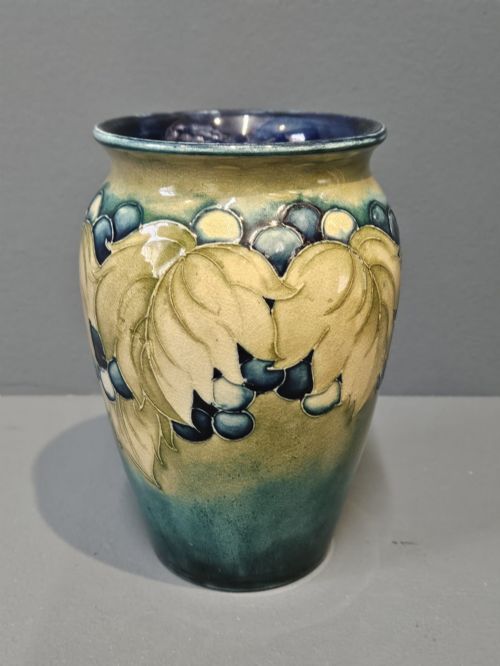
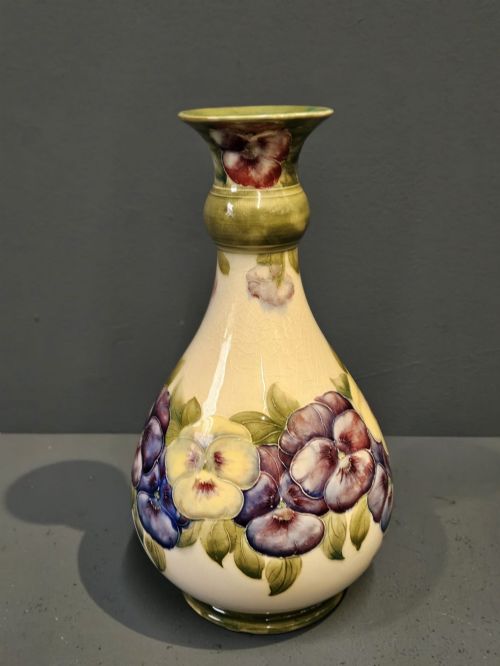
Hand-decorated art pottery vases from the Moorcroft factory in Burslem, made as decorative wares with each floral or fruit design trailed in raised slip before colouring and glazing.
Antique Moorcroft Vases
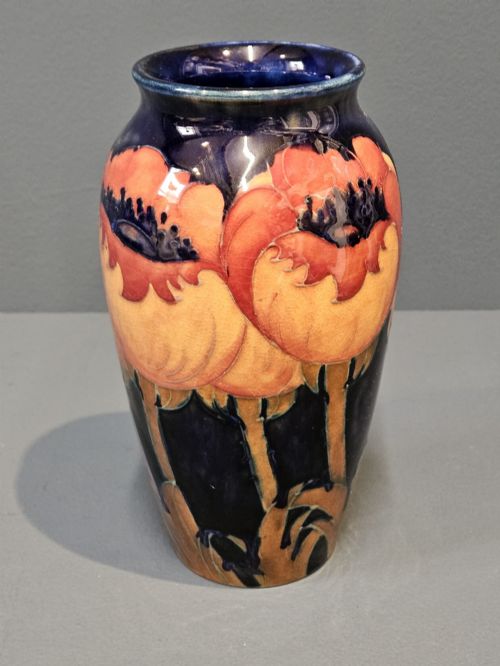
A Moorcroft vase is named by its pattern, and the title usually tells you which one. Pomegranate leads the archive on Sellingantiques, followed by pansy and leaf-and-berries, then orchid, anemone, poppy and cornflower. Shapes run from miniatures and bud vases to tall baluster forms, with the odd twin-handled or pewter-mounted piece.
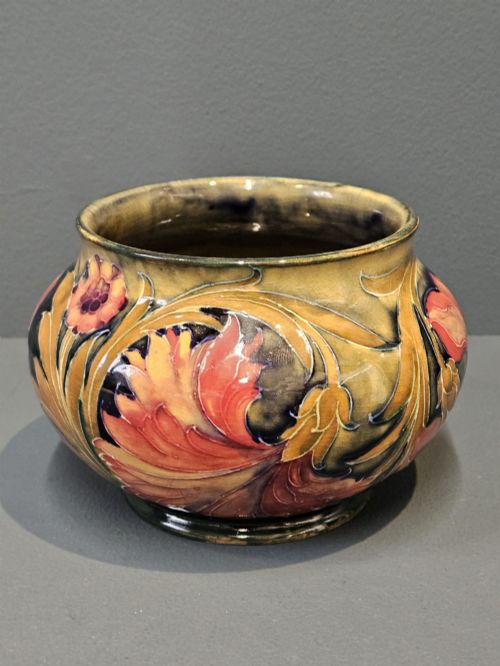
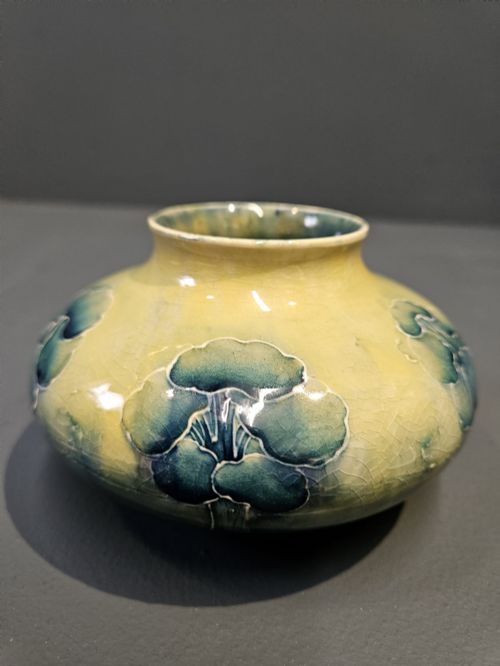
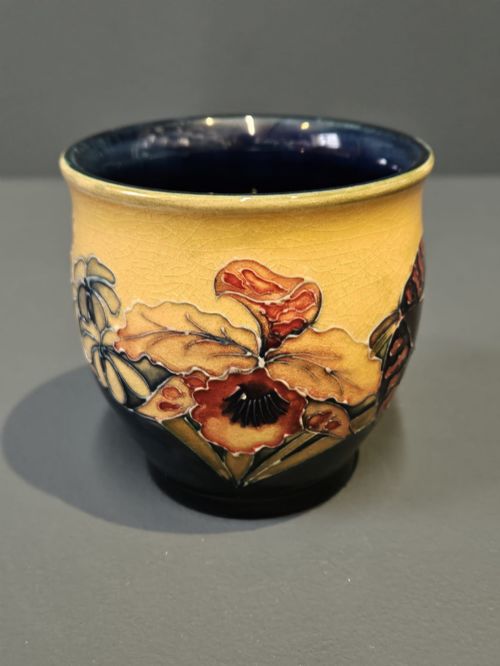
The decoration is tube-lining: raised trails of slip outline every motif by hand, then colour is filled in and a thick glaze goes over the top. That raised line is what you are looking at in the photographs, and it is the method behind every pattern named here.
About half of what turns up is early Burslem tube-lined floral work, pomegranate, pansy, Claremont, Spanish, Moonlit Blue and Hazeldene. Roughly a tenth to a sixth belongs to the Macintyre period, when Moorcroft ran the art pottery department of a larger earthenware firm, and covers Florian, Aurelian and Flamminian wares along with the early panelled poppy and cornflower forms. Later factory florals such as anemone, orchid, clematis, freesia and hibiscus make up around a quarter to a third.
Dates run from 1890 to 1960, and the 1910s dominate with more dated listings than the 1920s and 1930s together. Read those decades as the dealer's estimate rather than a date taken off the mark. Flambé glazing, deep red and streaked, accounts for about one in six.
What Moves The Price
Pattern does most of the work. Cornflower, Claremont, Hazeldene, Eventide, Spanish and Moonlit Blue sit at the top of the sampled range, and fish under a flambé glaze, which turns up only four times in the whole archive, sits higher still. Leaf-and-berries, magnolia, anemone and orchid fill the bottom.
Period pulls in the same direction. Macintyre-period wares and 1910s pieces cluster in the upper half, while 1930s and 1940s factory florals, the clematis and orchid and anemone vases, occupy the lower. The word "early" qualifies nearly a quarter of all titles and it tends to travel with the stronger prices.
After that it comes down to scale and colour. Large and tall forms sit above miniatures and bud vases, and an ochre, celadon, cream or white ground lifts a piece over a more ordinary colourway. Liberty-retailed examples and pewter-mounted forms also gather near the top, though mounts are a curiosity here rather than a norm.
Antique Moorcroft Vases Retail Price Guide 2026
Typical UK retail prices for moorcroft vases, calculated from the Sellingantiques database of over a million retail prices indexed since 2003. This retail price guide relies exclusively on Sellingantiques data; no external sources or auction records are used, so the figures do not describe the wider market.
The 1910s is the decade used most on Sellingantiques for Moorcroft vases, with the 1930s next and the 1920s third.
William Moorcroft
The Antique Moorcroft Vases Glossary
- Tube-lining
- Raised slip outlines trailed by hand around each motif, then filled with colour. The defining Moorcroft decorating method and visible on the surface of every pattern.
- Flambé
- A reduction-fired glaze giving deep red and streaked tones. Named in around fifteen in a hundred titles, sometimes written "flambe glazed".
- Ground
- The background colour behind the pattern. Ochre, blue, cream, white, grey and celadon all appear in titles, and the ground is often named before the pattern.
- Pomegranate
- The most-named pattern in the archive, fruit and foliage on a dark ground. Titles sometimes add "seeded" or "open seeded".
- Claremont
- Toadstool pattern, around twenty-two titles, several of them Liberty-retailed.
- Hazeldene
- Landscape pattern of trees against a horizon. Fewer than a dozen titles, and Liberty is frequently named alongside it.
Antique Moorcroft Vases: Frequently Asked Questions
What is the most common Moorcroft vase pattern?
Pomegranate, by a clear margin. It accounts for more titles than any other pattern on Sellingantiques, fruit and foliage on a dark ground, sometimes described as seeded or open seeded.
Pansy and leaf-and-berries come next, then orchid, anemone, poppy and cornflower, each on a similar footing to one another.
Which period do most of these vases come from?
The 1910s. Of the listings carrying a clean year, the 1910s account for more than the 1920s and 1930s combined.
The dated field as a whole runs from 1890 to 1960, but only two listings fall in the 1890s and exactly one in the 1960s. Those decade buckets are the dealer's estimate rather than a date read off a mark.
Are Macintyre-period Moorcroft vases different?
They are the earliest wares, made while Moorcroft ran the art pottery department of a larger earthenware firm before the independent factory of 1913.
This is where Florian, Aurelian and Flamminian wares sit, along with the early panelled poppy and cornflower forms. Florian is also written Florinware or Florianware in titles.
They make up roughly a tenth to a sixth of what comes to market.
How often do flambé Moorcroft vases appear?
About one in six titles names a flambé glaze, the reduction-fired finish that gives deep red and streaked tones.
They concentrate in the 1920s to 1940s titles. Berries under flambé is a recurring combination, and fish or fishes under flambé appears only four times across the archive, all four near the top of the range.
Do Moorcroft vases come in pairs?
Rarely. Pairs account for a small fraction of titles, so the single vase is what you will normally meet.
Handles are also unusual. Twin-handled turns up in around twenty titles, while a three-handled and a four-handled example each appear once.
Why is Liberty mentioned in some Moorcroft listings?
Moorcroft wares were retailed through Liberty, and around six in a hundred titles carry the association.
Flamminian, Hazeldene, Claremont and Tudor Rose examples come up that way, as do pewter-mounted forms. Liberty-linked pieces tend to cluster in the upper half of the sampled range.