


Delftware Pottery Vase
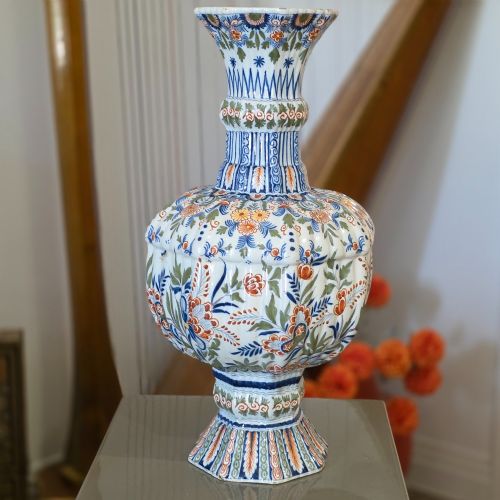
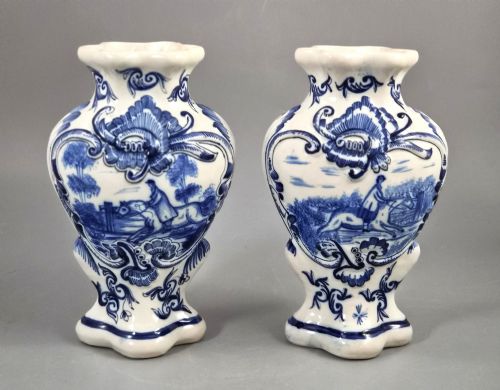
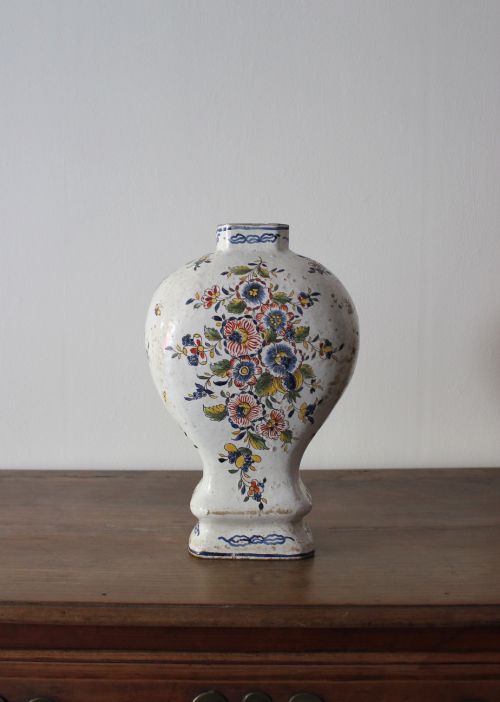
These delftware pottery vase examples bring historic tin-glazed earthenware into modern interiors with hand-painted blue and white or polychrome decoration.
Delftware Pottery Vase
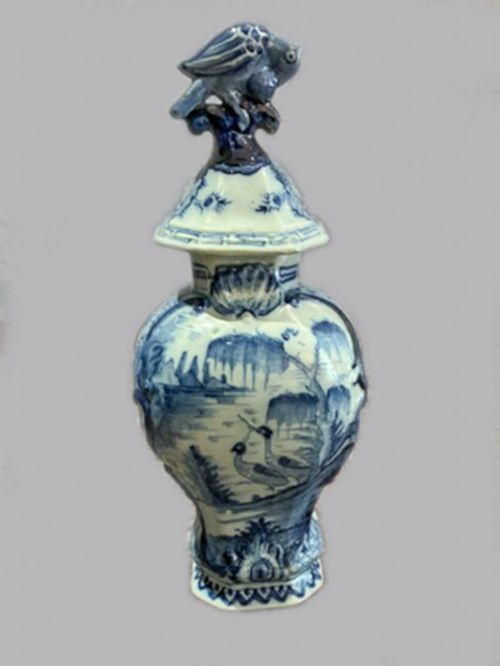
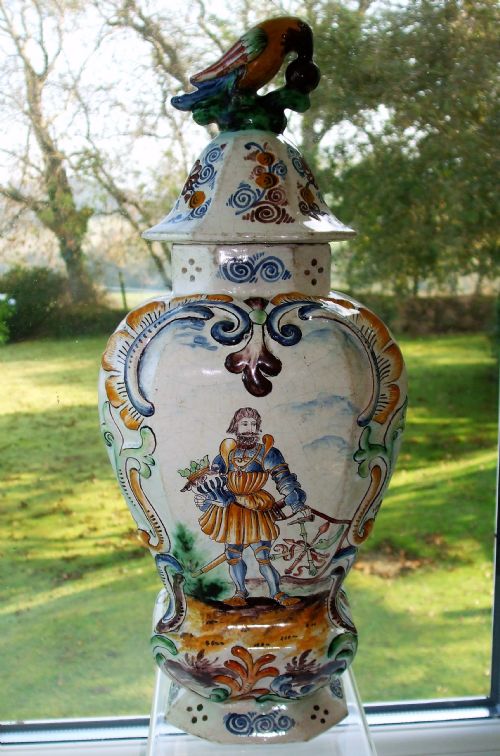
When searching for a delftware pottery vase, collectors encounter diverse forms ranging from baluster jars and lidded vessels to beaker vases, bottles, and occasional table lamps. The selection spans the seventeenth, eighteenth, and nineteenth centuries, with notable pieces originating from English potteries like Lambeth, French workshops such as Desvres, and traditional Dutch centres.
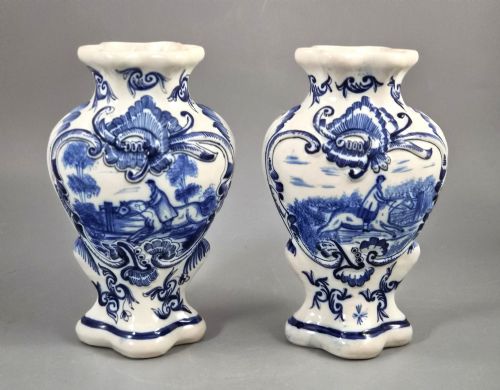
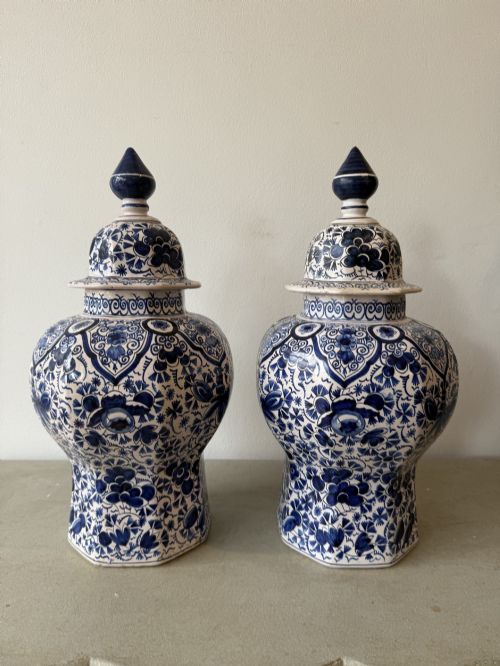
The inventory on this page leans heavily towards eighteenth-century Dutch delftware alongside nineteenth-century French faience interpretations and English production. Buyers will find both single display items and matched pairs, including lidded urns and decorated jars utilised across different periods.
Forms vary from robust seventeenth-century Chinoiserie baluster vases depicting birds and flowers to slender eighteenth-century vessels and later nineteenth-century revival styles. Many historic examples show adaptation for modern domestic lighting as wired table lamps while retaining their original ceramic bodies.
How they were made
Makers shaped these earthenware bodies on the potter's wheel before applying an opaque white tin glaze that created a smooth surface for painting. Artisans then brushed cobalt pigment or polychrome colours directly onto the unfired or raw glaze, absorbing the metallic oxides before a final kiln firing.
Potters utilised specialised tin glaze formulations alongside cobalt pigment to achieve the characteristic deep blue decoration associated with traditional Dutch and English delftware. Later nineteenth-century French faience pieces from makers like Fourmaintraux-Courquin at Desvres followed similar ceramic traditions using earthenware and tin glaze.
Listings span earthenware materials, tin glaze, and cobalt pigment across the seventeenth, eighteenth, and nineteenth centuries.
What varies in quality
The distinction between ordinary production and superior work rests on the crispness of the hand-painted brushwork and the depth of the cobalt pigment beneath the tin glaze. Early seventeenth-century Chinoiserie pieces with detailed depictions of birds and flowers display a painterly fluidity that sets them apart from later, more mechanical factory output.
Proportion, potting weight, and the retention of original matching lids heavily influence the standing of any given vase. Examples produced by documented factories such as Drie Klokken or specific makers command attention through their careful adherence to Dutch Baroque or Rococo Revival design principles.
Fourmaintraux-Courquin·Drie Klokken Factory·Lambeth Pottery·Louis Victor
The Delftware Pottery Vase Glossary
- Tin-Glazed Earthenware
- Pottery covered with a white opaque glaze containing tin oxide, providing a smooth canvas for hand-painted cobalt pigment. This technique defines the core aesthetic of European delftware and faience.
- Chinoiserie
- European artistic styles reflecting Chinese motifs, heavily utilised on seventeenth and eighteenth-century delftware vases. Artisans painted imaginative landscapes, flowers, and birds in blue and white.
- Baluster
- A vase shape with a rounded lower body that tapers upward to a narrow neck, frequently seen in seventeenth and eighteenth-century Dutch production. This form balances visual weight with decorative presence.
- Polychrome
- Decoration employing multiple colours rather than traditional blue and white pigment alone. Eighteenth-century Dutch and English examples often incorporate varied hues alongside tin glaze.
- Faience
- European tin-glazed earthenware produced in France, mirroring the aesthetic traditions of Dutch delftware. Nineteenth-century French workshops at Desvres specialised in this technique.
Delftware Pottery Vase: Frequently Asked Questions
How do I date an old delftware vase?
Dating relies on stylistic shifts, painting quality, and the composition of the earthenware body. Seventeenth-century examples often display dynamic Chinoiserie motifs, while eighteenth-century pieces favour balanced baluster or lidded jar forms.
Changes in glaze texture and the vibrancy of the cobalt pigment also provide clues. Reference marks or factory origins, when present, help narrow down the period.
Are these vases waterproof?
Most historic delftware pieces are porous earthenware beneath their tin glaze and can be susceptible to moisture seepage over extended periods. It is safer to use them dry for display rather than holding water for fresh flowers.
For converted table lamps or delicate eighteenth-century vessels, keeping them dry preserves the interior ceramic body and protects the historic glaze.
What is the difference between delft and faience?
Both terms describe tin-glazed earthenware, but regional naming conventions generally apply. Delftware specifically refers to pottery made in the Netherlands and England, while faience describes equivalent wares made in France.
Despite the geographic distinction, the core materials and painting techniques remain very similar. French makers often produced revival pieces inspired by earlier Dutch designs.
How should I display a delftware vase?
Position these pieces away from direct heat sources and strong sunlight to protect the tin glaze and hand-painted pigments. Placing them on stable surfaces ensures their safety, particularly for taller baluster or lidded forms.
Pairs look striking when matched on a mantelpiece or sideboard, while converted lamp bases function effectively in traditional living spaces.