


Antique Delftware Urn
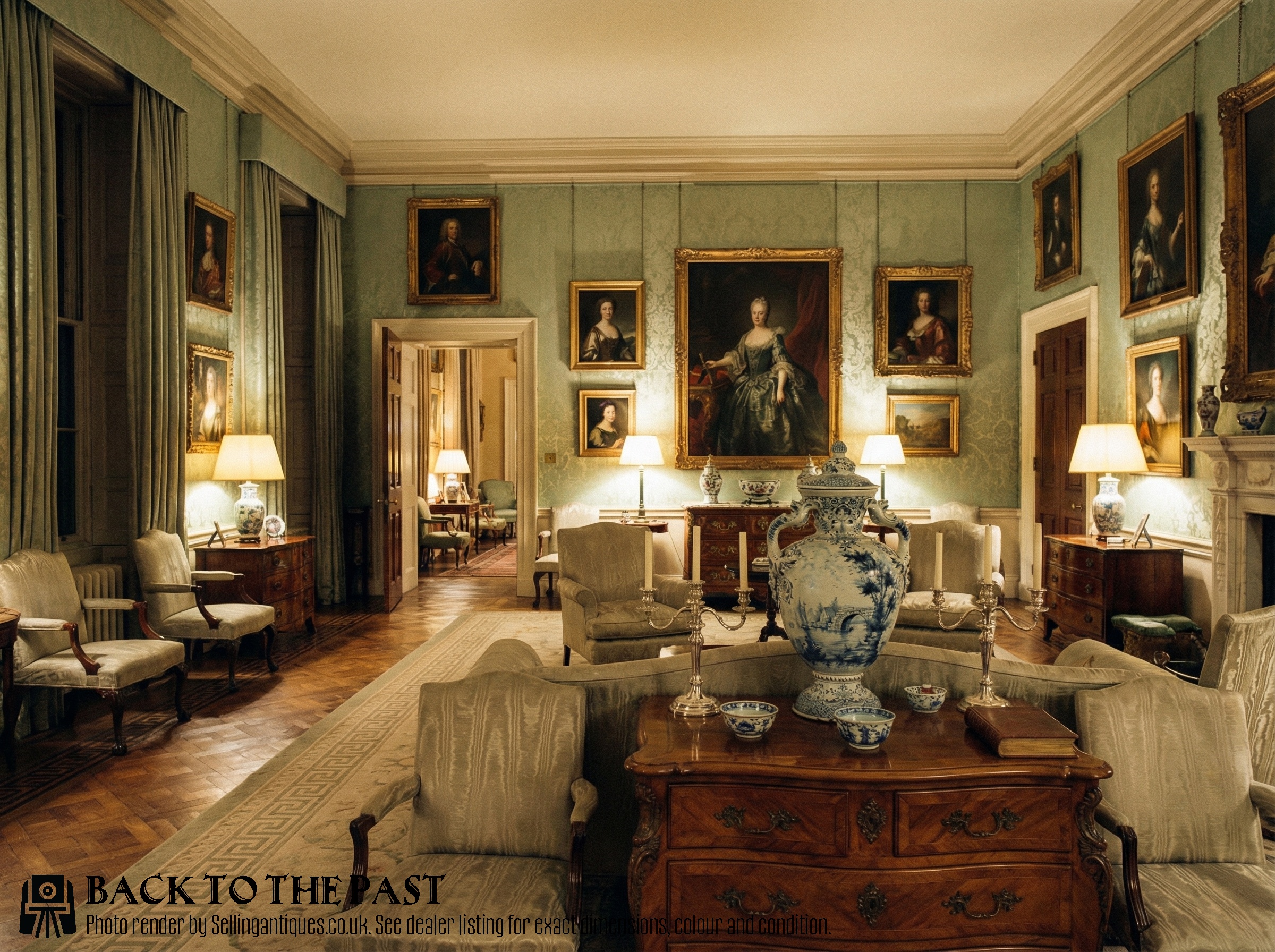
An antique delftware urn brings tin-glazed earthenware and tin glaze into a room, offering blue and white or polychrome palettes.
Antique Delftware Urn
An antique delftware urn is a ceramic vessel shaped for display, storage, or lighting, appearing across the seventeenth, eighteenth, and nineteenth centuries.
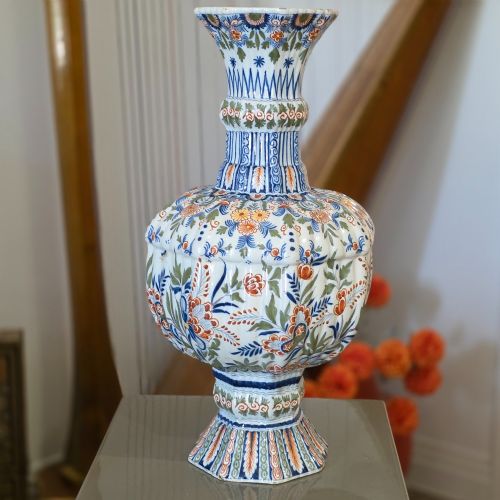
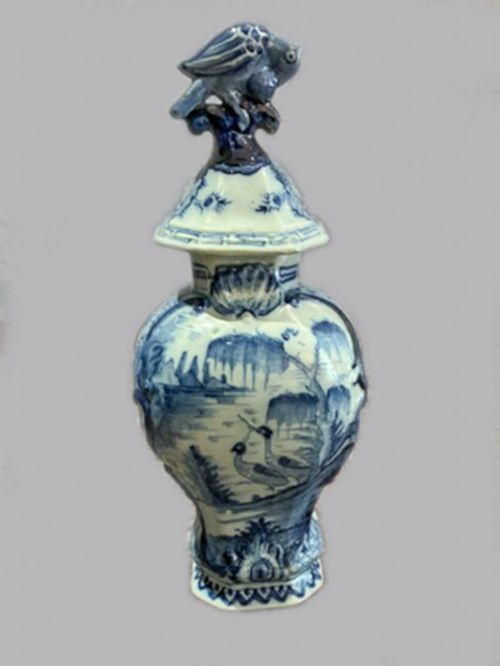
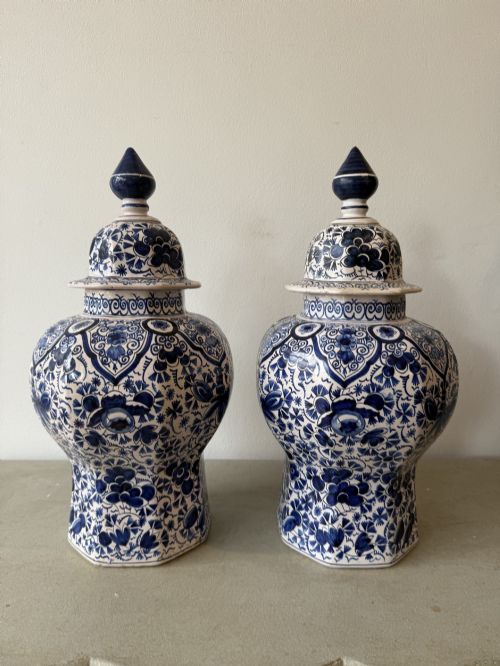
Buyers encounter forms such as large garden urns, lidded vases, baluster vases, and converted table lamps with gilt bases.
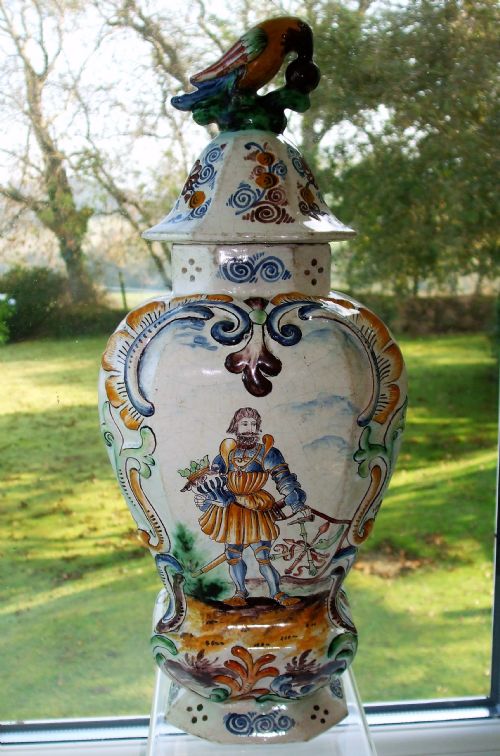
Origins span Dutch production, French faience from Desvres, and Georgian Chinoiserie styles featuring birds, flowers, and ribbed beaker designs.
How they were made
Potters shaped earthenware bodies which were then coated in an opaque white tin glaze before being painted by hand.
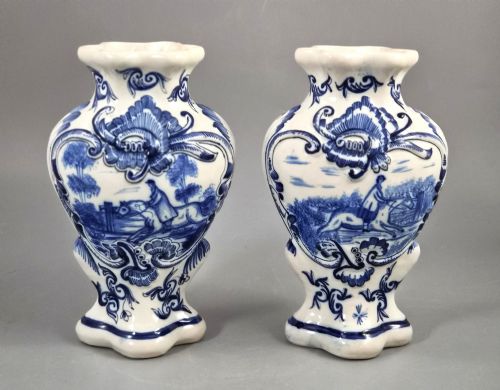
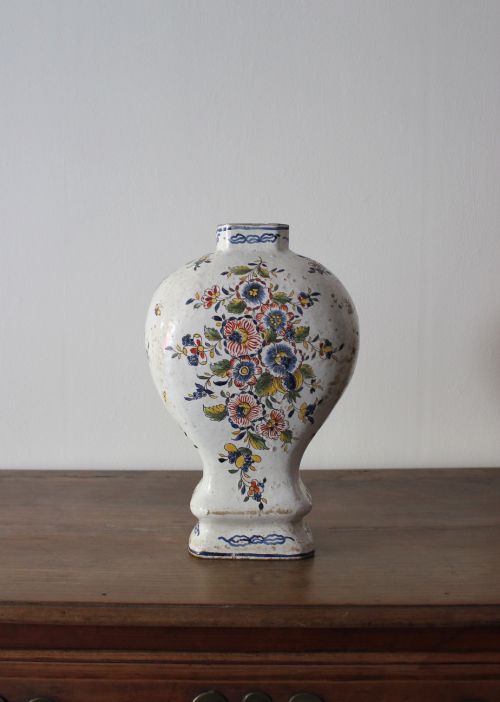
Decoration relied on cobalt blue pigments alongside manganese and polychrome enamels, often drawing on Chinoiserie motifs and Dutch Baroque styles.
The selection includes French faience alongside Dutch delftware vases, jars, and lamps.
What varies in quality
Quality rests on the crispness of the hand-painted brushwork, particularly in detailed bird and floral scenes across blue and white surfaces.
The weight, proportion, and presence of matching lids or covers distinguish standard production from substantial garden urns and large pairs.
Fourmaintraux Courquin
The Antique Delftware Urn Glossary
- Tin-Glazed Earthenware
- Earthenware pottery covered with a glaze containing tin oxide to produce a white, opaque surface. This forms the base for painting in blue or polychrome.
- Faience
- European tin-glazed earthenware, most commonly associated with French production. Makers like those at Desvres utilised this technique to create decorative vases.
- Chinoiserie
- European artistic styles reflecting Chinese motifs and motifs inspired by East Asian art. These designs frequently appear on Dutch delft tobacco jars and vases.
- Baluster
- A vase form with a rounded body that tapers toward the base and neck. Many eighteenth-century examples utilise this substantial silhouette.
Antique Delftware Urn: Frequently Asked Questions
How are antique delftware urns cleaned?
Dust surfaces gently with a dry, soft cloth to protect the tin glaze.
Avoid liquid cleaners and immersion in water, as old earthenware and glazes remain porous and sensitive.
Can converted lamp urns be rewired?
Many examples are adapted as table lamps while retaining their original ceramic bodies.
Qualified electricians can update wiring safely without altering the historic earthenware structure.
How do I spot eighteenth-century pieces?
Examine the weight of the earthenware and the softness of the cobalt blue hand-painted brushwork.
Look for traditional forms such as baluster lidded jars, tobacco jars, and garden planters.