
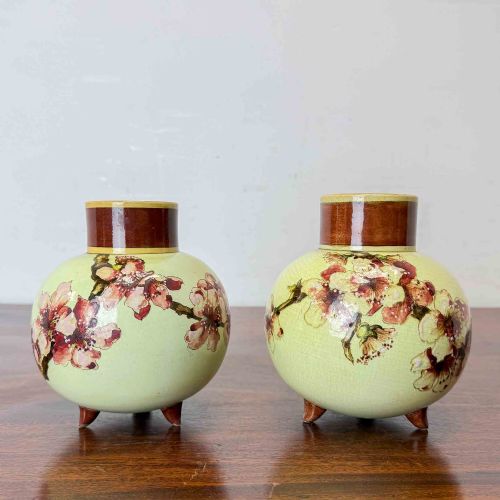


Faience Floral Vase
A faience floral vase brings tin-glazed earthenware and pottery into a room, offering botanical decoration across centuries of ceramic tradition.
Faience Floral Vase
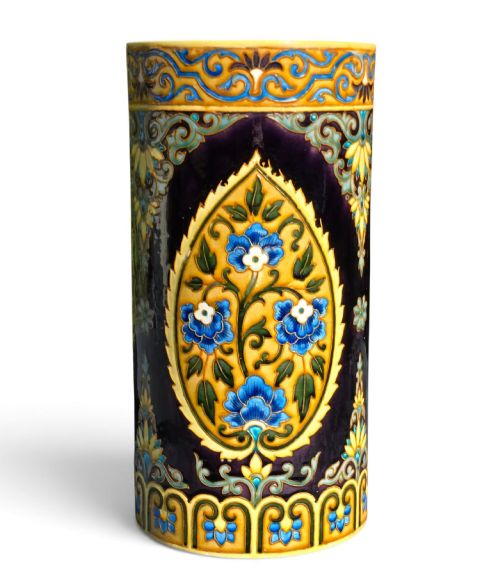
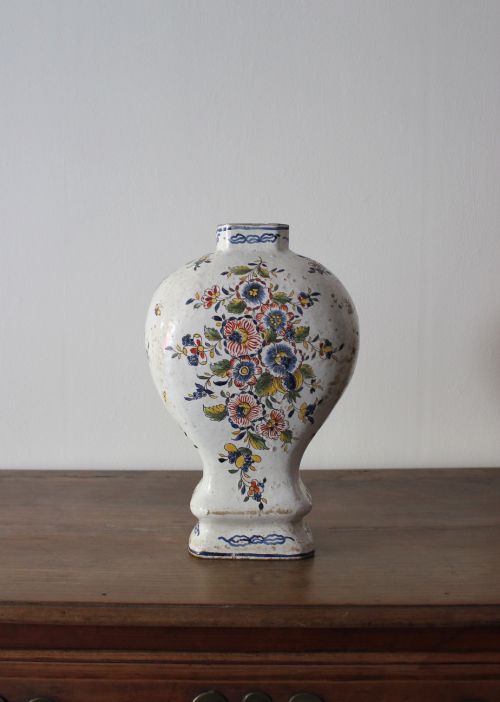
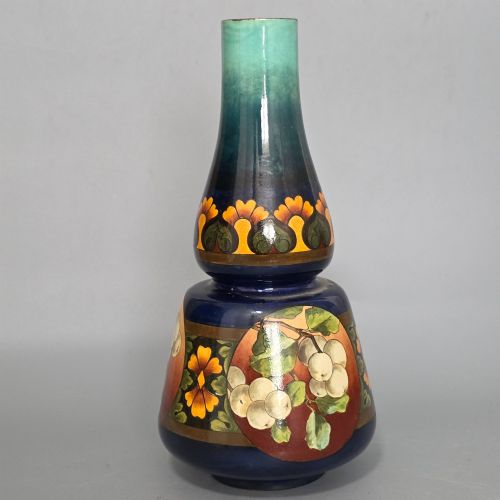
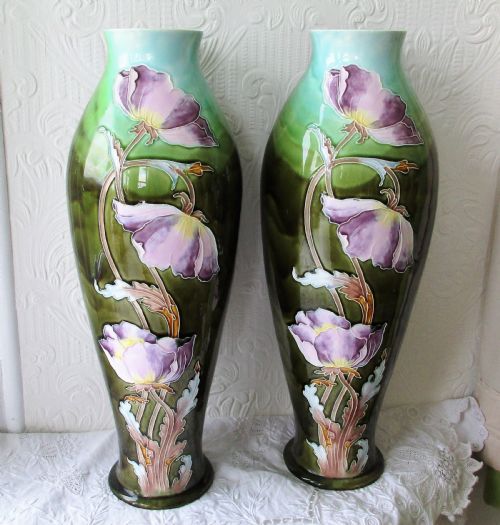
A faience floral vase encompasses tin-glazed earthenware vessels adorned with botanical motifs, spanning periods from the sixteenth century to the twentieth century. These objects include standard vases, larger umbrella or stick stands, and paired vessels reflecting diverse regional origins.
The versions most commonly met on this page range from eighteenth-century Delft examples to nineteenth-century British output, notably from Doulton Lambeth and Burmantofts. Art Nouveau and Arts and Crafts styles sit alongside Dutch and Italian forms, showing how makers reinterpreted historical aesthetics.
How they were made
Makers shaped ceramic and earthenware bodies before applying tin glaze and specialised finishes such as Slaters Patent techniques. The combination of absorbent clay and opaque glaze created smooth surfaces suitable for detailed floral painting.
Firing processes fixed the pigments and glazes onto the pottery, resulting in durable vessels decorated with floral and cherry blossom designs. Artisans employed hand-thrown and moulded methods to achieve both standard vase shapes and large umbrella stands.
Listings feature earthenware, ceramic, and tin glaze materials spanning the sixteenth to the twentieth centuries.
What varies in quality
Execution of the botanical painting separates standard production from finer output, with hand-painted floral details showing greater nuance than simpler applied decoration. The clarity of the tin glaze across complex surfaces also marks out superior pieces.
The ambition of the form influences overall quality, distinguishing straightforward earthenware vessels from large umbrella stands or works involving specialised techniques like Slaters Patent. Attribution to recognised makers adds distinct character to the ceramic body.
Théodore Deck·Alice Euphemia Thatcher·Doulton Lambeth·Burmantofts Faience·Doulton Burslem
The Faience Floral Vase Glossary
- Faience
- Tin-glazed earthenware produced in various European centres. This pottery type provides an opaque white or coloured background for painted decoration.
- Tin Glaze
- A ceramic glaze made opaque by the addition of tin oxide. It allows vibrant colours to be painted directly onto the unfired or biscuit-fired surface.
- Earthenware
- Porous pottery fired at lower temperatures than stoneware or porcelain. It forms the structural body for the majority of these glazed vessels.
- Arts and Crafts
- A design movement valuing handcraftsmanship and traditional materials. Pieces from this style often feature stylised floral ornament.
- Art Nouveau
- A style characterised by organic, fluid lines and botanical motifs. In ceramics, it manifests in asymmetrical vase forms and naturalistic plant designs.
Faience Floral Vase: Frequently Asked Questions
What is faience pottery?
Faience is tin-glazed earthenware, known for its smooth, opaque surface that accepts painted decoration well. It forms the base for a wide variety of historical vases and decorative vessels.
Potters across Europe utilised this technique for centuries, producing everything from simple jars to large umbrella stands adorned with floral motifs.
How old are these vases?
The pieces span multiple centuries, with examples recorded from the sixteenth, eighteenth, and nineteenth centuries, alongside early twentieth-century creations. Each period brings distinct stylistic traits, from Dutch Delft to Art Nouveau.
Dating relies on stylistic markers, materials, and documented maker output rather than a single uniform era of production.
How do I clean a glazed vase?
Cleaning requires gentle dusting with a soft cloth to protect the tin glaze and painted surfaces. Avoid harsh abrasives or soaking, as porous earthenware beneath the glaze can absorb moisture.
Displaying the vessel away from direct sunlight and extreme temperature fluctuations helps preserve the integrity of the ceramic body and its finish.
What styles are common here?
Styles include eighteenth-century Dutch, Italian Maiolica, Iznik Revival, Aesthetic Movement, Arts and Crafts, and Art Nouveau. These movements reflect how different generations reinterpreted historical ceramic traditions.
Floral decoration unites these varied aesthetics, appearing across diverse forms from standard vases to large stands.