

Pair of French Vases
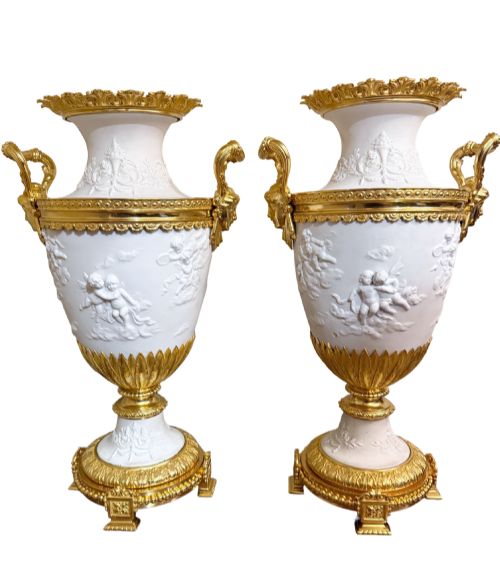
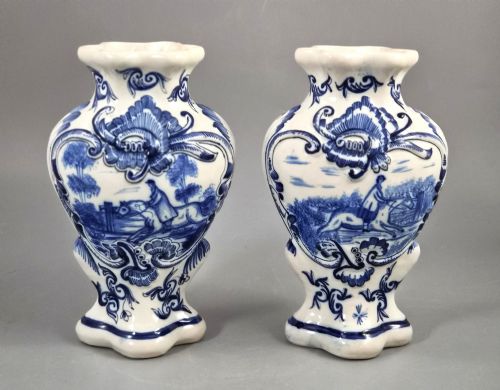
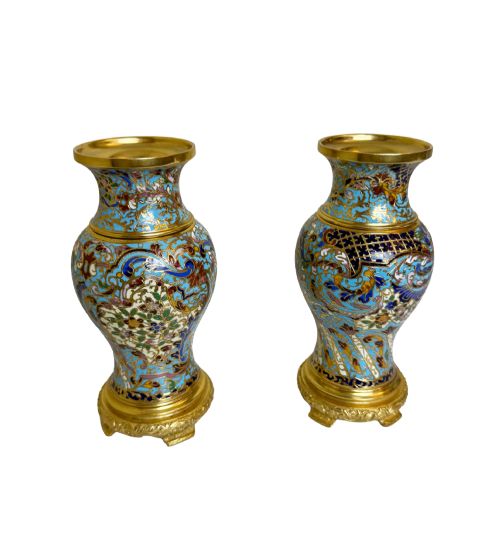
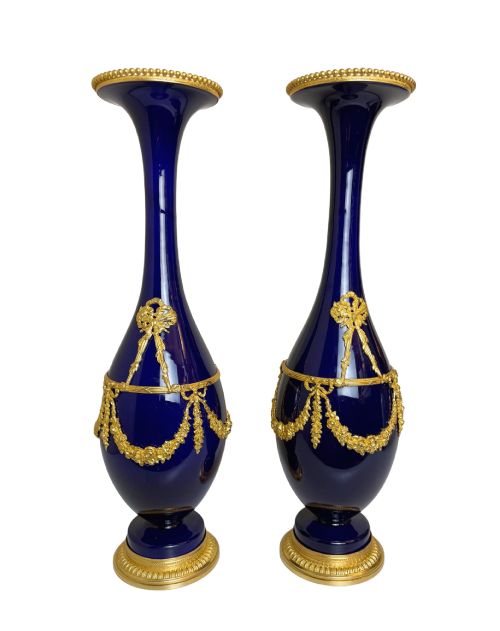
Pair of french vases offer symmetrical decorative presence for mantelpieces, consoles and architectural interiors through paired bronze, porcelain and marble forms.
Pair of French Vases
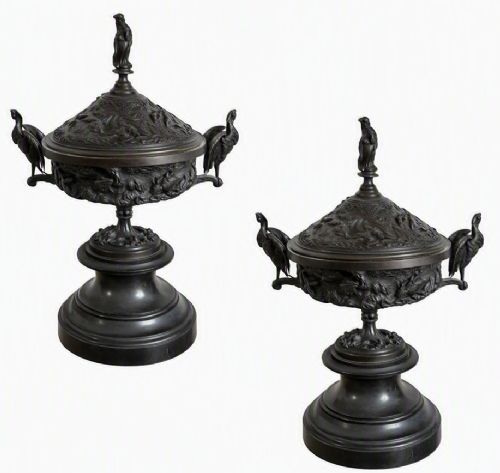
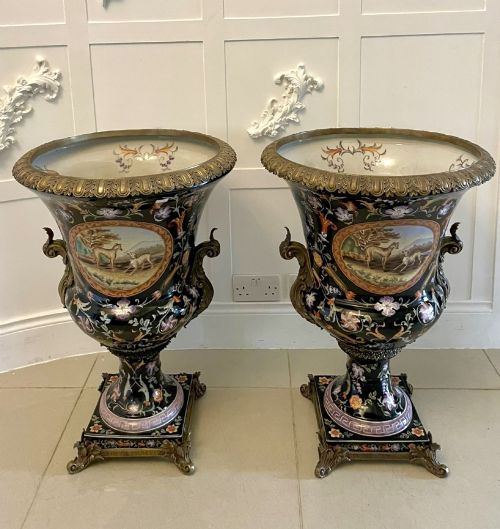
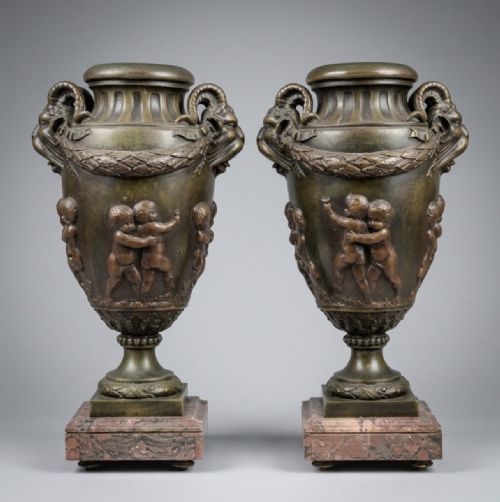
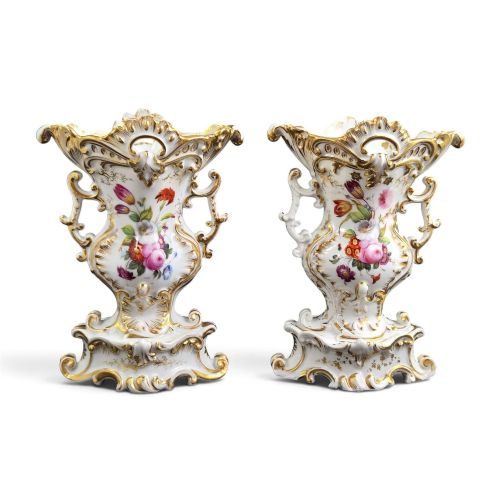
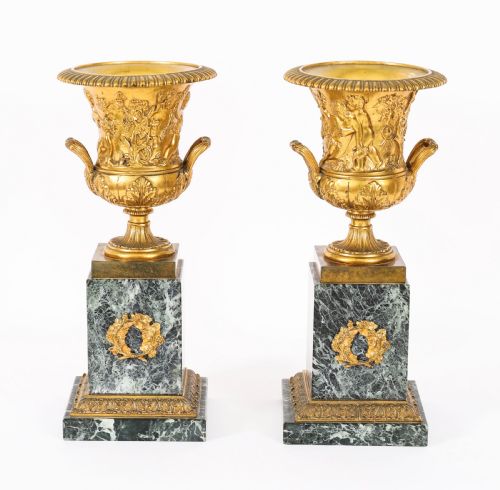
A pair of french vases comprises matched vessels designed for symmetrical placement, frequently taking the form of campana urns, baluster shapes, or lidded cassolettes. These objects emerge predominantly from the nineteenth century, drawing on neoclassical, empire, and rococo revival vocabulary.
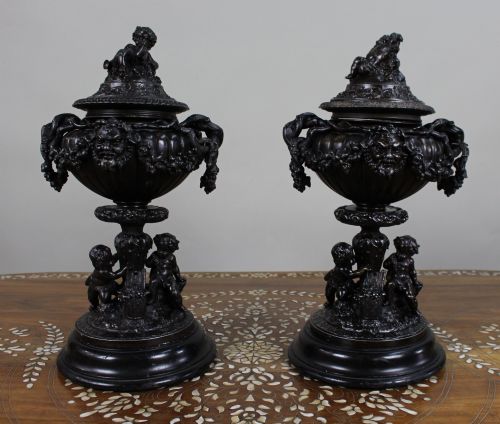
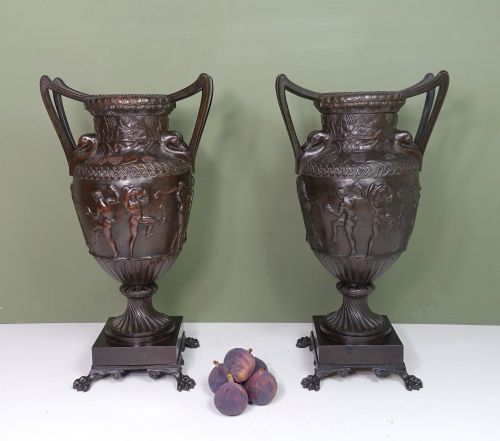
Makers and manufacturers ranging from Sevres and Paris porcelain studios to regional potteries produced these items in porcelain, faience, and glass. Bronze and spelter versions often incorporate classical figures, putti, and bacchic masks reflecting Grand Tour influences.
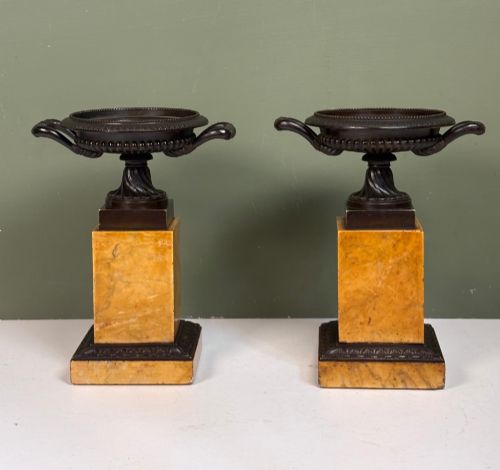
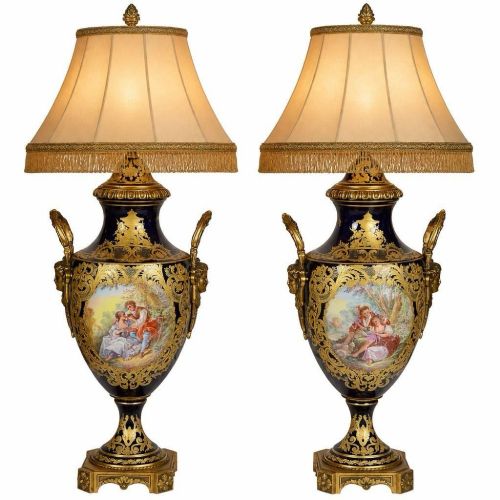
Many examples incorporate metal mounts, utilising brass, ormolu, or gilt bronze to secure marble, onyx, or crystal bodies. Table lamp conversions also appear among surviving pairs, adapting ornamental vessels for domestic lighting.
How they were made
Foundries cast bronze, spelter, and ormolu mounts using traditional techniques, frequently finishing the metal surfaces with gilding, patination, or champleve enamel work. Marble and onyx bases were turned and polished to support heavier metal and porcelain bodies.
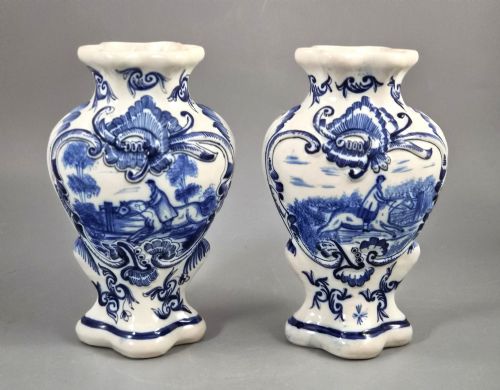
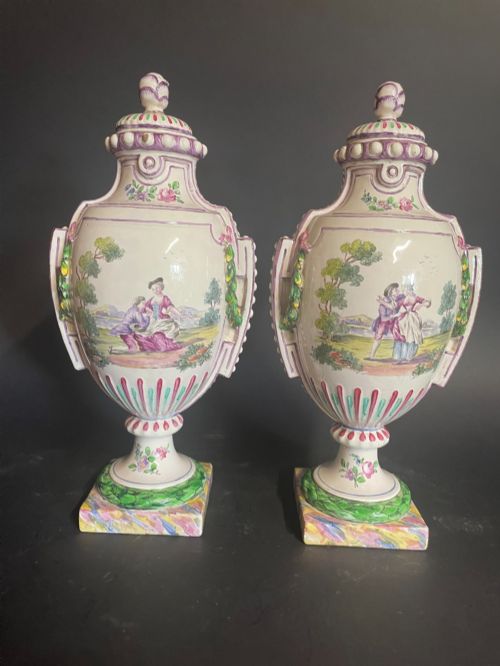
Potteries shaped ceramic vessels by hand or mould, applying cobalt blue, white, or coloured glazes alongside hand-painted pastoral or floral scenes before firing. Glassmakers utilised opaline, crystal, and cased techniques to achieve specific tonal effects.
What varies in quality
The precision of the metal chasing and the crispness of cast details in ormolu and bronze mounts distinguish standard decorative items from exhibition pieces. Hand-painted ceramic reserves display varying degrees of artistic skill, brushwork control, and compositional depth.
The selection of raw materials influences overall merit, with dense natural marbles, heavy gilt bronze, and unblemished porcelain bodies commanding higher regard than lighter spelter or moulded glass equivalents.
Jules Moigniez·Jacob Petit·Fourmaintraux Courquin·Samson Paris
The Pair of French Vases Glossary
- Ormolu
- Gilt bronze mounted on decorative objects, created by applying a mercury-gilding process to cast bronze. This decorative technique adds a bright golden surface to metal mounts.
- Cassolette
- A decorative vase or urn with a reversible lid that functions either as an open vase or an incense burner. These vessels often feature stone bodies with metal trims.
- Spelter
- An alloy of zinc and lead cast into decorative shapes and patinated to resemble bronze. It served as a more affordable alternative to true bronze in nineteenth-century manufacturing.
- Campana
- An inverted bell-shaped vessel derived from classical antiquity. This form appears frequently in bronze and iron garden or mantel urns.
- Faience
- Tin-glazed earthenware produced in France and Europe. It provides an opaque white ground for painted blue and polychrome designs.
Pair of French Vases: Frequently Asked Questions
What periods do pair of french vases usually date from?
Most surviving examples date from the nineteenth century, spanning neoclassical, empire, and late Victorian revivals. Production methods and aesthetic choices reflect the dominant historicism of those decades.
Pieces from the early twentieth century also occur, particularly art nouveau and art pottery variations. Dating relies upon material composition, casting style, and factory marks where present.
How were pair of french vases used historically?
These vessels functioned primarily as ornamental items for formal reception rooms, mantelpieces, and cabinet displays. Symmetrical placement created balanced focal points within classical interior schemes.
Certain lidded forms and cassolettes doubled as containers for potpourri or incense. Others have been subsequently adapted as table lamps while retaining their original ceramic and bronze bodies.
How do you distinguish ormolu from brass mounts?
Ormolu consists of cast bronze treated with gold leaf or mercury gilding, resulting in a deep, warm metallic lustre. Brass mounts typically display a paler, more uniform yellow tone.
Close inspection of the surface reveals the hand-chased detail characteristic of quality ormolu work. Brass components are generally simpler and show evidence of modern machining rather than historical hand-finishing.
What is the difference between porcelain and faience?
Porcelain is a hard, vitrified ceramic fired at high temperatures, offering a smooth, non-porous white body. Faience utilises a tin glaze over an earthenware base, yielding an opaque surface suited to painted decoration.
Porcelain items often display fine gilding and classical scenes in the Sevres manner. Faience pieces lean toward rustic or folk styles, including blue and white desvres wares.