




Bleu Celeste Porcelain Urns
Bleu celeste porcelain urns bring striking sky-blue ground colours and gilt bronze mounts into nineteenth-century interiors.
Bleu Celeste Porcelain Urns
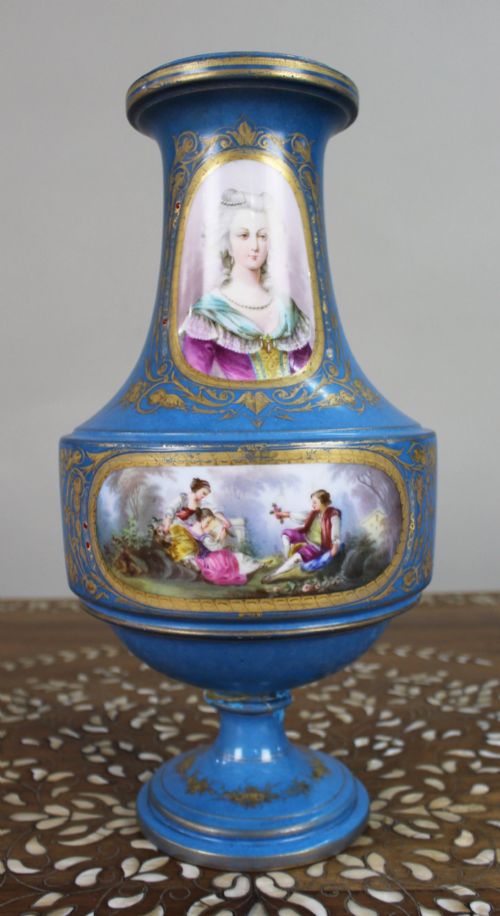
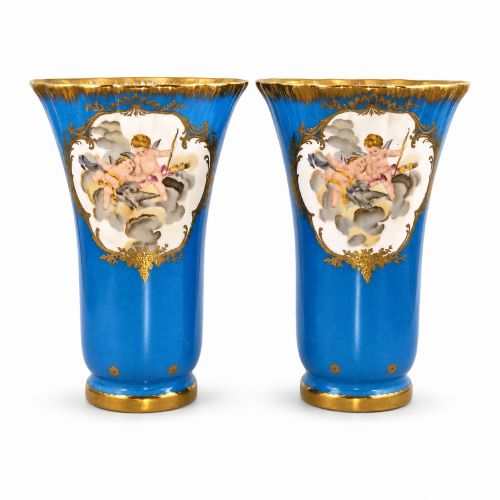
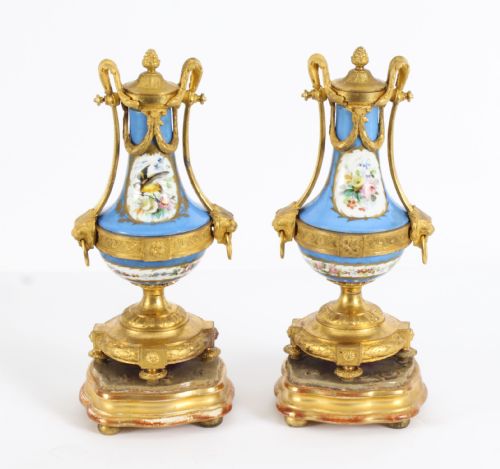
Bleu celeste porcelain urns sit firmly within the nineteenth-century French taste for decorative vessels styled after Sèvres. You will frequently encounter pairs of lidded urns and vases mounted in ormolu, gilt bronze, or gilt metal alongside table lamps and comports.
The aesthetic draws heavily from French Rococo Revival and classical nineteenth-century design idioms. Makers such as Samson Paris produced pieces in this exact taste during the third quarter of the century.
Most surviving examples date from the nineteenth century, specifically around eighteen eighty. They function primarily as decorative centrepieces or mantel garnitures within French chateau-style rooms.
How they were made
The manufacture relies on high-fired porcelain bodies coated in the characteristic pale blue enamel ground colour. Artisans then applied rich gilding, gold leaf, and enamel details over the glaze.
Metalworkers cast ormolu, gilt bronze, and gilt metal mounts to frame the porcelain bodies. These cast metal handles, bases, and rims are secured to the ceramic vessels with threaded fittings.
Listings show these pieces spanning the nineteenth century, with several concentrated around eighteen eighty.
What varies in quality
Quality rests upon the crispness of the gilt bronze casting and the precision of the hand-painted enamel decoration. Finer pieces display finely chased ormolu mounts that fit the porcelain contours exactly.
The depth and consistency of the bleu celeste ground colour differ across examples. Superior pieces maintain smooth, even enamel surfaces with carefully applied gilding that shows minimal rubbing.
Samson Paris
The Bleu Celeste Porcelain Urns Glossary
- Bleu Celeste
- A bright, pale sky-blue porcelain ground colour famously utilised at the Sèvres factory. It provides a vibrant backdrop for gilt and enamel decoration.
- Ormolu
- Gilt bronze mounted onto decorative objects. This technique involves applying a gold amalgam to a bronze base through fire-gilding.
- Comport
- An ornamental dish or bowl raised on a stem and foot. These pieces frequently appear in nineteenth-century dining and display settings.
- Rococo Revival
- A nineteenth-century design style reviving eighteenth-century asymmetrical scrollwork and natural motifs. It heavily influences the mounts on these urns.
- Gilt Metal
- Base metal treated with a gold-coloured finish or gold leaf. It serves as a more accessible alternative to solid gilt bronze on decorative accessories.
Bleu Celeste Porcelain Urns: Frequently Asked Questions
What is bleu celeste?
Bleu celeste is the distinct sky-blue ceramic ground colour developed in France during the eighteenth century and revived throughout the nineteenth century.
It is applied to porcelain bodies before firing and acts as the foundational tone for subsequent gilding and hand-painted details.
Are these urns functional?
These nineteenth-century pieces were created strictly for visual display as garnitures, mantel ornaments, or table centrepieces rather than for holding water or flowers.
Their delicate ormolu mounts and gilt surfaces mean they function as decorative sculpture within a room.
How do I date an urn?
Dating relies on examining the characteristics of the porcelain body, the style of the ormolu mounts, and any factory marks present beneath the glaze.
Most pieces matching this description originate from the nineteenth century, frequently around eighteen eighty.
How do I clean gilt bronze?
Gilt bronze mounts require careful dusting with a soft, dry brush to prevent the accumulation of dirt in the chased recesses.
Avoid abrasive cleaners or chemical polishes, which can strip the thin layer of gold leaf or gilding from the metal surface.