
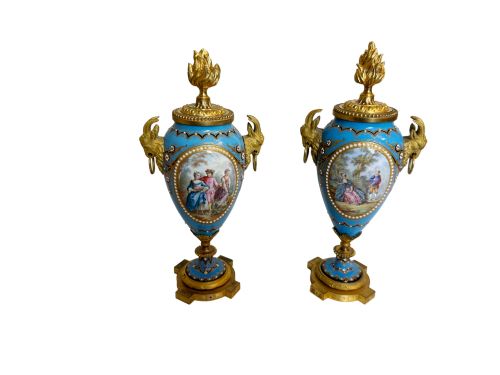


Turquoise Porcelain Urns
Turquoise porcelain urns bring brilliant colour and classical form to a room, ranging from grand nineteenth-century French lidded vases to delicate Dresden table pieces.
Turquoise Porcelain Urns
Turquoise porcelain urns encompass decorative vessels, table lamps, cassolettes, and clock sets dating from the nineteenth and early twentieth centuries. When searching for turquoise porcelain urns, buyers encounter pieces influenced by French chateau aesthetics, Rococo Revival, Louis XVI style, and Asian ceramic traditions.
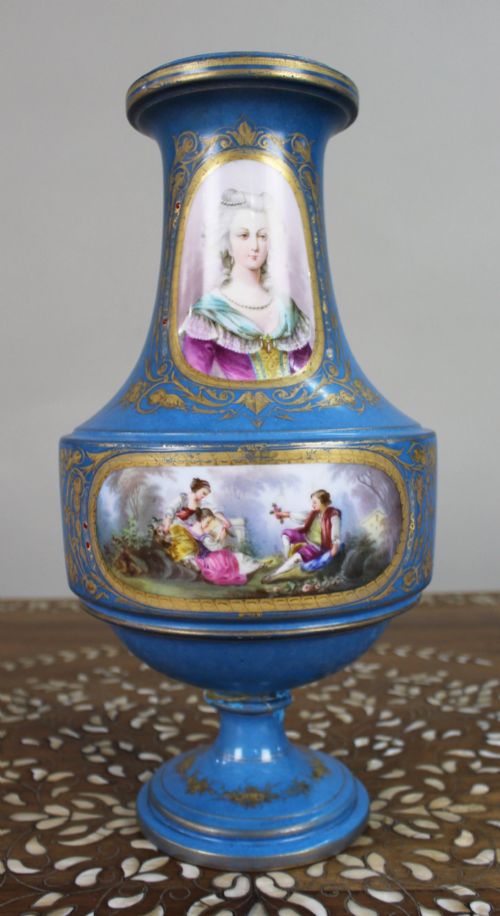
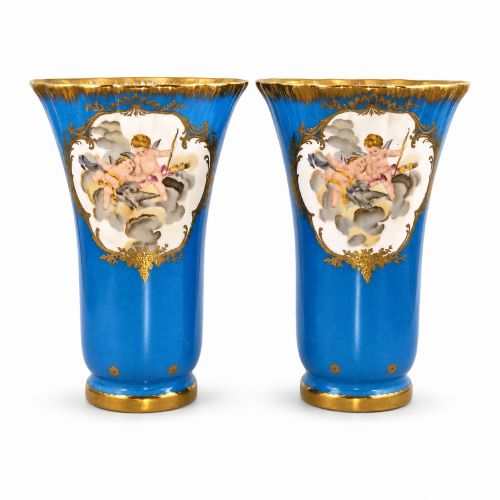
The selections available here feature striking blue and turquoise glaze finishes, frequently complemented by gilt bronze mounts, brass trim, and hand-painted figural or floral scenes. Forms vary from lidded baluster vases and moon flasks to paired cassolettes designed for mantelpieces and side tables.
Materials and Construction
These pieces combine high-fired porcelain and ceramic bodies with enamel decoration and gilt bronze or brass mounts. Artisans applied rich turquoise or bleu céleste glazes, often incorporating gold leaf, gilding, and intricate painted panels depicting classical or romantic subjects.
Foundries and potteries shaped these vessels using traditional moulding and throwing techniques before mounting them in cast metal hardware. Pairs and matching sets demonstrate careful attention to symmetry, mounting, and kiln firing to achieve uniform colour and lustre.
Listings feature porcelain, enamel, gilt bronze, brass, and ceramic materials across the nineteenth and early twentieth centuries.
Assessing Quality and Craftsmanship
Quality separates through the crispness of the porcelain moulding, the depth of the turquoise glaze, and the precision of the hand-painted detailing. Superior examples exhibit finely chased gilt bronze mounts and well-preserved enamel work without blurring or misalignment.
Maker attribution and stylistic coherence elevate certain pieces, particularly those reflecting the Sèvres taste or output from established European and Asian kilns. The integration between the ceramic body and the metal mounts indicates the skill invested in the original manufacture.
Samson Paris·Royal Doulton·Helena Wolfsohn Dresden·KPM Berlin·Minton
The Turquoise Porcelain Urns Glossary
- Bleu céleste
- A bright turquoise or sky-blue porcelain ground colour famously associated with eighteenth-century Sèvres production and later nineteenth-century revivals.
- Cassolette
- A decorative vessel shaped like a vase or urn, featuring a reversible lid that functions either as a solid cover or an incense burner.
- Gilt bronze
- Copper alloy cast and finished with a layer of gold, commonly used for the decorative mounts, handles, and bases of nineteenth-century urns.
- Moon flask
- A flattened circular ceramic vase with a short neck and two handles, often derived from traditional Chinese porcelain forms.
- Rococo Revival
- A nineteenth-century design style characterised by asymmetrical scrolls, naturalistic floral motifs, and ornate, flowing lines.
Turquoise Porcelain Urns: Frequently Asked Questions
What periods do these urns come from?
The listings span the nineteenth and early twentieth centuries, with a strong concentration of pieces produced during the Victorian era and the late 1800s.
European factories and Asian kilns contributed to this period through both revival styles and traditional manufacturing methods.
How were these urns used historically?
Many served as purely decorative mantel or console ornaments, while others functioned as cassolettes or housed clock movements.
Pairs were specifically manufactured to create symmetrical displays on grand nineteenth-century furniture.
Are these pieces wired for electricity?
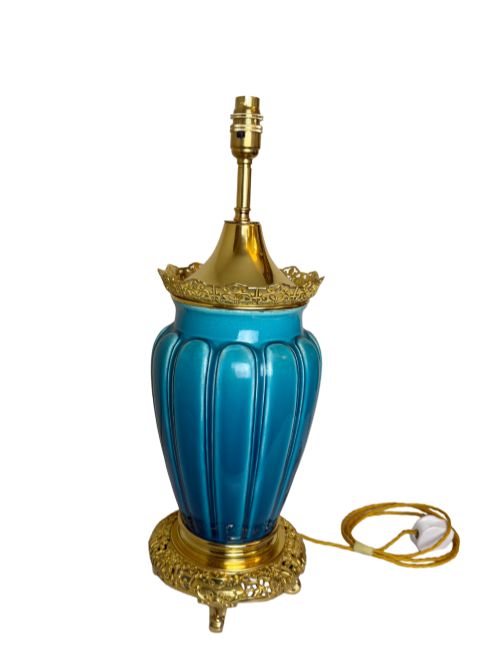
Certain items have been adapted into table lamps during their history, incorporating electrical fittings alongside their original porcelain and gilt bronze bodies.
Other selections remain in their original decorative vessel or urn configuration without lamp wiring.
How do I distinguish French styles from other origins?
French pieces often display Louis XVI or Rococo Revival influences, frequently featuring bleu céleste glazes paired with ornate gilt bronze mounts.
In contrast, pieces from Asian traditions utilise forms such as moon flasks and baluster shapes with distinct decorative motifs.