


Antique Ceramic Garniture
An antique ceramic garniture brings symmetry and classical presence to a room, offering matched sets of decorative vases and urns created to adorn a mantelpiece or console.
Antique Ceramic Garniture
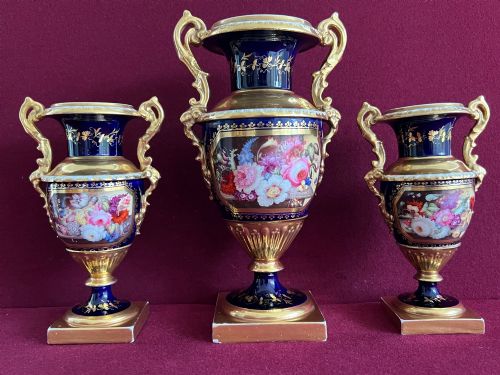
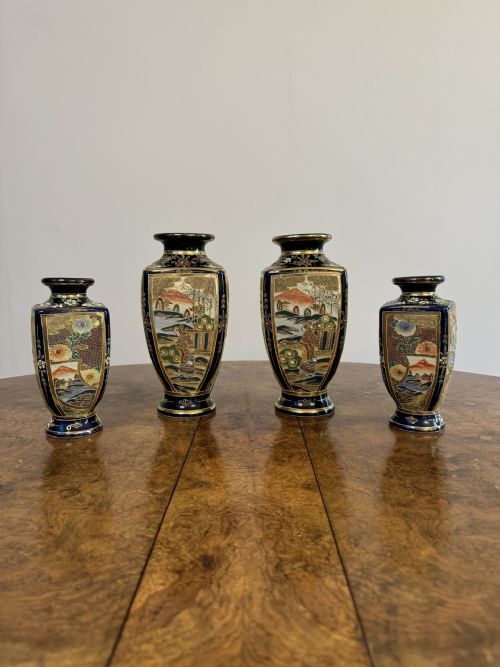
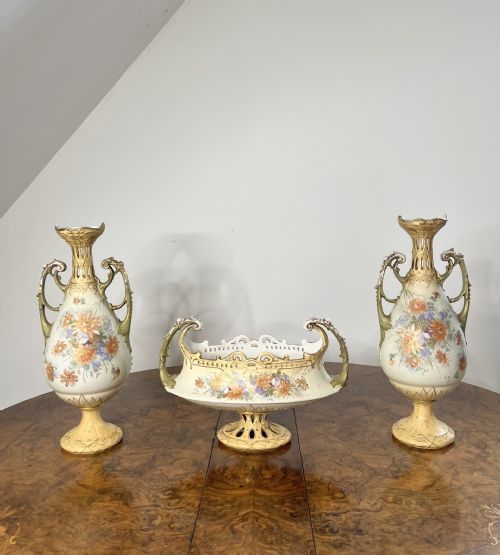
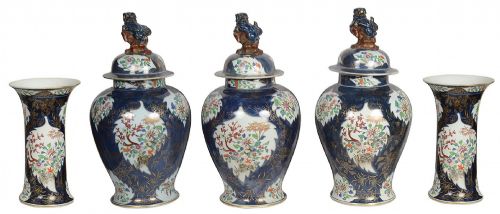
When you search for an antique ceramic garniture, you encounter matched sets of ornamental vessels designed for display on mantelpieces, credenzas and large tables. These arrangements typically comprise three or five pieces, pairing a central vase or urn with corresponding smaller companions that share identical motifs and palettes.
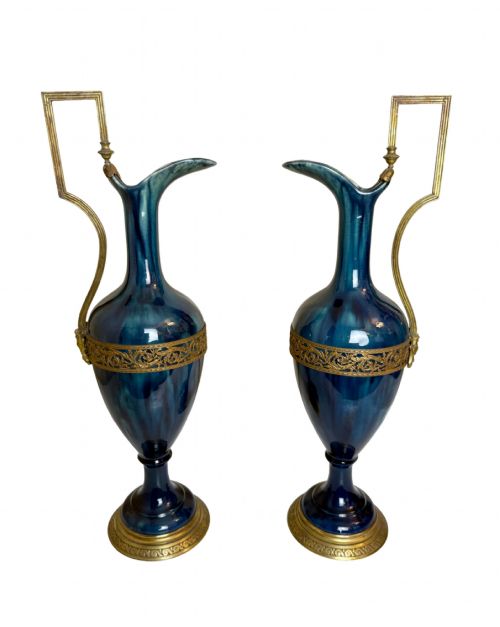
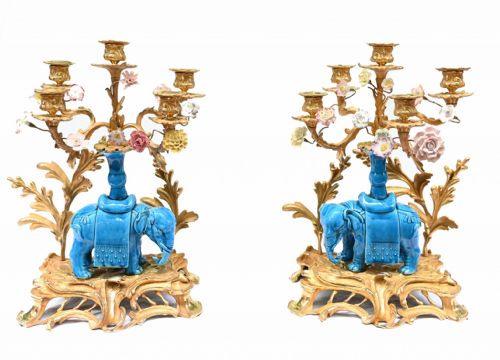
The versions most frequently met on this page span the nineteenth century, ranging from French Sevres style porcelain and Vienna wares to Japanese Imari and Satsuma productions. Many examples incorporate gilt bronze or ormolu mounts, bridging the worlds of ceramic artistry and metalcraft to create striking focal points for formal interiors.
Materials and Craftsmanship
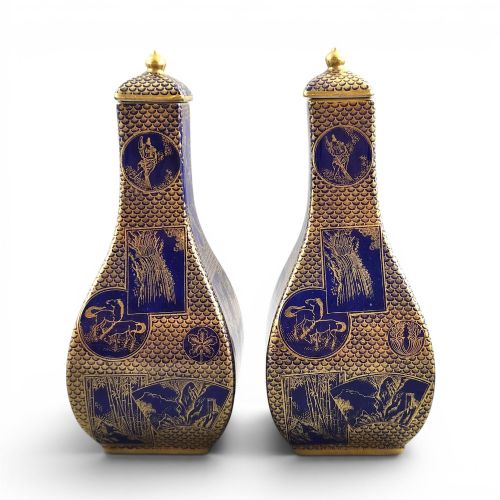
Makers shaped these vessels from fine porcelain, earthenware, ironstone and hard paste bodies, applying detailed hand-painted enamels, cobalt blue grounds and polychrome decorations. Surface enrichment often relied upon gold leaf and gilt bronze or ormolu mounts, which provided structural framing and ornamental handles for the ceramic bodies.
Techniques varied from traditional Japanese glazing and firing methods to European factory production involving multiple kiln firings. Artisans utilised underglaze cobalt, overglaze enamelling and precise gilding to achieve the rich colour palettes seen on nineteenth-century French and English decorative urns.
Elephants occasionally shoulder your candles, proving that nineteenth-century mantelpieces welcomed a touch of menagerie charm.
Distinctions in Quality
Quality in these matched sets rests primarily upon the crispness of the hand-painted details and the fidelity of the matching across all components of the group. Superior examples display finely articulated facial expressions, precise gilding work and harmonious colour application that remains consistent from the central piece to the smallest flanking vase.
The integration of metal mounts also dictates standing, as heavy cast ormolu mounts with chiselled detailing indicate a higher grade of production than stamped brass alternatives. Preservation of the original enamel and the absence of firing distortions distinguish top-tier factory outputs from commercial secondary pieces.
Mason s·Flight Barr and Barr·Sevres·Royal Vienna·Minton
The Antique Ceramic Garniture Glossary
- Garniture
- A set of matched vases, urns or vessels designed to be displayed together on a mantelpiece or sideboard. These groupings usually consist of three or five graduated pieces.
- Ormolu
- Gilded bronze used for mounts, feet and handles on nineteenth-century decorative ceramics. This cast metal adds structural definition and visual weight to porcelain bodies.
- Imari
- A traditional Japanese style of porcelain decoration characterised by a palette of cobalt blue, iron red and gold. It influenced European ceramic production significantly during the nineteenth century.
- Bleu Celeste
- A bright turquoise blue ground colour used extensively on Sevres porcelain. This distinctive hue forms the backdrop for gilt embellishments and painted pastoral scenes.
- Ironstone
- A heavy, durable type of earthenware patented in the nineteenth century. It provided a robust alternative to porcelain for large decorative services and garnitures.
Antique Ceramic Garniture: Frequently Asked Questions
What is an antique ceramic garniture used for?
These decorative sets were originally intended to ornament the mantelpiece above a fireplace or to grace the centre of a formal dining table. Their matched design creates visual balance and symmetry within a room.
Today, collectors use them to anchor a decorative scheme on large sideboards, console tables or empty shelves. The central vessel commands attention while the flanking pieces complete the balanced arrangement.
How do I identify French Sevres style pieces?
French Sevres style pieces typically feature rich ground colours such as turquoise bleu celeste or deep cobalt, accented with lavish gold leaf detailing. Painted panels often depict classical figures, landscapes or royal ciphers.
Many examples also incorporate heavy ormolu or gilt bronze mounts around the base and rim. The overall aesthetic leans toward French Rococo Revival and Neoclassical elegance.
How do I care for antique porcelain garnitures?
Dust these delicate ceramic surfaces gently with a soft, dry brush to prevent accumulation. Avoid using water, liquid cleaners or chemical agents, particularly near gilt bronze mounts or hand-painted enamel.
Keep the pieces away from direct sunlight to preserve the vibrancy of the enamels and gold leaf. Ensure they rest on stable, level surfaces where they will not be knocked or disturbed.