
Antique French Mantel Urns
Antique french mantel urns combine classical bronze and porcelain to anchor a room with undeniable presence.
Antique French Mantel Urns
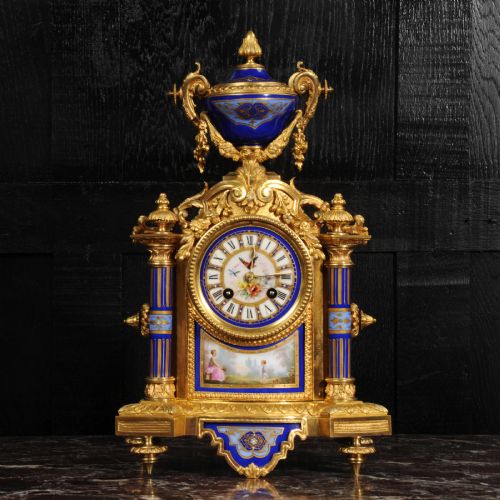
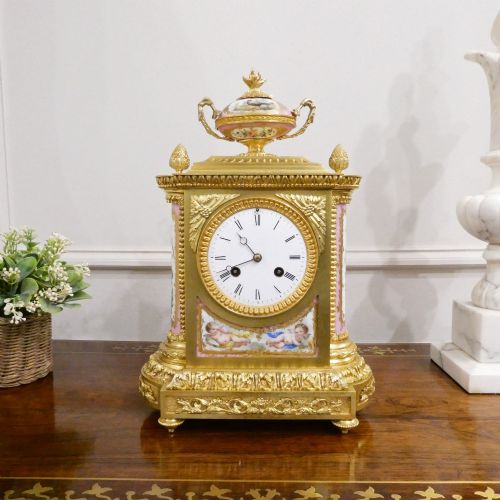
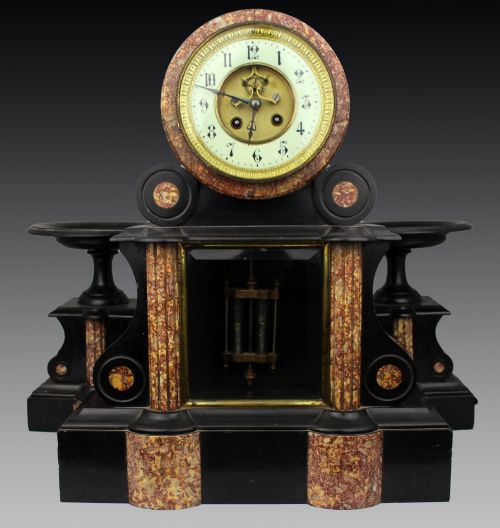
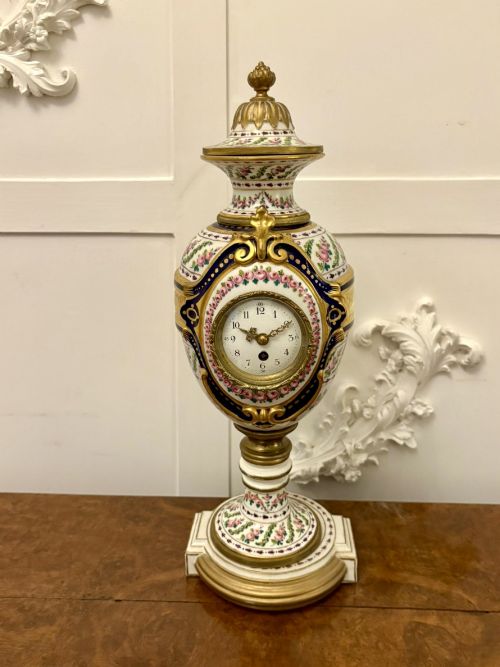
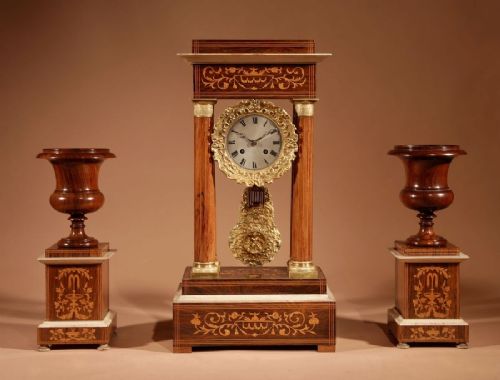
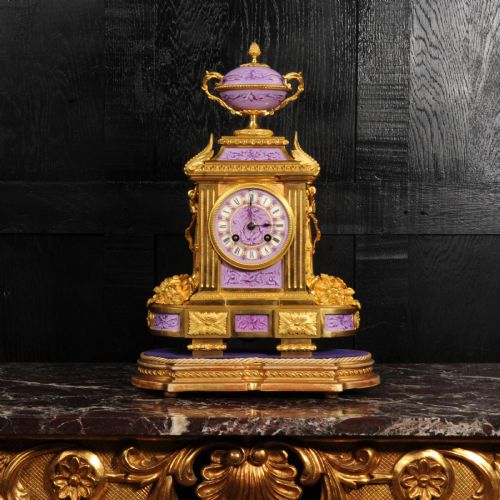
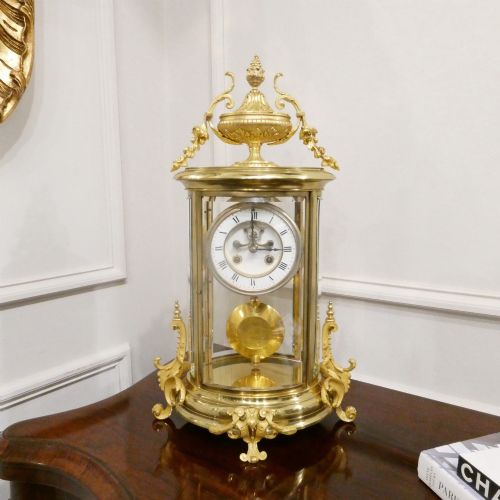
When buyers search for antique french mantel urns, they encounter decorative vessels, garniture sets, and clock garnitures designed to sit prominently on a fireplace or console. These pieces frequently appear alongside matching mantel clocks, forming symmetrical arrangements that defined nineteenth-century interiors.
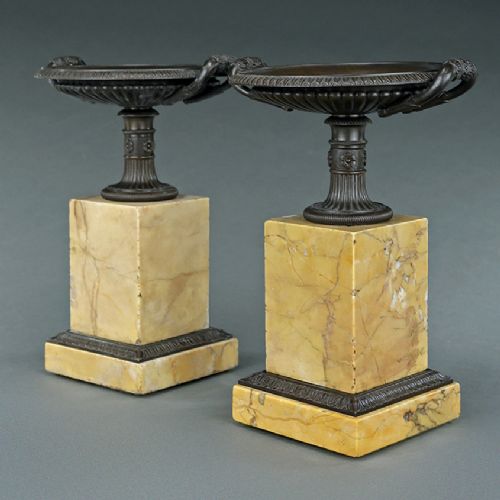
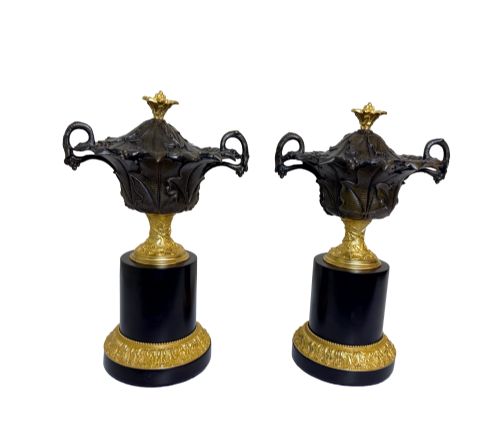
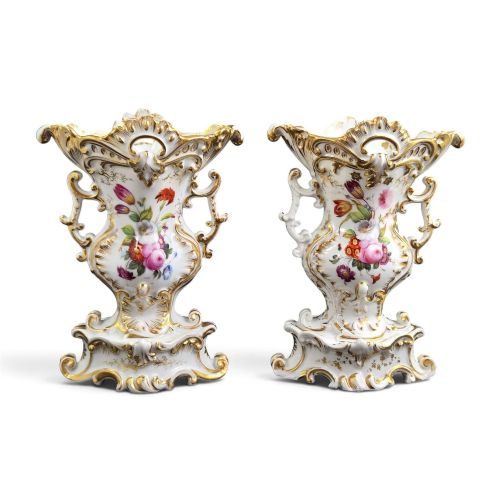
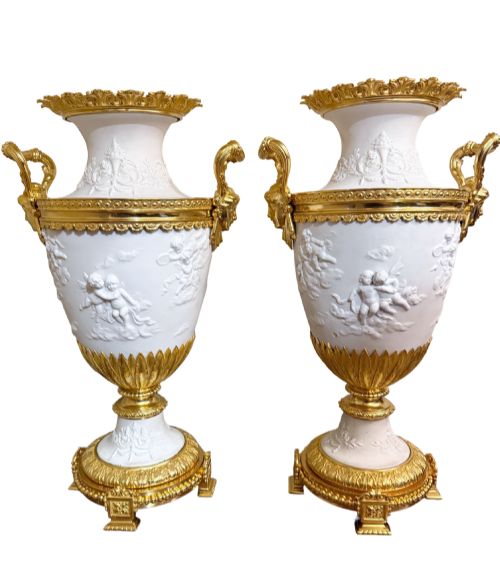
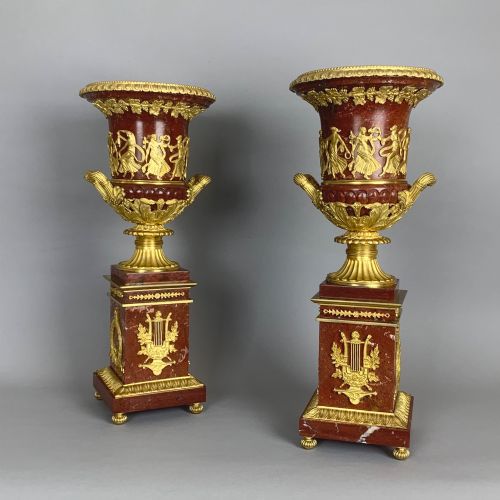
The selection ranges from neoclassical marble and ormolu designs to porcelain vases enriched with gilt bronze mounts. Makers often produced pairs intended to frame a central timepiece, utilising classic shapes derived from Grand Tour travels and revival styles.
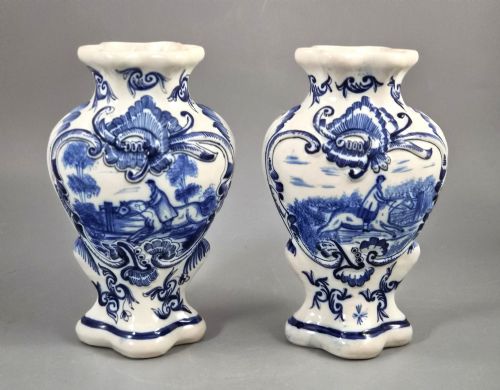
Nineteenth-century examples dominate the offerings, spanning periods from early empire forms to late Victorian interpretations. Buyers also discover occasional earthenware and faience pieces reflecting later artistic movements like Art Deco and Japonisme.
Materials and Craftsmanship
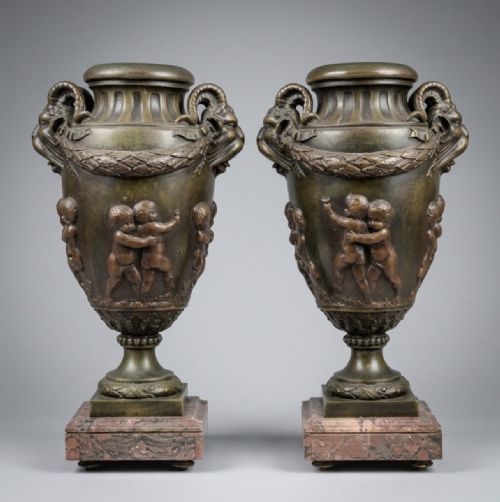
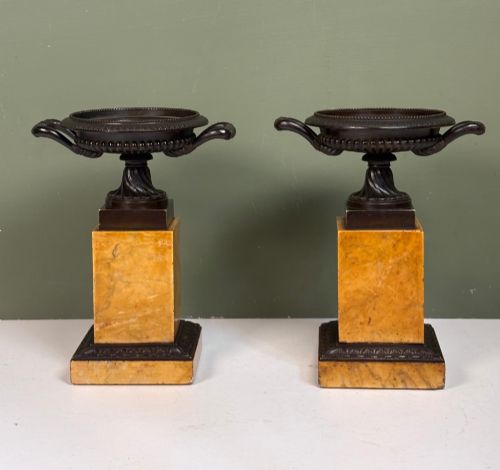
Foundry workers shaped these pieces using cast bronze, ormolu, and spelter, often mounting them upon contrasting bases of black, white, or Siena marble. Artisans then applied gilt finishes and hand-painted details onto porcelain bodies sourced from notable French factories.
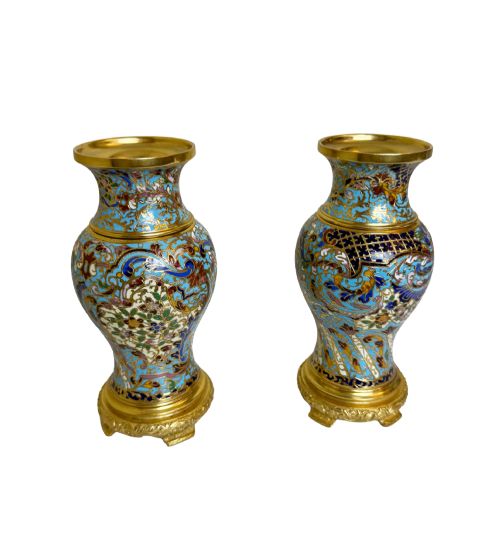
Enamelling techniques, such as champlevé, added vibrant colour and intricate patterns to metal surfaces, while glass and onyx provided alternative structural bodies. The combination of heavy stone bases with detailed metal mounts required precise assembly by skilled bronze-smiths and clockmakers.
Several bronze urns feature cheerful Bacchic masks and playful putti keeping watch over the mantelpiece.
Distinctions in Execution
The artistic merit of the hand-painted porcelain panels and the richness of the mercury gilding distinguish finer pieces from standard commercial production. Heavier, denser marble plinths and fully signed clock movements or garniture components indicate workshops of higher repute.
Japy Freres·Jean-Baptiste Delettrez·Achille Brocot·Samuel Marti·Jacob Petit·Fourmaintraux-Courquin·Samson Paris·Robert T Lallement·Louis Goret·Sacre
The Antique French Mantel Urns Glossary
- Ormolu
- Gilded bronze produced by applying a mercury and gold amalgam to a cast bronze base, then firing to drive off the mercury. This technique creates a durable, warm golden finish characteristic of luxury French decorative arts.
- Garniture
- A set of matching ornamental objects, typically comprising a central clock flanked by a pair of vases, urns, or candelabras. These sets were designed to create visual balance on a mantelpiece.
- Spelter
- A zinc alloy used as a less expensive alternative to bronze during the nineteenth century. It was frequently bronzed or painted to mimic heavier metals.
Antique French Mantel Urns: Frequently Asked Questions
What is a clock garniture?
A clock garniture is a matched set consisting of a central mantel clock accompanied by two flanking pieces such as urns or vases. These items were designed to create a unified and symmetrical display across a fireplace mantel.
The matching pieces share identical materials, decorative motifs, and mounting styles, reflecting the cohesive interior design preferences of the nineteenth century.
How do I style mantel urns?
Mantel urns look best centred on a fireplace mantel, sideboard, or console table, either flanking a clock or standing alone as a pair. Their vertical proportions draw the eye upward and add architectural weight to a room.
Ensure the surface is sturdy enough to support heavy marble and bronze objects, and keep them away from direct heat sources to protect delicate porcelain and gilding.
Are these pieces strictly French in origin?
The designs, movements, and mounting styles originate primarily from French workshops and factories active in Paris and regional manufacturing centres. Many pieces incorporate aesthetic influences from the Grand Tour or revival movements popular in France during the nineteenth century.
While some factories produced items for international export, the core manufacturing traditions remain distinctly French.
How can I tell the period?
Dating relies on stylistic clues, maker signatures, and the combination of materials like ormolu, marble, and porcelain. Neoclassical and Empire styles suggest early nineteenth-century production, whereas later Victorian and Art Deco pieces show distinct shifts in form and ornamentation.
Examining the casting quality, screw types, and movement stamps often provides a reliable timeframe for the manufacture.