

French Porcelain Vases
French porcelain vases bring undeniable presence to a room, offering rich painted detail and classic decorative form.

French porcelain vases
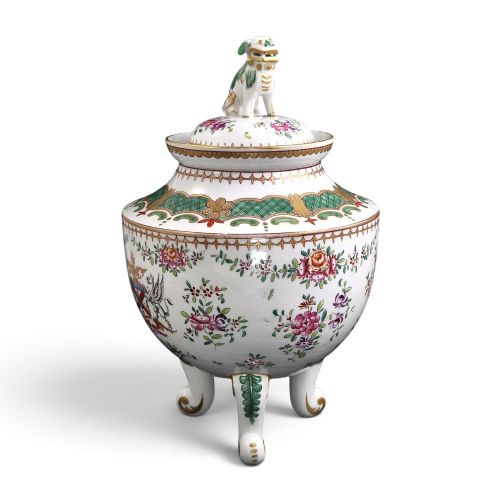
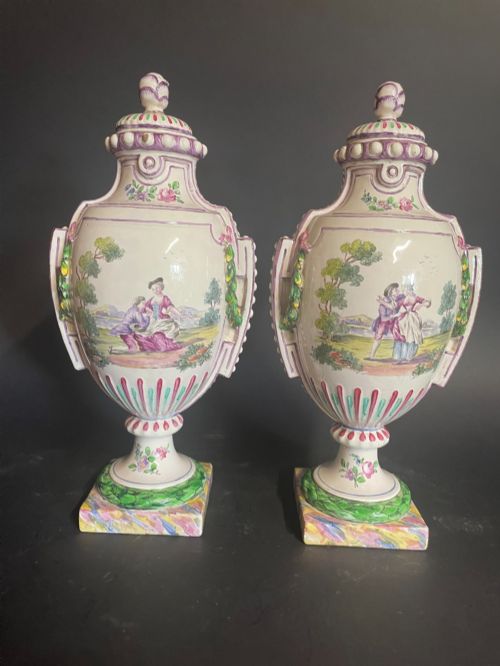
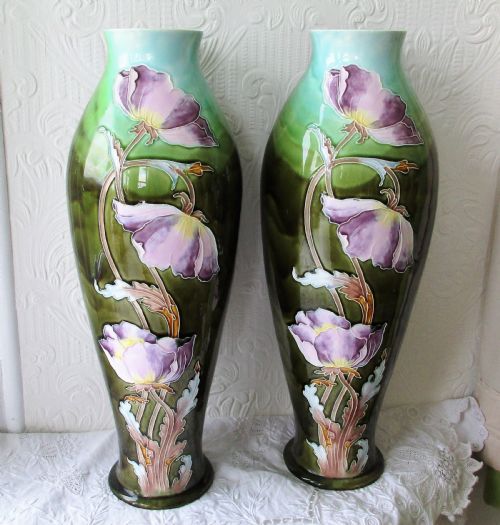
French porcelain vases encompass a range of decorative urns, lidded vessels, and tall display pieces originating primarily from nineteenth-century workshops. The selection here leans heavily towards nineteenth-century examples, including Victorian productions and pieces from around nineteen-twenty.
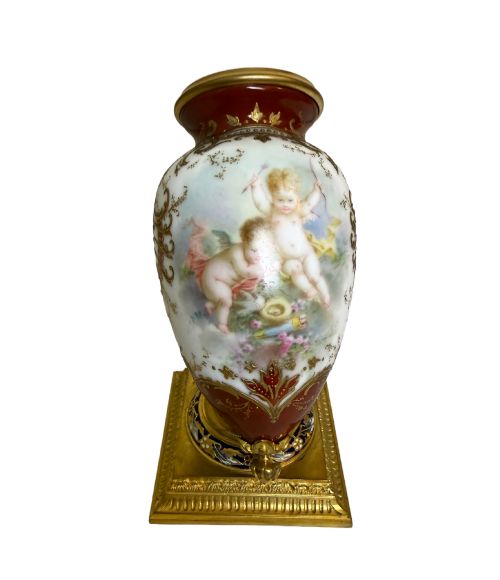
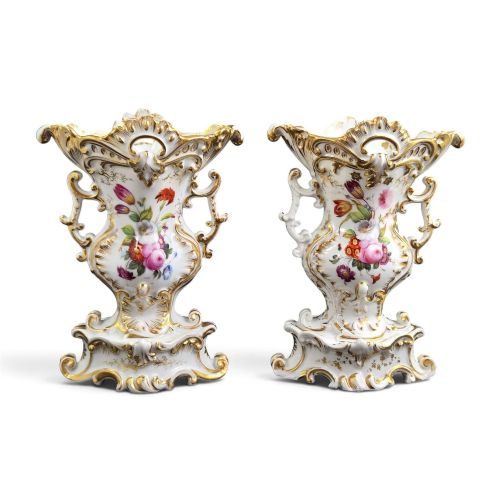
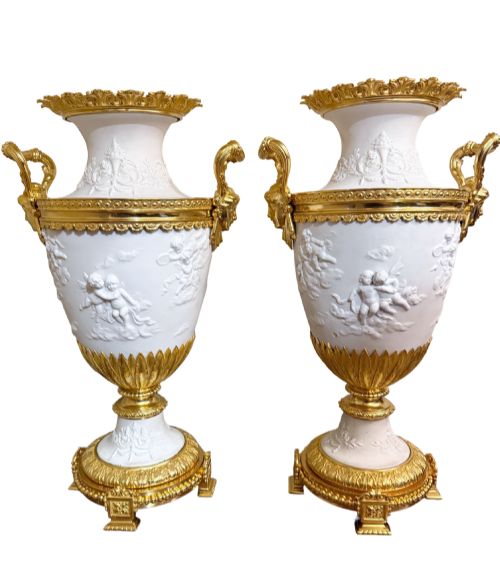
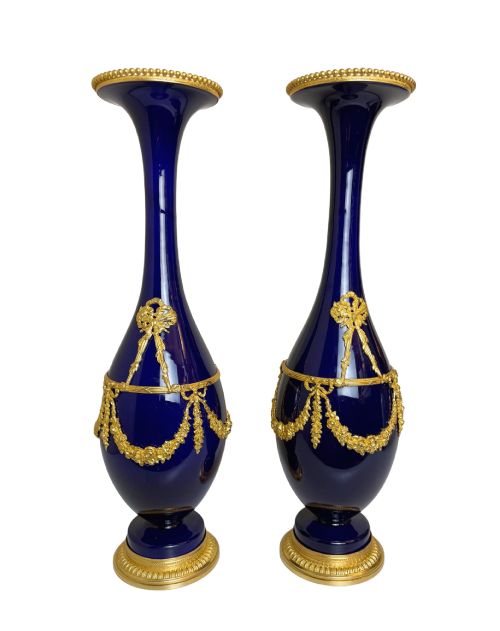
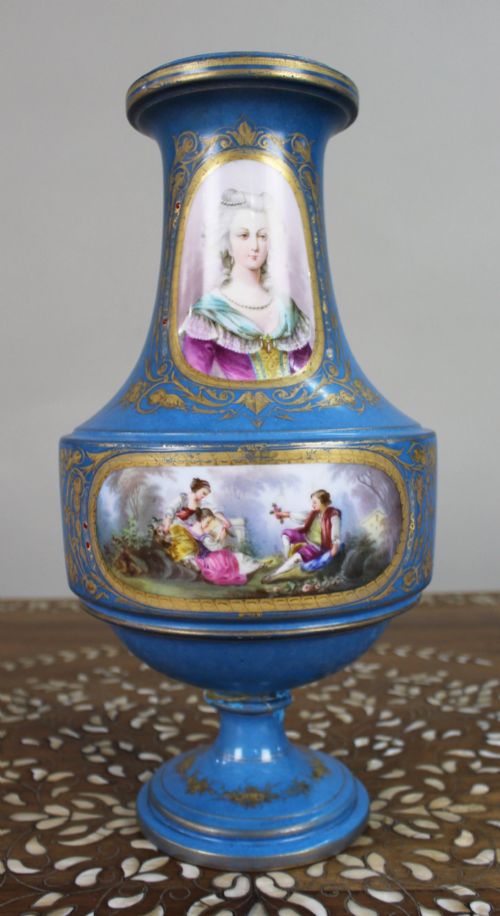
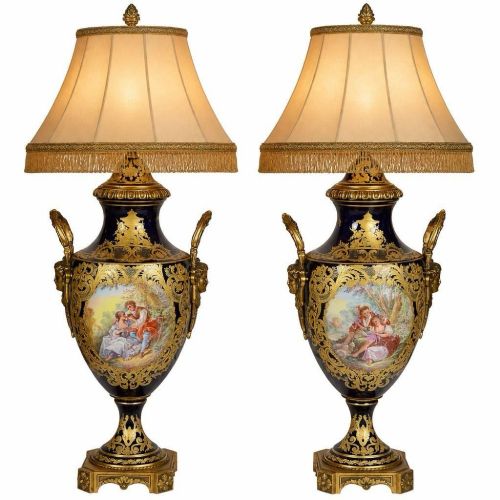
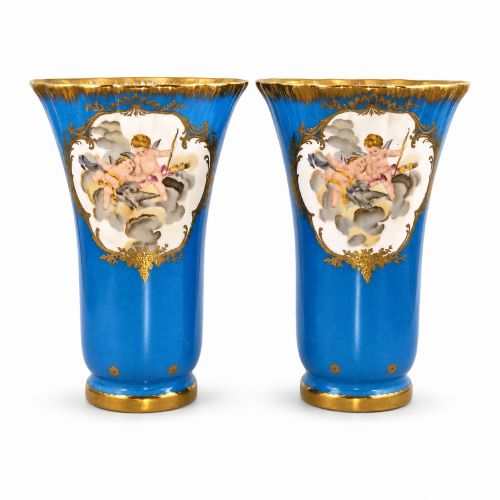
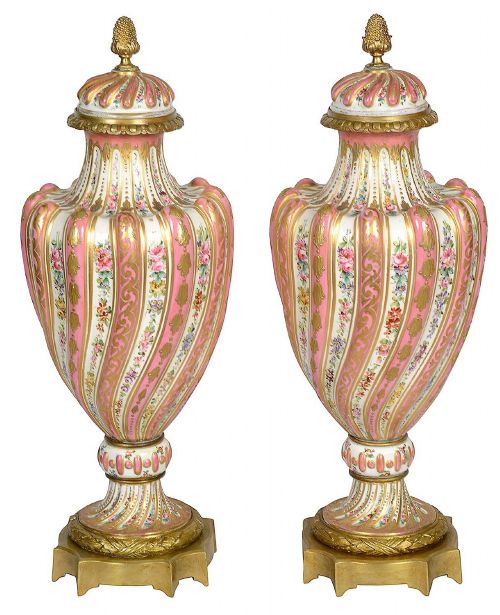
Buyers will frequently encounter items designed in the Sevres style, often featuring hand-painted floral motifs, gallant scenes, or putti against coloured grounds such as pink, cobalt blue, and bleu celeste. Other notable aesthetic directions include French Rococo Revival, French Empire, and items influenced by Chinese export or Japanese styles.
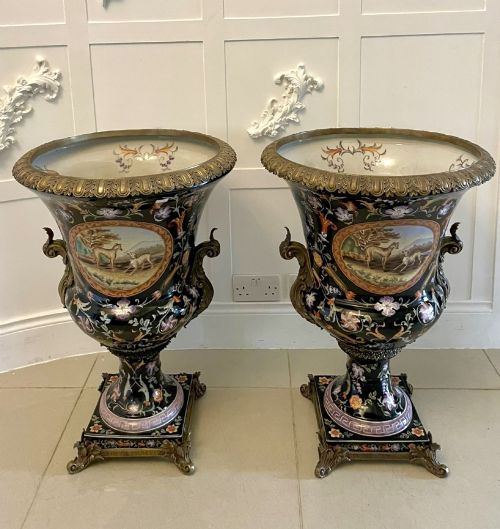
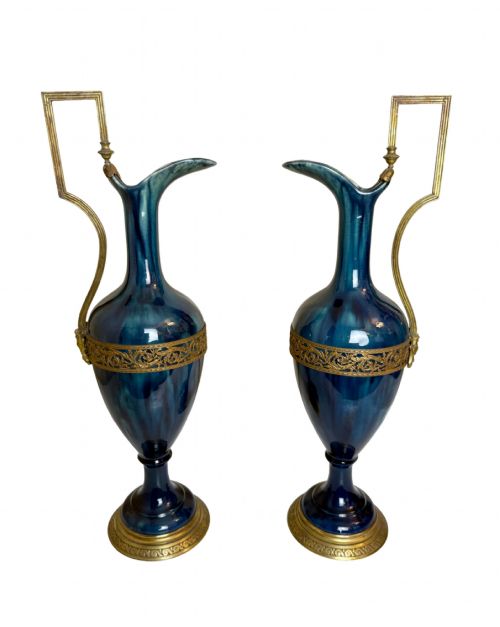
The inventory demonstrates a clear preference for pairs, whether substantial lidded urns or slender spill vases. These objects frequently incorporate metal mounts, reflecting the intersection of ceramic production and decorative metalwork.
Materials and technique
Makers utilised hard-paste porcelain as the primary ceramic body, shaped into forms such as Medici vases, quatrefoil profiles, and twisted bodies. This material allowed for crisp moulding and a smooth surface suitable for detailed decoration.
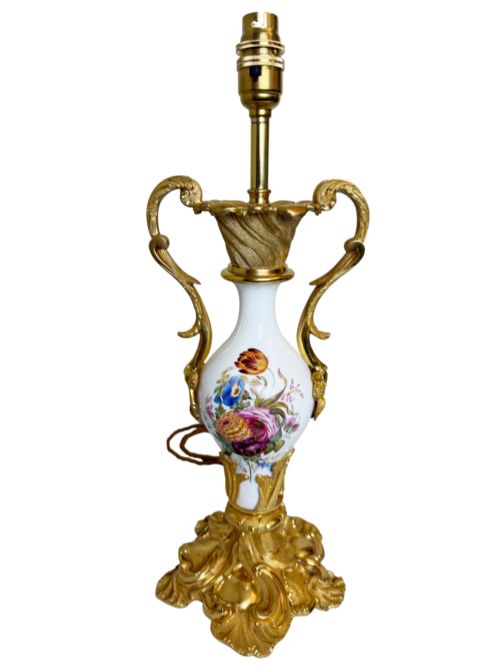
Decoration relied on hand-painted pigments, raised white enamel, and the application of gold leaf or gilt. Many pieces received mounts cast in ormolu, gilt bronze, or brass to frame the porcelain body and elevate its status.
Firing and glazing techniques produced varied background colours, from deep cobalt to soft lavender and white, upon which artists painted floral sprays and figurative panels.
Retail Price Guide 2026
Typical UK retail prices for french porcelain vases, calculated from the Sellingantiques database of over a million retail prices indexed since 2003. This retail price guide relies exclusively on Sellingantiques data; no external sources or auction records are used, so the figures do not describe the wider market.
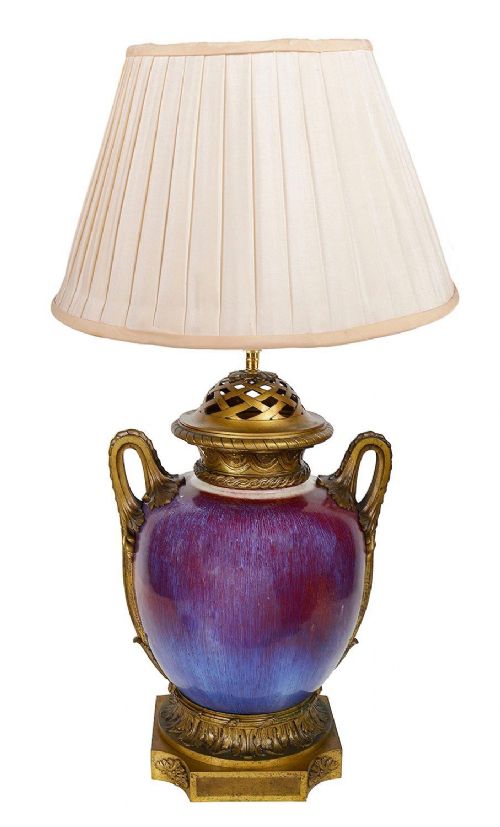
Some nineteenth-century French vases were cleverly repurposed as electric lamps, proving that even a decorative urn can learn new tricks.
Separating the fine from the ordinary
The distinction between standard decorative items and finer pieces rests upon the precision of the hand-painting and the crispness of the porcelain modeling. Superior examples display finely rendered figures and botanical details executed with visible skill.
Mount quality plays a decisive role, where heavy, finely chased ormolu or gilt bronze mounts integrate seamlessly with the ceramic body rather than appearing as an afterthought. The depth of the glaze and the richness of the gold leaf further separate the exceptional from the routine.
Samson, Paris·Jacob Petit
The French Porcelain Vases Glossary
- Ormolu
- Gilded bronze mounts applied to furniture and ceramics. This technique adds architectural weight and decorative flourish to the porcelain body.
- Sevres style
- A decorative manner inspired by the famous French royal porcelain factory. It often incorporates rich coloured grounds, gilt highlights, and painted pastoral scenes.
- Hard-paste porcelain
- A durable ceramic composition fired at high temperatures. It provides a dense, vitrified body that resists scratching and holds fine detail.
- Bleu celeste
- A bright sky-blue glaze often used on decorative porcelain. It serves as a distinctive background colour for gilt and painted ornamentation.
- Medici vase
- A bell-shaped urn form with a footed base and flared rim. Originating in classical antiquity, it was widely revived in nineteenth-century French ceramics.
Frequently Asked Questions
What styles are common among these vases?
The selection is dominated by nineteenth-century French Sevres style pieces, which draw on neoclassical and rococo traditions. You will also find examples reflecting Chinese export and Japanese styles.
These varied aesthetic influences mean items range from formal gilt-bronze mounted urns to more modest floral-decorated spill vases and figures.
Are these vases usually sold as pairs?
Yes, the listings heavily feature pairs of vases, reflecting how they were originally intended to balance a mantelpiece or side table. Single vases and near pairs do occasionally appear.
Buying a matching pair ensures symmetry in decorative schemes, which was the primary intent of their original makers.
What materials accompany the porcelain?
Many pieces feature metal mounts, specifically ormolu, gilt bronze, and brass, which frame the ceramic body. Gold leaf and enamel are also frequently used for surface decoration.
These added materials contribute significantly to the visual weight and decorative impact of the finished object.
How do I care for antique porcelain?
Dusting gently with a soft, dry cloth is usually sufficient for routine maintenance. Avoid using chemical cleaners or immersing mounted pieces in water, as this can damage the gilt and metal mounts.
Displaying them away from direct sunlight will help preserve the vibrancy of the hand-painted enamels and gold leaf.